The masters our own painters keep coming back to. Irish painters worked between Dublin, London and Paris: portraitists of the 18th century, the plein-air painters of Brittany and the modernists of the 20th century, including Francis Bacon. Here are 24 of them, each with three works that still teach painters today and the museum where they can be seen.
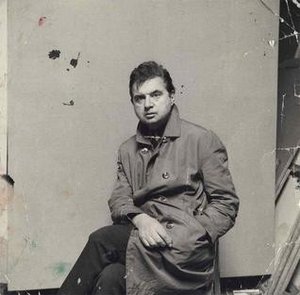
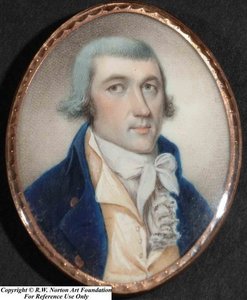
Francis Bacon (1909–1992), John Ramage (1748–1802) and William Orpen (1878–1931) head the 24 great Irish masters who inspire our artists, all born in Ireland, each with three key works.
His colors were often smeared and violent, used to strip away any sense of decorative comfort. Three Studies for Figures at the Base of a Crucifixion (1944).
Sir William Newenham Montague Orpen was born on 27 November 1878 in Stillorgan, County Dublin, Ireland. His technical proficiency was particularly evident in his command of the human form, a skill that earned him the British Isles gold medal for life drawing. There is a growing recognition of the power and complexity within his paintings of the First World War, which moved beyond mere documentation to capture the psychological weight of the conflict.
Where to see The physical presence of Orpen's oeuvre is scattered across several major institutions, reflecting a career that moved between the social circles of London and the grim landscapes of the Western Front.
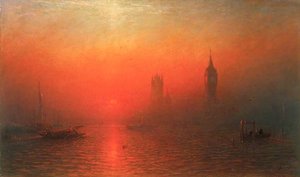
His canvases, often vast in scale and steeped in atmospheric effects, stand alongside those of contemporaries like John Martin and J.M. Danby’s early life was marked by upheaval; the death of his father in 1807 forced a relocation to Dublin, where he began formal art training at the Royal Dublin Society's schools under James Arthur O’Connor and alongside George Petrie. Following a period spent on the shores of Lake Geneva in Switzerland and a brief sojourn in Paris, Danby returned to England in 1840, revitalizing his reputation with “ The Deluge ” – a monumental work that showcased his continued mastery of dramatic composition.
“ After the Hunt ” Series: This series exemplifies Harnett’s technique perfectly, demonstrating how he utilizes optical tricks to create a convincing illusion of depth within a confined space. Recurring Themes: Recurring motifs include instruments (particularly violins), tobacco pouches, and meticulously arranged fruit – objects that speak to both the artist's personal interests and his broader engagement with artistic precedents. Museums such as the Albright-Knox Art Gallery, the American Museum of Natural History, and The Metropolitan Museum of Art proudly display his paintings, ensuring that his vision persists across generations.
While celebrated primarily as a portraitist, Shee’s oeuvre extended beyond capturing individual likenesses. He ventured into historical and literary subjects, demonstrating versatility and intellectual depth. Interestingly, his descendant George Archer-Shee inspired Terence Rattigan's poignant play, “The Winslow Boy,” adding another layer to the family’s historical significance.
The pursuit of artistic mastery led Saint-Gaudens across the Atlantic to Europe in 1867. He returned to New York in 1875, equipped not just with technical skill but a refined artistic vision. This blend of Irish and French heritage would subtly inform Saint-Gaudens’s artistic sensibility—a unique fusion of classical ideals and an emerging American identity.
The young Margaret came from a family touched by both artistic sensibility – her aunt being the celebrated Irish artist James Barry RA – and financial instability following her father’s dismissal from his post. A complex conspiracy involving her mother, Mary-Ann Bulkley, General Francisco de Miranda, Dr. The extraordinary secret of James Barry's true identity remained concealed until after his death in 1865.
Born in CorkHistorical narrative, realism and portraiture
Maclise’s style blended historical narrative with elements of realism and portraiture. His work often depicted scenes from history, literature (Shakespeare), and mythology. Influenced by French and classical art, particularly after his visit to Paris in 1830.
Initially, his subject matter centered on Breton life – peasants, landscapes, and scenes of rural existence. Yellow Landscape (1892), La Jeune Bretonne (1895), Mixed Flowers on Pink Cloth (circa 1916), and Landscape, Cassis (1913) stand as testaments to this artistic evolution. He exhibited at the Paris Salon and the Salon des Indépendants, gaining some recognition within Parisian art circles, but widespread acclaim eluded him.
These paintings weren't simply depictions of elegant social gatherings; they were carefully constructed illusions, designed to evoke a sense of enchantment and fleeting beauty. Crucially, Watteau avoided direct representation, instead relying on suggestion and implication to convey mood and emotion. The success of these works brought him recognition and patronage from influential figures, including the powerful Duke de Choiseul, who served as foreign secretary to Louis XV.
Paul Kane’s artistic style was uniquely his own, forged through self-education and direct observation. Upon returning to Toronto, Kane produced over one hundred oil paintings based on his travels, establishing himself as a prominent Canadian artist before his death in 1871. A brief encounter with George Catlin in London proved particularly impactful; Catlin's depictions of Native American life resonated deeply with Kane, sparking a desire to document the Indigenous cultures of North America.
He sought opportunities in London as a book illustrator, initially tackling ambitious projects like Coleridge's The Rime of the Ancient Mariner and Pope’s The Rape of the Lock, though these remained unfinished. His breakthrough arrived with illustrations for Hans Christian Andersen’s Fairy Tales (1916), which immediately established his reputation as a master storyteller in visual form. Equally renowned is the Geneva Window, a complex series commissioned by Irish expatriates in Geneva, portraying prominent figures from Irish literature—Yeats, Synge, Joyce, and others—in a vibrant tableau of national identity.
His paintings are imbued with a sense of warmth and humanity, reflecting his genuine affection for the people and landscape of Cornwall. However, as he spent more time in Newlyn, his paintings became increasingly vibrant and expressive, characterized by brighter colors, looser brushstrokes, and a greater emphasis on capturing the fleeting effects of light. His wife, Elizabeth Forbes, was equally important in this artistic movement, and their combined efforts established a thriving art school that nurtured countless young talents.
The life of Nicholas Fox was a tapestry woven from threads of immense courage and quiet observation, beginning in the rolling landscapes of Oldcastle, County Meath, Ireland. His migration to Greenwich, Connecticut, in 1855 marked the start of an American odyssey that would see him transition from a young immigrant to a celebrated hero of the Union.
Hamilton’s artistic signature lay in his ability to capture not just the likeness of his sitters, but also their character and social standing. He favored handmade cream or off-white paper for his pastels, providing a subtle warmth to the finished pieces. His portrait of Dean Kirwan remains a treasured piece at the Royal Dublin Society, while other notable works include portraits of George John, 2nd Earl Spencer, and Countess Cowper.
Beyond these grand historical scenes, Carter also produced numerous portraits – often characterized by their psychological depth and subtle nuances—and intimate domestic scenes that offer glimpses into the lives of his subjects. His compositions were generally balanced and harmonious, reflecting a commitment to classical principles while simultaneously embracing a distinctly American sensibility. His ability to capture both the grandeur of American history and the intimate details of everyday life cemented his place as a notable figure in 19th-century American art.
He undertook numerous trips throughout Europe, deepening his understanding of art history. Influences: The Old Masters, particularly those encountered during his European travels, significantly impacted his style and technique.
His father, William Osborne, was a successful animal painter, providing young Walter with an early immersion into the sights, smells, and techniques of a working artist’s life. This foundational exposure proved pivotal, nurturing a talent that would blossom into a significant contribution to Irish art. Working in locations like Dinan, Pont-Aven, and Quimperlé, Osborne encountered the plein air style championed by Jules Bastien-Lepage.
Raised in an environment where the arts were deeply cherished, his early years provided the foundational passion necessary to navigate the competitive art worlds of both Europe and America. He represents a bridge between the Old World traditions of Ireland and the emerging artistic identity of the United States.
Among his most celebrated works are “Returning from the Ale House” (also known as “ Fair Time ”), housed in the Tate Gallery, and “ Giving a Bite,” which graces the Victoria and Albert Museum. Mulready’s influence extended beyond his own work; he came from a family deeply rooted in artistry – his wife Elizabeth Varley and their sons Paul Augustus, William Junior, and Michael all pursued careers as artists.
His most celebrated achievement remains the monumental six-part series, The Progress of Human Culture, commissioned for the Great Room of the Royal Society of Arts in London. In these works, Barry explored the evolution of civilization through a lens of classical myth and historical allegory. The 1983 exhibition at the Tate Gallery served as a turning point, allowing scholars and enthusiasts alike to recognize him not just as a talented painter, but as a pivotal figure who bridged the gap between the structured elegance of Neoclassicism and the raw, emotive power of the Romantic movement.
Tiffany Studios Collaboration: Wilson's professional breakthrough arrived with his association with Louis Comfort Tiffany Studios in New York City. John’s Episcopal Church in Cornwall, NY and the Naval Academy Chapel in Annapolis, MD. Furthermore, his sculptures—particularly ‘The Spirit of Detroit,’ commissioned for the revitalization of downtown Detroit—demonstrate his versatility as an artist and solidify his place among the most influential sculptors of his time.
Most in the 19th century (13 of 24); births range from 1718 to 1909.
Where can I see their works?
The works shown on this page are mostly in National Gallery of Ireland (8), Metropolitan Museum of Art (4), Tate Gallery (2) and Yale Center for British Art (2).
How this list is ranked Our ranking draws on Wikipedia, the manual rank our editors give each artist and artwork, and the visits each page receives every month.