Introduction
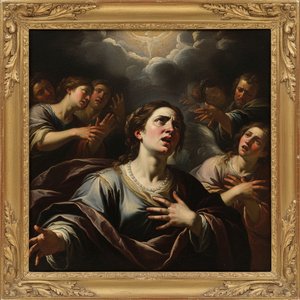
To step into the world of Baroque painting is to surrender to a theater of light and shadow, where every brushstroke breathes with an intensity that refuses to be ignored. It was an era defined by drama, a period when the stillness of the Renaissance gave way to a profound sense of movement, tension, and emotional urgency. As we wander through this selection of the Top 10 Masterpieces That Defined the Baroque Painting Art Movement , we are not merely looking at canvases; we are witnessing the pulse of a transformative age.
Emerging in the late 16th century and flourishing throughout the 17th, the Baroque movement served as the visual heartbeat of Europe. Driven by the grandeur of the Counter-Reformation and the opulence of absolute monarchies, artists sought to overwhelm the senses and stir the soul. Through the revolutionary use of chiaroscuro —that breathtaking interplay between deep, swallowing darkness and piercing, divine light—masters like Caravaggio, Bernini, and Rubens captured the very essence of human struggle, religious ecstasy, and royal majesty.
These works remain profoundly meaningful today because they speak a universal language of emotion. The raw vulnerability in a saint's gaze or the turbulent energy of a mythological battle resonates across centuries, reminding us that the human experience is fundamentally composed of light and shadow. They possess a tactile, visceral quality that modern digital imagery often lacks, offering a window into a time when art was designed to be felt as much as seen.
In the following pages, we will guide you through a curated journey across borders and centuries. We have selected ten pivotal works that do more than represent an era; they embody the very spirit of the Baroque, inviting you to rediscover the power of movement, the depth of texture, and the eternal drama of the human condition.
Ecce Homo - Caravaggio
 Ecce Homo - Caravaggio
To stand before a masterpiece of the Baroque era is to witness the moment shadows surrender to a piercing, divine light. In Ecce Homo by Caravaggio , this confrontation becomes visceral. Painted in 1609, this work serves as a cornerstone of the Baroque painting movement, stripping away Renaissance idealism to reveal the raw, unvarnished truth of human suffering. Caravaggio utilizes his signature tenebrism —an intense, theatrical chiaroscuro—to thrust Christ into the foreground, where brilliant highlights catch the wounds of the scourging against an abyssal, dark background.
The viewer is not merely observing a biblical event; they are pulled into the psychological weight of Pontius Pilate’s presentation. Every heavy brushstroke on the canvas emphasizes the tactile reality of flesh and fabric, creating a sense of profound spiritual urgency. As one of the top 10 masterpieces that defined the movement, this painting remains a masterclass in emotional manipulation through light. Its ability to command a room and evoke deep reverence ensures that its dramatic presence continues to transform modern spaces, bridging the gap between historical tragedy and contemporary contemplation.
The Entombment (detail) - Caravaggio
 The Entombment (detail) - Caravaggio
In The Entombment (detail) by Caravaggio, the light does not merely illuminate the scene; it acts as a profound language of drama . As you stand before this Baroque masterpiece, you realize the artist did not simply paint light—he composed it with the precision of a conductor. Through his revolutionary technique of tenebrism , a single, piercing shaft of brilliance cuts through an oppressive darkness, sculpting the heavy, grief-stricken forms of Christ and his followers.
This intense chiaroscuro creates a tactile reality where every muscle, every fold of coarse fabric, and every tear-streaked face feels almost tangible. The shadows are not empty; they are thick with the weight of mortality and raw emotion. This stark contrast is why this work remains a cornerstone of the Baroque movement, defining an era of intense realism and spiritual tension. To bring such a piece into your space is to invite a portal of inspiration, where the interplay of light and shadow transforms a simple wall into a window onto the sublime.
Supper at Emmaus - Caravaggio
 Supper at Emmaus - Caravaggio
What story does the heavy, enveloping shadow in Supper at Emmaus by Caravaggio tell? It speaks of a world caught in the profound tension between the known and the divine. Painted in 1601, this masterpiece emerged during a pivotal era when the Baroque movement began to reject Renaissance idealism in favor of a gritty, visceral realism. Caravaggio breaks ground by utilizing tenebrism —a dramatic technique where piercing shafts of light cut through deep, murky darkness—to capture the exact moment Christ reveals himself to his disciples.
The scene is remarkably tactile; you can almost feel the weight of the wooden table and the texture of the fruit basket. The figures are not idealized saints but ordinary men, their faces etched with sudden, startling recognition. For the modern collector, bringing such a work into a space offers more than mere decoration; it provides a curated escape into history. This painting’s ability to command attention through stark contrast makes it an essential pillar of the Top 10 Masterpieces That Defined the Baroque Painting Art Movement , offering a sense of dramatic depth and timelessness to any sophisticated interior.
Self Portrait as Saint Catherine of Alexandria - Artemisia Gentileschi
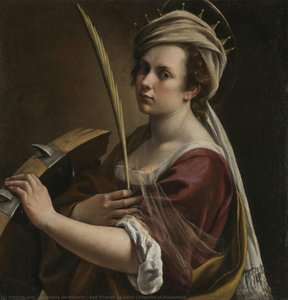 Self Portrait as Saint Catherine of Alexandria - Artemisia Gentileschi
In Artemisia Gentileschi’s Self Portrait as Saint Catherine of Alexandria , a profound sense of shadow dominates the canvas, where deep, obsidian blacks and heavy umbers set a mood of intense introspection and dramatic tension. This mastery of chiaroscuro—the hallmark of the Baroque painting movement—is what secures its place among the top 10 masterpieces that defined the era. By utilizing a palette of stark contrasts, Gentileschi does not merely paint a figure; she sculpts light itself to emerge from the darkness, mirroring the resilience of both the saint and the artist.
The painting’s atmospheric weight offers incredible inspiration for modern interior curation. The somber, dramatic tones can be used to anchor a sophisticated dining room or a private study, providing a foundation for high-contrast decor. Integrating such deep, emotive shades allows designers to create spaces with significant emotional depth and architectural gravity. Much like the heavy shadows in this work, utilizing dark, velvety textures in a contemporary setting can evoke a sense of timelessness and quiet strength, making it an essential reference for any collection focused on the power of light and shadow.
Officer and Laughing Girl - Johannes Vermeer
 Officer and Laughing Girl - Johannes Vermeer
In Johannes Vermeer’s 1657 masterpiece, Officer and Laughing Girl , light is not merely an illumination; it is a silent protagonist that composes the entire scene like a delicate musical sonata. As you stand before this Baroque treasure, you feel the warmth of the directional light spilling from an unseen window, bathing the woman’s face in a glow that captures a fleeting, joyful moment of intimacy. Vermeer does not just reflect light—he invents it, using it to sculpt the vibrant red of the officer's coat and the luminous yellow of the girl's dress.
The atmosphere is thick with quiet intrigue, from the tactile texture of the officer’s beaver hat to the subtle tension between the characters. Every brushstroke serves a purpose, weaving together social status and personal connection against the backdrop of a detailed Dutch map. This painting defines the Baroque era through its ability to turn a commonplace domestic encounter into a profound emotional experience. It is a portal of inspiration, inviting you to bring the tranquil, light-drenched prestige of the Dutch Golden Age into your own space.
The Blinding of Samson - Rembrandt van Rijn
 The Blinding of Samson - Rembrandt van Rijn
To encounter The Blinding of Samson by Rembrandt van Rijn is to witness the raw, unyielding power of the Dutch Baroque at its absolute zenith. This 1636 masterpiece stands as a cornerstone of the world's top 10 masterpieces that defined the Baroque painting art movement, offering much more than a biblical narrative; it provides a visceral masterclass in psychological tension and the dramatic use of chiaroscuro .
Rembrandt commands the viewer's gaze through a violent, beautiful interplay of light and shadow. The scene is thick with atmosphere, where deep, cavernous shadows collide with brilliant, strategic highlights that illuminate Samson’s vulnerability and the frantic energy of his captors. The palpable texture of the paint—the heavy impasto—adds a physical dimension to the struggle, making the chaos feel immediate and real. For the discerning collector or those curating sophisticated, high-end interiors, this work brings an unparalleled sense of history and gravity. It is not merely decor; it is a profound statement of legacy, bringing the dramatic emotional intelligence of the Golden Age into the modern architectural space.
The Procuress - Johannes Vermeer
 The Procuress - Johannes Vermeer
In The Procuress , Johannes Vermeer offers a captivating window into the social intrigues of 17th-century Delft. This early masterpiece marks a pivotal shift in his career toward genre painting, utilizing the dramatic chiaroscuro characteristic of the Baroque movement to heighten the scene's psychological tension. The composition draws the viewer into a discreet, almost clandestine transaction, where light and shadow dance across vibrant textures—from the shimmering silk of a yellow gown to the delicate glint of scattered wine glasses.
Vermeer’s mastery lies in his ability to transform a moment of quiet observation into a profound narrative of desire and commerce. The interplay of light on glass and the meticulous rendering of fabrics create an atmosphere that is both intimate and theatrical. To possess a reproduction of such a work is to invite this era of Dutch Golden Age brilliance into your own environment. The Procuress by Johannes Vermeer isn’t just a historical landmark; it is an invitation to surround yourself with the quiet, enduring genius of the Baroque masters.
Bacchus - Caravaggio
 Bacchus - Caravaggio
To observe Bacchus by Caravaggio is to witness the very moment the Baroque movement found its pulse. The brilliance of this 1596 masterpiece lies in the palpable materiality of the paint; one can almost feel the weight of the ripening grapes and the cool, damp texture of the wine carafe through his revolutionary use of chiaroscuro . Caravaggio does not merely paint light; he carves it out of deep, velvety shadows, using stark contrasts to sculpt the youthful god's physique with an unprecedented, gritty realism that broke from Renaissance idealism.
This intense manipulation of light and shadow—the hallmark of Baroque painting —creates a sensory experience that is both intimate and intoxicating. At OriginalUniqueArt.com, we strive to preserve this profound tactile depth. Our hand-painted oil reproductions utilize thick, intentional brushstrokes and layered pigments on cotton canvas to recreate the three-dimensional soul of Caravaggio’s work, ensuring that the dramatic tension and physical presence of this top masterpiece are brought vividly into your professional or private collection.
Birth of St John the Baptist - Artemisia Gentileschi
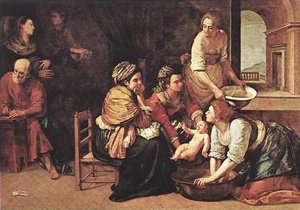 Birth of St John the Baptist - Artemisia Gentileschi
While many associate the dramatic shadows of the Baroque era solely with Caravaggio, Artemisia Gentileschi used that very same tenebrismo to forge a path of unprecedented female agency. In her 1635 masterpiece, The Birth of St John the Baptist , she does not merely replicate the masters; she breathes a raw, psychological realism into the biblical narrative that feels startlingly human. As you stand before this canvas, the stark contrasts of light and dark pull you into a room filled with the palpable tension of childbirth and spiritual awe.
The technical genius lies in her command of chiaroscuro , where radiant glows illuminate figures like Mary Magdalene against deep, velvety shadows, directing the eye through a complex composition of nurturing hands and symbolic objects, such as the contemplative chair and the bowl of care. This profound focus on emotional depth and monumental scale makes it a definitive pillar of the Baroque painting movement. Much like the intense concentration required to execute such a layered oil work, bringing a piece of this caliber into a modern study or home office fosters an atmosphere of sophisticated ambition and intellectual rigor.
The Holy Family at Night, Rembrandt van Rijn (workshop of), c. 1642 - c. 1648 - Rembrandt van Rijn
 The Holy Family at Night, Rembrandt van Rijn (workshop of), c. 1642 - c. 1648 - Rembrandt van Rijn
In The Holy Family at Night , attributed to the workshop of Rembrandt van Rijn, light is not merely an illumination; it is a profound language of intimacy. The artist does not simply reflect a light source—they compose it like a musician crafting a silent sonata. Within this dimly lit interior, the dramatic use of chiaroscuro creates a visceral experience, where flickering warmth dances across the figures of Mary, Joseph, and the infant Jesus, carving their forms out of the surrounding shadows.
This masterpiece stands as a pillar of the Baroque painting movement because it invents its own atmosphere. The interplay of deep tenebrismo and soft, golden highlights directs the eye toward the heart of the domestic sanctuary, turning a religious scene into a deeply human moment of vulnerability. As you observe the textures of worn fabric and the rustic glow of the hearth, the painting acts as a portal, inviting the viewer to experience the quiet grandeur of the Dutch Golden Age. It is a timeless meditation on protection and peace, designed to bring a sense of historical depth and emotional resonance to any curated space.
Conclusion
As the light fades on our journey through the Baroque era, we are left not merely with a list of historical milestones, but with the lingering resonance of shadows and brilliance. These masterpieces do more than occupy space in a museum; they possess a pulse that continues to beat across centuries, inviting us to feel the weight of drama and the tenderness of light. To encounter these works is to witness the profound capacity of the human spirit to capture the ephemeral—the fleeting tear, the sudden burst of sunlight, and the intense movement of the soul.
We invite you to move beyond the role of a distant observer and consider how these textures and emotions might inhabit your own world. Bringing a piece of this era into your home or workspace transforms a room into a sanctuary of reflection, turning walls into windows through which the grace of the past can inspire the creativity of your present. Let the deep chiaroscuro and the sweeping gestures of these legends serve as daily reminders of the beauty found in life's most dramatic moments.
Whether you are drawn to the quiet intensity of a portrait or the grand scale of a celestial scene, we invite you to explore our full collection and find the masterpiece that speaks to your own story, allowing the timeless elegance of the Baroque to live alongside you.