

 Preview
 Send
Send Share
Share
 Details
 Guide
Guide

 Download
 Similars
 X-Ray
X-Ray Diaporama
 Stats
StatsThe Wounded Hound


 Read More
Giclée / Art Print
Museum-quality giclée or canvas print with fast production and flexible finish options. ( Buy Hand Made Painting Switch to Digital Image)




P118B $10

P118H $10

P118W $10

P438Z $10

P508JH $12

P508YH $12

P805H $10

P805Z $10

P919BZ $10

P919G $10

P919XJ $10

P959ZH $10

P968JZ $12

W106C $8

W218G $10

W218JH $8

W218Y $10

W307PJ $10

W316G $10

W316PJ $8

W316Y $10

W398PJ $8

W4111J $10

W500HY $15

W500JH $15

W692G $12

W849H $8

W940BG $15

W953PJ $8




Pick from our preset sizes that match the artwork's original proportions.

Type the width and the height you need, to fit your frame or your wall. A print can only be cut, never made bigger than the picture, so a size with a different shape loses a part of the image. We send you a digital mockup to approve before we print anything. The picture shown on this page does not show the real cut — only the mockup does.
Worldwide Delivery () in 2 weeks instead of standard 4/5 weeks. (24 October)

Free Worldwide Express Shipping

High-Quality Linen Canvas

Full Shipping Insurance

Customs Tax Refund Guarantee

True Color Matching Guarantee

100-Day Return Policy (Defects Only)

100% Money-Back Guarantee

Bulk Discount Offer
 Glass option is only available in size under 110 CM

The Wounded Hound
Giclée / Art Print
Reproduction Size
-


Total Price
$ 81
William Tylee Ranney: A Pioneer of American Genre
William Tylee Ranney (1813-1857) stands as an unexpectedly significant figure in the annals of 19th-century American art. He wasn’t nurtured by the gilded halls of European academies or propelled forward by established artistic lineages; rather, his artistic journey unfolded organically within the burgeoning spirit of a nation aggressively expanding westward—a landscape profoundly shaped by frontier encounters and evolving perceptions of the American experience. His formative years, spent relocating to Fayetteville, North Carolina, at age thirteen to reside with an uncle, witnessed him apprenticed as a tinsmith – a practical trade that instilled in Ranney a grounded sensibility and meticulous attention to detail, qualities which would subsequently become hallmarks of his distinctive artistic style. This period of craftsmanship honed observational skills and fostered a deep understanding of textures and forms inherent in everyday life—a foundation upon which he built his celebrated oeuvre. The irresistible pull of artistry ultimately superseded pragmatic considerations, leading him to Brooklyn in 183- Early Life & Apprenticeship: Ranney’s formative years instilled in him a keen eye for observation and craftsmanship honed through an apprenticeship as a tinsmith. This grounding experience profoundly influenced his artistic sensibilities.
- Brooklyn Residence: Moving to Brooklyn solidified Ranney's commitment to art, establishing him within a vibrant artistic milieu characterized by experimentation and innovation.
The Wounded Hound: A Portrait of Resilience “The Wounded Hound” exemplifies Ranney’s masterful command of American genre painting—a movement that sought to depict scenes from daily life with unflinching realism, capturing the essence of the era's social and psychological landscape. Executed in 1850, this oil on canvas portrays a man and woman seated upon a horse, accompanied by several dogs – notably one exhibiting visible signs of injury or demise. The composition is deliberately austere, prioritizing clarity of form and tonal harmony over elaborate ornamentation. Ranney’s technique—characterized by smooth brushstrokes and subtle gradations of color—creates an atmosphere of contemplative solemnity, reflecting the profound impact of wartime suffering on the human spirit.
Symbolism & Narrative Depth Beyond its surface depiction, “The Wounded Hound” resonates with symbolic significance rooted in the broader context of mid-century American culture. The horse represents strength and nobility—a cornerstone of the frontier ethos—while the dogs embody loyalty and companionship. However, the presence of a deceased canine serves as a poignant reminder of mortality and vulnerability—themes prevalent throughout Ranney’s artistic explorations. The inclusion of birds adds an element of serenity to the scene, juxtaposed against the palpable sorrow conveyed by the central figures.
Historical Context & Influence Ranney's work emerged during a period of intense national introspection following the Civil War—a time marked by profound social upheaval and a yearning for artistic expression that mirrored the anxieties and aspirations of the era. His stylistic innovations—particularly his embrace of tonal realism—anticipated developments in Impressionism, establishing him as a precursor to this transformative movement. “The Wounded Hound” stands as testament to Ranney’s ability to distill complex emotions into visual form—a feat achieved through meticulous observation and unwavering dedication to artistic integrity.
Virginia Museum of Fine Arts Acquisition “The Wounded Hound” resides within the Virginia Museum of Fine Arts collection, where it continues to inspire viewers with its evocative portrayal of human resilience amidst adversity. Its accession number is 2002.538 and was created in 1850. The painting’s provenance underscores its enduring artistic merit—a legacy solidified by scholarly research and meticulous documentation.
Questions & Answers
Is a download available for "The Wounded Hound"?
"The Wounded Hound" by William Tylee Ranney can be downloaded from the artwork's Download page, as a high-resolution digital image download.
Is "The Wounded Hound" by William Tylee Ranney in the public domain?
The copyright answer for "The Wounded Hound" by William Tylee Ranney: the work is in the public domain - its copyright has expired. This determines whether reproductions of the image may be freely made.
Is "The Wounded Hound" held in the country of its creator?
Yes - the artwork is kept in the artist's home country. "The Wounded Hound" is held in United States of America, while William Tylee Ranney was born in United States of America.
Artist Biography
A Pioneer of American Genre: The Life and Art of William Tylee Ranney
William Tylee Ranney, born in Middletown, Connecticut, on May 9, 1813, occupies a pivotal yet often understated position in the narrative of 19th-century American art. He wasn’t a product of European academies or established artistic circles; instead, his journey was one of self-discovery and immersion in the burgeoning spirit of a nation rapidly expanding westward. His early life, marked by a move to Fayetteville, North Carolina, at age thirteen to live with an uncle, saw him apprenticed as a tinsmith – a practical trade that likely honed his observational skills and meticulous attention to detail, qualities that would later define his artistic style. This period of apprenticeship, though seemingly distant from the world of painting, instilled in Ranney a grounded sensibility and a keen eye for the textures and forms of everyday life. The call of artistry eventually proved too strong, leading him to Brooklyn in 1833 to pursue his passion, largely self-taught, yet driven by an innate talent and relentless dedication.From Texas Fields to Canvas: Shaping a Unique Artistic Vision
A defining chapter in Ranney’s life unfolded with his unexpected enlistment in the Texas Army in 1836, following the tragic fall of the Alamo. This wasn't merely a patriotic impulse; it was an immersion into a world vastly different from the quiet landscapes of Connecticut and North Carolina. For nine months, he experienced the raw realities of frontier life, serving under General Sam Houston and even reportedly guarding Santa Anna after the Battle of San Jacinto. These experiences were not simply biographical details but became the very bedrock of his artistic vision. Returning to Brooklyn in 1837, Ranney didn’t paint grand historical narratives of battles or heroes; instead, he focused on the lives of those who inhabited these spaces – the hunters, trappers, pioneers, and ordinary individuals forging a new existence on the American frontier. His early success with “A Courting Scene” at the National Academy of Design in 1838 signaled his arrival as a promising talent, but it was his ability to translate the visceral experiences of Texas into compelling visual stories that truly set him apart. He wasn’t simply *depicting* the West; he was conveying its atmosphere, its challenges, and its inherent drama with an authenticity rarely seen at the time.Master of Genre and Sporting Scenes: A Detailed World
Ranney's artistic style is characterized by a remarkable realism and attention to detail. He wasn’t interested in idealized representations or romanticized visions; he sought to capture life as it was, with all its complexities and nuances. His paintings are populated with figures rendered with sculptural solidity, their clothing and equipment meticulously researched and depicted. This dedication extended to the landscapes themselves, which were not merely backdrops but integral components of the narrative. “On the Wing,” perhaps his most celebrated work – existing in multiple versions – exemplifies this approach. The painting captures a fleeting moment of sporting success with an almost photographic clarity, showcasing Ranney’s mastery of light, texture, and composition. Similarly, works like "Prairie Burial" and "Scouting Party" are imbued with a sense of quiet drama and psychological depth, revealing the hardships and resilience of those who ventured into the unknown. Beyond Western scenes, Ranney also excelled in sporting art, particularly depictions of duck hunting and equestrian subjects, and historical genre paintings focusing on everyday life during the American Revolution.Legacy and Significance: A Voice of Pre-Civil War America
By the early 1850s, Ranney had established himself as a leading figure in American art, contributing regularly to exhibitions at the National Academy of Design and the American Art Union. His move to West Hoboken, New Jersey, in 1853 provided him with both a studio overlooking the Manhattan skyline and access to the natural landscapes that continued to inspire his work. He was considered the first major genre painter to truly establish himself in New Jersey, and his influence extended far beyond the state’s borders. Tragically, Ranney's career was cut short by illness; he died on November 18, 1857, likely from tuberculosis, at the age of forty-four. Despite his relatively brief life, his impact on American art is undeniable. He helped to popularize depictions of the American West and contributed significantly to the development of genre painting, focusing on the lives of ordinary people rather than grand historical events or aristocratic portraits. His contemporaries recognized his importance; one observer noted that “a specimen of Ranney is indispensable wherever a collection of American art exists.” Today, William Tylee Ranney stands as a vital link between the early traditions of American landscape and genre painting and the more complex artistic movements that would emerge in the aftermath of the Civil War. His work remains a powerful testament to the spirit of exploration, resilience, and the enduring beauty of everyday life in 19th-century America.Notable Works
- "On the Wing"
- "Prairie Burial"
- "Scouting Party"
- "Hunting Wild Horses"
- "Trapper's Last Shot"
- "The Match Boy"
- "Old Oaken Bucket"
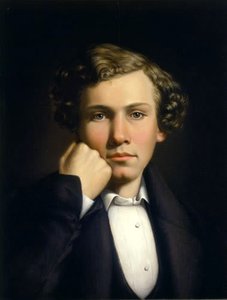
William Tylee Ranney
1813 - 1857 , United States of America
Quick Facts
- Full Name: William Tylee Ranney
- Nationality: American
- Date Of Birth: 1813
- Date Of Death: 1857
- Place Of Birth: Middletown, United States of America
- Notable Artworks:
- On the Wing
- Prairie Burial
- Scouting Party
- The Retrieve
- Marion Crossing the Peedee
- Artistic Movement Or Style: Genre painting, Romanticism
- Artists Or Movements Influenced By This Artist: American genre painters
Related Articles
William Aiken Walker: A Southern Luminist's Vision of River Life & Antebellum Society
Explore the evocative paintings of William Aiken Walker, a master of Southern Luminism. Discover his poignant depictions of post-Civil War life, African American culture & antebellum landscapes. Learn about this important artist's legacy.

William Owen: A Poetic Vision of War & Landscape in British Modernism
Explore the poignant war poetry of Wilfred Owen, a key figure in British Modernism. Discover his innovative style, themes of loss & camaraderie, and lasting impact on 20th-century literature. Analysis & historical context included.

Frederick William Jackson: Capturing the American West Through Luminist Vision & Narrative Detail
Explore the captivating works of Frederick William Jackson, a pioneer of Western realism & Luminist painting. Discover his atmospheric landscapes, depictions of Native American life, and lasting legacy. Learn more at OriginalUniqueArt.

Grant Wood & American Regionalism: Identity, Myth & the Rural Landscape
Explore the world of Grant Wood & American Regionalism with OriginalUniqueArt. Discover the symbolism behind 'American Gothic', recurring themes, and the movement's lasting impact on art history. High-quality reproductions available.
William Henry Hope: Illuminating American Genre Painting Through Luminosity & Narrative
Explore the captivating landscapes & genre scenes of William Henry Hope, a pivotal Canadian artist. Discover his mastery of light, realism, and narrative in this insightful guide. Learn about collecting his work & its place in art history.


