Preview
 Send
Send Share
Share
 Details
 Guide
Guide

 Download
 Similars
 X-Ray
X-Ray Diaporama
 Stats
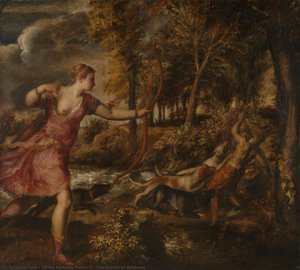
StatsPerseus and Andromeda
 Oil On Canvas
- WallArt
- Renaissance Revival
 1556
1556- 19th Century
 175.0 x 190.0 cm
 Wallace Collection
 Read More
Giclée / Art Print
Museum-quality giclée or canvas print with fast production and flexible finish options. ( Buy Hand Made Painting Switch to Digital Image)




P118B $10

P118H $10

P118W $10

P438Z $10

P508JH $12

P508YH $12

P805H $10

P805Z $10

P919BZ $10

P919G $10

P919XJ $10

P959ZH $10

P968JZ $12

W106C $8

W218G $10

W218JH $8

W218Y $10

W307PJ $10

W316G $10

W316PJ $8

W316Y $10

W398PJ $8

W4111J $10

W500HY $15

W500JH $15

W692G $12

W849H $8

W940BG $15

W953PJ $8




Pick from our preset sizes that match the artwork's original proportions.

Type the width and the height you need, to fit your frame or your wall. A print can only be cut, never made bigger than the picture, so a size with a different shape loses a part of the image. We send you a digital mockup to approve before we print anything. The picture shown on this page does not show the real cut — only the mockup does.
Worldwide Delivery () in 2 weeks instead of standard 4/5 weeks. (25 October)

Free Worldwide Express Shipping

High-Quality Linen Canvas

Full Shipping Insurance

Customs Tax Refund Guarantee

True Color Matching Guarantee

100-Day Return Policy (Defects Only)

100% Money-Back Guarantee

Bulk Discount Offer
 Glass option is only available in size under 110 CM

Perseus and Andromeda
Giclée / Art Print
Reproduction Size
-


Total Price
$ 81
A Heroic Encounter in Oil: The Timeless Allure of Perseus and Andromeda
In the grand tapestry of nineteenth-century American art, few works capture the dramatic tension of classical mythology as vividly as Titian Ramsay Peale II’s Perseus and Andromeda. This monumental oil on canvas is far more than a mere historical record; it is a breathtaking window into a world where divine intervention meets mortal peril. As the viewer's eye meets the canvas, they are immediately swept into a scene of high drama, where the salt spray of the sea seems to mingle with the heavy, atmospheric clouds of a tempestuous sky. Peale, a descendant of one of America’s most illustrious artistic lineages, masterfully bridges the gap between the burgeoning identity of the New World and the refined, humanist ideals of the Old World Renaissance.The narrative strength of the piece lies in its masterful execution of chiaroscuro, where deep, velvety shadows clash against brilliant highlights to sculpt the figures from the darkness. At the heart of this composition is the pyramidal arrangement of the protagonists, a technique that provides both stability and a focal point for the unfolding rescue. Perseus, descending through the air with his sword drawn, embodies the very essence of righteous action and heroic determination. Below him, Andromeda stands bound to the rugged rocks, her vulnerability palpable against the encroaching threat of Cetus, the fearsome sea monster. The artist’s brushwork, though meticulous in its rendering of texture, retains a certain dynamism that breathes life into the swirling waters and the muscular tension of the scene.
Symbolism and the Echo of Antiquity
Beyond the immediate spectacle of the rescue, Peale weaves a complex web of symbolism that rewards the contemplative observer. Every element within this mythological landscape serves a higher purpose in the storytelling. The chains encircling Andromeda are not merely physical restraints but symbols of the human condition—the weight of fate and the vulnerability of innocence. Yet, amidst this peril, there is an unmistakable sense of hope; the birds circling high above the fray act as celestial messengers, signifying freedom and the approaching dawn of salvation. Even the subtle presence of a lion in the background serves to mirror Perseus’s own indomative courage, grounding the mythological event in a landscape of primal strength.
For the discerning collector or interior designer, this painting offers an unparalleled opportunity to introduce a sense of narrative depth and classical elegance into a space. Whether placed in a grand library or as a commanding centerpiece in a contemporary salon, Perseus and Andromeda commands attention through its rich color palette and profound emotional resonance. It is a work that does not merely decorate a wall but enriches the very atmosphere of a room, inviting guests to linger and lose themselves in the eternal struggle between darkness and light, between the monster and the hero.
Questions & Answers
Is "Perseus and Andromeda" by Titian Ramsay Peale II in the public domain, and why?
"Perseus and Andromeda" by Titian Ramsay Peale II is in the public domain - its copyright has expired. Copyright terms are measured from the artist's death, and Titian Ramsay Peale II died in 1885.
How harmonious are the colors of "Perseus and Andromeda" by Titian Ramsay Peale II?
"Perseus and Andromeda" by Titian Ramsay Peale II displays a balanced harmony color harmony.
What stage of Titian Ramsay Peale II's career does "Perseus and Andromeda" (1556) belong to?
The 1556 date places "Perseus and Andromeda" in the Mature Period of Titian Ramsay Peale II's development.
Artist Biography
The intersection of science and classical form
To look at the work of Titian Ramsay Peale II is to see a deliberate attempt to reconcile the rigorous demands of 19th-century natural history with the aesthetic weight of the High Renaissance. Born in Philadelphia in 1799, he did not merely inherit a famous name as the son of Charles Willson Peale; he inherited a specific way of seeing. His early years were defined by this dual focus. He was an explorer and a scientific illustrator long before he was purely a painter. During the Stephen Harriman Long expedition to the Rocky Mountains between 1819 and 1820, his task was documentation. He recorded flora and fauna with a precision that required anatomical accuracy. This period of fieldwork provided the technical foundation for his later canvases. He understood how light hit a wing or how texture defined a specimen.
This scientific training prevented his later religious and mythological works from becoming mere abstractions. When he turned to subjects like St. Augustine, he applied the same scrutiny to the folds of a garment as he would to a botanical specimen. He utilized techniques such as sfumato to soften edges, yet the underlying structure remained grounded in physical reality. His work exists in the tension between the observational eye of a naturalist and the stylistic ambitions of Venetian colorism.
A technical bridge between eras
Peale’s development was marked by an refusal to adhere to the purely utilitarian trends of American art in his era. While many contemporaries focused on straightforward portraiture or landscape, he looked backward to the principles of artists like Rubens and the Venetian masters. This is most evident in his handling of color and light. He sought a luminous quality that mirrored the Old World traditions. His religious paintings, such as The Holy Family with a Shepherd, demonstrate a controlled use of oil paint to build depth through layers. He did not rely on superficial beauty; he relied on the structural application of pigment.
His technical repertoire was broad and functional. He worked across several media to achieve his goals:
- Watercolor and graphite for scientific documentation
- Oil on canvas for religious and mythological subjects
- Lithography and ink for illustration
- Photography, which he adopted as an amateur later in life
This versatility allowed him to move between the microscopic detail of a Cicada watercolor and the atmospheric scale of a landscape. He was not interested in style for its own sake, but in how specific techniques could communicate the weight of his subject matter.
The legacy of an overlooked naturalist
For much of the 20th century, Peale’s significance was obscured by the sheer scale of the Peale family's broader impact on American culture. He did not fit the mold of the purely commercial portraitist. His career included roles as a chief naturalist for the United States Exploring Expedition from 1838 to 1842 and work within the United States Patent Office. These were not distractions from his art; they were the source of it. The precision found in his wildlife drawings informed the dignity he brought to his classical subjects.
Today, the value of his work lies in this specific synthesis. He represents a moment when American identity was being formed through the simultaneous exploration of new territories and the reinterpretation of ancient artistic values. His paintings, now held in institutions such as the Uffizi Gallery and the Scottish National Gallery of Modern Art, remain relevant because they refuse to separate the intellect from the aesthetic. He proved that scientific observation and classical reverence could occupy the same canvas.

Titian Ramsay Peale II
1799 - 1885
Related Articles

Charles Willson Peale: Portraiture, Enlightenment Ideals & Shaping American Identity
Explore the life & art of Charles Willson Peale – Revolutionary portraitist, scientist, and founder of America’s first museum. Discover his iconic paintings of Washington & the Enlightenment ideals that shaped a nation.

Titian Ramsay Peale II: A Legacy of Botanical Precision & Artistic Innovation
Explore the life & art of Titian Ramsay Peale II, a master of botanical precision and wildlife painting. Discover his legacy bridging art & natural history at OriginalUniqueArt.
Neo-Classicism's Greatest Hits: 10 Masterpieces for Your Home |
Journey through Neo-Classicism's finest! Explore 10 iconic masterpieces by David, Ingres & Canova. Discover art history, techniques & timeless beauty – perfect for inspiring your home decor. Find museum-quality reproductions at

Grant Wood & American Regionalism: Identity, Myth & the Rural Landscape
Explore the world of Grant Wood & American Regionalism with OriginalUniqueArt. Discover the symbolism behind 'American Gothic', recurring themes, and the movement's lasting impact on art history. High-quality reproductions available.

American Realism's Defining Works: 10 Masterpieces for Your Home
Explore 10 defining American Realism masterpieces – Hopper, Homer & more. Discover the stories behind these iconic paintings and bring timeless art to your home with OriginalUniqueArt's museum-quality reproductions. Explore the full collection online.