Text size

() ·

A painting made for you, by hand

A Quad (c.1900)

Hand Made Oil Reproduction

Hand-painted oil on canvas in your size and frame, made to order by our artists. ( Switch to Print Switch to Digital Image)

Collectible Description

Artist Biography

Discover Sir William Nicholson (1872-1949), a British painter celebrated for striking portraits, elegant still lifes & innovative woodcuts. Explore his Beggarstaff partnership and lasting influence on early 20th-century art.

from ·

Chapter 1

How large should it be?

Slide to change the size; the picture on the left shows the frame at its real width. The proportions of the original are kept.

Standard
custom
CM
INCH

Pick from our preset sizes that match the artwork's original proportions.

width
height

Type the width and the height you need, to fit your frame or your wall. This is hand-painted, so for a size with a different shape the artist can paint a bit more around the picture, or cut a bit — you choose. We send you a digital mockup to approve before the painting starts. The picture shown on this page does not show the real result — only the mockup does.

Chapter 2

How should it arrive?

Choose the edges of the stretched canvas

Choose your frame

Corner sample of the WhiteWrap canvas edge finish, stretched on solid wood bars
White $1
Corner sample of the BlurSideWrap canvas edge finish, stretched on solid wood bars
Blurside $1
Corner sample of the ExtendedWrap canvas edge finish, stretched on solid wood bars
Extended $1
Corner sample of the P118B picture frame: moulded polystyrene, 5 cm wide and 3 cm thick
P118B $10
Corner sample of the P118H picture frame: moulded polystyrene, 5 cm wide and 3 cm thick
P118H $10
Corner sample of the P118W picture frame: moulded polystyrene, 5 cm wide and 3 cm thick
P118W $10
Corner sample of the P438Z picture frame: moulded polystyrene, 5.5 cm wide and 3.5 cm thick
P438Z $10
Corner sample of the P508JH picture frame: moulded polystyrene, 7 cm wide and 3.5 cm thick
P508JH $12
Corner sample of the P508YH picture frame: moulded polystyrene, 7 cm wide and 3.5 cm thick
P508YH $12
Corner sample of the P805H picture frame: moulded polystyrene, 5 cm wide and 3.5 cm thick
P805H $10
Corner sample of the P805Z picture frame: moulded polystyrene, 5 cm wide and 3.5 cm thick
P805Z $10
Corner sample of the P919BZ picture frame: moulded polystyrene, 7 cm wide and 3.5 cm thick
P919BZ $10
Corner sample of the P919G picture frame: moulded polystyrene, 7 cm wide and 3.5 cm thick
P919G $10
Corner sample of the P919XJ picture frame: moulded polystyrene, 7 cm wide and 3.5 cm thick
P919XJ $10
Corner sample of the P959ZH picture frame: moulded polystyrene, 5 cm wide and 3 cm thick
P959ZH $10
Corner sample of the P968JZ picture frame: moulded polystyrene, 6 cm wide and 4 cm thick
P968JZ $12
Corner sample of the W106C picture frame: solid wood, 5 cm wide and 3 cm thick
W106C $8
Corner sample of the W218G picture frame: solid wood, 5 cm wide and 3 cm thick
W218G $10
Corner sample of the W218JH picture frame: solid wood, 5 cm wide and 3 cm thick
W218JH $8
Corner sample of the W218Y picture frame: solid wood, 5 cm wide and 3 cm thick
W218Y $10
Corner sample of the W307PJ picture frame: solid wood, 6 cm wide and 3 cm thick
W307PJ $10
Corner sample of the W316G picture frame: solid wood, 6 cm wide and 3 cm thick
W316G $10
Corner sample of the W316PJ picture frame: solid wood, 6 cm wide and 3 cm thick
W316PJ $8
Corner sample of the W316Y picture frame: solid wood, 6 cm wide and 3 cm thick
W316Y $10
Corner sample of the W398PJ picture frame: solid wood, 5 cm wide and 3 cm thick
W398PJ $8
Corner sample of the W4111J picture frame: solid wood, 6.5 cm wide and 3.5 cm thick
W4111J $10
Corner sample of the W500HY picture frame: solid wood, 7 cm wide and 5 cm thick
W500HY $15
Corner sample of the W500JH picture frame: solid wood, 7 cm wide and 5 cm thick
W500JH $15
Corner sample of the W692G picture frame: solid wood, 8 cm wide and 4 cm thick
W692G $12
Corner sample of the W849H picture frame: solid wood, 5 cm wide and 3 cm thick
W849H $8
Corner sample of the W940BG picture frame: solid wood, 7.5 cm wide and 4.5 cm thick
W940BG $15
Corner sample of the W953PJ picture frame: solid wood, 6 cm wide and 3.5 cm thick
W953PJ $8
Corner sample of the H24-GOLD picture frame: carved wood with gesso, 10 cm wide and 6 cm thick
H24-GOLD $30
Corner sample of the H24-SILVER picture frame: carved wood with gesso, 10 cm wide and 6 cm thick
H24-SILVER $30
Corner sample of the H36-GOLD picture frame: carved wood with gesso, 15 cm wide and 6.5 cm thick
H36-GOLD $45
Corner sample of the H36-SILVER picture frame: carved wood with gesso, 15 cm wide and 6.5 cm thick
H36-SILVER $45
Frame preview
Framed

Moulding: . Overall size with the frame: .

Chapter 3

Who paints it, and should anything change?

Examples of what can be changed: Replace face with customer photo; Add pet (e.g., replace cat with dog); Include hidden message in background; Change background landscape or elements.
After order, OriginalUniqueArt.com team will email client for instructions and provide a mockup preview

Worldwide Delivery () in 3/4 weeks instead of standard 5 weeks. (4 November). No compromise on quality.

Chapter 4

The finishing touches

A nameplate, as in a museum?

Engraved Bronze Plaque Details

This elegant plaque features the artist's name and the title of the artwork, finely engraved for a timeless presentation.

It is made from bronze with a refined, elegant finish. The text is precisely laser-engraved for a sharp and permanent result. Measuring 9x2 cm, the plaque is compact yet easy to read. It's built to be durable and scratch-resistant, offering a professional, museum-quality look. Mounting is simple thanks to the included adhesive backing.

Transparent Acrylic Plaque Details

The plaque includes essential engraved details such as the artist's name, the title of the artwork, the date it was created, the type of media used-like oil on canvas or watercolor-a brief description of the piece, and a QR code that links to the complete artwork information.

It is crafted from clear acrylic, offering a sleek, modern appearance. The text is UV-engraved in black to ensure strong visual contrast. With a size of 10x15 cm, it ensures optimal readability. It comes equipped with two metal hooks for secure wall mounting. The plaque is designed to be weather-resistant, making it suitable for various environments, and it includes interactive features that work seamlessly with smartphone scanning.

Black Acrylic Plaque Details

This elegant plaque includes engraved information such as the artist's name, the title of the artwork, the date it was created, the type of media used (like oil on canvas or watercolor), a short description of the artwork, and a QR code for quick access to more information.

The plaque itself is made from refined black acrylic with a premium finish. The text is laser-engraved in white for high contrast and readability. Its size is 10x15 cm, designed to be easy to read. It comes with two metal hooks for professional mounting. The design is sleek and fits any interior style. It is also weather-resistant and durable, with built-in digital integration for mobile compatibility.

A protective varnish?

When do you need it?

Chapter 5

Your painting, as you ordered it

A Quad (c.1900)

Reproduction Medium

Reproduction Size

-

Elite Senior Artist

More detail, finesse, and extra production time

-

Reproduction Frame

-

-

For artworks or reproductions larger than 105 cm (approximately 41 inches) on any side, the frame will be shipped as a kit, disassembled. This method ensures safe delivery and prevents damage during transport.

Professional assembly required - this is not a DIY product.
The kit must be assembled and the canvas stretched by an experienced professional framer, using wood glue (not supplied), a canvas stretching plier and clamps to hold the bars square while the glue dries. Incorrect assembly or uneven canvas tension can permanently damage the artwork and is not covered by our warranty.

  • All solid wood bars are included, precisely cut to size.

  • Assembled with the screws provided, plus wood glue for the corner joints, which is not supplied and must be sourced by your framer.

  • Professional tools are required and not included: a canvas stretching plier (tensioner) and clamps to hold the bars square while the glue dries.

Important:
The corner joints require wood glue, the bars must be held with clamps until the glue is fully dry, and tightening the canvas on the assembled frame requires a canvas stretching plier. None of these are included in the kit. Please arrange an experienced professional framer before ordering this size.

Nameplate

-

-

Protective Varnish

Glossy Varnish (enhances colors, protects against light/moisture)

-

Customize My Artwork

Examples of what can be changed: Replace face with customer photo; Add pet (e.g., replace cat with dog); Include hidden message in background; Change background landscape or elements.

-

Urgent

Worldwide Delivery () in 3/4 weeks instead of standard 5 weeks. (4 November). No compromise on quality.

-

Express Shipping

Worldwide Delivery () in 5 weeks. (11 November).

Included

Total Price

$ 300

Total Price $ 300

Glass option is only available in size under 110 CM

Included with every order

  • Free Worldwide Express Shipping
  • High-Quality Linen Canvas
  • Full Shipping Insurance
  • Customs Tax Refund Guarantee
  • True Color Matching Guarantee
  • 100-Day Return Policy (Defects Only)
  • 100% Money-Back Guarantee
  • Bulk Discount Offer

A Quad (c.1900): A Monumental Vision of British Landscape

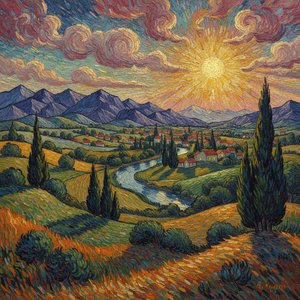
Sir William Nicholson’s “A Quad” stands as an arresting testament to the burgeoning landscape movement of early 20th century Britain, capturing a dramatic vista of Dartmoor National Park with breathtaking precision and emotional resonance. Painted around 1900, this monumental canvas exemplifies Nicholson's masterful command of Impressionistic principles blended seamlessly with Symbolist influences—a stylistic fusion that distinguishes it from its contemporaries.

The painting depicts a vast expanse of moorland under a turbulent sky ablaze with hues of crimson and ochre. Nicholson skillfully employs loose brushstrokes to convey the dynamism of the weather, mirroring the rugged beauty of Dartmoor’s terrain. Foreground elements—rolling hillsides dotted with heather—are rendered in muted tones, creating depth and perspective that draws the viewer into the scene. However, it is the sky itself – dominated by swirling clouds – which commands attention, conveying a palpable sense of atmospheric drama.

  • Style: Impressionistic Landscape
  • Technique: Oil on Canvas; Impasto Texture
  • Historical Context: Dartmoor landscape painting gained prominence during the Aesthetic Movement, reflecting a fascination with untamed nature and Romantic ideals.

Beyond its aesthetic merits, “A Quad” resonates with deeper symbolic significance. Nicholson’s deliberate use of color—particularly the fiery reds—suggests passion and energy, mirroring the primal forces shaping Dartmoor's environment. The composition itself emphasizes grandeur and solitude, inviting contemplation on humanity’s relationship with the natural world. It speaks to a yearning for escape from urban pressures and an appreciation for the sublime beauty found in untouched wilderness.

Nicholson’s artistic partnership with Mabel Pryde profoundly shaped his creative vision. Together they established the Pryde Studio, fostering innovation and experimentation within British art circles. This collaborative spirit is evident in “A Quad,” where Nicholson's meticulous observation of Dartmoor combined with Pryde’s encouragement to push boundaries resulted in a truly unforgettable artwork.

About Sir William Nicholson

Born in Newark-on-Trent in 1872, Sir William Nicholson (1872–1949) was a British painter whose career spanned diverse mediums and styles. His father, an engineer and Conservative MP, instilled discipline alongside an appreciation for artistic pursuits—a duality that profoundly influenced his artistic development.

Early training under Hubert von Herkomer honed Nicholson’s technical skills while introducing him to Mabel Pryde, whom he married and with whom he formed a lifelong creative partnership. This collaboration propelled them to establish the Pryde Studio, nurturing innovation and fostering dialogue within British art.

Nicholson's artistic output encompassed portraits, landscapes, woodcuts, and decorative murals—each reflecting his unwavering commitment to exploring themes of emotion, memory, and human experience. His enduring legacy resides in his ability to capture the essence of his subjects with remarkable sensitivity and stylistic brilliance.

Connections to Other Artists

Nicholson’s artistic trajectory intersected with that of fellow British painters who championed landscape painting during the Aesthetic Movement. Notably, John Kyffin Williams—a Welsh artist celebrated for capturing Dartmoor's ethereal beauty—shared Nicholson’s fascination with portraying untamed landscapes using bold impasto technique.

Furthermore, Frank Brangwyn’s monumental murals and dramatic depictions of exotic locales mirrored Nicholson’s ambition to convey grandeur and emotional intensity. These artists collectively contributed to shaping the artistic landscape of their time, reflecting a shared desire to engage viewers on both an aesthetic and intellectual level.

Further Exploration

The Sir William Dunn School of Pathology—a pioneering institution dedicated to immunology research—represents a contrasting facet of Nicholson’s cultural milieu. Founded in Oxford, it exemplifies the scientific advancements that underpinned Victorian society and fostered dialogue between art and science.

Similarly, “A Quad” embodies the spirit of artistic experimentation championed by figures like Sir William Blake Richmond—a Pre-Raphaelite painter who sought to infuse his canvases with symbolic meaning. These artists’ endeavors underscore the multifaceted nature of British culture during the Edwardian era.

Questions & Answers

What use and space are recommended for "A Quad (c.1900)" by Sir William Nicholson?

"A Quad (c.1900)" by Sir William Nicholson is recommended for accent, ideally in a living room. Use and space together guide where a reproduction fits.

How old was Sir William Nicholson when creating "A Quad (c.1900)" in 1900?

When "A Quad (c.1900)" was created in 1900, Sir William Nicholson - born in 1872 - was 28 years old.

Who sells hand-painted copies of "A Quad (c.1900)" by Sir William Nicholson?

"A Quad (c.1900)" is available as a hand-painted oil reproduction on linen canvas. The order can be placed on its Hand-Painted Reproduction page, with a choice of sizes.

More about this painting

Preview AR preview Switch to Print Switch to Digital Image Send
Details Guide Add to favorites Download Similars X-Ray Diaporama Q&A Stats

In numbers

  • 1900the year it was painted
  • 29frames to choose from
  • standard sizes, in its own proportions
  • 5weeks to paint and deliver it
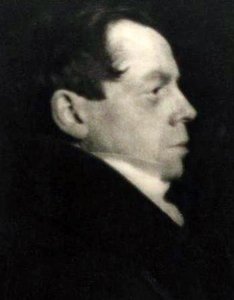
Sir William Nicholson

Sir William Nicholson

1872 - 1949, United Kingdom

Quick facts about Sir William Nicholson

  • Full Name: Sir William Newzam Prior Nicholson
  • Nationality: British
  • Date Of Birth: 1872
  • Date Of Death: 1949
  • Place Of Birth: Newark, United Kingdom
  • Notable Artworks:
    • Lady in Furs
    • The Lowestoft Bowl
    • Plaza de toros, Malaga
  • Artistic Movement Or Style: Still life, portraiture
  • Artists Who Influenced This Artist:
    • James Pryde
    • Whistler

Artist Biography

Early Life and Artistic Beginnings

Sir William Newzam Prior Nicholson, born in Newark-on-Trent in 1872, emerged from a background that blended industrial pragmatism with artistic sensibility. His father, a successful engineer and Conservative MP, instilled a sense of discipline, while his mother’s lineage connected him to the aesthetic traditions of Oxfordshire. From a young age, Nicholson displayed an aptitude for art, nurtured by lessons from William Cubley, a local painter who himself traced his artistic roots back to Sir Joshua Reynolds. This early exposure laid the foundation for a career that would span diverse mediums and styles. A brief stint at Hubert von Herkomer’s art school proved pivotal, not only for honing his skills but also for introducing him to Mabel Pryde, who would become his wife and an essential collaborator in his burgeoning artistic journey. It was through Mabel that he met her brother, James Pryde, a partnership that would soon revolutionize the world of graphic design.

The Beggarstaffs and a Revolution in Poster Art

The collaboration between William Nicholson and James Pryde, known as “J. & W. Beggarstaff,” marked a turning point in British visual culture. Rejecting the prevailing ornate aesthetic of Victorian posters, they embraced a bold simplicity characterized by striking silhouettes, flat planes of color, and a deliberate rejection of traditional perspective. Their designs weren’t merely advertisements; they were statements—powerful, graphic compositions that captured the public's imagination. Posters for productions like Don Quixote and publications such as Harper’s Magazine became instantly recognizable, influencing a generation of artists and designers. This period wasn’t simply about commercial art; it was about redefining visual communication itself. The Beggarstaffs’ work challenged conventions, paving the way for modern graphic design and establishing Nicholson's reputation as an innovator. Their impact resonated far beyond the realm of posters, influencing illustration and even painting with its emphasis on strong form and deliberate composition.

From Woodcuts to Portraits: A Developing Style

Following the dissolution of the Beggarstaff partnership, Nicholson embarked on a period of stylistic exploration. He turned his attention to woodcut and wood-engraving, techniques that allowed him to further refine his mastery of line and form. Encouraged by the influential James McNeill Whistler, he embraced these methods, producing intricate and evocative prints that showcased his growing artistic maturity. These works demonstrated a remarkable ability to capture essence with minimal detail, a quality that would become a hallmark of his style. Simultaneously, Nicholson began to establish himself as a portrait painter, receiving commissions from prominent figures of the era. His portraits weren’t merely likenesses; they were insightful studies of character, revealing the inner lives of his subjects through subtle nuances of expression and pose. Works like *Lady in Furs, Mme. P.* exemplify this skill, capturing not just physical appearance but also a sense of personality and social standing.

Still Life, Landscape, and Lasting Legacy

In the later stages of his career, Nicholson increasingly focused on still life and landscape painting. His still lifes, such as *The Lowestoft Bowl*, are celebrated for their exquisite attention to detail, harmonious color palettes, and a quiet sense of intimacy. He imbued everyday objects with a poetic quality, elevating them beyond mere representation to become symbols of beauty and contemplation. His landscapes, often depicting scenes from his travels in Spain and Italy, reveal a sensitivity to light and atmosphere, capturing the essence of place with remarkable skill. Throughout his life, Nicholson remained a versatile artist, constantly experimenting with new techniques and approaches. He authored children’s books, designed for the theatre, and continued to produce prints alongside his paintings. Sir William Nicholson's influence extends beyond his own prolific output; he inspired generations of artists with his commitment to craftsmanship, his innovative spirit, and his ability to find beauty in the ordinary. His work remains a testament to the power of art to illuminate the human experience and transform our perception of the world around us. He died in 1949, leaving behind a rich artistic legacy that continues to captivate and inspire today.

Quick Facts

  • Notable elements or techniques: Bold brushstrokes, expressive color palette
  • Medium: Oil on canvas
  • Subject or theme: Architecture
  • Movement: Post-Impressionism
  • Location: Private Collection
  • Influences: Cubism

Art Quiz

There is only one correct answer for each question.

Question 1:
What artistic movement is Sir William Nicholson primarily associated with?
Question 2:
The painting depicts a grand mansion characterized by what architectural feature?
Question 3:
Who collaborated with Nicholson in the Beggarstaff Partnership, contributing to iconic graphic design?
Question 4:
What technique is prominently used in Sir William Nicholson's artwork 'A Quad', creating a textured surface?
Question 5:
The painting’s overall impression is one of what historical period?