

Early Life & Artistic Beginnings: From Graphic Design to Portraiture
The art of the United Kingdom refers to all forms of visual art in or associated with the country since the formation of the Kingdom of Great Britain in 1707 and encompasses English art, Scottish art, Welsh art and Irish art, and forms part of Wester...
William Newzam Prior Nicholson, born in 1872, embarked on a journey that would see him become a defining figure of British art at the turn of the century. His early artistic inclinations were nurtured not within the hallowed halls of traditional academies – though he briefly attended both Herkomer’s School and the Académie Julian in Paris – but rather through practical application. Initially, Nicholson gravitated towards graphic design, a burgeoning field that offered immediate creative expression. This period proved formative, instilling in him a keen sense of composition, color theory, and the power of visual communication. However, it was his move to Denham, Buckinghamshire, in 1893, alongside his wife Mabel Pryde, that truly ignited his passion for painting. The rustic charm of village life provided a fertile ground for artistic exploration, though financial constraints initially led him down the path of commercial illustration.
This early work wasn’t merely a means to an end; it was a crucial stage in Nicholson's development. He honed his observational skills, learning to distill form and capture essence with remarkable precision. The influence of Whistler, whom he met around 1900, proved pivotal, encouraging him to embrace painting as a primary pursuit. Whistler’s emphasis on tonal harmony and atmospheric effects resonated deeply with Nicholson, laying the groundwork for his distinctive style.
The Beggarstaff Partnership: A Revolution in British Poster Art
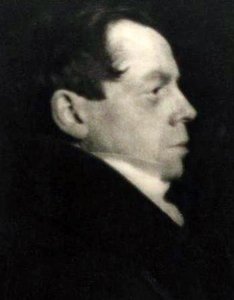 Sir William Nicholson
Discover Sir William Nicholson (1872-1949), a British painter celebrated for striking portraits, elegant still lifes & innovative woodcuts. Explore his Beggarstaff partnership and lasting influence on early 20th-century art.
Nicholson's artistic trajectory took an unexpected turn with the formation of the Beggarstaffs – a collaboration with his brother-in-law James Pryde. Operating under this pseudonym, they unleashed a wave of strikingly original posters that challenged the prevailing aesthetic norms of Victorian advertising. Rejecting the saccharine sentimentality and meticulous realism common at the time, the Beggarstaffs embraced bold simplicity, flattened perspectives, and a deliberately naive quality. Their designs were characterized by strong silhouettes, unconventional typography, and a playful disregard for conventional perspective.
The impact of their work was immediate and profound. They injected a much-needed dose of modernity into British graphic design, influencing generations of artists and designers to come. While the partnership was relatively short-lived – lasting only from 1894 to 1896 – its legacy endures as a testament to the power of collaboration and the transformative potential of innovative visual communication. The Beggarstaffs’ posters weren't simply advertisements; they were works of art in their own right, elevating the status of commercial design and paving the way for new forms of artistic expression.
Nicholson's Post-Impressionist Landscapes: Capturing Light and Atmosphere
As Nicholson transitioned fully into painting, he found himself drawn to the landscapes of Britain. Inspired by Whistler’s atmospheric approach, his early landscapes were characterized by muted tones and a subtle exploration of light and shadow. A move to Rottingdean in 1909 marked a turning point, as he began to experiment with bolder colors and looser brushwork, embracing elements of Post-Impressionism. However, Nicholson’s interpretation of this movement was uniquely his own – less concerned with the subjective emotional intensity of Van Gogh or Gauguin, and more focused on capturing the serene beauty of the English countryside.
Works like “The Windmill, Brighton Downs” (1910) exemplify this approach. The painting is a study in tranquility, rendered in soft, harmonious tones that evoke a sense of peace and stillness. Nicholson wasn’t striving for photographic realism; instead, he sought to convey the *feeling* of being present in the landscape – the gentle breeze, the warmth of the sun, the subtle nuances of light and color. This ability to capture atmosphere is a hallmark of his Post-Impressionist landscapes.
Portraits of Distinction: Character, Style, and Social Commentary
 William Henry Davies
1928 Portrait of William Henry Davies by Sir William Nicholson. Explore this textured oil painting featuring a contemplative subject & formal attire. A unique piece of British art.
While Nicholson’s landscapes are admired for their atmospheric beauty, it was his portraits that truly established his reputation as a leading British artist. He possessed an extraordinary ability to capture not just the likeness of his sitters, but also their character, intellect, and social standing. His portraiture wasn't merely about representation; it was about revealing something deeper – the inner life of the individual.
Portraits such as “William Henry Davies” (1928) and “Sir William Henry Bragg” (1932) demonstrate his mastery of technique and psychological insight. The portraits are rendered with remarkable precision, yet they avoid any hint of superficiality. Nicholson’s use of texture and color adds depth and dimension to the compositions, while his careful attention to detail conveys a sense of dignity and respect for his subjects. He wasn't afraid to subtly incorporate elements of social commentary into his work, hinting at the complexities of modern life.
Beyond Painting: Woodcuts, Illustration & Nicholson’s Versatile Talent
Nicholson’s artistic talents extended far beyond painting and portraiture. He was a prolific printmaker, particularly renowned for his innovative woodcuts. These works are characterized by their bold simplicity, striking compositions, and masterful use of line and form. His illustrations were equally impressive, showcasing his versatility and ability to adapt his style to different mediums.
Nicholson’s commitment to experimentation led him down a variety of creative paths throughout his career. He even authored children's books, demonstrating his playful side and his desire to reach a wider audience. This willingness to explore new avenues of expression is a testament to his artistic curiosity and his unwavering dedication to the craft. His woodcuts, in particular, represent a significant contribution to British printmaking, influencing generations of artists with their elegant simplicity and technical brilliance.
Legacy and Influence: A Lasting Impact on British Art
Sir William Nicholson’s impact on British art is undeniable. He bridged the gap between Victorian tradition and modernism, paving the way for a new generation of artists to explore innovative forms of expression. His striking portraits, atmospheric landscapes, and groundbreaking woodcuts continue to captivate audiences today.
His influence can be seen in the work of numerous contemporary artists, who admire his mastery of technique, his psychological insight, and his unwavering commitment to artistic integrity. Nicholson’s legacy extends beyond his individual works; he helped to redefine British art at a pivotal moment in history. Through OriginalUniqueArt.com, you can experience the beauty and enduring power of Nicholson's work firsthand, bringing these masterpieces into your own home and appreciating the artistry that continues to inspire.



