Preview
 Send
Send Share
Share
 Details

 Download
 Similars
 X-Ray
X-Ray Diaporama
 Stats
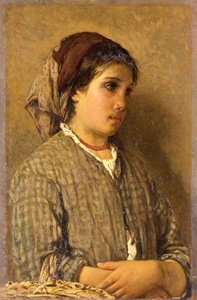
StatsSelf-portrait
 Oil On Panel
- WallArt
- Contemporary Realism
 1861
1861- 19th Century
 12.0 x 10.0 cm
 Galleria degli Uffizi
 Read More
Hand Made Oil Reproduction
Hand-painted oil on canvas in your size and frame, made to order by our artists. ( Switch to Print Switch to Digital Image)




P118B S$10

P118H S$10

P118W S$10

P438Z S$10

P508JH S$12

P508YH S$12

P805H S$10

P805Z S$10

P919BZ S$10

P919G S$10

P919XJ S$10

P959ZH S$10

P968JZ S$12

W106C S$8

W218G S$10

W218JH S$8

W218Y S$10

W307PJ S$10

W316G S$10

W316PJ S$8

W316Y S$10

W398PJ S$8

W4111J S$10

W500HY S$15

W500JH S$15

W692G S$12

W849H S$8

W940BG S$15

W953PJ S$8




Pick from our preset sizes that match the artwork's original proportions.

You may enter your own dimensions to fit a specific frame or space. If your selected size does not match the original image's proportions, we will either crop the artwork or extend the painting with additional hand-painted elements. A digital mockup will be sent for your approval before production begins.
Please note that the on-screen preview does not reflect the actual cropping or extension. Only the mockup will accurately show the final composition.
While custom sizes are available, we recommend selecting a dimension from the predefined list to preserve the original proportions.
After order, OriginalUniqueArt.com team will email client for instructions and provide a mockup preview
Worldwide Delivery () in 3/4 weeks instead of standard 5 weeks. (9 September). No compromise on quality.

Free Worldwide Express Shipping

High-Quality Linen Canvas

Full Shipping Insurance

Customs Tax Refund Guarantee

True Color Matching Guarantee

100-Day Return Policy (Defects Only)

100% Money-Back Guarantee

Bulk Discount Offer
 Glass option is only available in size under 110 CM

Self-portrait
Reproduction Medium
Reproduction Size
-


Total Price
S$ 384
A Glimpse into the Artist's Soul
In the quiet intimacy of Silvestro Lega’s 1861 Self-Portrait, we are invited to witness more than just a likeness; we are granted access to a moment of profound introspection. This small yet powerful oil on panel serves as a window into the psyche of one of Italy's most significant realist painters. At first glance, the viewer meets a man of contemplative gravity, his gaze steady and thoughtful, capturing that universal human impulse to look inward. The composition is masterfully focused, stripping away the distractions of a complex background to ensure that every nuance of the subject’s expression—the subtle furrow of the brow and the quiet strength in the eyes—takes center stage. For the collector or lover of fine art, this piece offers an unparalleled sense of presence, as if the artist himself is still caught in the very act of reflection.
The painting stands as a quintessential exemplar of the Macchiaioli movement, a group of Italian rebels who sought to dismantle the rigid, idealized standards of academic art. Rather than pursuing the polished perfection of Neoclassicism, Lega embraced the beauty of the "macchia"—the patch or spot of color and light. In this self-portrait, we see the rejection of artifice in favor of a raw, honest naturalism. The palette is intentionally restrained, utilizing earthy browns, deep blacks, and creamy highlights that evoke a sense of timelessness and groundedness. This stylistic choice does not merely document a face; it captures the very atmosphere of mid-19th-century Florentine realism, where the truth of light and shadow was held far above the vanity of ornamentation.
Mastery of Light and Texture
Technically, the work is a triumph of oil on panel execution. Lega demonstrates a sophisticated command over texture, utilizing subtle layers of impasto to breathe life into the canvas. One can almost feel the tactile quality of the subject's dark suit and the crispness of his white shirt and black bow tie. The artist’s brushwork is particularly deliberate around the facial features, where he employs light and shadow to sculpt the anatomy of the face, creating a three-dimensional effect that pulls the viewer into his personal space. This interplay of luminosity and depth ensures that the portrait remains dynamic, catching the light differently from every angle—a quality that makes a high-quality reproduction an exquisite addition to any curated interior.
Beyond its technical brilliance, the painting carries a heavy historical resonance. Created during the Risorgimento, a period of intense political upheaval and the unification of Italy, the work reflects the era's broader intellectual shift toward authenticity and national identity. There is a quiet dignity in Lega’s presentation that mirrors the stoicism of his generation. For an interior designer, this piece provides a sophisticated focal point, offering a sense of historical depth and intellectual weight to a room. Whether placed in a sunlit study or a moody, classical gallery setting, the Self-Portrait acts as a silent storyteller, bringing the spirit of Italian Realism into the modern home.
Artist Biography
Silvestro Lega: A Life in Italian Realism
- Born: Modignan, Italy (1826)
- Died: 1895
Silvestro Lega was a significant figure in 19th-century Italian art, recognized as a leading artist within the Macchiaioli movement. His work embodies a commitment to realism and observation of everyday life, intertwined with his involvement in the political currents of his time.
Early Life and Artistic Training
- Family Background: Lega was born into an affluent family in Modigliana, near Forlì.
- Education: From 1838, he attended the Piarist College where his drawing skills became apparent. He then studied at the Accademia di Belle Arti in Florence (1843-1847), initially under Benedetto Servolini and Tommaso Gazzarini for drawing, briefly studying painting with Giuseppe Bezzuoli.
- Influence of Luigi Mussini: Lega’s training continued under Luigi Mussini, emphasizing 15th-century Florentine principles of drawing and construction. This foundation shaped his early artistic approach.
- Military Service & Risorgimento: As a Garibaldian volunteer, Lega participated in the military campaigns for Italian independence (1848–49), demonstrating his engagement with the Risorgimento.
- Further Studies: He later studied under Antonio Ciseri.
The Macchiaioli Movement and Artistic Development
- Initial Academic Style: Initially, Lega’s style remained largely academic, as noted by contemporary Diego Martelli who observed his infrequent participation in the vibrant artistic discussions at the Caffè Michelangelo, a hub for young painters.
- Transition to Realism: By 1859, Lega's work began shifting towards realism, moving away from Mussini’s purist approach. This evolution is evident in the lunettes he painted for the Oratory of the Madonna del Cantone in Modigliana (1858-1863).
- En Plein Air Painting: Lega joined his Macchiaioli colleagues – Odoardo Borrani, Giuseppe Abbati, Telemaco Signorini, and Raffaello Sernesi – in embracing en plein air painting, directly observing and capturing the nuances of landscapes.
- The Batelli Family Period (1861-1870): A significant period in Lega’s life was spent with the Batelli family near the Affrico River. This time profoundly influenced his art, as he depicted their children and women in numerous paintings, reflecting a sense of domestic tranquility.
Key Works and Artistic Style
- Notable Paintings: Some of Lega’s most celebrated works include “A Walk in the Garden” (1870), "Il Pergolato" (also known as "Il dopopranzo") (1864), “The House of Don Giovanni Veritá” (1885), “In the Garden” (1883), and “Garden in Bellariva” (1884).
- Style Characteristics: Lega’s style is characterized by a careful balance between traditional composition and contemporary use of color, derived from direct observation. He employed carefully defined forms and rendered atmosphere with transparency of colors. His later works show an Impressionistic influence.
- Thematic Focus: His paintings often depict scenes of rural life, family gatherings, and portraits, reflecting a focus on the everyday experiences of ordinary people.
Later Years and Legacy
- Personal Tragedy: The loss of Virginia Batelli (his companion), along with three brothers, plunged Lega into deep grief and depression in 1870. This period led to a four-year hiatus from painting (1874-1878).
- Artistic Exploration & Impressionism: Despite his personal struggles, Lega remained engaged with the art world. He admired the works of Camille Pissarro and established an art gallery in Florence with Odoardo Borrani, though it was short-lived.
- Final Years: In his later years, he became a tutor for the sons of the Tommasi family, finding renewed stability and artistic inspiration. His final works, such as “The Gabbarigiane,” demonstrate a continued commitment to realism despite failing eyesight.
- Historical Significance: Silvestro Lega’s contribution lies in his ability to synthesize traditional compositional techniques with the emerging realist aesthetic of the Macchiaioli movement. He captured the essence of Italian life with sensitivity and skill, leaving behind a body of work that continues to resonate with audiences today. His focus on everyday subjects elevated them to artistic significance, contributing to the broader shift towards realism in 19th-century European art.

Silvestro Lega
1826 - 1895 , Italy
Quick Facts
- Artistic Movement Or Style: Realism, Macchiaioli
- Artists Or Movements Influenced By This Artist: ['Impressionism']
- Artists Who Influenced This Artist:
- Luigi Mussini
- Antonio Ciseri
- Date Of Birth: 1826
- Date Of Death: 1895
- Full Name: Silvestro Lega
- Nationality: Italian
- Notable Artworks:
- Doubting Thomas
- David placating Saul
- A Walk in the Garden
- Il pergolato
- The pergola
- Head of a boy
- Place Of Birth: Modigliana, Italy
Related Articles
The Raw Truth: A Definitive Guide to the Power and Legacy of Social Realism Art
Explore the profound impact of Social Realism. Discover how masters like Courbet rejected idealism to capture the raw, socio-political truths of the working class through powerful, unvarnished art history and enduring visual critique.
Reflecting the Self: A History of Portraiture & Psychological Insight
Explore the fascinating history of self-portraiture from Renaissance masters like Dürer & Rembrandt to modern interpretations. Discover the psychological insights and artistic techniques behind these iconic works. Expert analysis for art enthusiasts.

Giovanni Fattori: Realism, Identity & the Tuscan Landscape – A Macchiaioli Master
Explore the life & art of Giovanni Fattori, a leading figure of the Macchiaioli movement. Discover his revolutionary realism, captivating Tuscan landscapes, and lasting impact on Italian painting. Learn more at OriginalUniqueArt.
Echoes of Society: Exploring Social Realism's Enduring Legacy in Art
Explore the powerful world of Social Realism art! Discover key artists, masterpieces & its profound social commentary. Expert insights into this influential movement's history and enduring legacy.

Romantic Realism's Finest: 10 Masterpieces for Your Home | OriginalUniqueArt
Explore 10 defining masterpieces of Romantic Realism! Discover Courbet, Millet & Daumier's powerful paintings—capturing emotion and social realities. Find museum-quality reproductions for your home at OriginalUniqueArt.com.