Symbolism · 1910
Memory (Sergey Solomko, 1910)
Sergey Solomko (1867–1928) made Memory. It dates from 1910. It belongs to the Symbolism movement. It is made in watercolor.
- 1910
- Watercolor

 Preview

 Hand Made Oil Painting
 Send
 Share
 Fact sheet


 Download
 Similars
 X-Ray
 Diaporama
 Q&A

 Stats
Memory, in brief
- Title
- Memory
- Artist
- Sergey Solomko (1867–1928)
- Artist born in
- Saint Petersburg, Russia
- Date
- 1910
- Medium
- Watercolor
- Movement
- Symbolism
- Period
- 19th Century
- Subject
- ethereal figure, spectral woman, old man wisdom, glowing sun symbol, folklore imagery, romantic landscape
What does Memory depict?
Identification of Memory by Sergey Solomko
The scene unfolds within the work titled Memory, a creation by the artist Sergey Solomko. This piece emerges from 1910, a moment when the artist's hand captures a sense of ethereal presence. The image holds a quiet weight, as if a single breath has been suspended in time. It invites a sense of wonder regarding the figures that inhabit its soft, dreamlike space.
Sergey Solomko brings his unique vision to this composition, drawing from a life that began in 1867 in Saint Petersburg, Russia. His origins in this city shape the very essence of his perspective. The work exists as a window into a world of soft light and subtle shadows. It carries the unmistakable touch of a creator who understands the delicate balance between the seen and the unseen.
Visual Composition and Subject Matter
A seated elderly man, his long white beard catching the light, anchors the scene. Beside him, a young woman appears almost translucent, a spectral presence drifting near the edge of a quiet body of water. The vertical composition draws the eye upward from the figures toward a backdrop of trees and a vast sky. A large, glowing sun hangs in the distance, casting a bright reflection across the surface of the water that seems to bridge the gap between the physical and the ethereal.
The encounter between the old man and this ghostly figure suggests a quiet moment of supernatural visitation. One wonders if she is a spirit guide or a manifestation of the past. This meeting hints at deep themes of mortality and the weight of wisdom. The stillness of the water and the soft light create a sense of intimacy, as if the viewer has stumbled upon a private moment between the living and the remembered.
Artistic Style and Visual Qualities
The scene unfolds through a style that leans toward Romanticism or Symbolism, where the atmosphere carries more weight than strict realism. Every line flows in gentle, organic curves, tracing the edges of the trees and the soft contours of the figures. This rhythmic movement creates a dreamlike quality that pulls the viewer into a quiet, suspended moment. The technique appears to be watercolor or gouache on paper, lending a delicate, painted texture to the entire composition. It feels as though the image is a fragment of a half-remembered dream, preserved through soft brushstrokes and a gentle blending of forms.
Light behaves with a soft, diffused quality in this work. It emanates from the large, glowing sun, casting a warm and even radiance across the landscape. This light does not create harsh shadows but instead bathes the figures and the water in a subtle, pearlescent glow. The colors remain muted and carefully blended, working together to maintain a harmonious and slightly melancholic mood. There is a sense of stillness here, as if the air itself is heavy with the weight of the encounter.
A faded quality permeates the surface, consistent with the age of the piece. This patina adds a layer of nostalgic charm, as if the colors have softened through decades of quiet observation. The shallow perspective keeps the focus intimate, drawing the eye toward the interaction between the elderly man and the spectral woman. Every element, from the organic shapes of the background to the translucent quality of the female figure, contributes to a sense of profound mystery and quietude.
High-resolution images of Memory
Sergey Solomko, Memory (1910). Public domain.
Questions on Memory, answered
When was "Memory" made?
The creation of "Memory" by Sergey Solomko is dated 1910.
What medium is "Memory" by Sergey Solomko executed in?
The medium of "Memory" by Sergey Solomko is watercolor. Reproductions aim to render the appearance of this technique.
What is "Memory" about?
The themes present in "Memory" by Sergey Solomko include ethereal figure, spectral woman, old man wisdom, glowing sun symbol, folklore imagery, romantic landscape, melancholy mood, vintage illustration. Together they summarize the artwork's subject matter.
Is "Memory" free of copyright?
"Memory" by Sergey Solomko is in the public domain - its copyright has expired. This status governs how the image of the work may be reproduced.
Who is the artist behind "Memory"?
"Memory" is attributed to Sergey Solomko.
What style does "Memory" belong to?
The movement associated with "Memory" by Sergey Solomko is Symbolism. This classification situates the work among related artists and artworks.
What stage of Sergey Solomko's development does "Memory" represent?
"Memory" belongs to the Early 20th Century of Sergey Solomko's career. This classification relates the work to the artist's development.
How old was Sergey Solomko when creating "Memory" in 1910?
When "Memory" was created in 1910, Sergey Solomko - born in 1867 - was 43 years old.
Why is the copyright status of "Memory" what it is?
The copyright status of "Memory" - in the public domain - its copyright has expired - follows from the artist's death in 1928.
About the artist, Sergey Solomko
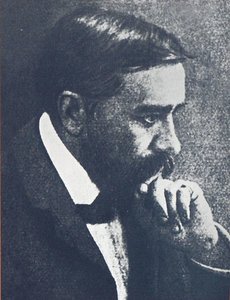
1867–1928, Russia
Sergey Solomko
Sergey Solomko: Life and Legacy Early Life and Education Born: August 22, 1867, in Saint Petersburg, Russia. Sergey Sergeyevich Solomko was the son of Colonel (later Major-General) Sergey Solomko, who served under Grand Duke Konstantin Nikolayevich. He grew up within the Konstantinovsky Palace, providing early exposure to aristocratic life and culture. Education: From 1883 to 1887, he attended the Moscow School of Painting, Sculpture and Architecture.
Also by Sergey Solomko
 Sketch of the poster. Pillory.1916
 Priestess1915
 Blarney
 Find
Essays around Memory
 Russian artworks of the 1900sRussian art from the 1900s features the brilliance of Wassily Kandinsky, Konstantin Korovin, and Boris Kustodiev. Shop museum-quality print…
 Dreams on Canvas: Understanding Automatist and Veristic SurrealismMaster the differences between Automatist and Veristic Surrealism. Explore the works of Dali and Miro to decode the dreamscape today.
 Russian artworks of the 1910sRussian Avant-Garde masterpieces from the 1910s by Wassily Kandinsky, Boris Kustodiev, and Kuzma Petrov-Vodkin. View the collection at Orig…