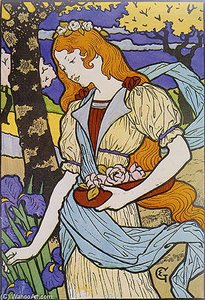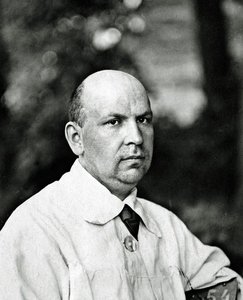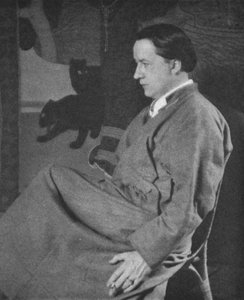
Art Nouveau, one artist at a time

Famous Art Nouveau Artists: 43 Original Voices

Gustav Klimt (1862–1918) is the most famous Art Nouveau artist, whose singular vision gave us Portrait of Adele Bloch-Bauer I and The Kiss. Next stand Alphonse Mucha, Ferdinand Hodler, Aubrey Beardsley and Félix Vallotton. These 43 artists, from Jules Chéret (born 1836) to Martin Munkácsi (born 1896), came from 19 countries.

Our selection. Artists whose works our catalogue attaches to Art Nouveau, in the order of our fame ranking. Artists born after 1955 with no Wikidata identifier stay out until verified. The Wikipedia figure counts our 32 languages with an article on the artist.

  1. Portrait of Adele Bloch-Bauer I by Gustav Klimt1Gustav Klimt
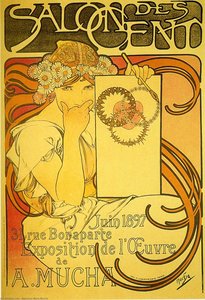
  2. Salon des Cent, 1897 by Alphonse Mucha2Alphonse Mucha
  3. The Day by Ferdinand Hodler3Ferdinand Hodler

In brief

Art Nouveau in brief

  • 43Artists
  • 1836–1896Years of birth
  • 19Countries of birth
  • 4Women
  • 4,991Works in our catalogue
Cities with most births
Saint Petersburg (4), Vienna (3), Lausanne (2), Baumgarten (1)

One artist at a time

43 Art Nouveau Artists and their signature works

1of 43

Gustav Klimt

Austrian Born in Baumgarten ['Art Nouveau', 'Symbolism', 'Vienna Secession'] Wikipedia in 32/32 languages

Gustav Klimt

Around 1900, a transformation took hold of his brush, ushering in a period that would define his legacy. He moved away from the heavy, academic shadows of his youth to embrace a luminous, decorative language. His influence was felt most keenly by those who followed in his footsteps, such as his younger peer Egon Schiele, who drew from the expressive possibilities Klimt had carved out.

Where to see Within those walls, the gold leaf seems to retain a warmth that defies the passage of time.

Signature works · The 100 signature works

2of 43

Alphonse Mucha

Czech Born in Ivančice Art Nouveau Wikipedia in 31/32 languages

Alphonse Mucha

Notable Works: The Slavonic Uprising - Showcases blending traditional Czech motifs with modern Art Nouveau elements. Paintings inspired by works like The Daughters of Tespio by Gustave Moreau, and La Ribambelle des Gobelins by Piero Dorazio. Influenced by Czech artistic traditions and modern European art movements.

Signature works · The 100 signature works

3of 43

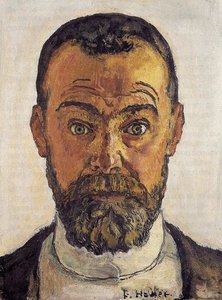
Ferdinand Hodler

Swiss Born in Bern Symbolism, Parallelism, Realism Wikipedia in 26/32 languages

Ferdinand Hodler

Born in Bern, Switzerland, in 1853, Ferdinand Hodler’s early years were defined by a quiet, persistent grief. His move to Geneva in 1871 marked a departure from the commercial demands of his youth. In works such as The Night, completed in 1890, he explored themes of repose and mortality through recumbent figures, a subject that challenged the prevailing tastes of the time.

Signature works · The 100 signature works

4of 43

Aubrey Beardsley

British Born in Brighton Art Nouveau, Decadent art Wikipedia in 27/32 languages

Aubrey Beardsley

beardsley's black ink drawings were influenced by japanese woodcuts, depicting the grotesque, the decadent, and the erotic. his work is characterized by elaborate composition, refined lines, and exploration of themes such as sexual identity. beardsley's contribution to the development of art nouveau was significant, despite his tragically short life.

Signature works · The 100 signature works

5of 43

Félix Vallotton

Swiss and French Born in Lannes Post-Impressionism, Symbolism, Les Nabis

Félix Vallotton

His style blended elements of Post-Impressionism and Symbolism, often resulting in a look that felt both modern and strangely still. He used brushstrokes characteristic of Neo-Impressionism, layering pigment to create depth and luminosity. Vallotton left behind a body of work that felt singular, often leaving those who viewed it with a sense of disquiet.

Where to see To encounter the quiet tension of Vallotton’s interiors, one might travel to the Cantonal Museum of Fine Arts in Lausanne, Switzerland, where The Red Room is kept.

Signature works · The 100 signature works

6of 43

Louis Comfort Tiffany

American Born in New York City Art Nouveau Wikipedia in 23/32 languages

Louis Comfort Tiffany

Dissatisfied with the prevailing standards of contemporary glass production, which he found lacking in artistic merit and originality, Tiffany embarked on a quest to elevate it to the level of fine art. His work transcended the boundaries of craft, elevating decorative arts to the status of fine art – a radical concept at the time.

Signature works · The 100 signature works

7of 43

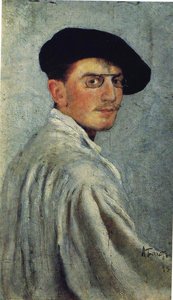
Léon Bakst

Russian Born in Horadnia Art Nouveau, Orientalism Wikipedia in 26/32 languages

Léon Bakst

Despite their reservations, Bakst persevered, eventually studying at the prestigious St. Petersburg Academy of Arts as a non-credit student while supplementing his education by working as a book illustrator—a practical necessity that honed his skills and provided financial independence. Léon Bakst’s legacy extends far beyond his contributions to ballet.

Signature works · The 100 signature works

8of 43

Koloman Moser

Austrian Born in Vienna Vienna Secession Wikipedia in 21/32 languages

Koloman Moser

Graphic Art: Moser's impact on graphic art is undeniable. Architecture: His architectural designs, most notably the apse mosaic and glass windows for the Kirche am Steinhof in Vienna (1904), showcase his ability to blend artistic vision with functional design. Moser's artistic development was influenced by several key movements, including Art Nouveau, Symbolism, and the Vienna Secession.

Signature works · The 100 signature works

9of 43

Charles Rennie Mackintosh

Scottish Born in Townhead Art Nouveau, Glasgow Style Wikipedia in 29/32 languages

Charles Rennie Mackintosh

Charles Rennie Mackintosh, born in Glasgow on June 7, 1868, was more than an architect; he was a philosophical artist who sought to harmonize every aspect of the built environment. However, beginning in the 1960s and 1970s, a renewed interest in Art Nouveau and early modernism led to a rediscovery of Mackintosh’s contributions.

Signature works · The 100 signature works

10of 43

René Jules Lalique

French Born in Aÿ Art Nouveau, Art Deco

René Jules Lalique

The Art Deco era saw Lalique’s glasswork reach new heights of sophistication. His work became synonymous with luxury and elegance, adorning the homes of discerning collectors worldwide, including Calouste Sarkis Gulbenkian, who amassed an impressive collection of over 140 Lalique pieces. His granddaughter, Marie Claude-Lalique, carried on the legacy of glassmaking until her death in 2003.

Signature works · The 100 signature works

11of 43

Joseph Maria Olbrich

Austrian Born in Tropea Vienna Secession, Art Nouveau

Joseph Maria Olbrich

This iconic structure wasn't merely a building; it was a manifesto, a physical embodiment of the ideals championed by the Vienna Secession – a group of artists who rebelled against the conservative artistic establishment. Otto Wagner instilled in him a commitment to functionalism and a rejection of excessive ornamentation, while his collaboration with Gustav Klimt and other members of the Vienna Secession fostered a shared aesthetic language characterized by geometric forms, decorative elements, and a sense of playful experimentation.

Signature works · The 100 signature works

12of 43

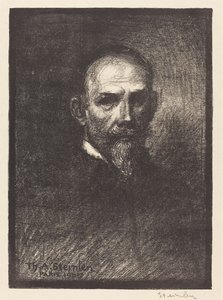
Théophile Steinlen

Swiss-French Born in Lausanne Art Nouveau Wikipedia in 15/32 languages

Théophile Steinlen

Influenced by the legendary artistic circles surrounding Le Chat Noir, he moved among the luminaries of the era, forging deep connections with figures such as Adolphe Willette and François Bocion.

Signature works · The 100 signature works

13of 43

Émile Gallé

French Born in Nancy Art Nouveau Wikipedia in 17/32 languages

Émile Gallé

His father, Charles Gallé, owned a respected factory producing furniture and porcelain, providing young Émile with an early exposure to the world of design and craftsmanship. However, Gallé’s intellectual curiosity extended far beyond the practicalities of the workshop. But Gallé was more than just an artist; he was a humanist deeply committed to social progress.

Signature works · The 100 signature works

14of 43

Alexandre Benois

Russian Born in Saint Petersburg Neo-Classicism, Mir Iskusstva Wikipedia in 23/32 languages

Alexandre Benois

Alexandre Nikolayevich Benois, born on May 4th, 1870, in the vibrant cultural heart of St. However, fate intervened with a pivotal encounter: while visiting Versailles in 1897, he caught the eye of Sergei Diaghilev and Léon Bakst, two figures who were rapidly reshaping the landscape of Russian art and theatre. Petersburg) from 1918 to 1926, securing his brother’s Leonardo da Vinci painting Madonna for the museum—a testament to his scholarly pursuits and dedication to preserving Russian cultural heritage.

Signature works · The 100 signature works

15of 43

Otto Koloman Wagner

Austrian Born in Vienna Art Nouveau, Vienna Secession

Otto Koloman Wagner

Otto Koloman Wagner, born in Vienna in 1841, stands as a pivotal figure bridging the gap between 19th-century historicism and the dawn of modern architecture. His studies under August Sicardsburg and Eduard von der Nüll instilled a crucial principle: architecture must possess a “rational expression” suited to its modern purpose—a concept that would become central to his life’s work. Wagner’s later works, spanning from 1906 until his death in 1918, are now widely recognized as precursors to the modern architectural movement.

Signature works · The 100 signature works

16of 43

Józef Mehoffer

Polish Born in Ropczyce ['Young Poland', 'Post-Impressionism', 'Secession', 'Art Nouveau', 'Symbolism'] Wikipedia in 14/32 languages

Józef Mehoffer

His hand could be found in the mosaics of the Armenian Cathedral in Lviv and the frescoes of Wawel Cathedral.

Signature works · The 100 signature works

17of 43

Jules Chéret

French Born in former 11th arrondissement of Paris Belle Époque, Art Nouveau Wikipedia in 17/32 languages

Jules Chéret

In 1895, he launched Maîtres de l'Affiche, a groundbreaking publication featuring reproductions of works by ninety-seven Parisian artists – a deliberate effort to elevate the status of poster art and recognize its creators. Recognized for his contributions with the Légion d'honneur in 1890, Chéret continued to work prolifically until his death in 1932 at the remarkable age of ninety-six. He inspired a new generation of artists, including Charles Gesmar and Henri de Toulouse-Lautrec, with Georges de Feure being one of his direct students.

Signature works · The 100 signature works

18of 43

J. C. Leyendecker

German-American Born in Montabaur Art Nouveau, Illustration Wikipedia in 14/32 languages

J. C. Leyendecker

Leyendecker’s artistic style was deeply rooted in the principles of Art Nouveau, characterized by elegant lines, flowing forms, and a decorative sensibility that elevated everyday scenes into realms of beauty. In many ways, Leyendecker laid the groundwork for Rockwell’s iconic depictions of American life. Cluett, Peabody & Co. also ceased using his illustrations, marking a turning point in his career.

Signature works · The 100 signature works

19of 43

Carlos Schwabe

Swiss Born in Altona Symbolism Wikipedia in 12/32 languages

Carlos Schwabe

Schwabe’s artistic development unfolded through diverse avenues, but it was his involvement in the Salon de la Rose + Croix in 1892 that truly marked a turning point. This participation revealed an engagement with Rosicrucian themes – esoteric philosophies emphasizing hidden knowledge and mystical experience – which would subtly permeate his later works. His engagement with Rosicrucianism, revealed through the Salon de la Rose + Croix, added another layer of complexity to his symbolism, hinting at hidden meanings and esoteric knowledge embedded within his imagery.

Signature works · The 100 signature works

20of 43

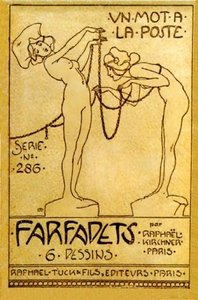
Raphael Kirchner

Austrian Born in Vienna Art Nouveau

Raphael Kirchner

The vibrant atmosphere of the French capital, steeped in Art Nouveau aesthetics and a burgeoning café society, proved fertile ground for Kirchner’s talent. He quickly found work illustrating for prominent magazines like La Vie Parisienne, honing his skills in capturing feminine beauty and fashionable trends. These images weren’t merely reproductions of Japanese motifs; they were innovative fusions of Western Art Nouveau and Eastern aesthetics, demonstrating Kirchner's ability to synthesize diverse artistic traditions.

Signature works · The 100 signature works

21of 43

Mariano Fortuny y Madrazo

Spanish Born in Granada Art Deco, Venetian art

Mariano Fortuny y Madrazo

Mariano Fortuny y Madrazo, a name synonymous with innovation, artistry, and the alluring mystique of Venice, was far more than simply a painter or designer.

Signature works · The 100 signature works

22of 43

Anne Anderson

British Art Nouveau

Anne Anderson

Anne Anderson stands as a luminous figure in the annals of Scottish illustration, a master of the Art Nouveau aesthetic who breathed life into the most beloved tales of folklore and fantasy. Born in 1874 to James and Grace Anderson, her early years were shaped by the vibrant, sweeping landscapes of Argentina, where her family resided during her formative childhood. Beyond the mere depiction of characters, Anderson’s work serves as a historical window into the Art Nouveau movement's influence on popular culture.

Signature works · The 100 signature works

23of 43

Max Kurzweil

Austrian Born in Bzenec Vienna Secession Wikipedia in 13/32 languages

Max Kurzweil

Born amidst the evocative landscapes of Bisenz, Bohemia, Maximilian Franz Viktor Zdenko Marie Kurzweil carried the romantic sensibilities of his youth into the heart of the Austro-Hungarian Empire. Yet, it was his immersion in the light-drenched ateliers of Paris, particularly the Académie Julian, that truly ignited his creative spirit. While he achieved significant professional milestones—including being awarded the prestigious Villa Romana prize in 1905 and serving as a respected professor at the Frauenkunstschule —his personal existence was often shadowed by an innate sense of melancholy.

Signature works · The 100 signature works

24of 43

Harry Clarke

Irish Born in Dublin Art Nouveau, Vienna Secession Wikipedia in 11/32 languages

Harry Clarke

He sought opportunities in London as a book illustrator, initially tackling ambitious projects like Coleridge's The Rime of the Ancient Mariner and Pope’s The Rape of the Lock, though these remained unfinished. His breakthrough arrived with illustrations for Hans Christian Andersen’s Fairy Tales (1916), which immediately established his reputation as a master storyteller in visual form. Equally renowned is the Geneva Window, a complex series commissioned by Irish expatriates in Geneva, portraying prominent figures from Irish literature—Yeats, Synge, Joyce, and others—in a vibrant tableau of national identity.

Signature works · The 100 signature works

25of 43

Ivan Yakovlevich Bilibin

Ivan Yakovlevich Bilibin

Early Influences: Bilibin’s artistic development was profoundly shaped by his ethnographic expeditions to northern Russia (Vologda, Olonetsk, Arkhangelsk governorates) between 1902-1904. He documented his findings in Narodnoye tvorchestvo russkogo severa (Folk Arts of the Russian North) published in 1904.

Signature works · The 100 signature works

26of 43

Eugène Grasset

Swiss-French Born in Lausanne Art Nouveau Wikipedia in 15/32 languages

Eugène Grasset

By 1869-1870, Grasset had established himself as both a painter and sculptor in Lausanne, but the allure of Paris proved irresistible. He didn’t simply imitate these sources; rather, he skillfully blended Gothic art’s intricate detailing with the elegant simplicity of Japanese aesthetics, forging a distinctive visual vocabulary that resonated with the spirit of the age. Initial studies under François-Louis David Bocion honed his drawing skills, but it was a subsequent foray into architectural studies in Zurich that broadened his artistic horizons, though ultimately proved insufficient to contain his burgeoning creativity.

Signature works · The 100 signature works

28of 43

Hector Guimard

French Born in Lyon Art Nouveau

Hector Guimard

Integrated Ornamentation: In works like the entrance to Castel Béranger, he utilized elegant blue metal bars and intricate decorative elements to create a rhythmic, visual melody across the building's surface.

Signature works · The 100 signature works

29of 43

Heorhiy Narbut

Ukrainian Born in Kharkiv Art Nouveau & Neoclassicism

Heorhiy Narbut

Narbut's relocation to Kyiv in 1917 coincided with the birth of a new era for the Ukrainian National Republic. His work spanned a breathtaking variety of media, including: State Symbols: He is most famously credited with designing the Coat of Arms of Ukraine, a symbol that remains an enduring icon of sovereignty. Tragically, Narbut’s life was cut short by typhus in 1920 at the age of only thirty-four.

Signature works · The 100 signature works

30of 43

Martin Munkácsi

Hungarian Born in Cluj-Napoca Action photography

Martin Munkácsi

This wasn't merely about staging action; Munkácsi possessed an innate ability to anticipate and capture the perfect moment. He collaborated closely with Carmel Snow, pioneering techniques such as photographing models running towards the camera – a practice previously unheard of. His dynamic compositions, masterful use of light and shadow, and ability to capture fleeting moments profoundly influenced Henri Cartier-Bresson, who famously declared that Munkácsi's photograph ‘Three Boys at Lake Tanganyika’ ignited his passion for photography.

Signature works · The 100 signature works

32of 43

Mstislav Dobuzhinsky

Russian-Lithuanian Born in Novgorod Expressionism, Cityscapes

Mstislav Dobuzhinsky

Born in Novgorod and carrying Lithuanian heritage, he carved out a unique artistic voice defined by a haunting exploration of urban decay, industrial landscapes, and the psychological toll of modernity. His work isn’t merely depictions of crumbling buildings; it's a visceral expression of isolation, anxiety, and the unsettling beauty found within the shadows of rapidly changing cities. Mstislav Dobuzhinsky’s work holds significant historical importance as a document of early 20th-century Russia.

Signature works · The 100 signature works

33of 43

Ethel Reed

American Born in Newburyport Art Nouveau

Ethel Reed

Born in Newburyport, Massachusetts, on March 13th, 1874, Reed’s life was marked by both artistic brilliance and personal challenges—a duality that profoundly shaped her oeuvre and cemented her legacy as a trailblazing artist of her time. Furthermore, she cultivated connections with influential photographers like Fred Holland Day, whose portraits captured her youthful beauty—notably in works such as Chloe and The Gainsborough Hat.

Signature works · The 100 signature works

34of 43

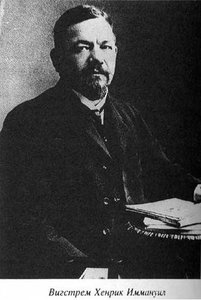
Henrik Immanuel Wigström

Finnish Born in Ekenäs Neoclassical, Louis XVI, Empire

Henrik Immanuel Wigström

As the era of Imperial Russia drew to a close, Wigström’s contributions remained a testament to a vanished world of unparalleled opulence. His ability to interpret historical styles through a modern, refined lens ensured that his work would remain iconic long after the workshops of St. When Wigström joined the Fabergé atelier in 1903, he inherited a monumental responsibility: maintaining the prestige of the House of Fabergé following the loss of Perchin.

Signature works · The 100 signature works

35of 43

Edmund Dulac

French-British Born in Toulouse Art Nouveau, Orientalism Wikipedia in 11/32 languages

Edmund Dulac

He harbored a deep admiration for Japanese woodblock prints— Ukiyo-e —captivated by their flattened perspective, bold compositions, and refined linework; elements he subtly incorporated into his own style. A fascination with Eastern cultures, particularly Persian and Arabian aesthetics, permeated much of his imagery, reaching its zenith in his iconic illustrations for The Rubaiyat of Omar Khayyam. This masterful blend of influences—European elegance, Japanese precision, and Eastern mystique—coalesced into a style that was uniquely Dulac’s: meticulous detail combined with rich color palettes and an ethereal, dreamlike quality.

Signature works · The 100 signature works

36of 43

Giuseppe Sommaruga

Italian Born in Milan Liberty Style / Art Nouveau

Giuseppe Sommaruga

His formative years at the Brera Academy provided him with a rigorous foundation in classical principles, yet it was his exposure to mentors such as Camillo Boito and Luca Beltrami that truly ignited his creative spirit.

Signature works · The 100 signature works

37of 43

Haralampi Tachev

Bulgarian Born in Plovdiv Early Modernism

Haralampi Tachev

Haralampi Tachev, a pivotal figure in the development of Bulgarian Modernism, was born on July 19th, 1875, in the vibrant city of Plovdiv, Bulgaria. The late 19th and early 20th centuries witnessed a surge in artistic movements across Europe— Art Nouveau, Symbolism, and the nascent stages of abstraction. Major Achievements: Creation of the Coat of Arms of Sofia, decoration of the Central Mineral Baths, contributions to numerous public buildings in Sofia.

Signature works · The 100 signature works

38of 43

Adolfo Hohenstein

German Born in Saint Petersburg Stile Liberty, Art Nouveau Wikipedia in 9/32 languages

Adolfo Hohenstein

His achievements include: Pioneering Graphic Design: Establishing the foundations of the Italian poster movement through highly decorative and emotionally resonant illustrations.

Signature works · The 100 signature works

39of 43

Frances Macdonald

Scottish Born in Kidsgrove Glasgow Style & Art Nouveau Wikipedia in 12/32 languages

Frances Macdonald

Born in 1873 in the industrial landscape of Wolverhampton, England, her life took a transformative turn when she moved to Glasgow in 1890. Though the later years of her life were marked by the decline of the great Glasgow studios and personal hardships, the historical significance of Frances Macdonald remains undiminished.

Signature works · The 100 signature works

41of 43

Harrison Fisher

American Born in Brooklyn Golden Age Illustration Wikipedia in 6/32 languages

Harrison Fisher

Fisher's style was a synthesis of various influences. However, Fisher wasn’t merely imitating these styles; he was adapting them to create something uniquely American. Harrison Fisher’s impact extended beyond the realm of illustration; he became a cultural touchstone, defining American beauty standards during the first quarter of the 20th century.

Signature works · The 100 signature works

42of 43

Achille Beltrame

Italian Born in Arzignano Historical Landscape Painting Wikipedia in 6/32 languages

Achille Beltrame

Under the mentorship of Giuseppe Bertini, Beltrame began to synthesize meticulous, academic observation with an emerging fascination for the dynamic interplay of light and atmosphere, much like the Impressionist masters Monet and Sisley. His name became indissolubly linked to La Domenica del Corriere, the iconic weekly magazine whose covers he illustrated from the dawn of the twentieth century until the closing shadows of World War II.

Signature works · The 100 signature works

43of 43

Léo Schnug

French Born in Strasbourg Art Nouveau & Medieval Themes Wikipedia in 3/32 languages

Léo Schnug

The outbreak of World War I saw him serve as a sergeant in the German army, a period that brought both recognition through the Order of Merit and the deepening of personal struggles with mental health and substance use.

Signature works · The 100 signature works

Signature works

Signature Art Nouveau works

  1. Portrait of Adele Bloch-Bauer I by Gustav Klimt

    Portrait of Adele Bloch-Bauer I

    Gustav Klimt

    1907 · Museum for German and Austrian Art and Private Collection, New York City

  2. Salon des Cent, 1897 by Alphonse Mucha

    Salon des Cent, 1897

    Alphonse Mucha

  3. The Day by Ferdinand Hodler

    The Day

    Ferdinand Hodler

    1906 · Kunsthaus Zürich, Zurich

  4. Salome with her mother by Aubrey Beardsley

    Salome with her mother

    Aubrey Beardsley

    1894

  5. The Artist`s Mother by Félix Vallotton

    The Artist`s Mother

    Félix Vallotton

    1871 · Musée d'Orsay, Paris

  6. Portiere by Louis Comfort Tiffany

    Portiere

    Louis Comfort Tiffany

    1902

  7. Scheherazade negre argent by Léon Bakst

    Scheherazade negre argent

    Léon Bakst

    1910

A timeline

Art Nouveau through its signature works

  1. 1894
  2. 1895
  3. 1895
  4. 1898
  5. 1900
  6. 1900
  7. 1902
  8. 1902
  9. 1905
  10. 1906
  11. 1906
  12. 1906
  13. 1907
  14. 1910

Figures

The figures

Every name

List of 43 famous Art Nouveau artists, every name

  1. 1Gustav KlimtGustav KlimtAustrian · 1862–1918
  2. 2Alphonse MuchaAlphonse MuchaCzech · 1860–1939
  3. 3Ferdinand HodlerFerdinand HodlerSwiss · 1853–1918
  4. 4Aubrey BeardsleyAubrey BeardsleyBritish · 1872–1898
  5. 5Félix VallottonFélix VallottonSwiss and French · 1865–1925
  6. 6Louis Comfort TiffanyLouis Comfort TiffanyAmerican · 1848–1933
  7. 7Léon BakstLéon BakstRussian · 1866–1924
  8. 8Koloman MoserKoloman MoserAustrian · 1868–1918
  9. 9Charles Rennie MackintoshCharles Rennie MackintoshScottish · 1868–1928
  10. 10René Jules LaliqueRené Jules LaliqueFrench · 1860–1945
  11. 11Joseph Maria OlbrichJoseph Maria OlbrichAustrian · 1867–1908
  12. 12Théophile SteinlenThéophile SteinlenSwiss-French · 1859–1923
  13. 13Émile GalléÉmile GalléFrench · 1846–1904
  14. 14Alexandre BenoisAlexandre BenoisRussian · 1870–1960
  15. 15Otto Koloman WagnerOtto Koloman WagnerAustrian · 1841–1918
  16. 16Józef MehofferJózef MehofferPolish · 1869–1946
  17. 17Jules ChéretJules ChéretFrench · 1836–1932
  18. 18J. C. LeyendeckerJ. C. LeyendeckerGerman-American · 1874–1951
  19. 19Carlos SchwabeCarlos SchwabeSwiss · 1866–1926
  20. 20Raphael KirchnerRaphael KirchnerAustrian · 1875–1917
  21. 21Mariano Fortuny y MadrazoMariano Fortuny y MadrazoSpanish · 1871–1949
  22. 22Anne AndersonAnne AndersonBritish · 1874–1930
  23. 23Max KurzweilMax KurzweilAustrian · 1867–1916
  24. 24Harry ClarkeHarry ClarkeIrish · 1889–1931
  25. 25Ivan Yakovlevich BilibinIvan Yakovlevich Bilibin1876–1942
  26. 26Eugène GrassetEugène GrassetSwiss-French · 1845–1917
  27. 27Kay Rasmus NielsenKay Rasmus NielsenDanish · 1886–1957
  28. 28Hector GuimardHector GuimardFrench · 1867–1942
  29. 29Heorhiy NarbutHeorhiy NarbutUkrainian · 1886–1920
  30. 30Martin MunkácsiMartin MunkácsiHungarian · 1896–1963
  31. 31Sergey SolomkoSergey Solomko1867–1928
  32. 32Mstislav DobuzhinskyMstislav DobuzhinskyRussian-Lithuanian · 1875–1957
  33. 33Ethel ReedEthel ReedAmerican · 1874–1912
  34. 34Henrik Immanuel WigströmHenrik Immanuel WigströmFinnish · 1862–1923
  35. 35Edmund DulacEdmund DulacFrench-British · 1882–1953
  36. 36Giuseppe SommarugaGiuseppe SommarugaItalian · 1867–1917
  37. 37Haralampi TachevHaralampi TachevBulgarian · 1875–1944
  38. 38Adolfo HohensteinAdolfo HohensteinGerman · 1854–1928
  39. 39Frances MacdonaldFrances MacdonaldScottish · 1873–1921
  40. 40Anna Ostroumova-LebedevaAnna Ostroumova-LebedevaRussian · 1871–1955
  41. 41Harrison FisherHarrison FisherAmerican · 1875–1934
  42. 42Achille BeltrameAchille BeltrameItalian · 1871–1945
  43. 43Léo SchnugLéo SchnugFrench · 1878–1933

Questions

Your questions

Read

Stories on OriginalUniqueArt.com

Other movements

Famous artists of other movements

Other periods

Famous artists across the periods

Famous paintings

Masterpieces that inspire us, by movement

Discover more

More artists to discover