Preview
 Send
Send Share
Share
 Details
 Guide
Guide

 Download
 Similars
 X-Ray
X-Ray Diaporama
 Q&A
Q&A Stats
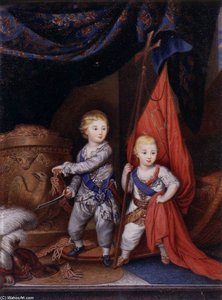
StatsRobert Walpole

 Read More
Giclée / Art Print
Museum-quality giclée or canvas print with fast production and flexible finish options. ( Buy Hand Made Painting Switch to Digital Image)




P118B $10

P118H $10

P118W $10

P438Z $10

P508JH $12

P508YH $12

P805H $10

P805Z $10

P919BZ $10

P919G $10

P919XJ $10

P959ZH $10

P968JZ $12

W106C $8

W218G $10

W218JH $8

W218Y $10

W307PJ $10

W316G $10

W316PJ $8

W316Y $10

W398PJ $8

W4111J $10

W500HY $15

W500JH $15

W692G $12

W849H $8

W940BG $15

W953PJ $8




Pick from our preset sizes that match the artwork's original proportions.

Type the width and the height you need, to fit your frame or your wall. A print can only be cut, never made bigger than the picture, so a size with a different shape loses a part of the image. We send you a digital mockup to approve before we print anything. The picture shown on this page does not show the real cut — only the mockup does.
Worldwide Delivery () in 2 weeks instead of standard 4/5 weeks. (20 November)

Free Worldwide Express Shipping

High-Quality Linen Canvas

Full Shipping Insurance

Customs Tax Refund Guarantee

True Color Matching Guarantee

100-Day Return Policy (Defects Only)

100% Money-Back Guarantee

Bulk Discount Offer
 Glass option is only available in size under 110 CM

Robert Walpole
Giclée / Art Print
Reproduction Size
-


Total Price
$ 81
Artist Biography
A Brush with Nobility: The Life and Art of Richard Brompton
Richard Brompton, born in 1734 in the United Kingdom, emerged as a significant figure within the vibrant landscape of 18th-century British portraiture. While biographical details remain somewhat elusive, his artistic legacy speaks volumes – a testament to his skill in capturing not merely likenesses, but the very essence of an aristocratic society on the cusp of change. Brompton’s career flourished during the Georgian era, a period defined by refined elegance, burgeoning empire, and a growing fascination with classical ideals. He wasn't simply *a* portrait painter; he was a chronicler of his time, immortalizing the faces that shaped its political and cultural narrative. His canvases offer a fascinating glimpse into the world of nobility, military heroes, and even royalty, establishing him as a sought-after artist amongst the elite.Early Training and Artistic Development
The specifics of Brompton’s early artistic training are largely undocumented, a common occurrence for artists of his period who often learned through apprenticeships or private instruction. However, the influence of prominent portraitists like Thomas Hudson and Joshua Reynolds is readily apparent in his work. Like his contemporaries, Brompton embraced the Grand Manner style – an approach that elevated portraiture beyond mere representation to emulate the scale and dignity of historical painting. This meant a focus on composition, dramatic lighting, and carefully constructed poses designed to convey status, power, and moral virtue. His early works demonstrate a meticulous attention to detail, particularly in rendering fabrics and textures, suggesting a solid foundation in technical skill. He quickly moved beyond imitation, developing a distinctive style characterized by a subtle yet compelling psychological depth in his subjects’ expressions.Patronage and Major Achievements
Brompton's success was inextricably linked to the patronage of influential figures. His ability to portray individuals with both accuracy and flattery secured him commissions from members of the British aristocracy, naval officers, and even European royalty. Among his most celebrated achievements are portraits of Catherine II of Russia (Catherine the Great), a testament to his international reputation, and Admiral Edward Hawke, Lord Hawke – a hero of the Seven Years’ War. The portrait of Admiral Saunders is another notable example, showcasing Brompton's skill in depicting military prowess and authority. These works weren’t simply exercises in artistic technique; they were statements of power, prestige, and national pride. Brompton excelled at capturing the character of his sitters, imbuing them with a sense of dignity and gravitas that resonated with their social standing. His portraits often served as diplomatic gifts or symbols of allegiance, further solidifying his position within the upper echelons of society.Style and Technique: A Master of Refinement
Brompton’s artistic style is defined by a refined elegance and subtle realism. He favored a relatively restrained palette, employing rich, warm tones to create a sense of depth and luminosity. His brushwork is smooth and polished, avoiding overt displays of virtuosity in favor of meticulous detail and accurate representation. He was particularly adept at capturing the textures of silk, velvet, and lace, adding to the overall impression of opulence and refinement. Unlike some of his more flamboyant contemporaries, Brompton’s compositions are typically balanced and harmonious, focusing attention on the sitter's face and expression. He skillfully used light and shadow to sculpt forms and create a sense of volume, enhancing the three-dimensionality of his portraits. His ability to convey personality through subtle nuances in pose and facial expression set him apart as a master portraitist.Historical Significance and Legacy
Richard Brompton died in 1783, leaving behind a body of work that provides invaluable insights into the social and political landscape of 18th-century Britain. His portraits offer a visual record of the individuals who shaped the era – from naval heroes to powerful aristocrats and even European royalty. While he may not be as widely recognized as some of his more famous contemporaries, Brompton’s contribution to British portraiture is significant.- His paintings are prized for their accuracy, elegance, and psychological depth.
- He successfully captured the spirit of the Georgian era, immortalizing its values and ideals.
- His portraits serve as important historical documents, providing a glimpse into the lives of the elite.

Richard Brompton
1734 - 1783 , United Kingdom
Quick Facts
- Full Name: Richard Brompton
- Nationality: British
- Date Of Birth: 1734
- Date Of Death: 1783
- Place Of Birth: United Kingdom
- Notable Artworks:
- Portrait of William Pitt, 1st Earl of Chatham
- Portrait of Catherine II
- Artistic Movement Or Style: Neoclassical Portraiture
- Artists Who Influenced This Artist: ['Joshua Reynolds']
- Artists Or Movements Influenced By This Artist: ['Classical Portraiture']
Related Articles

The Revival of Antiquity: Exploring the Ideals & Innovations of Neoclassical Art
Explore the revival of classical art with our deep dive into Neoclassicism! Discover key artists like Jacques-Louis David, Enlightenment influences & lasting impact on art history. Learn more now.

Illuminating the Enlightenment: Artistic Expression in 18th-Century Europe
Explore the artistic brilliance of the Enlightenment era! Discover Rococo's elegance & Neoclassicism’s virtue with expert insights into 18th-century masterpieces. Learn about David, Kauffmann & more.

Embodying the Polis: Civic Virtue as Subject & Symbol in Western Art
Explore the fascinating history of civic virtue in Western art! From ancient Greece to the French Revolution, discover how artists depicted ideals of citizenship, duty & republicanism. Expert analysis at OriginalUniqueArt.

Reflecting Nobility & Nuance: 18th-Century Portraiture as a Window into Societal Values
Explore the world of 18th-century portraiture with OriginalUniqueArt. Discover symbolism, artistic innovation & societal values reflected in masterpieces by Reynolds, Hogarth & more. Expert insights for collectors.

The Enduring Legacy of Neoclassical Art: Order, Reason & Antiquity's Revival
Explore the enduring legacy of Neoclassical art! Discover masterpieces by David, Girodet & Garnier. Expert analysis, custom reproductions & art appraisal at OriginalUniqueArt.