Post-Impressionism · 1931
In Summer (Pierre Bonnard, 1931)
Pierre Bonnard (1867–1947) made In Summer. It dates from 1931. It belongs to the Post-Impressionism movement. It is made in painting. It is kept at Pushkin State Museum in Moscow, Russian Federation.
- 1931
- Painting
- Pushkin State Museum, Moscow

 Preview

 Hand Made Oil Painting
 Send
 Share
 Fact sheet


 Download
 Similars
 X-Ray
 Diaporama
 Q&A

 Stats
In Summer, in brief
- Title
- In Summer
- Artist
- Pierre Bonnard (1867–1947)
- Artist born in
- Fontenay-aux-Roses, France
- Date
- 1931
- Medium
- Painting
- Where to see it
- Pushkin State Museum, Moscow, Russian Federation
- Movement
- Post-Impressionism
- Period
- Modern
- Subject
- people, trees, bushes, buildings, red roofs, blue sky
What does In Summer depict?
A Symphony of Light and Life
In the sun-drenched masterpiece "In Summer," painted in 1931, Pierre Bonnard invites us into a world where the boundaries between nature and human existence dissolve into a vibrant tapestry of color. This exquisite work serves as a quintessential example of the artist's late period, where his mastery of light reached its most profound heights. The scene captures a lively village street, not merely as a geographical location, but as a sensory experience. As the viewer’s eye wanders through the composition, they are greeted by the lush, almost tactile greenery of the foreground. Bonnard employs loose, energetic brushstrokes to render leaves in brilliant shades of emerald, citron, and gold, creating a sense of three-dimensional depth that makes the foliage feel as though it might sway with a passing summer breeze.
The painting functions as a window into a tranquil yet bustling French afternoon. Beyond the verdant frame of trees and bushes, the middle ground reveals the rhythmic pulse of village life. Figures move through the street, their forms rendered with a delicate touch that allows them to blend harmoniously with the architecture. The warm, terracotta hues of the rooftops provide a grounding contrast to the ethereal blue of the distant hills and the clear sky. This careful balance between the structured elements of the village and the wild, organic beauty of the flora creates a dynamic tension, drawing the observer deeper into the heart of this idyllic summer day.
The Intimist Touch and Technical Brilliance
As a prominent figure associated with the Nabis movement and a master of the "Intimist" style, Bonnard’s technique in "In Summer" transcends simple representation. He does not merely paint a landscape; he paints the feeling of warmth on skin and the scent of sun-warmed earth. His use of color is nothing short of revolutionary, utilizing high-contrast palettes to manipulate perception and light. The way the sunlight filters through the canopy, creating dappled patterns of shadow and brilliance, demonstrates a sophisticated understanding of optical effects that predates much of modern color theory. Each stroke is deliberate yet fluid, contributing to an overall atmosphere of movement and vitality.
For the discerning collector or interior designer, this piece offers more than just aesthetic beauty; it provides an emotional sanctuary. The painting’s ability to evoke nostalgia and a sense of peace makes it a transformative addition to any curated space. Whether placed in a sunlit gallery or a sophisticated living area, "In Summer" acts as a focal point that radiates warmth and vitality. It is a celebration of the fleeting moments of beauty that define our lives, captured forever in a permanent state of summer radiance. Owning a high-quality reproduction of this work allows one to bring the timeless, luminous spirit of Bonnard’s France into the modern home, offering a daily encounter with the sublime.
Which museum holds In Summer?
Pushkin State Museum
Moscow, Russian Federation
Origins and History of the Museum The Pushkin State Museum began its existence in 1912. It was established by Professor Ivan Tsvetaev as an arm of Moscow University. At its inception, the institution held a different name, serving as the Alexander III Museum to honor Emperor Alexander III.


High-resolution images of In Summer

Pierre Bonnard, In Summer (1931), Pushkin State Museum. Public domain.
Questions on In Summer, answered
Where can I see the original "In Summer" by Pierre Bonnard?
The original "In Summer" by Pierre Bonnard is held at the Pushkin State Museum, Moscow, Russian Federation. A reproduction allows the work to be displayed at home.
In what year was "In Summer" by Pierre Bonnard created?
"In Summer" by Pierre Bonnard was created in 1931.
What technique was used for "In Summer" by Pierre Bonnard?
Pierre Bonnard used the painting technique for "In Summer". The technique defines the material nature of the original work.
What subjects appear in "In Summer" by Pierre Bonnard?
The subjects of "In Summer" are people, trees, bushes, buildings, red roofs, blue sky, green leaves, village street.
Is "In Summer" free of copyright?
"In Summer" by Pierre Bonnard is in the public domain - its copyright has expired. This status governs how the image of the work may be reproduced.
Who is the artist behind "In Summer"?
"In Summer" was created by Pierre Bonnard. The information on this page describes Pierre Bonnard's original work.
Which artistic current is "In Summer" by Pierre Bonnard part of?
The movement associated with "In Summer" by Pierre Bonnard is Post-Impressionism. This classification situates the work among related artists and artworks.
Where does "In Summer" fall in Pierre Bonnard's career?
Within Pierre Bonnard's career, "In Summer" falls in the Late Period. The phase helps compare it with the artist's other works.
At what age did Pierre Bonnard make "In Summer"?
Pierre Bonnard was 64 years old when creating "In Summer" in 1931. The age is computed from the artist's birth year, 1867.
About the artist, Pierre Bonnard
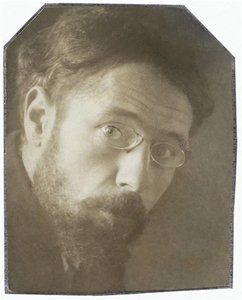
1867–1947, France
Pierre Bonnard
Early Life, Family and Training Pierre Bonnard entered the world on 3 October 1867 in Fontenay-aux-Roses, Hauts-de-Seine, France. He was born into a family of structured expectations; his father, Eugène Bonnard, held a senior position within the French Ministry of War. While his lineage was rooted in the administrative stability of the state, Pierre’s domestic sphere was shaped by his mother, Élisabeth Mertzdorff, who hailed from Alsace. He grew up alongside his brother, Charles, and his sister, Andrée, within a household that would eventually see his sister marry the composer Claude Terrasse.
Also by Pierre Bonnard
 Nude1920
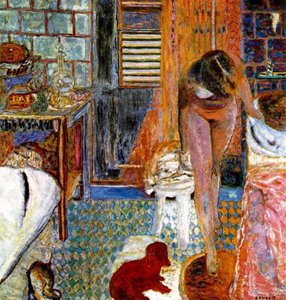 La toilette, ca Private1932
 The almond tree in blossom
 Le placard rouge (The Red Cupboard),1939

Essays around In Summer
 Renoir’s Impressionist Masterpieces: A Definitive Guide to Light, Color, and the Art of JoyExplore the luminous world of Pierre-Auguste Renoir. Discover the history, technique, and emotional depth behind his Impressionist masterpi…
 The Art of Home: Capturing Intimacy and Light in Impressionist Domestic ScenesDiscover the enchanting world of Impressionist domestic scenes. Explore how masters like Bonnard and Vuillard captured light and intimacy, …
 Impressionism's Finest: 10 Masterpieces That Revolutionized Art | OriginalUniqueArtJourney through Impressionism's golden age! Explore 10 masterpieces by Monet, Renoir & Degas that redefined art. Discover the stories behin…