
 Preview
 Send
Send Share
Share
 Details
 Guide
Guide

 Download
 Similars
 X-Ray
X-Ray Diaporama
 Q&A
Q&A Stats
StatsDancer

- 142.0 x 94.0 cm


 Read More
Giclée / Art Print
Museum-quality giclée or canvas print with fast production and flexible finish options. ( Buy Hand Made Painting Switch to Digital Image)




P118B $10

P118H $10

P118W $10

P438Z $10

P508JH $12

P508YH $12

P805H $10

P805Z $10

P919BZ $10

P919G $10

P919XJ $10

P959ZH $10

P968JZ $12

W106C $8

W218G $10

W218JH $8

W218Y $10

W307PJ $10

W316G $10

W316PJ $8

W316Y $10

W398PJ $8

W4111J $10

W500HY $15

W500JH $15

W692G $12

W849H $8

W940BG $15

W953PJ $8




Pick from our preset sizes that match the artwork's original proportions.

Type the width and the height you need, to fit your frame or your wall. A print can only be cut, never made bigger than the picture, so a size with a different shape loses a part of the image. We send you a digital mockup to approve before we print anything. The picture shown on this page does not show the real cut — only the mockup does.
Worldwide Delivery () in 2 weeks instead of standard 4/5 weeks. (8 November)

Free Worldwide Express Shipping

High-Quality Linen Canvas

Full Shipping Insurance

Customs Tax Refund Guarantee

True Color Matching Guarantee

100-Day Return Policy (Defects Only)

100% Money-Back Guarantee

Bulk Discount Offer
 Glass option is only available in size under 110 CM

Dancer
Giclée / Art Print
Reproduction Size
-


Total Price
$ 81
A Moment Frozen in Light and Grace: Exploring Renoir’s ‘The Dancer’
Pierre-Auguste Renoir's “The Dancer,” completed in 1874, stands as a quintessential emblem of Impressionism—a movement that irrevocably altered the course of art history. Currently residing within the hallowed halls of the National Gallery of Art in Washington D.C., this oil on canvas masterpiece transcends mere visual representation; it captures an ephemeral essence of beauty and movement, reflecting Renoir’s profound fascination with capturing fleeting moments of light and color.Composition and Observation
The painting depicts Gabrielle Renard, a young ballerina performing at the Paris Opera Ballet, poised elegantly on one leg while her other foot remains elevated—a position known as fifth position—demonstrating remarkable balance and grace. Renoir’s masterful composition directs the viewer's gaze directly to the dancer, emphasizing her centrality within the frame. Surrounding her is a subtle backdrop of muted tones – predominantly greens and browns – allowing the vibrant hues of her costume and the luminosity of the studio light to dominate the visual experience. This deliberate choice underscores Impressionism’s core principle: prioritizing sensory perception over meticulous detail.Impressionist Techniques: Brushstrokes as Emotion
Renoir's signature Impressionist technique is immediately apparent in the visible brushstrokes that animate the canvas. Rather than blending colors seamlessly, he applied paint in short, broken strokes—a revolutionary departure from academic painting’s smooth surfaces—creating a textured surface that vibrates with color and light. These energetic brushstrokes aren’t merely descriptive; they convey emotion and dynamism, mirroring the movement of the dancer herself. The artist skillfully utilizes complementary hues – particularly orange and blue – to heighten visual impact and create an illusion of depth.Historical Context: Challenging Artistic Conventions
“The Dancer” emerged during a period of significant artistic upheaval—the birth of Impressionism—challenging the established conventions of the Salon system, which favored idealized depictions and polished finishes. Artists like Renoir, Monet, Sisley, and Bazille sought to depict everyday life with unprecedented honesty and spontaneity, rejecting academic dogma in favor of capturing the immediacy of experience. This bold stance reflected a broader cultural shift toward valuing sensory perception and embracing artistic innovation.Symbolism and Emotional Resonance
Beyond its technical brilliance, “The Dancer” resonates deeply with viewers on an emotional level. The ballerina’s posture embodies poise, strength, and vulnerability—qualities that transcend the specific subject matter and speak to universal themes of beauty and grace. Renoir's masterful use of color contributes to this emotive impact, conveying a sense of warmth and luminosity that evokes feelings of serenity and admiration. The inclusion of flowers in her hand symbolizes purity and devotion, further enriching the painting’s symbolic significance.Legacy: Influence on Modern Art Movements
“The Dancer” served as an inspiration for subsequent artistic movements—including Fauvism and Cubism—demonstrating Impressionism's enduring influence on the trajectory of modern art. Artists like Henri Matisse and Pablo Picasso embraced Renoir’s innovative approach to color and brushstroke, pushing boundaries and redefining aesthetic standards. Today, reproductions of “The Dancer” continue to captivate audiences worldwide, cementing its place as a cornerstone of Impressionist art and a testament to Renoir's artistic genius.- View the painting on OriginalUniqueArt
- List of paintings by Pierre Auguste Renoir on Wikipedia
- The National Gallery of Art, Washington D.C. on OriginalUniqueArt
Questions & Answers
In which movement and which era is "Dancer" by Pierre-Auguste Renoir placed?
"Dancer" by Pierre-Auguste Renoir is placed in the Impressionism movement, within the 19th-Century era of its creator.
Where is "Dancer" suggested to be displayed, considering its palette?
The earthy colors of "Dancer" by Pierre-Auguste Renoir match its recommended space: a living room.
Is there a slideshow for "Dancer" by Pierre-Auguste Renoir?
"Dancer" by Pierre-Auguste Renoir can be viewed as a slideshow on the artwork's Diaporama page.
Artist Biography
A Childhood of Porcelain and Light
In the provincial streets of Limoges, France, a young boy named Pierre-Auguste Renoir began his life immersed in the delicate precision of craftsmanship. His father was a tailor, and the family eventually moved to Paris in 1845, seeking better prospects in the bustling capital. At thirteen, necessity led him into an apprenticeship as a porcelain painter, a role that demanded a keen eye for detail and a steady hand. This early work with ceramics instilled in him a lasting appreciation for color and texture. While his days were spent decorating fine china, his spirit often wandered toward the galleries of the Louvre. There, he studied the techniques of the Old Masters, absorbing the way they handled light and form.
The path from decorative art to the canvas was paved by a desire for something more expressive than mere reproduction. After leaving the porcelain factory, he sought formal training at the studio of Charles Gleyre. It was within this creative circle that he met fellow students such as Claude Monet, Alfred Sisley, and Frédéric Bazille. These friendships formed the bedrock of a new way of seeing. They shared a common goal to move away from the rigid rules of academic painting, preferring instead to capture the fleeting atmosphere of a moment. His early successes, like Lise with a Parasol in 1867, began to show this emerging interest in the natural world and the soft glow of outdoor light.
The Pulse of Parisian Life
As the years progressed, Renoir became a central figure in the movement known as Impressionism. He participated in the first exhibition of this group in 1874, displaying six paintings that challenged the traditional art establishment. His work during this period focused on the joy found in everyday social gatherings and the lively energy of the city. In works such as Dance at Le Moulin de la Galette, he used broken brushstrokes to mimic the way sunlight filters through leaves, creating a sense of movement and warmth. He did not seek grand historical narratives; rather, he looked for beauty in the simple pleasure of a summer afternoon or a group of friends enjoying a meal.
The subject matter of his canvases often celebrated the human form and the softness of skin. He had a particular talent for portraying feminine beauty, drawing inspiration from the sensual lines of Peter Paul Rubens and Jean-Antoine Watteau. His paintings, such as Luncheon of the Boating Party, captured the conviviality of life on the Seine, with figures bathed in a natural, luminous glow. This period of his life was defined by an embrace of the ephemeral, focusing on how light dances across fabric and settles upon a garden landscape.
A Shift Toward Form and Final Years
In the 1890s, Renoir’s approach to the canvas underwent a significant change. Following travels to Italy, where he studied the works of Raphael and Titian, he began to move away from the loose, blurry edges of his youth. He sought a more structured and classical method, emphasizing volume, contour, and clear lines. This transition toward a more disciplined technique is evident in his later works, such as The Great Bathers, which possess a sculptural quality. Despite the physical struggle of rheumatoid arthritis, which eventually forced him to paint with a brush attached to his hand, his dedication to his vision never wavered.
He eventually settled in Cagnes-sur-Mer, France, at the Domaine des Collettes, a place filled with olive groves and orange trees that provided fresh inspiration. In these later years, his palette remained warm, even as his style became more formal. He continued to produce portraits, landscapes, and still lifes until his death in 1919. His legacy remains tied to his ability to find divinity in the mundane, leaving behind a body of work that continues to reflect the warmth and light of the human experience.
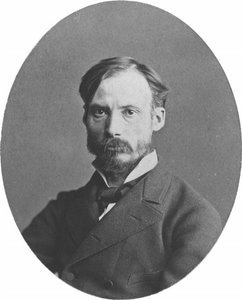
Pierre-Auguste Renoir
1841 - 1919 , France
Quick Facts
- Artistic Movement Or Style: Impressionism
- Artists Or Movements Influenced By This Artist: ['Impressionism']
- Artists Who Influenced This Artist:
- Gustave Courbet
- Édouard Manet
- Peter Paul Rubens
- Jean-Antoine Watteau
- Full Name: Pierre-Auguste Renoir
- Nationality: French
- Notable Artworks:
- Dance at Le Moulin de la Galette
- Luncheon of the Boating Party
- After the Bath
- Place Of Birth: Limoges, France
- Date Of Birth: 1841
- Date Of Death: 1919
Related Articles

25 Masterpieces by Pierre-Auguste Renoir: The Essence of Impressionism
Explore 25 iconic Pierre-Auguste Renoir masterpieces. Discover the beauty of Impressionism on OriginalUniqueArt.com.

Impressionistic Landscapes: 10 Masterpieces That Changed Art & Decor
Journey into the heart of Impressionism! Explore 10 masterpieces by Monet, Renoir & Degas that revolutionized landscape art. Discover their stories, techniques & find museum-quality reproductions to elevate your home decor on OriginalUniqueArt.com.
Impressionism's Greatest Hits: 10 Masterpieces for Your Home | OriginalUniqueArt
Journey through Impressionism's finest! Explore 10 masterpieces by Monet, Degas & Renoir – discover their stories, techniques & lasting impact. Find museum-quality art reproductions for your home at OriginalUniqueArt.com. Explore the full collection online.
Impressionism's Legacy: 10 Masterpieces That Transformed Art & Decor
Journey through Impressionism's radiant world! Explore 10 masterpieces by Monet, Renoir & Degas that revolutionized art. Discover the stories behind these iconic paintings and find museum-quality reproductions for your home at .
Impressionism's Finest: 10 Masterpieces That Revolutionized Art | OriginalUniqueArt
Journey through Impressionism's golden age! Explore 10 masterpieces by Monet, Renoir & Degas that redefined art. Discover the stories behind these iconic paintings and find museum-quality reproductions to elevate your home decor on OriginalUniqueArt.com.


