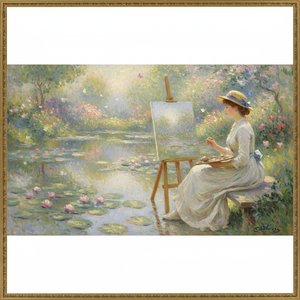
The Dawn of a New Vision: Challenging Academic Tradition
Impressionism was a 19th-century art movement characterized by visible brush strokes, open composition, emphasis on accurate depiction of light in its changing qualities (often accentuating the effects of the passage of time), ordinary subject matter...
For centuries, the art world adhered to strict conventions – historical narratives, religious allegories, and meticulously rendered realism dictated what constituted “good” painting. The French Académie held sway, its annual Salon exhibitions serving as gatekeepers to success and prestige. But beneath this veneer of order, a quiet rebellion was brewing. A new generation of artists, disillusioned with the constraints of tradition, began to question the very foundations of artistic representation. They sought not to depict the world *as it was*, but rather how it *appeared* – fleeting impressions captured in light and color. This wasn’t merely a stylistic shift; it was a philosophical one, prioritizing subjective experience over objective accuracy. Artists like Gustave Courbet had already paved the way with Realism, challenging idealized forms, but the Impressionists would take this defiance further, venturing beyond subject matter to revolutionize technique itself.
The mid-19th century Parisian art scene was a crucible of change. The rapid industrialization and urbanization of France created a dynamic, modern world that felt increasingly at odds with the classical themes favored by the Académie. This disconnect fueled a desire for new forms of expression – ones that could capture the energy, vibrancy, and transience of contemporary life. The seeds of Impressionism were sown in this fertile ground, nurtured by a shared frustration with established norms and a burgeoning fascination with the power of light.
En Plein Air: Capturing the Ephemeral Effects of Light & Atmosphere
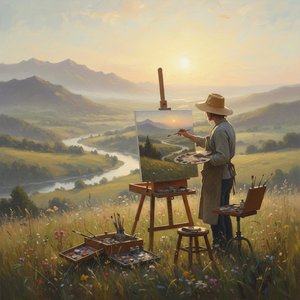 Capturing Ephemeral Light: A Comprehensive Exploration of Plein Air Painting's History & Enduring Legacy
Explore the rich history of plein air painting, from its origins with Constable & Corot to Impressionism's revolution. Discover techniques, key artists, and the enduring legacy of capturing light outdoors. Learn more at OriginalUniqueArt.
Central to the Impressionist revolution was the practice of en plein air – painting outdoors, directly from nature. This wasn’t simply about relocating the easel; it represented a fundamental shift in artistic methodology. Prior to this, paintings were largely completed in studios, relying on sketches and memory as aids. Pioneered by artists like Pierre-Henri de Valenciennes earlier in the century, en plein air allowed artists to meticulously observe the changing qualities of light and atmosphere in real time. The invention of portable paint tubes was crucial, enabling them to carry their palettes and capture these fleeting moments with greater ease.
Claude Monet’s early works, such as “Sailing Boats at Honfleur,” exemplify this dedication to outdoor observation. Inspired by Eugène Boudin's encouragement, Monet relentlessly pursued the nuances of light reflecting on water and sky. This wasn’t about creating a precise topographical record; it was about conveying the *sensation* of being present in that moment – the cool breeze, the shimmering sunlight, the subtle shifts in color as clouds drifted overhead. The challenge lay in capturing these ephemeral effects before they vanished, demanding quick brushwork and an intuitive understanding of light’s behavior. Artists weren't just painting landscapes; they were painting *time* itself.
The Rouen School painters, like Joseph Delattre, further refined this approach, bridging the gap between Barbizon naturalism and full-fledged Impressionism. Their dedication to capturing the atmospheric conditions of their surroundings laid the groundwork for the movement’s later developments.
Brushstrokes & Broken Color: The Techniques That Defined Impressionism
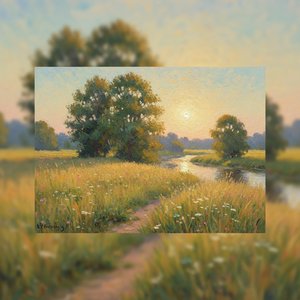 Capturing Fleeting Light: The Enduring Legacy of Impressionist Landscape Painting
Explore the captivating world of Impressionism! Discover its history, key artists, techniques & enduring legacy. Find museum-quality reproductions and expert art consultation at OriginalUniqueArt.
The shift to en plein air necessitated a new approach to technique. Traditional methods, with their emphasis on smooth blending and precise detail, were ill-suited for capturing the rapid changes of light and atmosphere. Impressionists abandoned these conventions in favor of visible brushstrokes, open composition, and a revolutionary use of color. They didn’t mix colors on the palette; instead, they applied small dabs of pure, unmixed pigment directly to the canvas, allowing the viewer's eye to blend them optically.
This technique, known as broken color, created a vibrant, shimmering effect that captured the luminosity of light. By juxtaposing complementary colors – blue and orange, red and green – they heightened the sense of visual intensity. The result wasn’t photographic realism; it was something far more dynamic and evocative. The paintings seemed to vibrate with life, capturing not just what the eye *saw*, but how it *perceived* light and color.
Consider Monet's “Vetheuil, Ice Floes.” The fragmented brushstrokes and interplay of cool blues and whites convey the chill of winter air and the shimmering surface of the ice. It’s a testament to the power of broken color to create atmosphere and evoke emotion. The emphasis wasn’t on meticulous detail but on capturing the overall impression – the fleeting sensation of light reflecting off the icy landscape.
Key Masters of Impressionism: Monet, Renoir, and Beyond
While many artists contributed to the Impressionist movement, a few key figures stand out as pioneers. Claude Monet, arguably the most iconic Impressionist, dedicated his career to capturing the ephemeral effects of light on various subjects – water lilies, haystacks, cathedrals, and landscapes. His series paintings, such as the Rouen Cathedral series, demonstrate his relentless pursuit of capturing a single subject under different lighting conditions.
Pierre-Auguste Renoir, known for his depictions of Parisian social life, brought a warmth and sensuality to Impressionism. His “Luncheon of the Boating Party” captures the joy and vibrancy of modern life with its dynamic composition and luminous colors. Edgar Degas, while often associated with Realism, embraced Impressionist techniques in his depictions of ballet dancers, capturing their fluid movements and fleeting poses.
Beyond these central figures, artists like Camille Pissarro, Alfred Sisley, and Berthe Morisot each brought a unique perspective to the movement. Pissarro’s landscapes captured the rural beauty of France, while Sisley focused on atmospheric effects and subtle color variations. Morisot, one of the few female Impressionists, depicted scenes of domestic life with delicate brushwork and luminous colors.
The Enduring Legacy: How Impressionism Shaped Modern Art
Initially met with harsh criticism from the conventional art community, Impressionism gradually gained acceptance and ultimately revolutionized the course of modern art. Its emphasis on subjective experience, fleeting moments, and innovative techniques paved the way for subsequent movements like Post-Impressionism, Fauvism, and Cubism. The Impressionists’ rejection of academic tradition liberated artists to explore new forms of expression, prioritizing personal vision over established norms.
The impact of Impressionism extends far beyond painting. Its influence can be seen in literature, music, and photography – any art form that seeks to capture the ephemeral beauty of the world around us. The movement’s legacy continues to inspire artists today, reminding us of the power of observation, experimentation, and individual expression.
Collecting Impressionism: Finding Your Place in a Timeless Movement
The allure of Impressionism lies not only in its historical significance but also in its enduring beauty. Collecting Impressionist art – whether original masterpieces or high-quality reproductions – allows you to connect with this transformative movement on a personal level. At OriginalUniqueArt.com, we offer museum-quality oil paintings and prints, meticulously crafted by skilled artists. Our commitment to authenticity and detail ensures that each reproduction captures the vibrancy and luminosity of the original artwork.
Whether you’re drawn to Monet’s water lilies, Renoir’s social scenes, or Degas’ ballet dancers, we can help you find the perfect piece to enhance your collection. Our free art consultation service provides personalized guidance on style selection, size recommendations, and framing options. Explore our extensive library of Impressionist masterpieces and discover the timeless beauty that continues to captivate audiences worldwide.