Preview
 Send
Send Share
Share
 Details

 Download
 Similars
 X-Ray
X-Ray Diaporama
 Stats
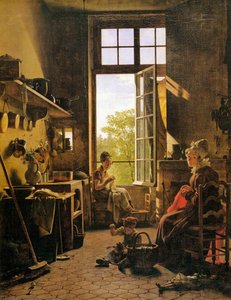
StatsInterior of a Kitchen
 Oil On Canvas
- WallArt
- Neoclassical Art
 1815
1815- 19th Century
 65.0 x 81.0 cm
 The Louvre
 Read More
Giclée / Art Print
Museum-quality giclée or canvas print with fast production and flexible finish options. ( Buy Hand Made Painting Switch to Digital Image)




P118B $10

P118H $10

P118W $10

P438Z $10

P508JH $12

P508YH $12

P805H $10

P805Z $10

P919BZ $10

P919G $10

P919XJ $10

P959ZH $10

P968JZ $12

W106C $8

W218G $10

W218JH $8

W218Y $10

W307PJ $10

W316G $10

W316PJ $8

W316Y $10

W398PJ $8

W4111J $10

W500HY $15

W500JH $15

W692G $12

W849H $8

W940BG $15

W953PJ $8




Pick from our preset sizes that match the artwork's original proportions.

You may enter your own dimensions to fit a specific frame or space. If your selected size does not match the original image's proportions, we will either crop the artwork or extend the image with a mirrored or solid-fill edge. A digital mockup will be sent for your approval before production begins.
Please note that the on-screen preview does not reflect the actual cropping or extension. Only the mockup will accurately show the final composition.
While custom sizes are available, we recommend selecting a dimension from the predefined list to preserve the original proportions.
Worldwide Delivery () in 2 weeks instead of standard 4/5 weeks. (16 September)

Free Worldwide Express Shipping

High-Quality Linen Canvas

Full Shipping Insurance

Customs Tax Refund Guarantee

True Color Matching Guarantee

100-Day Return Policy (Defects Only)

100% Money-Back Guarantee

Bulk Discount Offer
 Glass option is only available in size under 110 CM

Interior of a Kitchen
Giclée / Art Print
Reproduction Size
-


Total Price
$ 81
A Window into Parisian Domesticity
In the quiet corners of art history, certain works possess the unique ability to transcend their era, acting as temporal portals that invite us into a lost world. Michel Martin Drolling’s "Interior of a Kitchen," painted in 1815, is precisely such a masterpiece. It is far more than a mere documentation of a household routine; it is an intimate invitation into the heart of French domestic life during a period of profound transition. As Paris breathed with renewed vigor following the Napolelyonic Wars, Drolling captured a moment of profound serenity, elevating the mundane activities of a kitchen to a level of monumental grace. The scene unfolds as a carefully orchestrated tableau, where the boundaries between the everyday and the artistic blur, offering a sanctuary of understated elegance and palpable warmth.
The composition centers around a sturdy dining table, acting as an anchor for a group of figures engaged in what appears to be a quiet, communal moment. Through his masterful command of Neoclassical principles, Drolling presents a scene where the light seems to dance softly across the surfaces of ceramic bowls and glass bottles, lending a luminous quality to the room. The presence of everyday objects—the scattered bottles, the delicate cups, and even a touch of greenery from a potted plant—serves to ground the painting in reality while simultaneously contributing to a sense of organized beauty. There is a rhythmic balance to the placement of the figures and furniture, creating a visual harmony that guides the eye through the domestic landscape with ease and tranquility.
The Precision of Neoclassical Elegance
Drolling’s artistic journey, shaped by the rigorous training under the legendary Jacques-Louis David, is evident in every meticulous brushstroke of this work. Eschewing the turbulent emotionalism that would later define the Romantic movement, Drolling embraced a style characterized by remarkable precision and a deliberate restraint. His technique involves smooth, controlled applications of paint that achieve textures reminiscent of fine marble sculpture. This precision allows for an exquisite rendering of form, where the weight of the wooden furniture and the delicate translucency of glassware are rendered with breathtaking clarity.
The artist’s palette is a masterclass in subtle sophistication, leaning heavily on muted tones such as ochres, creams, and pale blues. These colors do not shout for attention; instead, they create an atmosphere of soft, diffused light that evokes a sense of timelessness. For the discerning collector or interior designer, this restrained color palette offers incredible versatility. A high-quality reproduction of this piece brings a sophisticated, calming energy to any space, acting as a focal point that commands respect through its subtlety rather than through overt spectacle. It is an artwork that rewards prolonged contemplation, revealing new layers of detail and light with every glance.
An Enduring Legacy for the Modern Collector
To possess a work inspired by Drolling is to hold a piece of the French Neoclassical soul. The emotional impact of "Interior of a Kitchen" lies in its ability to evoke nostalgia for a period of structured beauty and quiet intimacy. It speaks to the universal human desire for connection, community, and the sanctity of the home. In an era often characterized by chaos and rapid change, Drolling’s vision of a stable, serene domesticity remains deeply resonant.
For those seeking to curate an environment of historical depth and artistic refinement, this painting serves as an incomparable inspiration. Whether placed in a grand dining room to echo its subject matter or in a contemporary study to provide a classical counterpoint, the work transcends mere decoration. It becomes a conversation piece, a window into 1815 Paris, and a testament to the enduring power of Neoclassical grace. Investing in a hand-painted reproduction of this masterpiece allows the beauty of Drolling’s precision and the warmth of his vision to become a permanent part of your personal aesthetic legacy.
Artist Biography
Michel Martin Drolling: A Life in Neoclassical Art
Early Life and Education
Michel Martin Drolling was born on March 7, 1786, in Paris, France. He came from an artistic family; his father, Martin Drolling, was also a painter. This familial influence sparked young Michel’s interest in art, and he began his training under his father's supervision. In 1806, he furthered his education by studying with the renowned Neoclassical artist Jacques-Louis David, a pivotal moment that shaped his artistic trajectory.The Prix de Rome and Early Career
Drolling’s talent quickly became apparent, culminating in his winning of the prestigious Prix de Rome in 1810. This award granted him a scholarship to study at the French Academy in Rome. His winning submission was “The Wrath of Achilles,” demonstrating his mastery of classical themes and techniques. After completing his studies in Rome, he returned to Paris and began establishing himself as a painter.Artistic Style and Major Works
Drolling’s paintings are characterized by the hallmarks of Neoclassicism: theatricality, bright colors, dramatic contrasts of light and shadow, and meticulous attention to detail. He excelled in both historical painting and portraiture. Some of his most significant works include:- “The Death of Abel” (1817) – This work brought him considerable recognition after its exhibition at the Salon.
- “The Lord Descends to Earth to Establish his Empire and Spread his Good Deeds” – A large-scale ceiling painting for the Room of Illustrious Men at the Louvre.
- “The States-General of Tours” (1836) and “The Convention of Alexandria” (1837) – Both commissioned for the Museum of History in the Palace of Versailles.
- “Jesus Among the Doctors” (1840) – Created for the Church of Our-Lady-of-Loretto in Paris.
Recognition and Influence
Drolling’s talent was widely acknowledged, leading to his election as a member of the Académie des Beaux-Arts in 1837. He was subsequently appointed a professor at the École Nationale Supérieure des Beaux-Arts, where he shared his knowledge and expertise with aspiring artists. His students included notable figures such as Paul Baudry, Jules Breton, Roger Fenton, and many others.Historical Significance and Legacy
Michel Martin Drolling represents a key figure in the transition from Neoclassicism to later 19th-century artistic styles. While firmly rooted in classical principles, his work also foreshadows some of the dramatic flair that would characterize Romanticism. His large-scale historical paintings contributed significantly to the visual narrative of French history and national identity during a period of political and social change. He died in Paris on January 9, 1851, leaving behind a legacy of skillfully executed and historically significant artworks.
Michel Martin Drolling
1786 - 1851 , France
Quick Facts
- Birth Date: 1786
- Birth Place: Paris, France
- Death Date: 1851
- Influenced:
- Paul Baudry
- Victor Biennourry
- Jules Breton
- Theodor Aman
- Roger Fenton
- Influenced By: Jacques-Louis David
- Movement: Neoclassicism
- Name: Michel Martin Drolling
- Nationality: French
- Notable Works:
- The Wrath of Achilles
- Death of Abel
- Lord Descends to Earth
- States-General of Tours
- Convention of Alexandria
- Jesus Among the Doctors
Related Articles

Elevating Interiors: How Murals are Redefining Kitchens and Bathrooms
Transform your kitchen & bathroom with stunning murals! Explore design trends, durable materials & expert advice. Elevate your interiors with OriginalUniqueArt.com's bespoke mural solutions.

Neoclassical Art: The Timeless Elegance of Order, Virtue, and Classical Grace
Explore the profound elegance of Neoclassical art. Discover the principles of order, symmetry, and virtue through the works of masters like David and Mengs. Immerse yourself in a journey of classical grace and timeless aesthetic perfection.
Harmonizing Contrasts: Integrating Abstract Art into Classic Interiors for Timeless Modernity
Elevate your classic home with abstract art! Discover expert tips for seamlessly blending modern pieces into timeless interiors. Find the perfect artwork & design advice at OriginalUniqueArt.
The Timeless Elegance of Academic Classicism: A Journey Through Order, Precision, and the Pursuit of Perfection
Explore the profound beauty of Academic Classicism. Discover how masters used order, precision, and classical ideals to achieve timeless perfection in art history, from Neoclassical portraits to the pursuit of ideal beauty.

Neo-Classicism's Greatest Hits: 10 Masterpieces for Your Home |
Journey through Neo-Classicism's finest! Explore 10 iconic masterpieces by David, Ingres & Canova. Discover art history, techniques & timeless beauty – perfect for inspiring your home decor. Find museum-quality reproductions at