Preview
 Send
Send Share
Share
 Details
 Guide
Guide

 Download
 Similars
 X-Ray
X-Ray Diaporama
 Q&A
Q&A Stats
StatsChirst befire pilate

 Read More
Giclée / Art Print
Museum-quality giclée or canvas print with fast production and flexible finish options. ( Buy Hand Made Painting Switch to Digital Image)




P118B $10

P118H $10

P118W $10

P438Z $10

P508JH $12

P508YH $12

P805H $10

P805Z $10

P919BZ $10

P919G $10

P919XJ $10

P959ZH $10

P968JZ $12

W106C $8

W218G $10

W218JH $8

W218Y $10

W307PJ $10

W316G $10

W316PJ $8

W316Y $10

W398PJ $8

W4111J $10

W500HY $15

W500JH $15

W692G $12

W849H $8

W940BG $15

W953PJ $8




Pick from our preset sizes that match the artwork's original proportions.

Type the width and the height you need, to fit your frame or your wall. A print can only be cut, never made bigger than the picture, so a size with a different shape loses a part of the image. We send you a digital mockup to approve before we print anything. The picture shown on this page does not show the real cut — only the mockup does.
Worldwide Delivery () in 2 weeks instead of standard 4/5 weeks. (2 November)

Free Worldwide Express Shipping

High-Quality Linen Canvas

Full Shipping Insurance

Customs Tax Refund Guarantee

True Color Matching Guarantee

100-Day Return Policy (Defects Only)

100% Money-Back Guarantee

Bulk Discount Offer
 Glass option is only available in size under 110 CM

Chirst befire pilate
Giclée / Art Print
Reproduction Size
-


Total Price
$ 81
Subject and Narrative Depth
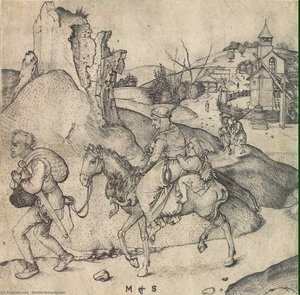
This masterful engraving captures a pivotal moment from the Passion of Christ, depicting Him before Pontius Pilate. The scene is rich with emotional intensity, illustrating the tense interaction between the Roman governor and the condemned Christ. Surrounding figures, including soldiers and onlookers, add layers of narrative, emphasizing themes of judgment, authority, and divine sacrifice. The composition invites viewers to contemplate the gravity of this biblical event, evoking feelings of reverence, reflection, and spiritual introspection.Artistic Style and Technique
Created in the Northern Renaissance style, this piece exemplifies the meticulous craftsmanship of early printmaking. The artist employs fine lines, delicate cross-hatching, and stippling to achieve remarkable detail and depth. The monochromatic palette, relying solely on black ink against white paper, enhances the dramatic contrast and highlights the intricate textures of drapery, facial expressions, and architectural elements. The engraving technique allows for precise control over light and shadow, giving the scene a three-dimensional quality that draws viewers into its complex narrative.Historical Context and Significance
Produced during the late 15th century, this engraving reflects the burgeoning interest in religious themes and the development of printmaking as an art form. Artists like Martin Schongauer pioneered the use of detailed line work to communicate profound spiritual stories accessible to a broader audience. This work not only served as a devotional object but also as a means of disseminating biblical stories across Europe, influencing countless artists and engravers. Its historical importance lies in its role in shaping religious art and printmaking techniques during the Renaissance.Symbolism and Emotional Impact
Every element within this scene is imbued with symbolic meaning. The act of Pilate washing his hands signifies the abdication of moral responsibility, while the intense expressions of the figures convey a spectrum of human emotion—confusion, anger, compassion, and foreboding. The detailed rendering of gestures and facial features fosters a visceral connection, allowing viewers to experience the tension and solemnity of the moment. This engraving’s emotional power lies in its ability to evoke empathy and spiritual reflection, making it a compelling centerpiece for both private collections and sacred spaces.Perfect for Collectors and Interior Design
This high-quality reproduction offers art lovers, collectors, and interior designers an exceptional opportunity to own a piece of Renaissance religious artistry. Its intricate detail and historical significance make it a timeless addition to any collection or interior setting. Whether displayed in a study, gallery wall, or sacred space, this engraving provides a sophisticated focal point that inspires contemplation and admiration. Its enduring beauty and profound narrative make it an investment in both art and spiritual heritage.Questions & Answers
What color saturation does "Chirst befire pilate" by Martin Schongauer have?
The colors of "Chirst befire pilate" by Martin Schongauer have a muted saturation. Saturation describes how vivid or muted the colors are.
Where does "Chirst befire pilate" stand among Martin Schongauer's recurring subjects?
"Chirst befire pilate" depicts religious scene, christ before pilate, judgment scene, religious print, detailed engraving, biblical event, narrative composition, monochrome art, while Martin Schongauer's recorded themes are religious biblical scene. Comparing the two shows how the work relates to the artist's usual subjects.
How do I discover artworks close to "Chirst befire pilate" by Martin Schongauer?
The Similars page of "Chirst befire pilate" by Martin Schongauer presents related artworks.
Artist Biography
Martin Schongauer: Life and Legacy
Early Life and Training
Martin Schongauer, born around 1450 in Colmar, Alsace (now France), was a pivotal figure in the development of printmaking during the Northern Renaissance. He came from a family of artisans; his father, Caspar Schongauer, was a goldsmith who had moved to Colmar from Augsburg, Germany, around 1440. This familial background significantly influenced Martin’s early artistic training, as goldsmithing provided a strong foundation in precise detail and metalworking techniques – skills directly transferable to engraving.
Education and Artistic Development
In 1465, Schongauer briefly attended the University of Leipzig, but he soon abandoned academic pursuits to dedicate himself fully to art. He initially trained as a painter under Caspar Isenmann, a local master influenced by Early Netherlandish painting, particularly the work of Rogier van der Weyden. This early exposure to Netherlandish realism and attention to detail would become hallmarks of Schongauer’s own style.
Artistic Style and Influences
Schongauer's artistic style is characterized by a clear, organized Gothic aesthetic blended with the emerging influences of the Northern Renaissance. He notably lacked direct Italian influence, instead drawing inspiration from German and Early Netherlandish traditions. His work demonstrates meticulous detail, expressive figures, and a sophisticated understanding of composition.
- Key Characteristics: Precise engraving, realistic depictions, dramatic narratives, Gothic structure
- Influences: Rogier van der Weyden, Caspar Isenmann, German Gothic traditions
Major Achievements and Works
Schongauer is best known for his 116 engravings, each identified by his monogram. These prints were widely disseminated throughout Europe, significantly impacting the development of printmaking techniques and artistic styles. His engravings often depicted religious scenes, portraits, and allegorical subjects.
- Madonna of the Rose Bower (1473): A significant painting showcasing his skill in depicting delicate details and emotional depth.
- Engravings: Including *The Temptation of Saint Anthony*, *The Adoration of the Shepherds*, and numerous others, demonstrating his mastery of the engraving technique.
Historical Significance and Legacy
Martin Schongauer’s impact on the art world was substantial. He was one of the first German artists to achieve international recognition as an engraver. His prints were highly sought after and widely copied, spreading his artistic style across Europe. It is even documented that Michelangelo himself studied and copied one of Schongauer's engravings – *The Trial of Saint Anthony* – demonstrating the high regard in which Schongauer was held by later masters.
Schongauer’s work bridged the gap between Gothic art and the Renaissance, paving the way for artists like Albrecht Dürer. His innovative use of engraving techniques and his commitment to artistic detail left an enduring legacy on the history of printmaking and Northern European art.
Death
Martin Schongauer died in Breisach on February 2, 1491, leaving behind a remarkable body of work that continues to be celebrated for its artistic merit and historical significance.

Martin Schongauer
1450 - 1491 , Germany
Quick Facts
- Name: Martin Schongauer
- Movement:
- Gothic art
- Northern Renaissance
- Birth Date: c. 1450–1453
- Death Date: 2 February 1491
- Influenced:
- Michelangelo
- Albrecht Dürer
- Birth Place: Colmar, Alsace
- Nationality: German
- Date Of Birth: 1450
- Date Of Death: 1491
- Influenced By:
- Rogier van der Weyden
- Caspar Isenmann
- Notable Works:
- Madonna of the Rose Bower
- Engravings (116)
- Place Of Birth: Augsburg, Germany
Related Articles

The Art of Devotion: Capturing the Grandeur and Spiritual Drama of Religious Processions in Art History
Explore the profound beauty of religious processions in art history. From Baroque drama to spiritual transcendence, discover how masters captured faith. OriginalUniqueArt.com offers exquisite, hand-painted oil reproductions for discerning collectors seeking timeless grandeur.

25 Divine Masterpieces by Fra Angelico: The Painter of Heaven
Explore 25 divine Fra Angelico masterpieces of the Early Renaissance. Discover museum-quality art on OriginalUniqueArt.com.
Sacred Narratives on Canvas: Exploring Religious Painting Through History
Explore the rich history of religious painting with OriginalUniqueArt.com! Discover iconic artworks, symbolism & techniques from antiquity to the Renaissance. Enhance your art appreciation today.
Sacred Narratives Embodied: A Comprehensive Exploration of Religious Iconography in Art History
Explore the rich history of religious iconography in art! Discover symbolism, movements & masterpieces from Byzantine to Renaissance periods. Expert insights for collectors and enthusiasts at OriginalUniqueArt.

Sacred Symbols: Decoding the Iconography and Spiritual Power of the World’s Greatest Religious Masterpieces
Explore the profound history and symbolism of the world's greatest religious artworks. From Byzantine icons to Renaissance masters, journey through sacred iconography with our expert guide and discover museum-quality, hand-painted oil reproductions for your collection.