Text size

() ·

A painting made for you, by hand

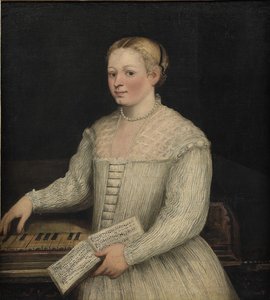
Self-Portrait

Hand Made Oil Reproduction

Hand-painted oil on canvas in your size and frame, made to order by our artists. ( Switch to Print Switch to Digital Image)

Collectible Description

Discover Marietta Robusti’s ‘Self-Portrait’ (1580), a rare Venetian masterpiece. Explore this poignant self-portrait by a pioneering female artist, showcasing Renaissance style & historical significance.

Artist Biography

Marietta Robusti (1560-1590), daughter of Tintoretto, was a Renaissance Venetian painter noted for portraits & assisting her father. Discover the life & work of 'la Tintoretta', challenging female artistic norms.

from ·

Chapter 1

How large should it be?

Slide to change the size; the picture on the left shows the frame at its real width. The proportions of the original are kept.

Standard
custom
CM
INCH

Pick from our preset sizes that match the artwork's original proportions.

width
height

Type the width and the height you need, to fit your frame or your wall. This is hand-painted, so for a size with a different shape the artist can paint a bit more around the picture, or cut a bit — you choose. We send you a digital mockup to approve before the painting starts. The picture shown on this page does not show the real result — only the mockup does.

Chapter 2

How should it arrive?

Choose the edges of the stretched canvas

Choose your frame

Corner sample of the WhiteWrap canvas edge finish, stretched on solid wood bars
White $1
Corner sample of the BlurSideWrap canvas edge finish, stretched on solid wood bars
Blurside $1
Corner sample of the ExtendedWrap canvas edge finish, stretched on solid wood bars
Extended $1
Corner sample of the P118B picture frame: moulded polystyrene, 5 cm wide and 3 cm thick
P118B $10
Corner sample of the P118H picture frame: moulded polystyrene, 5 cm wide and 3 cm thick
P118H $10
Corner sample of the P118W picture frame: moulded polystyrene, 5 cm wide and 3 cm thick
P118W $10
Corner sample of the P438Z picture frame: moulded polystyrene, 5.5 cm wide and 3.5 cm thick
P438Z $10
Corner sample of the P508JH picture frame: moulded polystyrene, 7 cm wide and 3.5 cm thick
P508JH $12
Corner sample of the P508YH picture frame: moulded polystyrene, 7 cm wide and 3.5 cm thick
P508YH $12
Corner sample of the P805H picture frame: moulded polystyrene, 5 cm wide and 3.5 cm thick
P805H $10
Corner sample of the P805Z picture frame: moulded polystyrene, 5 cm wide and 3.5 cm thick
P805Z $10
Corner sample of the P919BZ picture frame: moulded polystyrene, 7 cm wide and 3.5 cm thick
P919BZ $10
Corner sample of the P919G picture frame: moulded polystyrene, 7 cm wide and 3.5 cm thick
P919G $10
Corner sample of the P919XJ picture frame: moulded polystyrene, 7 cm wide and 3.5 cm thick
P919XJ $10
Corner sample of the P959ZH picture frame: moulded polystyrene, 5 cm wide and 3 cm thick
P959ZH $10
Corner sample of the P968JZ picture frame: moulded polystyrene, 6 cm wide and 4 cm thick
P968JZ $12
Corner sample of the W106C picture frame: solid wood, 5 cm wide and 3 cm thick
W106C $8
Corner sample of the W218G picture frame: solid wood, 5 cm wide and 3 cm thick
W218G $10
Corner sample of the W218JH picture frame: solid wood, 5 cm wide and 3 cm thick
W218JH $8
Corner sample of the W218Y picture frame: solid wood, 5 cm wide and 3 cm thick
W218Y $10
Corner sample of the W307PJ picture frame: solid wood, 6 cm wide and 3 cm thick
W307PJ $10
Corner sample of the W316G picture frame: solid wood, 6 cm wide and 3 cm thick
W316G $10
Corner sample of the W316PJ picture frame: solid wood, 6 cm wide and 3 cm thick
W316PJ $8
Corner sample of the W316Y picture frame: solid wood, 6 cm wide and 3 cm thick
W316Y $10
Corner sample of the W398PJ picture frame: solid wood, 5 cm wide and 3 cm thick
W398PJ $8
Corner sample of the W4111J picture frame: solid wood, 6.5 cm wide and 3.5 cm thick
W4111J $10
Corner sample of the W500HY picture frame: solid wood, 7 cm wide and 5 cm thick
W500HY $15
Corner sample of the W500JH picture frame: solid wood, 7 cm wide and 5 cm thick
W500JH $15
Corner sample of the W692G picture frame: solid wood, 8 cm wide and 4 cm thick
W692G $12
Corner sample of the W849H picture frame: solid wood, 5 cm wide and 3 cm thick
W849H $8
Corner sample of the W940BG picture frame: solid wood, 7.5 cm wide and 4.5 cm thick
W940BG $15
Corner sample of the W953PJ picture frame: solid wood, 6 cm wide and 3.5 cm thick
W953PJ $8
Corner sample of the H24-GOLD picture frame: carved wood with gesso, 10 cm wide and 6 cm thick
H24-GOLD $30
Corner sample of the H24-SILVER picture frame: carved wood with gesso, 10 cm wide and 6 cm thick
H24-SILVER $30
Corner sample of the H36-GOLD picture frame: carved wood with gesso, 15 cm wide and 6.5 cm thick
H36-GOLD $45
Corner sample of the H36-SILVER picture frame: carved wood with gesso, 15 cm wide and 6.5 cm thick
H36-SILVER $45
Frame preview
Framed

Moulding: . Overall size with the frame: .

Chapter 3

Who paints it, and should anything change?

Examples of what can be changed: Replace face with customer photo; Add pet (e.g., replace cat with dog); Include hidden message in background; Change background landscape or elements.
After order, OriginalUniqueArt.com team will email client for instructions and provide a mockup preview

Worldwide Delivery () in 3/4 weeks instead of standard 5 weeks. (9 November). No compromise on quality.

Chapter 4

The finishing touches

A nameplate, as in a museum?

Engraved Bronze Plaque Details

This elegant plaque features the artist's name and the title of the artwork, finely engraved for a timeless presentation.

It is made from bronze with a refined, elegant finish. The text is precisely laser-engraved for a sharp and permanent result. Measuring 9x2 cm, the plaque is compact yet easy to read. It's built to be durable and scratch-resistant, offering a professional, museum-quality look. Mounting is simple thanks to the included adhesive backing.

Transparent Acrylic Plaque Details

The plaque includes essential engraved details such as the artist's name, the title of the artwork, the date it was created, the type of media used-like oil on canvas or watercolor-a brief description of the piece, and a QR code that links to the complete artwork information.

It is crafted from clear acrylic, offering a sleek, modern appearance. The text is UV-engraved in black to ensure strong visual contrast. With a size of 10x15 cm, it ensures optimal readability. It comes equipped with two metal hooks for secure wall mounting. The plaque is designed to be weather-resistant, making it suitable for various environments, and it includes interactive features that work seamlessly with smartphone scanning.

Black Acrylic Plaque Details

This elegant plaque includes engraved information such as the artist's name, the title of the artwork, the date it was created, the type of media used (like oil on canvas or watercolor), a short description of the artwork, and a QR code for quick access to more information.

The plaque itself is made from refined black acrylic with a premium finish. The text is laser-engraved in white for high contrast and readability. Its size is 10x15 cm, designed to be easy to read. It comes with two metal hooks for professional mounting. The design is sleek and fits any interior style. It is also weather-resistant and durable, with built-in digital integration for mobile compatibility.

A protective varnish?

When do you need it?

Chapter 5

Your painting, as you ordered it

Self-Portrait

Reproduction Medium

Reproduction Size

-

Elite Senior Artist

More detail, finesse, and extra production time

-

Reproduction Frame

-

-

For artworks or reproductions larger than 105 cm (approximately 41 inches) on any side, the frame will be shipped as a kit, disassembled. This method ensures safe delivery and prevents damage during transport.

Professional assembly required - this is not a DIY product.
The kit must be assembled and the canvas stretched by an experienced professional framer, using wood glue (not supplied), a canvas stretching plier and clamps to hold the bars square while the glue dries. Incorrect assembly or uneven canvas tension can permanently damage the artwork and is not covered by our warranty.

  • All solid wood bars are included, precisely cut to size.

  • Assembled with the screws provided, plus wood glue for the corner joints, which is not supplied and must be sourced by your framer.

  • Professional tools are required and not included: a canvas stretching plier (tensioner) and clamps to hold the bars square while the glue dries.

Important:
The corner joints require wood glue, the bars must be held with clamps until the glue is fully dry, and tightening the canvas on the assembled frame requires a canvas stretching plier. None of these are included in the kit. Please arrange an experienced professional framer before ordering this size.

Nameplate

-

-

Protective Varnish

Glossy Varnish (enhances colors, protects against light/moisture)

-

Customize My Artwork

Examples of what can be changed: Replace face with customer photo; Add pet (e.g., replace cat with dog); Include hidden message in background; Change background landscape or elements.

-

Urgent

Worldwide Delivery () in 3/4 weeks instead of standard 5 weeks. (9 November). No compromise on quality.

-

Express Shipping

Worldwide Delivery () in 5 weeks. (16 November).

Included

Total Price

$ 300

Total Price $ 300

Glass option is only available in size under 110 CM

Included with every order

  • Free Worldwide Express Shipping
  • High-Quality Linen Canvas
  • Full Shipping Insurance
  • Customs Tax Refund Guarantee
  • True Color Matching Guarantee
  • 100-Day Return Policy (Defects Only)
  • 100% Money-Back Guarantee
  • Bulk Discount Offer

The Quiet Resonance of Genius: A Portrait of Marietta Robusti

To stand before this depiction of Marietta Robusti is to encounter not merely a likeness, but a moment suspended in the rich, vibrant tapestry of late Renaissance Venice. The air around her seems thick with the scent of aged varnish and the ghost notes of music yet unplayed. She is captured in an intimate, three-quarter pose, seated before the elegant expanse of a harpsichord. Her gaze, though directed slightly away from the viewer, possesses an undeniable intelligence—a quiet dignity that speaks volumes of her intellect and artistic immersion. The composition itself guides the eye with masterful subtlety; the gentle diagonal sweep created by her posture and the instrument anchors the scene, while the dark, undifferentiated background serves to heighten the luminosity emanating solely from her figure.

Technique and Material Mastery

The artist, working in a style deeply rooted in Venetian portraiture, demonstrates an exquisite command of oil paint. One can almost feel the meticulous layering that gives depth to the textures presented. Observe the contrast between the smooth, porcelain quality of her skin—highlighted by soft, diffused light catching her cheekbone—and the crisp articulation of the lace at her collar. The handling of fabric is particularly noteworthy; the woven texture of her gown and the delicate folds suggest a painter who understood how light interacts with different materials. The inclusion of sheet music adds another layer of technical brilliance, requiring fine, precise lines to delineate the paper's edges against the polished wood of the keyboard. This attention to varied surface quality elevates the piece beyond simple representation into a study of material existence.

A Window into Venetian Culture and Ambition

This portrait is more than just a depiction of a musician; it is a cultural artifact from 1580 Venice. Marietta, daughter of the celebrated Tintoretto, lived within an environment where artistic genius was both nurtured and constrained by social expectation. The presence of the instrument and music serves as potent symbolism: it speaks to her cultivated talent, perhaps hinting at patronage or the intellectual life afforded to women of means. Her attire subtly communicates her standing within Venetian society. It is a portrait steeped in the gravity of an era where art was inextricably linked to status, making her quiet composure feel like a declaration of self-worth.

Emotional Echoes for the Modern Collector

For the contemporary collector or designer seeking pieces that breathe history into modern interiors, this reproduction offers profound emotional resonance. The mood is one of contemplative beauty—a sense of focused artistry and enduring grace. It invites quiet reflection, suggesting that true genius often resides not in grand pronouncements, but in moments of deep concentration. Owning a piece like this allows one to curate an atmosphere steeped in the romance of the Renaissance masters, bringing home a tangible echo of Venetian brilliance.

Questions & Answers

What color intensity does "Self-Portrait" by Marietta Robusti have?

"Self-Portrait" by Marietta Robusti shows a monochromatic color intensity.

What is the emotional tone of "Self-Portrait" by Marietta Robusti?

The emotional tone recorded for "Self-Portrait" by Marietta Robusti is reflective. It summarizes the feeling the work expresses.

Where does "Self-Portrait" fall in Marietta Robusti's career?

Within Marietta Robusti's career, "Self-Portrait" falls in the Renaissance. The phase helps compare it with the artist's other works.

More about this painting

Preview AR preview Switch to Print Switch to Digital Image Send
Details Guide Add to favorites Download Similars X-Ray Diaporama Q&A Stats

In numbers

  • 1580the year it was painted
  • 29frames to choose from
  • standard sizes, in its own proportions
  • 5weeks to paint and deliver it
Marietta Robusti

Marietta Robusti

1554 - 1590, Italy

Quick facts about Marietta Robusti

  • Full Name: Marietta Robusti
  • Nationality: Italian
  • Date Of Birth: 1554
  • Date Of Death: 1590
  • Place Of Birth: Venice, Italy
  • Notable Artworks:
    • Self-portrait
    • Portrait of Ottavio Strada
  • Artistic Movement Or Style: Renaissance
  • Artists Who Influenced This Artist: ['Tintoretto']
  • Artists Or Movements Influenced By This Artist: ['Tintoretto']

Artist Biography

Marietta Robusti: A Venetian Daughter’s Brushstroke

The world of 16th-century Venice, a crucible of artistic innovation and social constraint, produced a remarkable figure – Marietta Robusti, often known as “la Tintoretta.” Daughter of the celebrated master Jacopo Robusti, better recognized as Tintoretto, she navigated a challenging landscape for female artists, leaving behind a legacy of subtle brilliance and a poignant story of ambition, family, and untimely death. Her life, shrouded in some mystery due to limited primary sources, offers a fascinating glimpse into the dynamics of Venetian art production during a pivotal era.

Born around 1560 – though the exact year remains debated between 1555 and 1560 – Marietta’s early life was inextricably linked to her father's workshop. Tintoretto’s studio wasn’t merely a place of work; it was a vibrant, collaborative environment where artistic techniques were honed through shared experience. While the precise nature of her training remains somewhat elusive, it is believed that she contributed significantly to Tintoretto’s projects, primarily executing backgrounds and blocking out figures – tasks typically assigned to women within the established workshop hierarchy. This wasn't simply menial labor; it was a crucial element in the creation process, allowing her to absorb the master’s techniques and develop her own artistic sensibility.

A Daughter’s Apprenticeship and Artistic Identity

Marietta’s nickname, “la Tintoretta,” reflects both her lineage and her distinctive style. It translates as "little dyer girl," a nod to her grandfather's profession – a tintore, or dyer – and subtly alludes to the vibrant colors that characterized Tintoretto’s work. Her family history was complex; her father had married Faustina Episcopi, who later died, and he subsequently remarried, adding three half-brothers to his immediate family. This blended familial structure undoubtedly influenced Marietta's upbringing.

Interestingly, accounts from the time reveal that Marietta adopted a masculine guise – dressing as a boy – during her early years with Tintoretto. This unconventional choice wasn’t simply a childish whim; it was a deliberate strategy to gain access to the workshop and participate more fully in the artistic process, defying societal expectations for women at the time. Carlo Ridolfi, Tintoretto's biographer, vividly describes this period, highlighting Marietta’s close bond with her father and his evident affection for her.

Notable Works and Artistic Style

Despite the limitations placed upon female artists, Marietta Robusti managed to leave a discernible mark on Venetian art. While she didn’t receive independent commissions for major religious works like altarpieces – a common path for male painters – her contributions are nonetheless significant. The most widely accepted attribution is to her “Venetian Woman” (circa 1580), currently housed in the Uffizi Gallery in Florence. This portrait, rich with opulent colors and elegant detail, showcases her ability to capture likeness and convey a sense of dignified composure.

Furthermore, she assisted her father on several notable paintings, including “Portrait of Ottavio Strada” (1567), demonstrating her understanding of Tintoretto’s signature *chiaroscuro* technique – the dramatic use of light and shadow that defines his style. Her work often involved creating atmospheric backgrounds and subtly shaping figures within a composition, contributing to the overall harmony and dynamism of the paintings.

A Tragic End and Lasting Legacy

Marietta’s life was tragically cut short in 1590 at the age of thirty. She died during childbirth, a common fate for women of that era. Her death profoundly affected Tintoretto, who reportedly created a poignant posthumous portrait of her on her deathbed – an image that speaks volumes about their deep and enduring connection.

Following her demise, Marietta’s artistic achievements were largely overshadowed by those of her father. However, in more recent decades, scholars have begun to recognize the significance of her contributions and challenge the traditional narrative that has relegated her to a footnote in Venetian art history. Her story serves as a powerful reminder of the obstacles faced by female artists during the Renaissance and the enduring legacy of a talented woman who defied convention through her skill, determination, and familial ties.

Further Exploration

Quick Facts

  • Notable elements or techniques:
    • Soft diffused lighting
    • Layering and glazing
  • Artist: Marietta Robusti
  • Medium: Oil paint on canvas/panel
  • Artistic style: Renaissance portraiture

Art Quiz

There is only one correct answer for each question.

Question 1:
What is the primary subject depicted in Marietta Robusti’s ‘Self-Portrait with Madrigal’?
Question 2:
Which artistic movement is most closely associated with Marietta Robusti’s style as evidenced in this painting?
Question 3:
What is the significance of the sheet music (madrigal) held by Marietta Robusti in the painting?
Question 4:
The painting was created in which century?
Question 5:
What does the inclusion of a madrigal suggest about Marietta Robusti’s position within Venetian art circles?