

 Preview
 Send
Send Share
Share
 Details
 Guide
Guide

 Download
 Similars
 X-Ray
X-Ray Diaporama
 Stats
StatsStill Life Flowers
 Acrylic On Canvas
- WallArt
- Dutch Golden Age
 1944
1944 64.0 x 64.0 cm
 British Council Collection
 Read More
The artwork displayed on this page is protected by copyright law, which means we cannot legally create or sell an identical reproduction. This protection is enforced under international agreements such as the Berne Convention and by national laws, including those outlined by the U.S. Copyright Law - Title 17.
This method fully complies with copyright regulations because it does not involve copying or duplicating the protected artwork. Instead, it is a creative reinterpretation - a new painting that is influenced by the original but not identical to it.
Giclée / Art Print
Museum-quality giclée or canvas print with fast production and flexible finish options. ( Buy Hand Made Painting Switch to Digital Image)




P118B $10

P118H $10

P118W $10

P438Z $10

P508JH $12

P508YH $12

P805H $10

P805Z $10

P919BZ $10

P919G $10

P919XJ $10

P959ZH $10

P968JZ $12

W106C $8

W218G $10

W218JH $8

W218Y $10

W307PJ $10

W316G $10

W316PJ $8

W316Y $10

W398PJ $8

W4111J $10

W500HY $15

W500JH $15

W692G $12

W849H $8

W940BG $15

W953PJ $8




Pick from our preset sizes that match the artwork's original proportions.

Type the width and the height you need, to fit your frame or your wall. A print can only be cut, never made bigger than the picture, so a size with a different shape loses a part of the image. We send you a digital mockup to approve before we print anything. The picture shown on this page does not show the real cut — only the mockup does.
Worldwide Delivery () in 2 weeks instead of standard 4/5 weeks. (26 October)

Free Worldwide Express Shipping

High-Quality Linen Canvas

Full Shipping Insurance

Customs Tax Refund Guarantee

True Color Matching Guarantee

100-Day Return Policy (Defects Only)

100% Money-Back Guarantee

Bulk Discount Offer
 Glass option is only available in size under 110 CM

Still Life Flowers
Giclée / Art Print
Reproduction Size
-


Total Price
$ 81
A Quiet Reflection: Lawrence Gowing’s Still Life Flowers
Lawrence Burnett Gowing (1918-1991) wasn't merely an artist; he was a pivotal figure in the landscape of 20th-century British art, a dedicated educator whose influence resonated through generations of artists and scholars. Born in Hackney, East London – a surprisingly humble beginning for one who would later command respect within the highest echelons of the art world – Gowing’s early life was shaped by his Quaker upbringing and a keen observation of the urban environment, as evidenced by his earliest work, “Mare Street, Hackney,” a vibrant snapshot of his father's drapery shop. This initial foray into painting laid the groundwork for a career that seamlessly blended artistic creation with rigorous academic study and passionate teaching. Gowing’s formal art training began at Leighton Park School in Gloucestershire and continued at Euston Road School under William Coldstream – a formative influence that instilled in him a commitment to both meticulous realism and expressive color palettes. This dedication would become central to his artistic vision, particularly evident in pieces like “Still Life Flowers,” completed in 1944. The painting depicts a vase brimming with daisies and carnations against a muted brown backdrop, capturing a moment of serene beauty within the confines of domestic space.Style and Technique: Precision Meets Impressionistic Touches
Gowing’s approach to painting combined the exacting standards of British Academic Art with subtle hints of Impressionism. Like many artists of his time, he prioritized accurate representation—the careful rendering of petal textures, stem contours, and vase form—yet he skillfully modulated light and shadow to imbue the composition with a palpable sense of atmosphere. The muted brown hue of the background serves not merely as visual grounding but actively contributes to the painting’s contemplative mood, allowing the flowers themselves to dominate the eye's attention.Historical Context: Postwar Britain and the Pursuit of Beauty
“Still Life Flowers” emerged during the immediate postwar period in Britain—a time marked by rebuilding efforts and a renewed appreciation for artistic solace amidst societal upheaval. The painting reflects the broader cultural ethos of the era, where artists sought to reaffirm values of order, harmony, and contemplation after the trauma of wartime experience. It aligns with the stylistic trends prevalent at the time, mirroring the influence of Dutch Masters like Jan Jansz Wijnants who championed similar explorations of floral symbolism and meticulous technique.Symbolism: Vanitas Revisited
The inclusion of daisies and carnations—flowers traditionally associated with innocence and remembrance—suggests a subtle nod to the concept of *vanitas*, a genre popular in Northern Renaissance art that confronts mortality through depictions of decaying fruit, skulls, and hourglasses. While not overtly morbid, Gowing’s composition invites viewers to consider the fleeting nature of beauty and life itself – prompting reflection on themes of time, fragility, and spiritual contemplation.Emotional Impact: A Momentary Escape
Ultimately, “Still Life Flowers” succeeds in conveying a profound sense of tranquility and understated elegance. The artist's careful attention to detail captures not just the visual appearance of the flowers but also their inherent stillness—a quiet invitation for the viewer to pause and appreciate the simple pleasures of observation. As exemplified by Henri Fantin-Latour’s poetic realism, Gowing’s work speaks to a deeper yearning for beauty and contemplation – qualities that continue to resonate with collectors and interior designers seeking timeless art pieces.- Artist: Lawrence Gowing
- Year Created: 1944
- Size: 64 x 64 cm
- Medium: Oil on Canvas
Questions & Answers
When and with what materials was "Still Life Flowers" made?
The medium of "Still Life Flowers" by Lawrence Gowing is acrylic on canvas, and the work is dated 1944.
What was Lawrence Gowing's age when "Still Life Flowers" was created?
When "Still Life Flowers" was created in 1944, Lawrence Gowing - born in 1918 - was 26 years old.
What is a reproduction of "Still Life Flowers" by Lawrence Gowing recommended for?
The suggested use for "Still Life Flowers" by Lawrence Gowing is accent. It can serve other purposes as well.
Artist Biography
Lawrence Gowing: A Life Dedicated to Art and Education
Sir Lawrence Burnett Gowing (1918-1991) wasn’t merely an artist; he was a pivotal figure in the landscape of 20th-century British art, a dedicated educator whose influence resonated through generations of artists and scholars. Born in Hackney, East London – a surprisingly humble beginning for one who would later command respect within the highest echelons of the art world – Gowing’s early life was shaped by his Quaker upbringing and a keen observation of the urban environment, as evidenced by his earliest work, “Mare Street, Hackney,” a vibrant snapshot of his father's drapery shop. This initial foray into painting laid the groundwork for a career that seamlessly blended artistic creation with rigorous academic study and passionate teaching.
Gowing’s formal art training began at the prestigious Leighton Park School in Gloucestershire and continued at the Euston Road School, where he studied under William Coldstream – a formative experience that instilled within him a commitment to both observation and a nuanced understanding of color. Crucially, his conscientious objection during World War II led to a period of self-directed study, fostering an independent approach to art history and a deep appreciation for the masters of European painting. This autodidacticism proved invaluable as he navigated the evolving artistic landscape of post-war Britain.
A Portraitist of Prominence and a Champion of Turner
The 1940s marked a turning point in Gowing’s career, establishing him as a sought-after portrait painter. He quickly gained recognition for his ability to capture the essence of prominent figures – Clement Attlee, Lord Halifax, Edgar Adrian – imbuing each portrait with a sense of dignity and character. These weren't merely likenesses; they were carefully constructed narratives reflecting the subject’s position within society. Simultaneously, he continued his lifelong passion for open-air landscape painting, honing his skills through observation and experimentation.
Gowing’s dedication to Turner is particularly noteworthy. In 1966, he orchestrated a landmark exhibition at the Museum of Modern Art in New York, showcasing the breadth and brilliance of the Romantic painter's oeuvre. This event not only brought Turner’s work to a wider audience but also cemented Gowing’s reputation as a leading authority on the artist. Subsequent exhibitions in London and France further solidified his expertise and influence.
Academia and Institutional Leadership
Beyond his artistic pursuits, Gowing made an indelible mark as an educator. He began teaching at King's College, Durham (later Newcastle upon Tyne) in 1948, progressing to the Principalship of Chelsea School of Art from 1958 to 1965 and ultimately assuming the role of Principal of the Slade School of Fine Art at University College London from 1975 to 1985. These positions demanded not only artistic vision but also administrative skill, shaping the curriculum and fostering a vibrant learning environment for countless students.
His influence extended beyond the classroom; Gowing served as a trustee of prestigious institutions like the Tate Gallery, the National Portrait Gallery, and the British Museum, demonstrating his commitment to preserving and promoting art heritage. He was also elected an Associate of the Royal Academy in 1978 and later became a Honorary Curator, further solidifying his standing within the artistic community.
Legacy and Continuing Influence
Lawrence Gowing’s legacy is multifaceted. He wasn't simply a painter or a teacher; he was a curator, an art historian, and a passionate advocate for the enduring power of visual culture. His meticulous research, insightful writings, and dedication to both artistic creation and education have left an undeniable mark on British art history. The recent opening of his personal archive at University College London offers invaluable insights into his life’s work, ensuring that his contributions will continue to be studied and appreciated for generations to come.
His commitment to fostering a deep understanding of artistic techniques, particularly in the study of masters like Vermeer, Hogarth, Turner, Cézanne, Matisse, and Freud, ensured that students were equipped with both technical skills and critical thinking abilities. Gowing’s approach emphasized not just imitation but genuine engagement with the historical context and stylistic nuances of each artist's work – a philosophy that continues to resonate within art education today.

Lawrence Gowing
1918 - 1991
Quick Facts
- Full Name: Lawrence Burnett Gowing
- Nationality: English
- Date Of Birth: 1918
- Date Of Death: 1991
- Place Of Birth: Hackney, London
- Notable Artworks:
- Mare Street, Hackney
- On the Phone
- Artistic Movement Or Style: Portraiture, Landscape
- Artists Who Influenced This Artist: ['William Coldstream']
- Artists Or Movements Influenced By This Artist:
- Vermeer
- Turner
- Cézanne
Related Articles

Jan Jansz Wijnants: A Study in Dutch Golden Age Still Life & Floral Transience
Explore the captivating world of Jan Wijnants and Dutch Golden Age still life painting. Discover symbolism, masterful techniques & lasting influence on floral art history. Learn more!
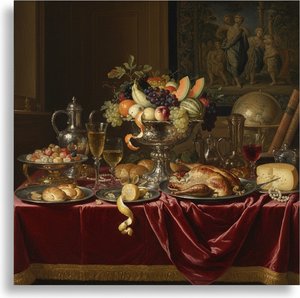
Abraham Hendricksz van Beyeren: Pioneering Dutch Still Life & the Banquet Tradition
Explore the captivating world of Dutch Golden Age still life with Abraham van Beyeren. Discover his innovative techniques, symbolic banquet scenes & lasting influence on art history. Learn about collecting these masterpieces.

Golden Age Reflections: Dutch Baroque Painting & Cultural Innovation
Explore the Dutch Golden Age of painting! Discover key artists like Vermeer & ter Borch, their innovative techniques, and the rich cultural context behind these Baroque masterpieces. Learn about collecting & appreciating this iconic art period.

Golden Light & Dutch Skies: The Timeless Magic of Dutch Golden Age Landscapes
Discover the breathtaking beauty of Dutch Golden Age landscapes. Explore the mastery of light, chiaroscuro, and 17th-century realism through an expert art history lens, celebrating the enduring legacy of the Dutch Masters for discerning collectors and art lovers.

Dutch Masters: 10 Golden Age Paintings That Still Inspire |
Journey into the Dutch Golden Age! Explore 10 iconic paintings by Rembrandt, Vermeer & Hals. Discover the stories behind these Baroque masterpieces and find museum-quality art reproductions to elevate your home decor on .


