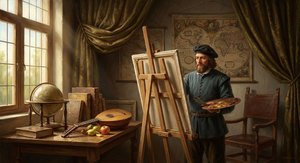
The Rise of Dutch Still Life: A Golden Age Innovation
The Dutch Golden Age (Dutch: Gouden Eeuw [ˈɣʌudən ˈeːu, ˈɣʌudə ˈʔeːu]) was a period in the history of the Netherlands which roughly lasted from 1588, when the Dutch Republic was established, to 1672, when the Rampjaar occurred. During this period, Du...
The 17th century Netherlands, a period often lauded as the Dutch Golden Age, witnessed an unprecedented flourishing of artistic talent, particularly within the genre of still life painting. This wasn’t merely a reflection of newfound prosperity and global trade; it was a deliberate shift in focus, a turning inward to appreciate the beauty and transience of everyday existence. Prior to this era, still life often existed as subordinate elements within larger compositions – religious scenes or portraits, for example. However, with the rise of a burgeoning merchant class and an increasingly secular society, independent still life painting emerged, captivating collectors and establishing itself as a respected art form. The Dutch climate, conducive to botanical study, coupled with access to exotic goods from around the world through the Dutch East India Company, provided artists with both inspiration and subject matter. This unique confluence of factors propelled Dutch still life to heights previously unseen, characterized by meticulous detail, vibrant color palettes, and often, a subtle undercurrent of moral contemplation.
Abraham van Beyeren’s Artistic Signature: Technique & Style
Among the masters who defined this golden age, Abraham Hendricksz van Beyeren stands out as a particularly compelling figure. Born around 1620/21 and active until his death in 1690, Van Beyeren didn't simply *paint* still lifes; he constructed elaborate visual feasts. His canvases are renowned for their monumental scale – often exceeding one meter in any dimension – and the sheer abundance of objects depicted. But beyond size, it was his technical prowess that truly set him apart. Van Beyeren possessed an extraordinary ability to render textures with astonishing realism: the glistening skin of a peach, the delicate translucence of wine glasses, the rough weave of velvet drapery. He employed a masterful use of light and shadow – *chiaroscuro* – to create depth and volume, drawing the viewer into the scene as if they could reach out and touch the objects themselves. His compositions weren’t haphazard arrangements; rather, they were carefully orchestrated displays designed to showcase his skill and evoke a sense of luxurious indulgence. The signature on many of his works, often subtly placed along the edge of a table or within the arrangement itself – “ABF” – serves as a quiet testament to his artistry.
Decoding the Dutch Banquet Scene: Symbolism & Vanitas
Vanitas is a genre of memento mori symbolizing the transience of life, the futility of pleasure, and the certainty of death, and thus the vanity of ambition and all worldly desires. The paintings involved still life imagery of transitory items. The g...
To view a Van Beyeren banquet still life is to enter a world brimming with symbolism. These weren’t simply depictions of lavish meals; they were carefully constructed allegories reflecting on themes of wealth, mortality, and the fleeting nature of earthly pleasures. The term *vanitas* – derived from the Latin word for “emptiness” or “futility” – encapsulates this underlying message. Objects frequently included carried specific connotations: a half-peeled lemon symbolized bitterness, a wilting flower represented decay, an overturned glass hinted at transience, and a pocket watch served as a stark reminder of the passage of time. The inclusion of exotic fruits, expensive porcelain, and gleaming silver underscored the material possessions that often defined status in Dutch society, yet simultaneously questioned their ultimate value. A partially eaten meal suggested the inevitability of consumption and decay, while open oyster shells alluded to sensuality and indulgence. These subtle cues weren’t intended to be overtly didactic; rather, they invited viewers to contemplate their own lives and priorities.
Beyond Realism: Opulence, Detail and the Illusion of Abundance
While Van Beyeren's technical skill is undeniable, his artistry extends beyond mere replication. He wasn’t simply interested in *what* he painted but *how* he painted it. The sheer density of objects within his compositions creates a sense of overwhelming abundance – a visual representation of the prosperity that characterized the Dutch Golden Age. This opulence, however, is often tempered by a subtle awareness of fragility and impermanence. A fly resting on a piece of fruit, a chipped glass, or a slightly bruised peach serve as reminders that even the most beautiful things are subject to decay. The artist’s meticulous attention to detail extends beyond the objects themselves; he also masterfully depicts reflections in polished surfaces, creating an illusion of depth and realism that further immerses the viewer in the scene. The interplay of light and texture is particularly striking, transforming ordinary objects into captivating works of art. He often included subtle self-portraits reflected in silver or glass, a quiet acknowledgement of his own role as creator.
Van Beyeren's Legacy: Influence on Subsequent Still Life Masters
 pieter steenwijck
Discover Pieter Steenwijck (1615-1656), a Dutch Golden Age painter known for his realistic still lifes, vanitas themes & poignant depictions of life's transience.
Abraham van Beyeren’s influence extended far beyond his lifetime. His innovative techniques and sophisticated use of symbolism inspired generations of still life painters. Artists like Willem Kalf, known for his opulent *pronkstilleven* compositions, built upon Van Beyeren's foundation, further refining the genre with dramatic lighting and elaborate arrangements. Pieter Steenwijck, while often focusing on more austere vanitas themes, also demonstrated a similar attention to detail and symbolic depth. Even Jan van Huysum, celebrated for his exquisite floral still lifes, owes a debt to Van Beyeren’s pioneering work in rendering textures and capturing the beauty of natural forms. The legacy of these Dutch masters continues to resonate today, influencing contemporary artists and captivating collectors with their timeless appeal.
Collecting Dutch Golden Age Still Lifes Today
Acquiring a painting from this period is more than simply purchasing an artwork; it’s investing in a piece of history. Original works by Van Beyeren are rare and highly sought after, commanding significant prices on the art market. However, the enduring appeal of Dutch Golden Age still life has led to a thriving market for high-quality reproductions. OriginalUniqueArt.com offers meticulously crafted handmade oil paintings that capture the essence of these masterpieces, allowing collectors to experience the beauty and detail of Van Beyeren’s work without the prohibitive cost of an original. Whether you are drawn to the opulent banquet scenes or the more contemplative vanitas compositions, a Dutch still life is sure to add a touch of elegance and sophistication to any collection. Consider exploring the range of available sizes and framing options to create a piece that perfectly complements your space.