The Flourishing World of Dutch Golden Age Painting
The Dutch Golden Age (Dutch: Gouden Eeuw [ˈɣʌudən ˈeːu, ˈɣʌudə ˈʔeːu]) was a period in the history of the Netherlands which roughly lasted from 1588, when the Dutch Republic was established, to 1672, when the Rampjaar occurred. During this period, Du...
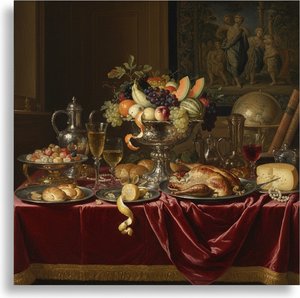
The 17th century Netherlands, a period often lauded as the Dutch Golden Age, witnessed an unprecedented blossoming of artistic talent, particularly within the realm of still life and landscape painting. This wasn’t merely a stylistic preference; it was deeply interwoven with the nation's burgeoning economic prosperity, its embrace of scientific inquiry, and a newfound appreciation for the beauty found in everyday existence. The rise of a wealthy merchant class created a demand for art that reflected their status and refined tastes, moving away from predominantly religious or mythological themes towards depictions of tangible possessions – opulent fruits, delicate flowers, gleaming silver, and meticulously rendered interiors. This shift fostered an environment where artists could specialize, experiment with technique, and elevate seemingly humble subjects to extraordinary levels of detail and symbolic resonance.
The Dutch Republic’s geographical position as a global trading hub also played a crucial role. Exotic fruits from the East, rare flowers cultivated in private gardens, and imported luxury goods found their way into Dutch homes – and onto canvases. Artists weren't simply replicating objects; they were documenting a world of expanding horizons and material wealth. This period saw the development of distinct subgenres within still life painting—the keukenstuk (kitchen piece), focusing on domestic scenes and culinary abundance; the fruit stuck, celebrating the lusciousness of nature’s bounty; and the vanitas, a poignant reminder of mortality often incorporating symbolic objects like skulls or wilting flowers. The meticulous realism achieved by these artists wasn't accidental; it was born from careful observation, scientific understanding of light and shadow, and a dedication to capturing the ephemeral beauty of life.
Jan Wijnants: Life, Influences & Artistic Development
Within this vibrant artistic landscape emerged Jan Jansz Wijnants (1632-1684), a Haarlem-born painter who carved a niche for himself with his captivating Italianate landscapes and refined still life compositions. While biographical details remain somewhat sparse, we know that Wijnants came from a Catholic art dealing family – a background that likely instilled in him an early appreciation for the market and the nuances of artistic taste. His father’s remarriage to the mother of Egbert Jaspersz van Heemskerck created a familial connection that undoubtedly influenced his development as an artist, fostering a collaborative environment and shared aesthetic sensibilities.
Wijnants initially worked in Haarlem before relocating to Amsterdam around 1660, a move indicative of his ambition and desire to reach a wider audience. His early works demonstrate a clear influence from the topographical traditions of Dutch landscape painting, but he quickly developed a distinctive style characterized by a delicate touch, atmospheric perspective, and a keen eye for detail. He wasn’t solely focused on recreating landscapes; he imbued them with a sense of tranquility and poetic beauty, often incorporating classical ruins or architectural elements to evoke a romanticized vision of Italy – a place many Dutch citizens only experienced through paintings.
Mastering Topography & the Italianate Landscape in Wijnants’ Oeuvre
Wijnants' mastery lay in his ability to seamlessly blend topographical accuracy with an idealized aesthetic sensibility. His landscapes aren’t precise reproductions of specific locations; rather, they are carefully constructed compositions that evoke a mood and atmosphere. He frequently depicted scenes inspired by the Roman countryside – rolling hills, ancient ruins, picturesque villages, and sun-dappled forests. This fascination with Italy reflects a broader cultural trend within Dutch art during the Golden Age, fueled by travel accounts and the popularity of Italianate painting styles.
He skillfully employed techniques like atmospheric perspective to create a sense of depth and distance, using subtle gradations of color and tone to suggest receding planes. His brushwork is delicate and refined, creating a luminous quality that enhances the overall impression of tranquility. Wijnants often populated his landscapes with small figures – travelers, shepherds, or peasants – adding a human element and further grounding the scenes in reality. However, these figures are rarely the focal point; they serve to complement the landscape and enhance its sense of scale and grandeur.
Symbolism and Detail: Decoding the Language of Flowers and Fruit
A still life (pl.: still lifes) is a work of art depicting mostly inanimate subject matter, typically commonplace objects which are either natural (food, flowers, dead animals, plants, rocks, shells, etc.) or human-made (drinking glasses, books, vase...
While Wijnants is celebrated for his landscapes, his still life compositions reveal a profound understanding of symbolism and detail. The fruits and flowers he depicted weren’t merely decorative elements; they were imbued with layers of meaning that would have been readily understood by contemporary viewers. Each flower carried specific connotations – roses symbolized love and beauty, lilies represented purity, and tulips signified wealth and prosperity. Similarly, different types of fruit held symbolic weight – peaches evoked longevity, grapes represented abundance, and pomegranates alluded to fertility.
The arrangement of objects within a still life was also significant. A wilting flower might represent the transience of life, while a partially peeled lemon could symbolize bitterness or decay. Artists like Wijnants weren’t simply creating visually appealing compositions; they were crafting narratives that invited contemplation and reflection on themes of mortality, wealth, and the fleeting nature of beauty. The dramatic use of chiaroscuro – the contrast between light and shadow – further enhanced the symbolic impact of these works, drawing attention to specific details and creating a sense of emotional depth.
Wijnants' Legacy and Influence on Subsequent Artists
Jan Wijnants’ influence extended beyond his immediate contemporaries. His delicate touch, atmospheric perspective, and refined compositions inspired generations of artists, particularly in England and Germany. Thomas Gainsborough, the renowned English portrait and landscape painter, openly admired Wijnants’ work and incorporated elements of his style into his own paintings. Similarly, German artist Wilhelm von Kobell drew inspiration from Wijnants' meticulous detail and botanical accuracy.
Wijnants’ legacy lies not only in his technical skill but also in his ability to capture the essence of a particular time and place – the Dutch Golden Age, with its burgeoning prosperity, scientific curiosity, and appreciation for beauty. His paintings offer a glimpse into a world of expanding horizons, material wealth, and a profound connection to nature. Today, Wijnants’ works are highly sought after by collectors and museums alike, serving as enduring reminders of a remarkable period in art history. Explore the exquisite detail and timeless appeal of Jan Wijnants' masterpieces at OriginalUniqueArt.com, where you can discover museum-quality reproductions and delve deeper into the world of Dutch Golden Age painting.