Preview
 Send
Send Share
Share
 Details

 Download
 Similars
 X-Ray
X-Ray Diaporama
 Stats
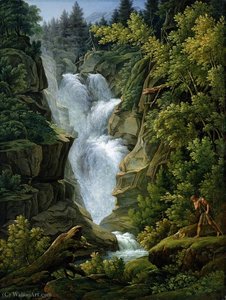
StatsThe Schmadribach Falls
 Oil
Oil- WallArt
- Romantic Landscape
 1821
1821- 19th Century
 132.0 x 110.0 cm
 Neue Pinakothek
 Read More
Giclée / Art Print
Museum-quality giclée or canvas print with fast production and flexible finish options. ( Buy Hand Made Painting Switch to Digital Image)




P118B $10

P118H $10

P118W $10

P438Z $10

P508JH $12

P508YH $12

P805H $10

P805Z $10

P919BZ $10

P919G $10

P919XJ $10

P959ZH $10

P968JZ $12

W106C $8

W218G $10

W218JH $8

W218Y $10

W307PJ $10

W316G $10

W316PJ $8

W316Y $10

W398PJ $8

W4111J $10

W500HY $15

W500JH $15

W692G $12

W849H $8

W940BG $15

W953PJ $8




Pick from our preset sizes that match the artwork's original proportions.

You may enter your own dimensions to fit a specific frame or space. If your selected size does not match the original image's proportions, we will either crop the artwork or extend the image with a mirrored or solid-fill edge. A digital mockup will be sent for your approval before production begins.
Please note that the on-screen preview does not reflect the actual cropping or extension. Only the mockup will accurately show the final composition.
While custom sizes are available, we recommend selecting a dimension from the predefined list to preserve the original proportions.
Worldwide Delivery () in 2 weeks instead of standard 4/5 weeks. (18 September)

Free Worldwide Express Shipping

High-Quality Linen Canvas

Full Shipping Insurance

Customs Tax Refund Guarantee

True Color Matching Guarantee

100-Day Return Policy (Defects Only)

100% Money-Back Guarantee

Bulk Discount Offer
 Glass option is only available in size under 110 CM

The Schmadribach Falls
Giclée / Art Print
Reproduction Size
-


Total Price
$ 81
The Majesty of the Alpine Sublime
In the heart of the Bernese Oberland, where the earth reaches upward in a silent, snow-capped prayer, Joseph Anton Koch captured a vision of nature that transcends mere topography. The Schmadribach Falls is not simply a window into the Swiss landscape; it is a profound meditation on the "heroic" landscape, a genre Koch pioneered to bridge the disciplined elegance of Neoclassicism with the raw, untamed emotion of German Romanticism. As the eye wanders through this monumental composition, one is immediately struck by the dramatic interplay of light and shadow, where the cascading waters of the falls serve as a silver thread connecting the heavens to the terrestrial realm. The painting invites the viewer into a space where the boundaries between reality and poetry dissolve, offering a glimpse into a world that feels both ancient and eternally present.
Koch’s technical mastery is evident in his ability to manipulate scale and perspective to evoke a sense of awe. Through a sophisticated use of sfumato and meticulous detail, he directs the gaze from the intimate textures of the foreground—where small figures provide a vital human connection to the vastness—upward toward the towering peaks of the Grosshorn and Breithorn. The artist deliberately employed a "poetic" approach, compressing geographical elements to create a panoramic effect that would be impossible in a single natural glance. By layering mountains so they appear to tower one behind the other, Koch imbue the Alps with a monumental dignity reminiscent of the Himalayas, creating a sense of infinite depth that pulls the spectator into the very soul of the mountain range.
A Symphony of Light and Emotion
Beyond its breathtaking scenery, the work serves as a masterclass in emotional resonance. The presence of the two solitary figures near the base and center-right of the canvas acts as a compositional anchor, reminding us of our own smallness when confronted with the sublime power of the natural world. This tension between human fragility and geological permanence is the hallmark of Koch’s aesthetic. The lighting, often reminiscent of the soft, transformative glow of dawn or the melancholic hush of twilight, bathes the snow-capped summits in a way that suggests a divine presence within the landscape itself. For the collector or interior designer, this piece offers more than mere decoration; it provides a focal point of profound tranquility and intellectual depth.
Integrating such a powerful reproduction into a curated space allows for an atmosphere of grandeur and contemplation. Whether placed in a sunlit gallery or a sophisticated study, The Schmadribach Falls commands attention through its rhythmic movement and balanced composition. It is a work that speaks to the enduring human desire to find beauty in the wild and order within the chaotic. To possess a reproduction of this caliber is to hold a piece of art history that celebrates the indomitable spirit of nature, making it an incomparable choice for those who seek to surround themselves with art that inspires reverence, peace, and a timeless sense of wonder.
Artist Biography
The Architect of the Heroic Landscape
Joseph Anton Koch stands as a singular figure in Austrian art history—a painter who deftly navigated the shifting currents of Neoclassicism into the burgeoning fervor of German Romanticism. Born in 1768 in Elbigenalp, Austria, his early life was marked by a pastoral simplicity that would profoundly shape his artistic vision; tending cattle in his youth instilled in him an intimate appreciation for the natural world, a connection that later manifested in his monumental depictions of earth and sky. A fortuitous recommendation from Bishop Umgelder secured him a prestigious academic education at Stuttgart’s Karlsschule, a rigorous military academy where discipline and intellectual pursuit converged. However, Koch's youthful spirit rebelled against such constraints, leading to a brief but formative wanderlust through France and Switzerland before he finally established himself in the artistic crucible of Rome in 1795.
In the heart of Italy, Koch found kinship with fellow painter Asmus Jacob Carstens, adopting a style often referred to as the heroic aesthetic. This approach initially mirrored Carstens’ literal interpretations of mythological narratives, characterized by a certain sculptural clarity and formal rigor. Koch demonstrated his technical prowess not only through paint but also through the meticulous art of printmaking, notably etching the pages of Carrend's Les Argonautes. This period of his life was defined by a mastery of detail and a command over line that would serve as the foundation for his later, more expansive compositions.
A Visionary Evolution: From Myth to Mountain
As his career progressed, Koch underwent a profound artistic evolution, transitioning from the structured narratives of Neoclassicism toward the sweeping grandeur of landscape painting. He began to reimagine classical ideals through the lens of the Austrian Alps and the Italian countryside, producing works that felt both timeless and intensely visceral. Influenced by the monumental compositions of masters like Nicolas Poussin and Claude Lorrain, Koch developed a unique way of organizing space, where dramatic lighting and vast, rugged terrains created a sense of awe. His landscapes were never merely topographical records; they were emotional journeys through heroic scenery.
His ability to blend the classical with the romantic is perhaps best seen in his treatment of light and atmosphere. In works such as Heroic Landscape with Rainbow, he utilizes a Baroque sensibility to introduce dramatic weather elements that punctuate the stillness of the mountains. This technique allowed him to bridge two eras: the ordered, rational world of the Enlightenment and the emotive, untamed spirit of Romanticism. Even when depicting serene scenes, such as the Monastery of San Francesco di Civitella in the Sabine Mountains, there remains an underlying sense of the sublime—a realization of nature's immense power and scale.
Legacy and Historical Significance
The later years of Koch's life were marked by both movement and resilience. Facing financial hardships exacerbated by Napoleon’s invasions, he relocated to Vienna in 1812. In this new setting, he flourished under the patronage of influential intellectuals like Friedrich Schlegel and became a central figure in the Germanic artistic tradition. His work during this period began to reflect a shift toward harsher, more dramatic elements, further cementing his role as a pioneer of the landscape genre.
The historical significance of Joseph Anton Koch lies in his ability to transform the landscape from a secondary, decorative element into a primary vehicle for philosophical and emotional expression. His contributions can be summarized through several key artistic pillars:
- Synthesis of Styles: He successfully merged the formal discipline of Neoclassicism with the emotional depth of German Romanticism.
- The Heroic Aesthetic: He redefined landscape painting by introducing a sense of monumental scale and dramatic, "heroic" compositions.
- Technical Mastery: His skill spanned from the delicate precision of etching to the sweeping, atmospheric brushwork required for vast mountain vistas.
- Cultural Bridge: He acted as a vital link between the classical traditions of Rome and the emerging nationalistic landscape movements in Austria and Germany.
Today, Koch is remembered not just as an Austrian painter, but as a visionary who taught viewers to look upon the mountains and see within them the very soul of the sublime.

Joseph Anton Koch
1768 - 1839 , Austria
Quick Facts
- Artistic Movement Or Style: Neoclassicism & Romanticism
- Artists Or Movements Influenced By This Artist: ['Romantic painting']
- Artists Who Influenced This Artist: ['Asmus Jacob Carstens']
- Date Of Birth: 1768
- Date Of Death: 1839
- Full Name: Joseph Anton Koch
- Nationality: Austrian
- Notable Artworks:
- The Upland near Bern
- Landscape with Abraham and the Three Angels in the Valley of Mambre
- Heroic Landscape with Rainbow
- Place Of Birth: Elbigenalp, Austria
Related Articles

The Sublime and the Picturesque: Exploring Emotion & Nature in Romantic Landscape Painting
Explore the emotional power of Romantic landscape painting! Discover the sublime & picturesque traditions, key artists like Friedrich & Cole, and find your perfect artwork at OriginalUniqueArt.

John Constable's Masterpieces: Explore 25 Iconic Landscapes for Your Home
Journey through John Constable's 25 most celebrated landscapes. Explore Romanticism, Dedham Vale & his masterful use of light in iconic paintings like 'Hay Wain'. Find museum-quality art reproductions and elevate your home decor on OriginalUniqueArt.com.
Capturing the Soul: The Emotional Magic and Sublime Grandeur of Romantic Landscape Painting
Explore the profound emotional depth of Romantic landscape painting. Discover how masters like Friedrich and Turner captured the sublime through light, shadow, and nature's power in this expert art history retrospective for discerning collectors.

Romantic Landscapes: 10 Masterpieces for Your Home | OriginalUniqueArt
Journey through 10 Romantic landscape masterpieces by Friedrich, Turner & Cole. Explore emotional art, sublime nature scenes & iconic 19th-century paintings. Find museum-quality reproductions for your home at OriginalUniqueArt.com – discover the full collection online!

Evocations of Place: A Historical Journey Through Landscape Art
Explore the rich history of landscape art with OriginalUniqueArt. Discover renowned artists, movements like Impressionism & Romanticism, and expert guidance for collecting timeless pieces. Find your perfect serene escape today!