
 Preview
 Send
Send Share
Share
 Details
 Guide
Guide

 Download
 Similars
 X-Ray
X-Ray Diaporama
 Q&A
Q&A Stats
StatsPuzzle


 Read More
The artwork displayed on this page is protected by copyright law, which means we cannot legally create or sell an identical reproduction. This protection is enforced under international agreements such as the Berne Convention and by national laws, including those outlined by the U.S. Copyright Law - Title 17.
This method fully complies with copyright regulations because it does not involve copying or duplicating the protected artwork. Instead, it is a creative reinterpretation - a new painting that is influenced by the original but not identical to it.
Giclée / Art Print
Museum-quality giclée or canvas print with fast production and flexible finish options. ( Buy Hand Made Painting Switch to Digital Image)




P118B $10

P118H $10

P118W $10

P438Z $10

P508JH $12

P508YH $12

P805H $10

P805Z $10

P919BZ $10

P919G $10

P919XJ $10

P959ZH $10

P968JZ $12

W106C $8

W218G $10

W218JH $8

W218Y $10

W307PJ $10

W316G $10

W316PJ $8

W316Y $10

W398PJ $8

W4111J $10

W500HY $15

W500JH $15

W692G $12

W849H $8

W940BG $15

W953PJ $8




Pick from our preset sizes that match the artwork's original proportions.

Type the width and the height you need, to fit your frame or your wall. A print can only be cut, never made bigger than the picture, so a size with a different shape loses a part of the image. We send you a digital mockup to approve before we print anything. The picture shown on this page does not show the real cut — only the mockup does.
Worldwide Delivery () in 2 weeks instead of standard 4/5 weeks. (2 November)

Free Worldwide Express Shipping

High-Quality Linen Canvas

Full Shipping Insurance

Customs Tax Refund Guarantee

True Color Matching Guarantee

100-Day Return Policy (Defects Only)

100% Money-Back Guarantee

Bulk Discount Offer
 Glass option is only available in size under 110 CM

Puzzle
Giclée / Art Print
Reproduction Size
-


Total Price
$ 81
A Vortex of Emotion: Decoding Jorge de la Vega’s ‘Puzzle’
Created in 1969, during a period of intense political and social upheaval in Argentina, ‘Puzzle’ by Jorge de la Vega is not merely an abstract composition; it's a visual manifestation of inner turmoil and existential questioning. This stark black and white work immediately commands attention with its swirling forms and dynamic energy. De la Vega, a remarkably versatile artist who also excelled as a musician, channeled his multifaceted creativity into paintings that often reflected the anxieties of his time.
Style & Context: *Nueva Figuración* and Beyond
‘Puzzle’ is deeply rooted in the Nueva Figuración (New Figuration) movement, which De la Vega helped pioneer with artists like Luis Felipe Noé and Rómulo Macció. This group reacted against the dominance of geometric abstraction prevalent in Argentina during the 1950s, seeking a more expressive and emotionally resonant form of art. While abstract, ‘Puzzle’ hints at fragmented figures – distorted faces seem to emerge from the chaos, suggesting a psychological landscape rather than a purely formal exploration. The work shares affinities with Expressionism, particularly its emphasis on subjective experience and raw emotion, but also displays a unique sensibility that sets De la Vega apart.
Technique & Composition: A Study in Contrast
De la Vega’s masterful use of line is central to the impact of ‘Puzzle’. Thick, bold black outlines define swirling shapes against a predominantly white background, creating a powerful contrast that amplifies the sense of movement and tension. The composition is deliberately asymmetrical, with elements clustered towards the lower portion of the image, drawing the viewer's eye into the vortex of forms. It’s likely De la Vega employed acrylic paint, possibly utilizing brushwork alongside stencil techniques to achieve such precise lines and solid areas of black. This technique creates a striking graphic quality, almost resembling an illustration, yet imbued with painterly texture.
Emotional Resonance & Interpretation
The title ‘Puzzle’ is particularly apt. The work feels fragmented, incomplete – like pieces of something broken or unresolved. It evokes feelings of unease, disorientation, and perhaps even a sense of being overwhelmed. While open to individual interpretation, the painting's emotional intensity is undeniable. Collectors are drawn to De la Vega’s ability to capture complex psychological states on canvas, while interior designers appreciate the work’s dramatic monochrome palette and its capacity to add a sophisticated, thought-provoking element to any space. ‘Puzzle’ stands as a testament to De la Vega's brief but impactful career – a powerful expression of human experience rendered in a uniquely compelling visual language.
Questions & Answers
How do the colors of "Puzzle" relate to each other?
The colors of "Puzzle" by Jorge de la Vega show a strong color unity harmony. Harmony describes how the colors relate to each other.
What color intensity does "Puzzle" by Jorge de la Vega have?
The color intensity of "Puzzle" is monochromatic. Intensity describes how strong the colors appear.
What color palette is used in "Puzzle" by Jorge de la Vega?
"Puzzle" by Jorge de la Vega uses a neutrals color palette. The palette summarizes the work's overall color character.
Artist Biography
A Life Interrupted: The Multifaceted World of Jorge de la Vega
Jorge de la Vega, a name resonating with the restless energy of mid-20th century Argentina, was more than just a painter; he was a cultural seismograph, registering the tremors of societal change through canvases brimming with unsettling imagery and, later, through poignant protest songs. Born in Buenos Aires in 1930, de la Vega’s initial trajectory seemed set towards architecture, enrolling at the Universidad de Buenos Aires in 1948. However, the rigid structures of design soon proved insufficient to contain his burgeoning artistic spirit. He abandoned formal architectural studies after six years, choosing instead a path of self-directed exploration—a decision that would define his remarkably diverse and ultimately truncated career. The early 1950s saw him experimenting with both representational forms and the prevailing abstract geometric styles, laying the groundwork for a unique visual vocabulary that would soon challenge the established order.The Rise of Nueva Figuración and a Critical Eye
A pivotal moment arrived in 1961 with the formation of *Otra Figuración* (Other Figuration), alongside fellow Argentine artists Luis Felipe Noé, Rómulo Macció, and Ernesto Diera. This movement, also known as *Nueva Figuración* (New Figuration), was a direct response to the dominance of geometric abstraction in the Argentine art scene—a deliberate attempt to reintroduce the human figure, not merely as an aesthetic element, but as a vessel for existential anxieties and social commentary. The group’s collective aim wasn't simply to depict humanity, but to dissect it, exposing its vulnerabilities and contradictions. A formative trip to Europe with *Otra Figuración* proved deeply influential, broadening their artistic horizons and solidifying their commitment to challenging conventional norms. Later, a period spent in the United States exposed de la Vega to the burgeoning Pop Art movement in New York City—an encounter that would profoundly impact his style, injecting it with bold imagery and a critical edge. He even secured a Fulbright Scholarship in 1965, allowing him to serve as a visiting professor at Cornell University, further enriching his artistic perspective.Decoding a Visual Language of Discomfort
De la Vega’s art is characterized by its unflinching engagement with the complexities of modern life. His canvases are populated with distorted figures, fragmented forms, and symbolic objects—a visual language designed to provoke discomfort and incite critical thought. He wasn't interested in beauty for beauty’s sake; rather, he sought to expose the absurdities of consumer culture, the alienation of contemporary existence, and the underlying anxieties that plagued post-war society. The influence of Pop Art is readily apparent in his bold use of color and appropriation of everyday imagery, but de la Vega imbued these elements with a distinctly darker tone—a sardonic humor that underscored his social critique. Works like “Praise,” “Try Again,” “Flirt,” “Games of Love and Chance,” “Incubation,” and the series titled "Puzzle" exemplify this approach, presenting fragmented narratives that challenge viewers to confront uncomfortable truths. His style often anticipated digital aesthetics, with a sense of rendering and manipulation that was remarkably prescient for its time.From Canvas to Song: A Shift in Medium
In a surprising turn, de la Vega dramatically shifted his focus in the final years of his life, turning away from visual art altogether and dedicating himself to music. He became a popular singer-songwriter, crafting protest songs that echoed the satirical worldview evident in his paintings. This transition wasn’t merely a change in medium; it was an extension of his artistic philosophy—a desire to reach a wider audience with his message of social critique. His lyrics were sharp and insightful, reflecting his deep concern for political injustice and the human condition. Tragically, de la Vega's life was cut short in 1971 at the age of 41, leaving behind a body of work that remains both compelling and hauntingly incomplete.A Lasting Legacy: Redefining Argentine Expression
Despite his premature death, Jorge de la Vega’s impact on Latin American art history is undeniable. His involvement with *Nueva Figuración* helped redefine Argentine artistic expression during a period of significant political and social upheaval. He challenged the status quo, questioned societal norms, and dared to expose the darker undercurrents of modern life. Today, his artworks are displayed in museums across Argentina and internationally—including the Phoenix Art Museum, the Museum of Modern Art in Rio de Janeiro, Brazil, and the Art Museum of the Americas at the OAS in Washington, DC—testifying to the enduring power and relevance of his vision. De la Vega’s legacy lies not only in his distinctive artistic style but also in his unwavering commitment to using art as a tool for social commentary and self-expression – a testament to an artist who dared to look beyond the surface and confront the complexities of the human experience.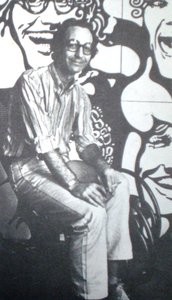
Jorge de la Vega
1930 - 1971 , Argentina
Quick Facts
- Full Name: Jorge de la Vega
- Nationality: Argentine
- Date Of Birth: 1930
- Date Of Death: 1971
- Place Of Birth: Buenos Aires, Argentina
- Notable Artworks:
- Praise
- Try Again
- Flirt
- Games of Love and Chance
- Incubation
- Puzzle
- Artistic Movement Or Style: Nueva Figuración, Pop Art
- Artists Who Influenced This Artist: ['Pop Art artists']
- Artists Or Movements Influenced By This Artist: ['Nueva Figuración']
Related Articles

Abstract Expressionism's 10 Defining Masterpieces |
Explore 10 defining Abstract Expressionism masterpieces by Pollock, Rothko & de Kooning. Discover the stories behind these iconic paintings and find museum-quality art reproductions to elevate your home decor on .

Dark Masterpieces: 10 Iconic Paintings Dominated by Black Tones |
Explore 10 iconic paintings dominated by black tones, from Rembrandt’s chiaroscuro to Goya's dark expressions. Discover the stories behind these masterpieces & find museum-quality art reproductions for your home at .

Mastering Abstraction: The 25 Most Iconic Works by Wassily Kandinsky
Explore 25 iconic Kandinsky masterpieces and the birth of abstraction. Discover the full collection online at OriginalUniqueArt.com.
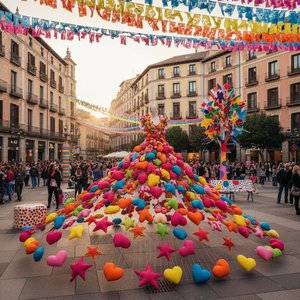
Águeda Ruiz de la Prada: A Study of Eclecticism & Emotional Resonance in Contemporary Spanish Painting
Discover the vibrant world of Ágatha Ruiz de la Prada, a leading figure in contemporary Spanish art. Explore her eclectic style, emotional depth & legacy – a must-read for discerning collectors.

Mastering Shadows: The 25 Most Powerful Artworks by Francisco Goya
Explore Goya's haunting masterpieces from courtly portraits to Black Paintings. Discover the full collection on OriginalUniqueArt.com.


