Neoclassicism · 1809
George IV (John Singleton Copley, 1809)
John Singleton Copley (1738–1815) made George IV. It dates from 1809. It belongs to the Neoclassicism movement. It is made in oil on canvas. It is kept at Museum of Fine Arts in Boston, United States of America. It measures 372 × 318 cm.
- 1809
- Oil On Canvas
- 372 × 318 cm
- Museum of Fine Arts, Boston

 Preview

 Hand Made Oil Painting
 Send
 Share
 Fact sheet


 Download
 Similars
 X-Ray
 Diaporama
 Q&A

 Stats
George IV, in brief
- Title
- George IV
- Artist
- John Singleton Copley (1738–1815)
- Artist born in
- Boston, United States
- Date
- 1809
- Medium
- Oil On Canvas
- Dimensions
- 372 × 318 cm
- Where to see it
- Museum of Fine Arts, Boston, United States of America
- Movement
- Neoclassicism
- Period
- Early Modern
- Subject
- portrait, royalty, military, george iv, equestrian, grandeur
What does George IV depict?
George IV by John Singleton Copley: A Royal Portrait in Neoclassicism
John Singleton Copley's "George IV," painted in 1809, stands as a monumental example of Neoclassical portraiture. This oil on canvas artwork, measuring an impressive 372 x 318 cm, captures the essence of King George IV during a period of significant political and social change in Britain. The painting is not merely a likeness; it's a carefully constructed representation of royal power, military authority, and aristocratic grandeur.
The Artist and His Style
John Singleton Copley (1738-1815) was a pivotal figure in Anglo-American art. Born in Boston, he developed his skills largely through self-study and observation. His style is characterized by meticulous attention to detail, realism, and a strong sense of composition. Copley's ability to capture the likeness and character of his subjects, combined with his mastery of light and shadow, resulted in portraits that were both technically impressive and psychologically insightful. In "George IV," these qualities are evident in the king’s commanding presence and the intricate rendering of his military uniform.
Composition and Technique
The painting's composition is vertically oriented, emphasizing the King's stature and authority. George IV is depicted on horseback, rearing slightly to convey a sense of dynamism and power. He is clad in a striking military uniform, rich with detail and color, signifying his role as commander-in-chief. Below him, a group of soldiers are portrayed, creating a visual hierarchy that reinforces the king's position at the apex of society. The background features a dramatic sky filled with billowing clouds and trees, adding depth and atmosphere to the scene. Copley’s use of oil paints allows for a remarkable level of detail and texture; visible brushstrokes contribute to a somewhat rough surface quality, enhancing the painting's realism.
Historical Context and Symbolism
Created in 1809, "George IV" reflects the political climate of the Regency era. George IV was Prince Regent at the time, ruling as his father, King George III, suffered from periods of mental illness. The painting served to project an image of strength and stability during a period of considerable social and political upheaval. Symbolically, the king's military attire represents Britain’s power and its role on the world stage. The rearing horse is a classical motif signifying energy and control. The inclusion of soldiers underscores George IV’s authority as commander of the armed forces.
Emotional Impact and Legacy
"George IV" evokes a sense of awe and respect for the monarchy. Copley's skillful rendering of the king's features conveys both confidence and a certain aloofness, reflecting his complex personality. The painting’s grandeur and scale command attention, making it a powerful statement of royal authority. Today, "George IV" remains an important historical document and a testament to Copley's artistic skill, offering viewers a glimpse into the world of 19th-century British royalty.
Which museum holds George IV?
Museum of Fine Arts
Boston, United States of America
A Legacy of the Museum of Fine Arts The Museum of Fine Arts, located in Boston, United States of America, began its existence in 1870 within the walls of the Boston Athenæum. This foundation established a presence that has grown into a significant institution, now recognized as the 20th-largest art museum in the world by public gallery area. Its scale allows for a profound encounter with history, attracting a steady stream of observers; as of 2024, it is the 83rd-most-visited art museum in the world.


High-resolution images of George IV
John Singleton Copley, George IV (1809), Museum of Fine Arts. Public domain.
Questions on George IV, answered
Which museum holds the original "George IV"?
You can see the original "George IV" at the Museum of Fine Arts, Boston, United States of America.
In what year was "George IV" by John Singleton Copley created?
"George IV" by John Singleton Copley was created in 1809.
What medium is "George IV" by John Singleton Copley executed in?
"George IV" is executed in oil on canvas.
What size is "George IV" by John Singleton Copley in real life?
The recorded dimensions of "George IV" by John Singleton Copley are 372 x 318 cm. Reproductions can be ordered in other sizes while keeping the same proportions.
What subjects appear in "George IV" by John Singleton Copley?
"George IV" by John Singleton Copley depicts: portrait, royalty, military, george iv, equestrian, grandeur, neoclassicism.
Is "George IV" free of copyright?
"George IV" by John Singleton Copley is in the public domain - its copyright has expired. This status governs how the image of the work may be reproduced.
Who created "George IV"?
"George IV" is attributed to John Singleton Copley.
What art movement does "George IV" by John Singleton Copley belong to?
"George IV" by John Singleton Copley belongs to the Neoclassicism movement. This movement provides the stylistic context of the work.
What stage of John Singleton Copley's development does "George IV" represent?
"George IV" represents the Mature Period of John Singleton Copley.
About the artist, John Singleton Copley
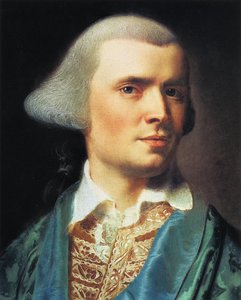
1738–1815, United States
John Singleton Copley
Early Life, Family and Training John Singleton Copley emerged from the commercial grit of colonial Boston, born in 1738. His upbringing was rooted in the maritime trade of Long Wharf, where his mother, Mary Singleton Copley, managed a shop. His father, Richard Copley, worked as a tobacco merchant. This environment provided more than just a social backdrop; it offered a direct view of the material textures and social hierarchies that would later define his visual language.
About John Singleton Copley Notable works by John Singleton Copley
Also by John Singleton Copley
 Watson and the Shark1778
 Brook Watson and the Shark1778
 Paul Revere1768
 The Colapse of the Earl of Chatham in the House of Lords (also known as The Death of the Earl of Chatham)1779
Essays around George IV
 American neoclassical paintersAmerican Neoclassical painters like Gilbert Stuart, John Singleton Copley, and Benjamin West. Shop museum-quality art reproductions on Orig…
 Neo-Expressionism vs. Conceptual Art: The Battle of Feeling and IdeaMaster the difference between Neo-Expressionism and Conceptual Art. Explore the clash of emotion and idea now.
 British Neoclassical paintersBritish Neoclassical painters like Joshua Reynolds, George Romney, and Thomas Lawrence define an era. Find museum-quality reproductions on …