Preview
 Send
Send Share
Share
 Details
 Guide
Guide

 Download
 Similars
 X-Ray
X-Ray Diaporama
 Stats
StatsDutch Interior
 Acrylic On Canvas
- WallArt
- Cubism
 1928
1928- Modern
 129.0 x 96.0 cm
 Read More
The artwork displayed on this page is protected by copyright law, which means we cannot legally create or sell an identical reproduction. This protection is enforced under international agreements such as the Berne Convention and by national laws, including those outlined by the U.S. Copyright Law - Title 17.
This method fully complies with copyright regulations because it does not involve copying or duplicating the protected artwork. Instead, it is a creative reinterpretation - a new painting that is influenced by the original but not identical to it.
Giclée / Art Print
Museum-quality giclée or canvas print with fast production and flexible finish options. ( Buy Hand Made Painting Switch to Digital Image)




P118B $10

P118H $10

P118W $10

P438Z $10

P508JH $12

P508YH $12

P805H $10

P805Z $10

P919BZ $10

P919G $10

P919XJ $10

P959ZH $10

P968JZ $12

W106C $8

W218G $10

W218JH $8

W218Y $10

W307PJ $10

W316G $10

W316PJ $8

W316Y $10

W398PJ $8

W4111J $10

W500HY $15

W500JH $15

W692G $12

W849H $8

W940BG $15

W953PJ $8




Pick from our preset sizes that match the artwork's original proportions.

Type the width and the height you need, to fit your frame or your wall. A print can only be cut, never made bigger than the picture, so a size with a different shape loses a part of the image. We send you a digital mockup to approve before we print anything. The picture shown on this page does not show the real cut — only the mockup does.
Worldwide Delivery () in 2 weeks instead of standard 4/5 weeks. (20 October)

Free Worldwide Express Shipping

High-Quality Linen Canvas

Full Shipping Insurance

Customs Tax Refund Guarantee

True Color Matching Guarantee

100-Day Return Policy (Defects Only)

100% Money-Back Guarantee

Bulk Discount Offer
 Glass option is only available in size under 110 CM

Dutch Interior
Giclée / Art Print
Reproduction Size
-


Total Price
$ 81
A Bold Reimagining of Domesticity: Joan Miró’s *Dutch Interior* (1928)
Dutch Interior by Joan Miró is a captivating example of the artist's unique approach to Surrealism and his playful deconstruction of traditional artistic subjects. Painted in 1928, this vibrant work isn’t merely a depiction of an interior scene; it’s a spirited reimagining—a visual poem inspired by the Dutch Masters.Subject & Inspiration
Miró embarked on this series of “Dutch Interiors” after a trip to Belgium and Holland where he was profoundly moved by 17th-century Dutch paintings. Specifically, *Dutch Interior I* draws inspiration from Hendrik Martenszoon Sorgh’s *The Lute Player*. However, Miró doesn't replicate; he *interprets*. He distills the essence of the original composition—the figures, objects, and spatial relationships—and reconstructs them through a distinctly modern lens. The familiar domestic setting is populated with simplified forms, hinting at human and animal presences engaged in ambiguous activities.Style & Technique
The artwork exemplifies Miró’s evolving style during this period – a fusion of Cubism, Surrealism, and his own burgeoning abstract language. Bold, flat planes of color, primarily dominated by intense yellows contrasted with black, white, and purple, create a dynamic visual field. The figures are fragmented and stylized, almost geometric in their simplification. Miró’s technique involves broad brushstrokes and visible texture, suggesting spontaneity and an expressive application of paint—likely oil or acrylic on canvas. He deliberately flattens perspective, rejecting traditional depth cues to emphasize the two-dimensionality of the canvas.Historical Context & “The Assassination of Painting”
1928 was a pivotal year for Miró, aligning with his exploration of what he termed "the assassination of painting." This wasn’t literal destruction but rather a rejection of conventional representational methods and bourgeois artistic values. He sought to dismantle established norms, liberating art from its traditional constraints. The *Dutch Interior* series embodies this spirit—taking recognizable imagery and dismantling it into something new, challenging the viewer's expectations.Symbolism & Interpretation
While Miró resisted definitive interpretations of his work, symbols permeate *Dutch Interior*. The simplified figures can be seen as archetypes representing human interaction or perhaps even a commentary on societal roles. The ambiguous activities—suggesting music, play, and observation—invite viewers to project their own narratives onto the scene. The vibrant yellow background evokes energy and optimism, while the contrasting dark tones add depth and mystery.Emotional Impact & Aesthetic Appeal
*Dutch Interior* exudes a sense of energetic chaos and stylized representation. It’s not a tranquil domestic scene but rather a dynamic interplay of forms and colors that stimulates the imagination. The artwork's bold aesthetic makes it a striking focal point for any interior space, appealing to those who appreciate modern art with a playful yet sophisticated sensibility. Its vibrant palette and abstract composition offer a refreshing departure from traditional representations, making it an ideal piece for collectors and designers seeking unique statement pieces.- Dimensions: 129 x 96 cm
- Year: 1928
Questions & Answers
From which era does "Dutch Interior" date?
The historical period of "Dutch Interior" by Joan Miró is Modern. This classification situates the work in art history.
When was "Dutch Interior" made?
The creation of "Dutch Interior" by Joan Miró is dated 1928.
What technique and style characterize "Dutch Interior" by Joan Miró?
"Dutch Interior" by Joan Miró combines the acrylic on canvas technique with the Cubism style. Technique and movement describe the making and the style of the work.
Artist Biography
A Catalan Visionary: The Life and Art of Joan Miró
Joan Miró i Ferrà, born in Barcelona in 1893, stands as one of the most significant figures in 20th-century art. His journey was not merely a progression through styles but an exploration of inner worlds, translating dreams, memories, and Catalan identity onto canvas with a uniquely poetic visual language. From humble beginnings marked by illness and initial parental reservations about his artistic pursuits, Miró persevered, driven by an innate need to express the intangible—the emotions, sensations, and subconscious currents that lie beneath the surface of reality. His early life was steeped in the traditions of Barcelona, a city brimming with architectural marvels thanks to Antoni Gaudí, whose organic forms would subtly influence Miró’s later abstractions. The goldsmithing profession of his father instilled an appreciation for meticulous craftsmanship, while the rugged Catalan landscape became a recurring motif and source of inspiration throughout his career.Early Influences and the Path to Surrealism
Miró's formal artistic training began at La Llotja in Barcelona, where he honed his skills in traditional techniques. However, it was exposure to the avant-garde movements sweeping through Paris that truly ignited his creative evolution. The vibrant colors of Fauvism and the fragmented forms of Cubism resonated deeply, prompting him to move to Paris in 1920. This period proved pivotal as he encountered artists like Pablo Picasso and began experimenting with increasingly abstract compositions. Yet, Miró didn’t simply adopt these styles; he synthesized them, forging a path toward his own distinctive aesthetic. He sought to distill forms to their essence, stripping away representational details in favor of symbolic shapes and evocative colors. This exploration led him to the Surrealist group in 1924, aligning him with artists such as Max Ernst and Salvador Dalí. While embracing the Surrealist interest in the subconscious, Miró maintained a unique sensibility—his work was less about shocking imagery or Freudian symbolism than it was about creating a world of playful forms and poetic suggestion.The Language of Symbols: Key Works and Artistic Innovations
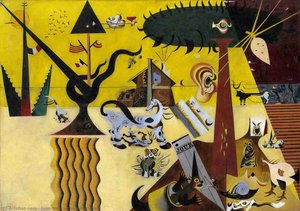
Throughout the 1920s and 30s, Miró developed his signature visual vocabulary—a universe populated by biomorphic shapes, floating forms, and vibrant colors. The Farm (1922), often considered a cornerstone of his oeuvre, exemplifies this transition. It’s not merely a depiction of rural life but an evocation of Catalan identity and a symbolic representation of the natural world. His collaborative spirit led to innovative techniques like *grattage*, pioneered with Max Ernst in 1926 for designs intended for Sergei Diaghilev's ballet, where textures were revealed by scraping paint across canvas. The Dutch Interiors (1928) series demonstrated his ability to reinterpret the Old Masters through a distinctly modern lens, transforming domestic scenes into dreamlike abstractions. Painting (1933), with its bold colors and simplified forms, encapsulates Miró’s exploration of the subconscious and his rejection of conventional artistic boundaries. Beyond painting, Miró fearlessly experimented with sculpture, ceramics, and printmaking, expanding his creative horizons and demonstrating a remarkable versatility.Legacy and Enduring Influence
Joan Miró's impact on 20th-century art is undeniable. He wasn’t simply a painter; he was a visionary who challenged the very definition of artistic expression. His work paved the way for abstract expressionism and continues to inspire artists across disciplines. He established two foundations—the Fundació Joan Miró in Barcelona (1975) and the Fundació Pilar i Joan Miró in Palma de Mallorca (1981)—ensuring that his legacy would endure, providing spaces for artistic exploration and education. Throughout his long career, he remained committed to pushing boundaries, questioning conventions, and exploring the depths of human imagination. Miró’s art is a testament to the power of abstraction, symbolism, and poetic expression—a vibrant celebration of life, dreams, and the enduring spirit of Catalan culture. His work continues to resonate with audiences worldwide, inviting us to enter a world where anything is possible and the boundaries between reality and fantasy blur into a captivating dance of color and form.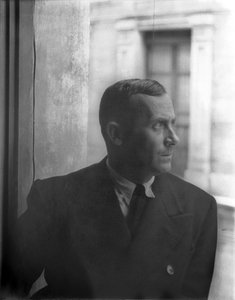
Joan Miró
1893 - 1983 , Spain
Quick Facts
- Artistic Movement Or Style: Surrealism, Abstract Art
- Artists Or Movements Influenced By This Artist:
- Surrealism
- Abstract Art
- Artists Who Influenced This Artist:
- Van Gogh
- Cézanne
- Date Of Birth: 1893
- Date Of Death: 1983
- Full Name: Joan Miró i Ferrà
- Nationality: Spanish
- Notable Artworks:
- The Farm
- Dutch Interiors
- Painting
- Place Of Birth: Barcelona, Spain
Related Articles
Harmonizing Contrasts: Integrating Abstract Art into Classic Interiors for Timeless Modernity
Elevate your classic home with abstract art! Discover expert tips for seamlessly blending modern pieces into timeless interiors. Find the perfect artwork & design advice at OriginalUniqueArt.
MoMA's Masterpieces: Explore 25 Iconic Artworks & Decor Ideas | OriginalUniqueArt
Journey through MoMA's 25 most iconic artworks! Explore Van Gogh, Picasso, Warhol & more. Discover the stories behind masterpieces of modern art and find museum-quality reproductions for your home at OriginalUniqueArt.com.

Geometric Abstraction's 10 Defining Masterpieces | Art for Your Home - OriginalUniqueArt
Explore 10 defining masterpieces of Geometric Abstraction! Discover Kandinsky, Mondrian & Malevich’s iconic works. Find museum-quality art reproductions and curated decor ideas to elevate your home at OriginalUniqueArt.com.
Surrealist Painting Masterpieces: 10 Artworks That Redefined Reality | OriginalUniqueArt
Journey into the dreamlike world of Surrealism! Explore 10 masterpieces by Dali, Magritte & Miró that redefined art. Discover their stories & find museum-quality reproductions to elevate your home decor on OriginalUniqueArt.com.
Joan Miró's Masterpieces: 25 Iconic Paintings for Art Lovers & Home Decor
Explore 25 iconic Joan Miró paintings! Discover the stories behind his Surrealist masterpieces, vibrant colors & unique style. Find museum-quality Miro reproductions and elevate your home decor with OriginalUniqueArt.com. Explore the full collection online.