
 Preview
 Send
Send Share
Share
 Details
 Guide
Guide

 Download
 Similars
 X-Ray
X-Ray Diaporama
 Q&A
Q&A Stats
StatsSelf-Portrait

- 61.0 x 49.0 cm


 Read More
Giclée / Art Print
Museum-quality giclée or canvas print with fast production and flexible finish options. ( Buy Hand Made Painting Switch to Digital Image)




P118B $10

P118H $10

P118W $10

P438Z $10

P508JH $12

P508YH $12

P805H $10

P805Z $10

P919BZ $10

P919G $10

P919XJ $10

P959ZH $10

P968JZ $12

W106C $8

W218G $10

W218JH $8

W218Y $10

W307PJ $10

W316G $10

W316PJ $8

W316Y $10

W398PJ $8

W4111J $10

W500HY $15

W500JH $15

W692G $12

W849H $8

W940BG $15

W953PJ $8




Pick from our preset sizes that match the artwork's original proportions.

Type the width and the height you need, to fit your frame or your wall. A print can only be cut, never made bigger than the picture, so a size with a different shape loses a part of the image. We send you a digital mockup to approve before we print anything. The picture shown on this page does not show the real cut — only the mockup does.
Worldwide Delivery () in 2 weeks instead of standard 4/5 weeks. (15 November)

Free Worldwide Express Shipping

High-Quality Linen Canvas

Full Shipping Insurance

Customs Tax Refund Guarantee

True Color Matching Guarantee

100-Day Return Policy (Defects Only)

100% Money-Back Guarantee

Bulk Discount Offer
 Glass option is only available in size under 110 CM

Self-Portrait
Giclée / Art Print
Reproduction Size
-


Total Price
$ 81
Jean-Étienne Liotard’s “Self-Portrait,” A Window into Rococo Introspection
The year 1744 marks a pivotal moment in the artistic trajectory of Jean-Étienne Liotard, a Genevan painter whose oeuvre is defined by an exquisite blend of naturalism and ethereal beauty. His “Self-Portrait,” housed within the hallowed halls of the Uffizi Gallery in Florence, isn’t merely a depiction of a man; it's a carefully constructed meditation on identity, perception, and the delicate balance between the observed world and the inner self. Painted during his period in Rome, this pastel masterpiece exemplifies Liotard’s signature style – a luminous, almost dreamlike quality achieved through masterful layering and an unparalleled sensitivity to light and texture.
Liotard's technique is immediately striking. He eschews the rigid formality of traditional portraiture, opting instead for a relaxed pose and a gaze that feels both direct and contemplative. The pastel medium itself—a relatively new tool in 18th-century art—allowed Liotard to build up color with astonishing subtlety, creating an effect akin to sfumato, the hazy blurring technique perfected by Leonardo da Vinci. Notice how he employs delicate washes of pinks, blues, and greens to capture the nuances of light on his face and clothing, imbuing the portrait with a sense of atmospheric depth. The background, rendered in loose, impressionistic strokes, isn’t merely decorative; it subtly reinforces the feeling of introspection, suggesting an inner landscape mirroring the sitter's thoughts.
A Genevan Artist Embraces the Orient
Born in Geneva in 1702, Liotard’s early life was shaped by his Huguenot heritage and a rigorous artistic training under esteemed miniaturists. However, it was his sojourn to Constantinople between 1738 and 1742 that profoundly influenced his artistic vision. Immersed in the vibrant culture of the Ottoman Empire, he developed a fascination with Eastern aesthetics – particularly the use of rich colors, luxurious fabrics, and the portrayal of everyday life. This influence is subtly present in “Self-Portrait,” not through overt Orientalist tropes, but rather through the overall mood of serenity and an appreciation for tactile textures. The loose brushwork and soft color palette evoke a sense of exoticism without resorting to stereotypical imagery.
Interestingly, Liotard’s embrace of the East wasn't solely aesthetic; it was also deeply personal. He deliberately adopted Turkish dress in his portraits, a conscious decision that challenged European conventions and established him as a unique figure within the art world. This choice, documented in numerous accounts, reflected not just an artistic preference but a genuine engagement with a culture vastly different from his own. It’s a testament to Liotard's intellectual curiosity and willingness to transcend conventional boundaries.
Symbolism of Inner Reflection
Beyond its technical brilliance, “Self-Portrait” is rich in symbolic meaning. The sitter’s direct gaze invites the viewer into his world, fostering a sense of intimacy and shared contemplation. The slightly parted lips suggest a quiet amusement, while the subtle furrow of his brow hints at underlying thoughts and emotions. Some art historians have interpreted the portrait as an exploration of the concept of “inner space”—a realm where the self is revealed through careful observation and artistic representation.
The inclusion of a small, partially visible book in the foreground adds another layer of complexity. It’s a subtle nod to Liotard's own intellectual pursuits – his studies of art theory and his role as an art dealer. The book symbolizes knowledge, reflection, and the pursuit of understanding—qualities that are central to the portrait’s overall message. The soft lighting and hazy atmosphere further contribute to this sense of introspection, creating a space where the viewer is invited to contemplate not just the subject's appearance but also his inner world.
A Timeless Masterpiece for Collectors
Liotard’s “Self-Portrait” remains a captivating work of art, offering a rare glimpse into the mind and soul of a remarkable artist. Its delicate pastel technique, evocative atmosphere, and profound symbolism continue to resonate with viewers centuries after its creation. A high-quality reproduction captures much of this beauty, making it an ideal addition to any collection or interior space. The painting’s luminous quality and contemplative mood create a sense of serenity and intellectual engagement—a perfect choice for those seeking art that transcends mere decoration.
Questions & Answers
What mood and emotion does "Self-Portrait" by Jean-Étienne Liotard express?
The recorded mood of "Self-Portrait" by Jean-Étienne Liotard is elegant, and its emotional tone is reflective.
Can I use augmented reality to see "Self-Portrait" by Jean-Étienne Liotard in my room?
The AR Preview page of "Self-Portrait" by Jean-Étienne Liotard uses augmented reality to show the artwork in your own space, on a compatible device.
What is the dominant color of "Self-Portrait" by Jean-Étienne Liotard?
The color that stands out most in "Self-Portrait" is clay (#a67555). The dominant color is useful when matching an artwork to an interior.
Artist Biography
Early Life, Family and Training
Jean-Étienne Liotard entered the world on December 22, 1702, in Geneva, Switzerland. He was born into a family of French Protestants who had sought refuge in Geneva following the events of 1685. His arrival was accompanied by a twin brother, Jean-Michel, who would later pursue his own path as a draughtsman and engraver. This early environment, shaped by the displacement of his parents, provided a quiet, disciplined foundation for the years of study that followed.
His formal instruction began in Geneva under the watchful eyes of professors Daniel Gardelle and Petitot. It was in these early lessons that he first mastered the delicate intricacies of enamel and miniature painting, techniques that required a steady hand and a keen eye for detail. These formative years established the technical precision that would define his later output, long before he sought broader horizons beyond the Swiss borders.
In 1725, the young artist moved to Paris to further his development. He spent three years within the workshop of Jean-Baptiste Massé, a period characterized more by professional labor than formal apprenticeship. During this time, he worked as an assistant, producing many copies of existing works to sustain himself. This practical immersion in the Parisian art scene provided the necessary exposure to the prevailing tastes of the era, preparing him for the travels that would eventually lead him toward the Ottoman Empire.
Life and Activity in Constantinople
Liotard’s residency in Constantinople, which began in 1738 and lasted for four years, fundamentally altered the trajectory of his career. Immersed in the Ottoman Empire, he developed a profound fascination with Eastern aesthetics. This was not a mere passing interest in the exotic; he sought to understand the textures and colors of a culture far removed from his Genevan roots. His observations were meticulous, focusing on the quietude of domestic life and the specificities of local customs.
He did not merely observe from the periphery. Liotard adopted the local way of life, frequently wearing Turkish attire in his own daily existence. This choice of dress was so consistent that he eventually earned the nickname "the Turkish painter." By integrating himself into the social fabric of the city, he gained access to intimate scenes that a casual traveler might never witness. His pastels from this period capture these domestic interiors with a sense of authentic presence, moving beyond the superficiality often found in contemporary Orientalist works.
- Turkish Woman with a Tambourine (1738)
- A Turk Seated (about 1740)
Technique and Artistic Style
Liotard’s approach to art was rooted in a rigorous commitment to naturalism. In his treatise, Traité des principes et des règles de la peinture, he argued that the purpose of painting was to act as a mirror of nature. This philosophy guided his hand whether he was working in oil, printmaking, or his most characteristic medium, pastel. He sought to capture the world with a precision that avoided the artificiality often found in the portraiture of his era.
His command of pastel allowed him to achieve a luminosity that few of his contemporaries could replicate. He did not merely brush color onto a surface; he pressed the pastel forcefully onto his supports to build a depth of tone. This technique required specific preparation of his materials. He often worked on vellum—calf, goat, or lamb skin—which had been treated with a mixture of fish glue, wine, and fine pumice dust to create the necessary texture for his layered application of color.
This technical precision is evident in his ability to render the subtle textures of fabric and the soft nuances of human skin. His portraits are noted for their striking detail, capturing the specific character of a sitter through a delicate handling of light. While his travels provided him with exotic subjects, his method remained focused on the truthful observation of his models.
Notable Works and Masterpieces
The year 1744 proved significant for his output, marked by the creation of The Chocolate Girl and a notable Self-Portrait. The latter, currently held in the Galleria degli Uffizi in Florence, offers a glimpse into his own identity through the medium of pastel. In this work, he utilizes the material to build color with a subtle, layered technique that achieves a sense of atmospheric depth. His ability to capture the nuances of light and texture allowed him to move away from the rigid formality often found in traditional portraiture of the era.
His engagement with the intellectual circles of Europe is evident in the Portrait of Francesco Algarotti, completed in 1745. This pastel work captures the subject with a fluid, luminous quality, emphasizing the character of the philosopher through delicate gradations of tone. Similarly, his skill in rendering youthful subjects is seen in the Portrait of Maria Frederike van Reede-Athlone at Seven Years of Age, a work preserved in the J. Paul Getty Museum in Los Angeles. These portraits demonstrate a capacity to balance physical likeness with a sense of the sitter's presence.
Later in his career, his focus expanded to include the landscapes of his home region. In 1770, he produced View of the Mont Blanc massif from the artist's studio in Geneva, with self-portrait. This oil on canvas depicts a vista of the Swiss Alps through a large window, merging the external grandeur of the mountains with the quiet, internal space of his studio. It remains a significant example of his ability to fuse realism with a soft, almost impressionistic approach to light and distance.
Later Years and Death
The final decade of Liotard's life was marked by a transition from the observational precision of his earlier years toward a more theoretical engagement with his craft. In 1781, he published his treatise, Traité des Principes et règles de la Peinture, a work that sought to codify the essential standards of his profession. This publication reflected a lifetime of technical inquiry, moving beyond the mere imitation of form to address the fundamental principles of the medium.
Even as his interests turned toward the intellectual foundations of art, his hand remained active in the studio. He did not abandon the physical act of creation, continuing to produce still lifes and landscapes in his later years. These later works, often focused on the quietude of nature or the arrangement of objects, provided a steady output alongside his more famous portraiture. He remained a man of the studio until the very end.
Liotard eventually returned to his roots in Geneva, the city where he had been born to Antoine, a merchant, and Anne Sauvage. He remained in this familiar landscape until his death on June 12, 1789. His passing occurred on the eve of a changing era, leaving behind a body of work that bridged the gap between the meticulous detail of the early eighteenth century and the shifting tastes of the late Enlightenment.
Where to See the Works Today
The distribution of Liotard’s output across Europe and beyond allows for a varied study of his technical precision. The Rijksmuseum in Amsterdam maintains the largest presence of his work, holding thirteen pieces that reflect his command of the medium. In London, the Royal Collection preserves ten works, offering a glimpse into the portraits that once circulated among the British elite. For those seeking his more intimate explorations, the Musée d'Art et d'Histoire in Geneva houses a significant collection of his pastels and drawings.
His presence in major international institutions remains steady. The J. Paul Getty Museum in Los Angeles holds four of his works, while the Uffizi Gallery in Florence preserves his 1744 Self-Portrait. These works, scattered from the Swiss Alps to the Mediterranean, provide a physical map of a life spent moving between the centers of European and Ottoman culture.
- 1744: Self-Portrait - Galleria degli Uffizi, Florence
- 1744: The Chocolate Girl - Gemäldegalerie, Dresden
- 1754: Portrait of Prince Edward, Duke of York and Albany - Royal Collection, London
- 1756: Portrait of Maria Frederike van Reede-Athlone at Seven Years of Age - J. Paul Getty Museum, Los Angeles

Jean-Étienne Liotard
1702 - 1789 , Switzerland
Quick Facts
- Artists Who Influenced This Artist:
- Daniel Gardelle
- Petitot
- Jean-Baptiste Massé
- François Lemoyne
- Full Name: Jean-Étienne Liotard
- Nationality: Swiss
- Notable Artworks:
- Dutch girl at breakfast
- La liseuse
- The chocolate girl
- La belle lyonnaise
- Maria frederike van reede-athlone at seven
- Place Of Birth: Geneva, Switzerland
- Date Of Birth: 1702
- Date Of Death: 1789
Related Articles

The Introspective Gaze: Tracing the Evolution and Psychological Depth of the Self-Portrait
Explore the psychological evolution of self-portraiture from Dürer to modern masters. Trace the history of the human gaze with us.
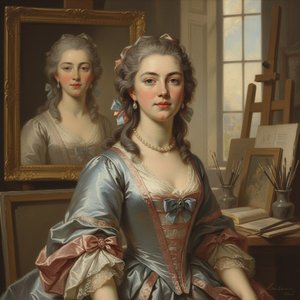
Jean-Étienne Liotard: Rococo Portraiture & the Pursuit of Naturalism
Explore the exquisite Rococo portraits of Jean-Étienne Liotard, a master of pastel and enamel. Discover his innovative techniques, captivating Turkish scenes, and lasting influence on art history. Learn more at OriginalUniqueArt.

Jean-Marc Nattier: Rococo Portraiture & Aristocratic Patronage
Explore the exquisite Rococo portraits of Jean-Marc Nattier, favored by French aristocracy. Discover his artistic techniques, patronage network, and lasting legacy – a guide for discerning collectors.

Beyond Decor: How Custom Historical Portraits Redefine Modern Self-Expression
Discover how custom historical portraits transcend decor to become profound expressions of identity. Explore the artistry of bespoke oil reproductions, from Renaissance mastery to modern reimagining, and learn to transform personal legacies into museum-quality fine art masterpieces.

25 Iconic Masterpieces by Henri de Toulouse-Lautrec: Capturing the Spirit of Montmartre
Step into the vibrant nightlife of Montmartre with our curated guide to the top 25 Henri de Toulouse-Lautrec masterpieces. Explore the soul of Post-Impressionism through iconic prints and museum-quality reproductions. Discover all masterpieces on OriginalUniqueArt.com.


