() ·

A painting made for you, by hand

Flowers

Hand Made Oil Reproduction

Hand-painted oil on canvas in your size and frame, made to order by our artists. ( Switch to Print Switch to Digital Image)

Collectible Description

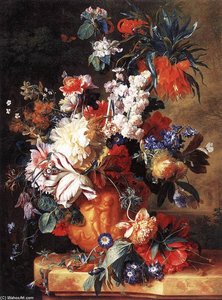
Experience the vibrant beauty of Jan van Huysum's "Flowers" – a stunning 1722 oil painting capturing an exquisite floral arrangement with meticulous detail and rich colors. A timeless masterpiece from the Dutch Golden Age.

Artist Biography

Jan van Huysum (1682-1749): Explore the exquisite Dutch still life paintings of flowers & fruit by this Golden Age master, renowned for detail and elegance.

from ·

Chapter 1

How large should it be?

Slide to change the size; the picture on the left shows the frame at its real width. The proportions of the original are kept.

Standard
custom
CM
INCH

Pick from our preset sizes that match the artwork's original proportions.

width
height

Type the width and the height you need, to fit your frame or your wall. This is hand-painted, so for a size with a different shape the artist can paint a bit more around the picture, or cut a bit — you choose. We send you a digital mockup to approve before the painting starts. The picture shown on this page does not show the real result — only the mockup does.

Chapter 2

How should it arrive?

Choose the edges of the stretched canvas

Choose your frame

Corner sample of the WhiteWrap canvas edge finish, stretched on solid wood bars
White $1
Corner sample of the BlurSideWrap canvas edge finish, stretched on solid wood bars
Blurside $1
Corner sample of the ExtendedWrap canvas edge finish, stretched on solid wood bars
Extended $1
Corner sample of the P118B picture frame: moulded polystyrene, 5 cm wide and 3 cm thick
P118B $10
Corner sample of the P118H picture frame: moulded polystyrene, 5 cm wide and 3 cm thick
P118H $10
Corner sample of the P118W picture frame: moulded polystyrene, 5 cm wide and 3 cm thick
P118W $10
Corner sample of the P438Z picture frame: moulded polystyrene, 5.5 cm wide and 3.5 cm thick
P438Z $10
Corner sample of the P508JH picture frame: moulded polystyrene, 7 cm wide and 3.5 cm thick
P508JH $12
Corner sample of the P508YH picture frame: moulded polystyrene, 7 cm wide and 3.5 cm thick
P508YH $12
Corner sample of the P805H picture frame: moulded polystyrene, 5 cm wide and 3.5 cm thick
P805H $10
Corner sample of the P805Z picture frame: moulded polystyrene, 5 cm wide and 3.5 cm thick
P805Z $10
Corner sample of the P919BZ picture frame: moulded polystyrene, 7 cm wide and 3.5 cm thick
P919BZ $10
Corner sample of the P919G picture frame: moulded polystyrene, 7 cm wide and 3.5 cm thick
P919G $10
Corner sample of the P919XJ picture frame: moulded polystyrene, 7 cm wide and 3.5 cm thick
P919XJ $10
Corner sample of the P959ZH picture frame: moulded polystyrene, 5 cm wide and 3 cm thick
P959ZH $10
Corner sample of the P968JZ picture frame: moulded polystyrene, 6 cm wide and 4 cm thick
P968JZ $12
Corner sample of the W106C picture frame: solid wood, 5 cm wide and 3 cm thick
W106C $8
Corner sample of the W218G picture frame: solid wood, 5 cm wide and 3 cm thick
W218G $10
Corner sample of the W218JH picture frame: solid wood, 5 cm wide and 3 cm thick
W218JH $8
Corner sample of the W218Y picture frame: solid wood, 5 cm wide and 3 cm thick
W218Y $10
Corner sample of the W307PJ picture frame: solid wood, 6 cm wide and 3 cm thick
W307PJ $10
Corner sample of the W316G picture frame: solid wood, 6 cm wide and 3 cm thick
W316G $10
Corner sample of the W316PJ picture frame: solid wood, 6 cm wide and 3 cm thick
W316PJ $8
Corner sample of the W316Y picture frame: solid wood, 6 cm wide and 3 cm thick
W316Y $10
Corner sample of the W398PJ picture frame: solid wood, 5 cm wide and 3 cm thick
W398PJ $8
Corner sample of the W4111J picture frame: solid wood, 6.5 cm wide and 3.5 cm thick
W4111J $10
Corner sample of the W500HY picture frame: solid wood, 7 cm wide and 5 cm thick
W500HY $15
Corner sample of the W500JH picture frame: solid wood, 7 cm wide and 5 cm thick
W500JH $15
Corner sample of the W692G picture frame: solid wood, 8 cm wide and 4 cm thick
W692G $12
Corner sample of the W849H picture frame: solid wood, 5 cm wide and 3 cm thick
W849H $8
Corner sample of the W940BG picture frame: solid wood, 7.5 cm wide and 4.5 cm thick
W940BG $15
Corner sample of the W953PJ picture frame: solid wood, 6 cm wide and 3.5 cm thick
W953PJ $8
Corner sample of the H24-GOLD picture frame: carved wood with gesso, 10 cm wide and 6 cm thick
H24-GOLD $30
Corner sample of the H24-SILVER picture frame: carved wood with gesso, 10 cm wide and 6 cm thick
H24-SILVER $30
Corner sample of the H36-GOLD picture frame: carved wood with gesso, 15 cm wide and 6.5 cm thick
H36-GOLD $45
Corner sample of the H36-SILVER picture frame: carved wood with gesso, 15 cm wide and 6.5 cm thick
H36-SILVER $45
Frame preview
Framed

Moulding: . Overall size with the frame: .

Chapter 3

Who paints it, and should anything change?

Examples of what can be changed: Replace face with customer photo; Add pet (e.g., replace cat with dog); Include hidden message in background; Change background landscape or elements.
After order, OriginalUniqueArt.com team will email client for instructions and provide a mockup preview

Worldwide Delivery () in 3/4 weeks instead of standard 5 weeks. (1 November). No compromise on quality.

Chapter 4

The finishing touches

A nameplate, as in a museum?

Engraved Bronze Plaque Details

This elegant plaque features the artist's name and the title of the artwork, finely engraved for a timeless presentation.

It is made from bronze with a refined, elegant finish. The text is precisely laser-engraved for a sharp and permanent result. Measuring 9x2 cm, the plaque is compact yet easy to read. It's built to be durable and scratch-resistant, offering a professional, museum-quality look. Mounting is simple thanks to the included adhesive backing.

Transparent Acrylic Plaque Details

The plaque includes essential engraved details such as the artist's name, the title of the artwork, the date it was created, the type of media used-like oil on canvas or watercolor-a brief description of the piece, and a QR code that links to the complete artwork information.

It is crafted from clear acrylic, offering a sleek, modern appearance. The text is UV-engraved in black to ensure strong visual contrast. With a size of 10x15 cm, it ensures optimal readability. It comes equipped with two metal hooks for secure wall mounting. The plaque is designed to be weather-resistant, making it suitable for various environments, and it includes interactive features that work seamlessly with smartphone scanning.

Black Acrylic Plaque Details

This elegant plaque includes engraved information such as the artist's name, the title of the artwork, the date it was created, the type of media used (like oil on canvas or watercolor), a short description of the artwork, and a QR code for quick access to more information.

The plaque itself is made from refined black acrylic with a premium finish. The text is laser-engraved in white for high contrast and readability. Its size is 10x15 cm, designed to be easy to read. It comes with two metal hooks for professional mounting. The design is sleek and fits any interior style. It is also weather-resistant and durable, with built-in digital integration for mobile compatibility.

A protective varnish?

When do you need it?

Chapter 5

Your painting, as you ordered it

Flowers

Reproduction Medium

Reproduction Size

-

Elite Senior Artist

More detail, finesse, and extra production time

-

Reproduction Frame

-

-

For artworks or reproductions larger than 105 cm (approximately 41 inches) on any side, the frame will be shipped as a kit, disassembled. This method ensures safe delivery and prevents damage during transport.

Professional assembly required - this is not a DIY product.
The kit must be assembled and the canvas stretched by an experienced professional framer, using wood glue (not supplied), a canvas stretching plier and clamps to hold the bars square while the glue dries. Incorrect assembly or uneven canvas tension can permanently damage the artwork and is not covered by our warranty.

  • All solid wood bars are included, precisely cut to size.

  • Assembled with the screws provided, plus wood glue for the corner joints, which is not supplied and must be sourced by your framer.

  • Professional tools are required and not included: a canvas stretching plier (tensioner) and clamps to hold the bars square while the glue dries.

Important:
The corner joints require wood glue, the bars must be held with clamps until the glue is fully dry, and tightening the canvas on the assembled frame requires a canvas stretching plier. None of these are included in the kit. Please arrange an experienced professional framer before ordering this size.

Nameplate

-

-

Protective Varnish

Glossy Varnish (enhances colors, protects against light/moisture)

-

Customize My Artwork

Examples of what can be changed: Replace face with customer photo; Add pet (e.g., replace cat with dog); Include hidden message in background; Change background landscape or elements.

-

Urgent

Worldwide Delivery () in 3/4 weeks instead of standard 5 weeks. (1 November). No compromise on quality.

-

Express Shipping

Worldwide Delivery () in 5 weeks. (8 November).

Included

Total Price

$ 300

Total Price $ 300

Glass option is only available in size under 110 CM

Included with every order

  • Free Worldwide Express Shipping
  • High-Quality Linen Canvas
  • Full Shipping Insurance
  • Customs Tax Refund Guarantee
  • True Color Matching Guarantee
  • 100-Day Return Policy (Defects Only)
  • 100% Money-Back Guarantee
  • Bulk Discount Offer

A Symphony in Bloom: Jan van Huysum’s “Flowers”

Jan van Huysum's "Flowers," painted in 1722, isn’t merely a depiction of blossoms; it’s an immersive experience—a meticulously crafted illusion of nature’s abundance captured with the delicate precision characteristic of the Dutch Golden Age. This exquisite still life transcends simple botanical illustration, becoming a testament to van Huysum's mastery of light, color, and texture, inviting the viewer into a world of fragrant beauty and quiet contemplation. The painting resides within the collection of the State Hermitage Museum in St. Petersburg, Russia, a testament to its enduring appeal and artistic significance.

The composition itself is a carefully orchestrated dance of forms. A terracotta vase, adorned with playful cupids – a recurring motif in van Huysum’s work signifying love and fertility – serves as the focal point, overflowing with an astonishing variety of flowers. Roses, anemones, hyacinths, tulips, and other blooms are arranged with an almost impossible realism, each petal rendered with painstaking detail. Scattered amongst the blossoms are three pale blue eggs nestled in a bird's nest, perched delicately on a marble tabletop. This seemingly incongruous addition—a reference to the vanitas theme prevalent at the time—adds a layer of complexity and reminds us of the fleeting nature of beauty and life itself.

The Painter’s Technique: Illusionism and Light

Van Huysum's genius lay in his ability to create an illusion of three-dimensionality on a two-dimensional surface. He achieved this through a masterful use of *sfumato*, a technique borrowed from Leonardo da Vinci, employing subtle gradations of tone and color to soften outlines and create atmospheric depth. Notice how the light seems to emanate from an unseen source, bathing the flowers in a warm, diffused glow. The artist’s layering of thin glazes—a hallmark of Dutch painting—builds up the colors gradually, resulting in a luminous quality that captures the delicate sheen of petals and the velvety texture of leaves. He was known for his meticulous attention to detail, often incorporating elements like crawling insects and water droplets to further enhance the sense of realism.

The choice of materials also contributed significantly to the painting’s effect. Van Huysum favored oak and copper panels, which provided a stable surface for his delicate brushwork. He would often paint directly onto these panels, applying thin layers of oil paint with incredible precision. The use of a warm, greenish-ocher background further enhances the vibrancy of the flowers, creating a harmonious balance within the composition.

A Window into the 18th Century: Symbolism and Context

"Flowers" is deeply rooted in the artistic and intellectual currents of the 17th and 18th centuries. The still life genre was particularly popular during this period, serving as a vehicle for exploring themes of mortality, beauty, and the transience of earthly pleasures – concepts encapsulated within the *vanitas* tradition. The inclusion of the eggs, a symbol of fertility and new beginnings, alongside the decaying flowers underscores this theme. Furthermore, van Huysum’s work reflects the Dutch fascination with scientific observation and botanical illustration, mirroring the growing interest in natural history during the Enlightenment.

Jan van Huysum's place within his family lineage is also noteworthy. He was part of a dynasty of artists—his father, Justus van Huysum, and brothers Jacob and Michiel—all dedicated to capturing the beauty of flowers and fruits. This familial legacy undoubtedly influenced his artistic development, shaping his technical skills and aesthetic sensibilities. His work stands as a pinnacle of Dutch floral painting, admired for its exquisite detail, luminous quality, and profound understanding of nature’s delicate beauty.

Bringing “Flowers” Home: Reproduction Possibilities

Owning a reproduction of Jan van Huysum's "Flowers" offers a remarkable opportunity to bring this masterpiece into your home or office. TOPofART meticulously recreates the painting’s intricate details and luminous quality using traditional oil-painting techniques, ensuring that every brushstroke is faithfully reproduced. Our reproductions are created by skilled European artists with academic training, guaranteeing museum-quality results. We offer a range of sizes to suit your space and budget, all framed in a classic style to complement any décor.

Consider the emotional impact of this artwork—the sense of tranquility, beauty, and fleeting wonder it evokes. A reproduction of “Flowers” can serve as a constant reminder of nature’s splendor and the importance of appreciating the simple joys of life. Explore our collection today and discover how you can transform your space with a touch of Dutch Golden Age artistry.

Questions & Answers

Can I use augmented reality to see "Flowers" by Jan van Huysum in my room?

"Flowers" has an augmented reality preview: the artwork's AR Preview page shows it in your own space on a compatible device.

What subject and atmosphere does "Flowers" by Jan van Huysum combine?

"Flowers" shows flowers, vase, jan van huysum, dutch golden age, baroque, composition, botanical, and its recorded mood is elegant.

Can I see "Flowers" by Jan van Huysum under different lights?

The X-Ray view of "Flowers" by Jan van Huysum is on the artwork's X-Ray page: an interactive examination of the image through eleven optical layers.

More about this painting

Preview AR preview Switch to Print Switch to Digital Image Send
Details Guide Add to favorites Download Similars X-Ray Diaporama Q&A Stats

In numbers

  • 1722the year it was painted
  • 29frames to choose from
  • standard sizes, in its own proportions
  • 5weeks to paint and deliver it
Jan van Huysum

Jan van Huysum

1682 - 1749, Netherlands

Quick facts about Jan van Huysum

  • Full Name: Jan van Huysum
  • Nationality: Dutch
  • Date Of Birth: 1682
  • Date Of Death: 1749
  • Place Of Birth: Amsterdam, Netherlands
  • Notable Artworks:
    • Terracotta Vase with Flowers
    • Flowers and Fruits
    • Bouquet of Flowers in an Urn
  • Artistic Movement Or Style: Dutch Golden Age, Still life
  • Artists Who Influenced This Artist: ['Justus van Huysum']
  • Artists Or Movements Influenced By This Artist:
    • Jan van Os
    • Johannes de Bosch

Artist Biography

A Legacy of Blossoms: The Life and Art of Jan van Huysum

Jan van Huysum, a name synonymous with the exquisite flower paintings of the Dutch Golden Age, was born in Amsterdam on April 15, 1682. He wasn’t simply a painter of blooms; he was a master of illusion, capable of rendering petals and droplets with such breathtaking realism that viewers felt they could almost inhale their fragrance. Born into an artistic family—his father, Justus van Huysum the Elder, was also a respected flower painter, and his brothers Jacob and Michiel followed suit—Jan’s path seemed predetermined. However, he wasn't immediately drawn to floral subjects. Early in his career, he experimented with landscapes, described as “conventional and arcadian,” but it was within the delicate world of still life that his true genius blossomed.

The foundation of Van Huysum’s artistic education was laid by his father, a formative experience that instilled in him not only technical skill but also an understanding of the art market. Amsterdam during this period thrived as a center for commerce and culture, fostering a demand for luxurious and decorative paintings like those depicting lavish floral arrangements. This environment shaped Van Huysum’s approach; he wasn't merely replicating nature, but crafting idealized visions of beauty intended to delight and impress. His earliest dated work, completed in 1717 and now residing in the Louvre, already reveals a remarkable maturity and attention to detail, hinting at the mastery that was to come.

The Art of Detail: Technique and Style

What truly sets Van Huysum apart is his unparalleled technique. He employed smooth, glossy brushstrokes, building up layers of paint to create an almost enamel-like surface that enhanced the richness and vibrancy of his colors. But it wasn’t just about color; it was about light—the way it played across petals, illuminated water droplets clinging to leaves, and created a sense of depth and volume. He possessed an extraordinary eye for detail, meticulously capturing the textures of every flower, fruit, and leaf with astonishing precision. Stories circulated that he could paint details like ants and dew drops so realistically they were visible without magnification—a testament to his dedication and skill.

Van Huysum’s compositions are characterized by a refined elegance and balance. Unlike some of his contemporaries who favored crowded, overflowing arrangements, he consistently avoided imbalance or over-composition. His later works became more elaborate, certainly, but always maintained a sense of harmony and grace. He often incorporated elements of fantasy into his work, particularly in his landscapes which featured imaginary scenes with classical architectural details and motionless trees. These weren’t attempts at topographical accuracy, but rather evocative settings designed to showcase the beauty of the flowers they contained.

A Flourishing Reputation: Major Works and Legacy

Throughout his lifetime, Jan van Huysum enjoyed considerable acclaim and financial success. His paintings were highly sought after by collectors, and he commanded high prices for his work. Today, his masterpieces can be found in prestigious museums around the world, including the Louvre in Paris, the National Gallery in London, and collections in Berlin and Amsterdam. Among his most celebrated works are Terracotta Vase with Flowers and Fruits, a stunning display of color and texture; Flowers and Fruits, showcasing his mastery of composition; and Bouquet of Flowers in an Urn, a testament to his ability to capture the ephemeral beauty of nature.

Van Huysum’s influence extended beyond his own time, inspiring generations of artists. Painters like Jan van Os and Johannes de Bosch clearly demonstrate his impact on subsequent floral still life traditions. He represents the pinnacle of Dutch Golden Age flower painting, a period defined by its meticulous observation of nature and its celebration of beauty. His legacy isn't simply about the numerous paintings he created, but also about the enduring appeal of his style—a style that continues to inspire artists and captivate audiences today. His work remains a powerful reminder of the artistry and skill required to transform fleeting moments of natural beauty into timeless works of art.

Family Connections & Artistic Lineage

  • Justus van Huysum the Elder (1659–1716): Jan’s father, a prolific painter of flower pieces and decorative schemes.
  • Jacob van Huysum (1688–1740): Jan's brother, also a notable artist specializing in botanical illustrations.
  • Justus van Huysum the Younger (1685-1707): Another of Jan’s brothers who pursued painting but died young.
  • Michiel van Huysum (1703–1777): A half-brother, also a flower painter.
  • Francina Margaretha van Huysum: Jan’s daughter, who assisted him in his work and was herself a skilled flower painter.

The Van Huysum family represents a remarkable artistic lineage, contributing significantly to the rich tapestry of Dutch Golden Age painting. Jan, however, stands out as the most celebrated member, leaving an indelible mark on the history of art with his exquisite and enduring floral masterpieces.

Quick Facts

  • Influences: Dutch Golden Age
  • Artistic style: Baroque still life
  • Year: 1722
  • Subject: Floral bouquet
  • Title: Flowers

Art Quiz

There is only one correct answer for each question.

Question 1:
What is the primary subject depicted in Jan van Huysum’s ‘Flowers’?
Question 2:
In what year was Jan van Huysum’s ‘Flowers’ painted?
Question 3:
The painting features a butterfly. Where is the butterfly located?
Question 4:
What artistic movement is Jan van Huysum’s style most closely associated with?
Question 5:
The painting's size is approximately: