
 Preview
 Send
Send Share
Share
 Details
 Guide
Guide

 Download
 Similars
 X-Ray
X-Ray Diaporama
 Q&A
Q&A Stats
StatsInspiration of the Painter


 Read More
Giclée / Art Print
Museum-quality giclée or canvas print with fast production and flexible finish options. ( Buy Hand Made Painting Switch to Digital Image)




P118B $10

P118H $10

P118W $10

P438Z $10

P508JH $12

P508YH $12

P805H $10

P805Z $10

P919BZ $10

P919G $10

P919XJ $10

P959ZH $10

P968JZ $12

W106C $8

W218G $10

W218JH $8

W218Y $10

W307PJ $10

W316G $10

W316PJ $8

W316Y $10

W398PJ $8

W4111J $10

W500HY $15

W500JH $15

W692G $12

W849H $8

W940BG $15

W953PJ $8




Pick from our preset sizes that match the artwork's original proportions.

Type the width and the height you need, to fit your frame or your wall. A print can only be cut, never made bigger than the picture, so a size with a different shape loses a part of the image. We send you a digital mockup to approve before we print anything. The picture shown on this page does not show the real cut — only the mockup does.
Worldwide Delivery () in 2 weeks instead of standard 4/5 weeks. (4 November)

Free Worldwide Express Shipping

High-Quality Linen Canvas

Full Shipping Insurance

Customs Tax Refund Guarantee

True Color Matching Guarantee

100-Day Return Policy (Defects Only)

100% Money-Back Guarantee

Bulk Discount Offer
 Glass option is only available in size under 110 CM

Inspiration of the Painter
Giclée / Art Print
Reproduction Size
-


Total Price
$ 81
The Genesis of a Masterpiece – “Inspiration of the Painter” (1897)
Jacek Malczewski, a pivotal figure in Polish Symbolism, didn't merely paint; he translated the nation’s yearning for identity and freedom into visual poetry. His 1897 work, "Inspiration of the Painter," isn’t simply a portrait but a profound meditation on artistic creation, loss, and the elusive nature of muse. Born in Radom during a period of Russian occupation, Malczewski carried within him the weight of Polish history – a history marked by partitions, exile, and an unyielding spirit of resistance. This deeply ingrained patriotism permeates his oeuvre, informing not just the subject matter but also the very atmosphere of his paintings.
The painting itself is a study in contrasts. It unfolds within a dimly lit studio, dominated by a large easel – a silent witness to the creative process. At its heart stands the artist himself, rendered in shades of grey and despair, his head bowed as if burdened by an unseen weight. This figure embodies the struggle inherent in artistic endeavor: the isolation, the self-doubt, and the relentless pursuit of capturing something intangible.
A Draped Muse – Symbolism and Female Archetypes
Juxtaposed against this melancholic portrait is a woman of ethereal beauty, draped in flowing fabrics and bathed in a soft, almost otherworldly light. She’s not merely a model; she's a symbol—the embodiment of “Polonia,” the lost and exiled soul of Poland. Her posture suggests both receptivity and a quiet strength, hinting at her role as an inspiration to the artist. The inclusion of this figure is crucial to understanding the painting’s layered symbolism. She represents not just artistic muse but also the historical memory of Poland – a nation yearning for its past glory.
The details surrounding her are equally significant. A palette rests in her hand, a direct reference to the artist's craft, while a delicate handbag suggests both practicality and a hint of vulnerability. The overall impression is one of a timeless beauty, rooted in Polish folklore and tradition – a visual echo of the nation’s enduring spirit.
Technique and Historical Context
Malczewski’s technique is characterized by its rich textures and evocative use of color. He employs thick impasto—a technique where paint is applied thickly to create a three-dimensional effect—particularly in the depiction of the artist's figure, conveying his emotional turmoil. The muted palette – dominated by greys, blues, and browns – reinforces the painting’s somber mood, while subtle highlights draw attention to the woman and the easel. The work was created during a period of intense nationalistic fervor in Poland, following the partitions of the country in the late 19th century. This context profoundly shaped Malczewski's artistic vision, fueling his desire to capture the essence of Polish identity.
Decoding the Shadows – The Significance of the Background
The background figures—a group of older women observing the scene—add another layer of complexity to the painting. They are often interpreted as muses or critics, representing the external forces that shape an artist’s vision. However, their somber expressions and posture also suggest a sense of disillusionment – a reflection on the challenges faced by Polish artists in a politically unstable environment. The vague outlines of men in the distance can be seen as symbolic partitions, representing the fragmented state of Poland at the time.
“Inspiration of the Painter” is more than just a portrait; it’s a powerful allegory of artistic struggle, national identity, and the enduring spirit of Poland. It remains a cornerstone of Polish Symbolism, inviting viewers to contemplate the profound connection between art, history, and the human soul.
Questions & Answers
What feeling do the colors of "Inspiration of the Painter" by Jacek Malczewski create?
"Inspiration of the Painter" by Jacek Malczewski combines an earthy palette with a melancholic tone.
How old was Jacek Malczewski when creating "Inspiration of the Painter" in 1897?
When "Inspiration of the Painter" was created in 1897, Jacek Malczewski - born in 1854 - was 43 years old.
What does "Inspiration of the Painter" share with the rest of Jacek Malczewski's output?
"Inspiration of the Painter" belongs to Jacek Malczewski's Polish Symbolism work, whose recorded themes include romanticism, polish nationalism, symbolist style, patriotism, historical memory, sacrifice themes, artistic struggle, creative process.
Artist Biography
A Life Imbued with Polish Longing
Jacek Malczewski, born in 1854 in Radom, a city then nestled within the Russian-controlled Congress Poland, was more than simply a painter; he was a visual embodiment of Polish national identity and a profound voice for a nation yearning for self-determination. His life’s trajectory and artistic vision were inextricably linked to the romantic ideals of independence, deeply instilled by his father, Julian Malczewski—a dedicated patriot who cultivated in young Jacek an unwavering love for Polish culture, literature, and history. This early influence became the bedrock of his creative expression, shaping him into the leading figure of Polish Symbolism and earning him the esteemed title of “father of Polish Symbolism.” His formative years were steeped in tales of heroism, sacrifice, and a poignant awareness of Poland’s troubled past—themes that would resonate throughout his entire *oeuvre*. The family's relocation to Wielgiem, and the guidance he received from Adolf Dygasiński, further cemented this connection to Poland’s rich folklore and evocative landscapes, providing an inexhaustible wellspring of inspiration for his future artistic endeavors.From Academic Training to Symbolic Revelation
Malczewski's artistic journey began in Kraków in 1872, where he studied under Leon Piccard at the Academy of Fine Arts, benefiting from the mentorship of Władysław Łuszczkiewicz and Feliks Szynalewski. A pivotal moment arrived with his time at the École des Beaux-Arts in Paris, exposing him to a diverse range of European artistic currents while simultaneously solidifying his commitment to a distinctly Polish aesthetic sensibility. While absorbing international influences, Malczewski never strayed far from the patriotic fervor that defined his upbringing. This unique synthesis is readily apparent in his early works, which gradually evolved from historical narratives influenced by Jan Matejko—whose dramatic style and exploration of Polish history left an indelible mark—to more complex symbolic compositions. He completed master classes with Matejko in 1879, a period where he honed his technical skills while absorbing the neo-romantic metaphors that would later characterize his own work. The influence of Artur Grottger’s dramatic art also played a crucial role in shaping Malczewski's artistic vision, particularly its emotional intensity and focus on themes of suffering and resilience.The Language of Symbolism: A Nation’s Soul Unveiled
Malczewski’s mature style is characterized by an evocative blend of historical motifs, Christian iconography, mythological allusions, and the haunting beauty of the Polish landscape. He wasn't merely depicting scenes; he was crafting visual allegories that spoke directly to the soul of a nation—a nation burdened by oppression yet sustained by enduring hope. Works like Melancholia (1890-1894), widely considered a masterpiece of Polish Symbolism, capture the profound sense of national sorrow and introspection prevalent during a time of political subjugation. Błędne koło (The Mad Circle, 1895–97) stands as a poignant reflection on the human condition, its cyclical imagery mirroring the seemingly endless struggles for freedom and self-determination. Natchnienie malarza (Painter's Muse, 1897) showcases his unique style and explores the role of the artist in society, often portraying himself within his paintings as a symbolic figure grappling with artistic inspiration and national identity. The *Thanatos* Series delves into profound themes of mortality and the afterlife, reflecting a philosophical depth that permeated his work. His collection of Bajki (Fables) draws upon folklore and mythology, imbuing these traditional narratives with layers of symbolic meaning and offering subtle critiques of contemporary society.Legacy and Enduring Influence on Polish Art
Beyond his remarkable artistic achievements, Malczewski dedicated himself to education, serving as a professor and later rector of the Academy of Fine Arts in Kraków. He nurtured generations of artists, imparting not only technical skills but also a deep sense of national pride and unwavering artistic integrity. His works were exhibited internationally, gaining recognition for their unique blend of Polish identity and European artistic trends. The preservation of his legacy was largely due to the tireless efforts of his son, Rafał Malczewski, who ensured that many of his father’s paintings found their way into the National Museum in Warsaw. Jacek Malczewski's influence on Polish art is undeniable; he remains a pivotal figure in the nation’s cultural heritage, forever celebrated as the “father of Polish Symbolism.” His ability to weave together personal emotion, national longing, and universal themes continues to resonate with audiences today, solidifying his place among the great masters of European painting. He left behind not just paintings, but a visual language that spoke volumes about the Polish spirit—a spirit of resilience, faith, and an enduring hope for a brighter future.Key Characteristics of His Work
- Symbolism: Malczewski’s work is deeply rooted in symbolism, using allegorical figures and motifs to convey complex ideas about Polish identity, history, and spirituality.
- Patriotism: A strong sense of patriotism permeates his art, reflecting Poland's struggles for independence and the longing for national revival.
- Mythology & Folklore: He frequently drew inspiration from Polish folklore, mythology, and religious themes, blending them with historical narratives.
- Psychological Depth: His paintings often explore psychological states of melancholy, introspection, and existential questioning.
- Unique Style: Malczewski developed a distinctive style characterized by muted colors, ethereal atmospheres, and dreamlike imagery.
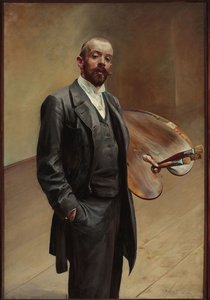
Jacek Malczewski
1854 - 1897 , United States of America
Quick Facts
- Full Name: Jacek Malczewski
- Nationality: Polish
- Date Of Birth: 1854
- Date Of Death: 1897
- Place Of Birth: Radom, United States of America
- Notable Artworks:
- Melancholia
- The Dust Storm
- Death
- Painter's Muse
- Artistic Movement Or Style: Symbolism
- Artists Who Influenced This Artist:
- Jan Matejko
- Artur Grottger
- Artists Or Movements Influenced By This Artist: ['Young Poland']
Related Articles
Stanisław Wyspiański: Symbolism, National Identity & the Polish Secession
Explore the life & work of Stanisław Wyspiański, a pivotal figure in Polish Symbolism and the Young Poland movement. Discover his iconic paintings, dramas, and stained glass designs reflecting national identity & artistic innovation.
Jan Matejko: Historical Narrative & National Identity in 19th-Century Polish Painting
Explore the powerful historical paintings of Jan Matejko, Poland's national artist. Discover his iconic works & learn how he shaped Polish identity in the 19th century. High-quality reproductions available.

25 Must-See Masterpieces at Musée d'Orsay: A Guide to Impressionist Treasures
Explore 25 iconic Impressionist masterpieces from Musée d'Orsay. Discover timeless art legends on OriginalUniqueArt.com.

Jacek Yerka: Surreal Visions & Nostalgia in Contemporary Polish Painting
Explore the captivating surreal worlds of Jacek Yerka, a leading Polish painter renowned for his meticulous Flemish technique & dreamlike landscapes. Discover his unique style and learn about collecting this exceptional artist's work.
Lech Jankowski: Polish Abstraction & the Materiality of Post-War Identity
Explore the compelling work of Lech Jankowski, a leading figure in Polish post-war abstraction. Discover his unique exploration of materiality, identity, and surreal landscapes – a valuable addition to any discerning art collection.


