Switch to Print
 Read More







































 For artworks or reproductions larger than 105 cm (approximately 41 inches) on any side, the frame will be shipped as a kit, disassembled. This method ensures safe delivery and prevents damage during transport.


The Composition and Subject
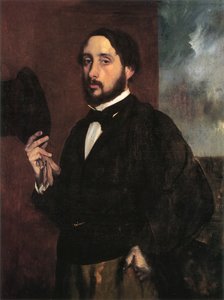
The painting presents a man with a beard and mustache, positioned within a frame that includes a chair and a book. He wears a suit and tie, looking directly toward the viewer with a serious facial expression. The palette is composed primarily of muted browns and greens, which contrast with smaller areas of brighter hues. In the background, a chair provides a sense of grounding to the arrangement, while a book sits nearby. A second person is visible in the scene, though their specific features remain indistinct. The brushstrokes are bold and controlled, building layers of color to create a textured surface that reacts to light.
Technique and Style
The work utilizes oil on canvas and paper to achieve its effects. The artist employs a method of meticulous observation, rendering precise details such as the creases in the suit and the exact positioning of the hands. While the technique incorporates elements of realism through accurate depiction, it also captures fleeting moments of light and atmosphere. The application of paint involves building up layers to create depth. This approach reflects a commitment to portraying everyday life with accuracy, focusing on the physical reality of the subject rather than an idealized form.
Historical Context and Symbolism
Created during the rise of Impressionism, this work emerged at a time when artists were shifting toward subjective experience and modern life. The arrangement of objects carries specific weight: the chair represents stability, and the book symbolizes intellect and contemplation. The direct gaze of the subject confronts the viewer with a palpable seriousness. This period in art history saw a departure from academic conventions, as seen in the artist's focus on capturing the essence of the contemporary world through honest representation.
Questions & Answers
What is the emotional tone of "Self-portrait" by Edgar Degas?
The emotional tone recorded for "Self-portrait" by Edgar Degas is reflective. It summarizes the feeling the work expresses.
Is "Self-portrait" by Edgar Degas a well-known artwork?
The popularity level recorded for "Self-portrait" by Edgar Degas is recognized.
What national origin stands behind the Impressionist Movement of "Self-portrait"?
"Self-portrait" was created by Edgar Degas, born in France, within the Impressionist Movement movement. The artist's origin links the work to Impressionist Movement as practiced by artists from France.
More about this painting
 Preview
 Send
Send Share
Share
 Details
 Guide
Guide

 Download
 Similars
 X-Ray
X-Ray Diaporama
 Q&A
Q&A Stats
Stats