Preview
 Send
Send Share
Share
 Details
 Guide
Guide

 Download
 Similars
 X-Ray
X-Ray Diaporama
 Q&A
Q&A Stats
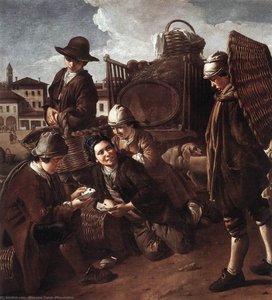
StatsBoy with a Basket

- 130.0 x 95.0 cm


 Read More
Giclée / Art Print
Museum-quality giclée or canvas print with fast production and flexible finish options. ( Buy Hand Made Painting Switch to Digital Image)




P118B $10

P118H $10

P118W $10

P438Z $10

P508JH $12

P508YH $12

P805H $10

P805Z $10

P919BZ $10

P919G $10

P919XJ $10

P959ZH $10

P968JZ $12

W106C $8

W218G $10

W218JH $8

W218Y $10

W307PJ $10

W316G $10

W316PJ $8

W316Y $10

W398PJ $8

W4111J $10

W500HY $15

W500JH $15

W692G $12

W849H $8

W940BG $15

W953PJ $8




Pick from our preset sizes that match the artwork's original proportions.

Type the width and the height you need, to fit your frame or your wall. A print can only be cut, never made bigger than the picture, so a size with a different shape loses a part of the image. We send you a digital mockup to approve before we print anything. The picture shown on this page does not show the real cut — only the mockup does.
Worldwide Delivery () in 2 weeks instead of standard 4/5 weeks. (8 November)

Free Worldwide Express Shipping

High-Quality Linen Canvas

Full Shipping Insurance

Customs Tax Refund Guarantee

True Color Matching Guarantee

100-Day Return Policy (Defects Only)

100% Money-Back Guarantee

Bulk Discount Offer
 Glass option is only available in size under 110 CM

Boy with a Basket
Giclée / Art Print
Reproduction Size
-


Total Price
$ 81
A Pastoral Moment Captured in Time
Giacomo Ceruti’s depiction of the Boy with a Basket transports the viewer into a sun-drenched, rustic scene from the mid-eighteenth century. This painting is far more than a simple genre study; it is an intimate tableau vivant, brimming with the quiet dignity of rural life. At its heart sits a young boy, whose serious, contemplative expression suggests a deep connection to the earth and the rhythms of agricultural labor. He is grounded in his surroundings, framed by the gentle chaos of nature’s bounty—a scattering of fresh eggs and the watchful presence of several chickens.
The composition draws the eye immediately to the basket cradled in the boy's hands, a vessel seemingly overflowing with the very symbols of sustenance and simple provision. Ceruti masterfully captures the texture of everything here: the soft down of the fowl, the matte shell of the eggs, and the worn fabric of the boy’s attire. It is a scene steeped in the tangible reality of pre-industrial existence.
Mastery of Light and Atmosphere
Ceruti, working during a period where genre painting flourished, exhibits a remarkable technical skill that lends this piece an almost luminous quality. While the provided biography details other artists, Ceruti’s own hand is evident in his ability to render light not just as illumination, but as an active participant in the scene. The light seems to emanate from an unseen source, catching the highlights on the boy's hat and giving a gentle sheen to the scattered eggs. This handling of light, characteristic of Italian genre masters, imbues the entire composition with a palpable warmth, inviting the viewer to step into its golden glow.
The technique employed suggests a delicate yet robust application of paint, allowing details—from the individual feathers to the subtle creases in the boy's clothing—to remain crisp while maintaining an overall atmospheric softness. This balance between minute detail and enveloping mood is what elevates the work from mere depiction to profound art.
Symbolism of Simplicity and Sustenance
The symbolism woven into this pastoral scene is rich and deeply resonant. The boy himself can be interpreted as a representation of innocence, labor, and the continuity of life. The basket filled with eggs speaks directly to themes of fertility, new beginnings, and the fundamental cycle of nature—life emerging from its source. Surrounded by chickens, the painting celebrates the humble bounty provided by the farmstead. For the modern collector or decorator, this symbolism offers a powerful counterpoint to the complexities of contemporary life; it is an invitation to pause and appreciate the elemental gifts.
A Timeless Connection for Your Space
Reproducing such a piece allows one to bring a curated piece of Italian history into a contemporary setting. Whether adorning a sunlit dining room, a cozy study, or a gallery wall, this artwork introduces an immediate sense of pastoral calm and enduring tradition. The emotional impact is one of gentle nostalgia—a yearning for a simpler time, viewed through the sophisticated lens of 18th-century Italian artistry. Owning a high-quality reproduction means acquiring not just paint on canvas, but a carefully preserved moment of quiet dignity.
Questions & Answers
How is the mood of "Boy with a Basket" by Giacomo Ceruti (Pitocchetto) described?
The overall mood of "Boy with a Basket" by Giacomo Ceruti (Pitocchetto) is earthy. The mood describes the general atmosphere of the work.
What other names is Giacomo Ceruti (Pitocchetto) known by?
Other names recorded for Giacomo Ceruti (Pitocchetto), creator of "Boy with a Basket", include Carlotto, Carlo Lotti.
Does "Boy with a Basket" have an augmented reality preview?
"Boy with a Basket" by Giacomo Ceruti (Pitocchetto) can be previewed on your own wall with the artwork's AR Preview page, using augmented reality on a compatible device.
Artist Biography
The Soul of the Humble: The Life of Giacomo Ceruti
Born in Milan, Giacomo Antonio Melchiorre Ceruti emerged as one of the most empathetic voices of the Italian late Baroque period. While his early years were rooted in the vibrant artistic atmosphere of Milan, his journey led him to Brescia, where he settled with his family in the parish of Sant'Agata. This transition marked the beginning of a career that would forever link his name to the very people he sought to immortalize. Though his initial forays into history painting were noted by some as clumsy, Ceruti found his true calling not in the grand, sweeping narratives of myth or religion, but in the quiet, dignified realities of the common man.
His profound connection to the marginalized members of society—the beggars, the paupers, and the simple craftsmen—was so central to his oeuvre that he earned the affectionate and descriptive nickname Pitocchetto, or "little beggar." This moniker was not merely a label but a testament to his artistic mission: to elevate the subjects of the street to the status of portraiture, treating their struggles and daily labors with a level of respect and psychological depth rarely afforded to the lower classes during the eighteenth century.
A Mastery of Light and Earthly Tones
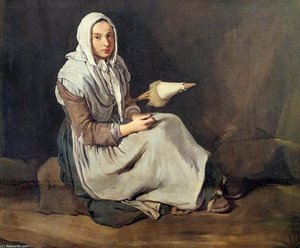
Ceruti’s technical prowess is most evident in his ability to manipulate light and texture to evoke a sense of profound realism. His style, deeply influenced by the Baroque emphasis on chiaroscuro, utilizes dramatic lighting to create volume and emotional weight within his compositions. In works such as The Spinner, one can observe how he employs subtle shadows and warm colors to cultivate an atmosphere of tranquility and contemplation, drawing the viewer's eye to the intricate details of a woman’s hands or the texture of her clothing.
His palette was often dominated by earthy tones, a choice that reinforced the connection between his subjects and the rugged, natural world they inhabited. Whether depicting the weathered face of a man in The Dwarf or the weary posture of a figure in Beggar Resting, Ceruti used muted colors and rough textures to achieve an authenticity that feels almost tactile. This focus on the material reality of his subjects—the weight of a heavy coat, the coarseness of a thatched roof, or the dampness of laundry in The Laundress—allowed him to bridge the gap between the observer and the observed.
Legacy and Artistic Significance
The historical significance of Giacomo Ceruti lies in his ability to transform genre painting into a medium of profound humanism. While he was capable of executing religious scenes, altarpieces, and even portraits for the local nobility, it is his large-scale depictions of everyday life that secure his place in the canon of Italian art. His work serves as a vital historical window into the social strata of Northern Italy, capturing the essence of 18th-century domesticity and survival.
Today, the enduring power of his vision is preserved in prestigious collections, such as the Musei Civici d'Arte e Storia in Brescia and the Fundación Colección Thyssen-Bornemisza in Spain. Through his empathetic lens, Ceruti ensured that the fleeting moments of the disenfranchised—a moment of rest, a repetitive task, or a quiet gaze—were granted a permanent and dignified existence in the annals of art history.

Giacomo Ceruti (Pitocchetto)
1698 - 1767 , Italy
Quick Facts
- Artistic Movement Or Style: Late Baroque
- Artists Who Influenced This Artist: ['Antonio Lucini']
- Full Name: Giacomo Antonio Melchiorre Ceruti
- Nationality: Italian
- Notable Artworks:
- Beggar Resting
- The Dwarf
- The Spinner
- The Laundress
- Place Of Birth: Milan, Italy
- Date Of Birth: 1698
- Date Of Death: 1767
Related Articles

Baroque Masterpieces: 10 Paintings That Defined an Era |
Journey through the drama & grandeur of Baroque art! Explore 10 masterpieces by Caravaggio, Rembrandt, Rubens & more. Discover stunning oil paintings, rich colors & timeless stories. Find museum-quality reproductions at .

Baroque Drama: Bringing Opulence & Emotion into Contemporary Interiors
Explore the opulent world of Baroque interior design! Discover key elements, modern applications & how to bring dramatic elegance into your home with OriginalUniqueArt.com's authentic reproductions.

Chiaroscuro and Soul: A Definitive Guide to the Drama and Emotion of Italian Baroque Masterpieces
Embark on a sophisticated journey through Italian Baroque art. Discover the dramatic interplay of light and emotion in Caravaggio’s masterpieces and explore how to bring this timeless grandeur into your collection with expert art insights.

The Enduring Power of Painting: A Historical & Contemporary Exploration of Form and Emotion
Explore the rich history & enduring techniques of oil painting with OriginalUniqueArt. Discover masterpieces, learn about art collecting, and find authentic handmade reproductions crafted by skilled artists.

Giuseppe Maria Crespi: Pioneering Genre Painting & the Bolognese Baroque
Explore the life & art of Giuseppe Maria Crespi, a pivotal Bolognese Baroque painter. Discover his groundbreaking genre scenes, religious works, and lasting influence on Italian art history. Learn more at OriginalUniqueArt.