Text size

() ·

A painting made for you, by hand

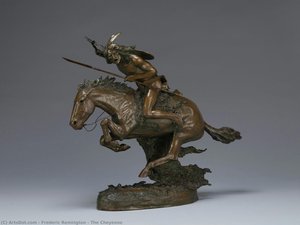
The Cheyenne

Hand Made Oil Reproduction

Hand-painted oil on canvas in your size and frame, made to order by our artists. ( Switch to Print Switch to Digital Image)

Collectible Description

Frederic Remington’s "The Cheyenne" bronze sculpture captures frontier life with dynamic realism & lost-wax casting. Explore this 1906 masterpiece's unique details & symbolism.

Artist Biography

Explore the captivating world of Frederic Remington (1861-1909), master of Western American art! Discover iconic paintings of cowboys, Native Americans & frontier life – a true American legend.

from ·

Chapter 1

How large should it be?

Slide to change the size; the picture on the left shows the frame at its real width. The proportions of the original are kept.

Standard
custom
CM
INCH

Pick from our preset sizes that match the artwork's original proportions.

width
height

Type the width and the height you need, to fit your frame or your wall. This is hand-painted, so for a size with a different shape the artist can paint a bit more around the picture, or cut a bit — you choose. We send you a digital mockup to approve before the painting starts. The picture shown on this page does not show the real result — only the mockup does.

Chapter 2

How should it arrive?

Choose the edges of the stretched canvas

Choose your frame

Corner sample of the WhiteWrap canvas edge finish, stretched on solid wood bars
White $1
Corner sample of the BlurSideWrap canvas edge finish, stretched on solid wood bars
Blurside $1
Corner sample of the ExtendedWrap canvas edge finish, stretched on solid wood bars
Extended $1
Corner sample of the P118B picture frame: moulded polystyrene, 5 cm wide and 3 cm thick
P118B $10
Corner sample of the P118H picture frame: moulded polystyrene, 5 cm wide and 3 cm thick
P118H $10
Corner sample of the P118W picture frame: moulded polystyrene, 5 cm wide and 3 cm thick
P118W $10
Corner sample of the P438Z picture frame: moulded polystyrene, 5.5 cm wide and 3.5 cm thick
P438Z $10
Corner sample of the P508JH picture frame: moulded polystyrene, 7 cm wide and 3.5 cm thick
P508JH $12
Corner sample of the P508YH picture frame: moulded polystyrene, 7 cm wide and 3.5 cm thick
P508YH $12
Corner sample of the P805H picture frame: moulded polystyrene, 5 cm wide and 3.5 cm thick
P805H $10
Corner sample of the P805Z picture frame: moulded polystyrene, 5 cm wide and 3.5 cm thick
P805Z $10
Corner sample of the P919BZ picture frame: moulded polystyrene, 7 cm wide and 3.5 cm thick
P919BZ $10
Corner sample of the P919G picture frame: moulded polystyrene, 7 cm wide and 3.5 cm thick
P919G $10
Corner sample of the P919XJ picture frame: moulded polystyrene, 7 cm wide and 3.5 cm thick
P919XJ $10
Corner sample of the P959ZH picture frame: moulded polystyrene, 5 cm wide and 3 cm thick
P959ZH $10
Corner sample of the P968JZ picture frame: moulded polystyrene, 6 cm wide and 4 cm thick
P968JZ $12
Corner sample of the W106C picture frame: solid wood, 5 cm wide and 3 cm thick
W106C $8
Corner sample of the W218G picture frame: solid wood, 5 cm wide and 3 cm thick
W218G $10
Corner sample of the W218JH picture frame: solid wood, 5 cm wide and 3 cm thick
W218JH $8
Corner sample of the W218Y picture frame: solid wood, 5 cm wide and 3 cm thick
W218Y $10
Corner sample of the W307PJ picture frame: solid wood, 6 cm wide and 3 cm thick
W307PJ $10
Corner sample of the W316G picture frame: solid wood, 6 cm wide and 3 cm thick
W316G $10
Corner sample of the W316PJ picture frame: solid wood, 6 cm wide and 3 cm thick
W316PJ $8
Corner sample of the W316Y picture frame: solid wood, 6 cm wide and 3 cm thick
W316Y $10
Corner sample of the W398PJ picture frame: solid wood, 5 cm wide and 3 cm thick
W398PJ $8
Corner sample of the W4111J picture frame: solid wood, 6.5 cm wide and 3.5 cm thick
W4111J $10
Corner sample of the W500HY picture frame: solid wood, 7 cm wide and 5 cm thick
W500HY $15
Corner sample of the W500JH picture frame: solid wood, 7 cm wide and 5 cm thick
W500JH $15
Corner sample of the W692G picture frame: solid wood, 8 cm wide and 4 cm thick
W692G $12
Corner sample of the W849H picture frame: solid wood, 5 cm wide and 3 cm thick
W849H $8
Corner sample of the W940BG picture frame: solid wood, 7.5 cm wide and 4.5 cm thick
W940BG $15
Corner sample of the W953PJ picture frame: solid wood, 6 cm wide and 3.5 cm thick
W953PJ $8
Corner sample of the H24-GOLD picture frame: carved wood with gesso, 10 cm wide and 6 cm thick
H24-GOLD $30
Corner sample of the H24-SILVER picture frame: carved wood with gesso, 10 cm wide and 6 cm thick
H24-SILVER $30
Corner sample of the H36-GOLD picture frame: carved wood with gesso, 15 cm wide and 6.5 cm thick
H36-GOLD $45
Corner sample of the H36-SILVER picture frame: carved wood with gesso, 15 cm wide and 6.5 cm thick
H36-SILVER $45
Frame preview
Framed

Moulding: . Overall size with the frame: .

Chapter 3

Who paints it, and should anything change?

Examples of what can be changed: Replace face with customer photo; Add pet (e.g., replace cat with dog); Include hidden message in background; Change background landscape or elements.
After order, OriginalUniqueArt.com team will email client for instructions and provide a mockup preview

Worldwide Delivery () in 3/4 weeks instead of standard 5 weeks. (31 October). No compromise on quality.

Chapter 4

The finishing touches

A nameplate, as in a museum?

Engraved Bronze Plaque Details

This elegant plaque features the artist's name and the title of the artwork, finely engraved for a timeless presentation.

It is made from bronze with a refined, elegant finish. The text is precisely laser-engraved for a sharp and permanent result. Measuring 9x2 cm, the plaque is compact yet easy to read. It's built to be durable and scratch-resistant, offering a professional, museum-quality look. Mounting is simple thanks to the included adhesive backing.

Transparent Acrylic Plaque Details

The plaque includes essential engraved details such as the artist's name, the title of the artwork, the date it was created, the type of media used-like oil on canvas or watercolor-a brief description of the piece, and a QR code that links to the complete artwork information.

It is crafted from clear acrylic, offering a sleek, modern appearance. The text is UV-engraved in black to ensure strong visual contrast. With a size of 10x15 cm, it ensures optimal readability. It comes equipped with two metal hooks for secure wall mounting. The plaque is designed to be weather-resistant, making it suitable for various environments, and it includes interactive features that work seamlessly with smartphone scanning.

Black Acrylic Plaque Details

This elegant plaque includes engraved information such as the artist's name, the title of the artwork, the date it was created, the type of media used (like oil on canvas or watercolor), a short description of the artwork, and a QR code for quick access to more information.

The plaque itself is made from refined black acrylic with a premium finish. The text is laser-engraved in white for high contrast and readability. Its size is 10x15 cm, designed to be easy to read. It comes with two metal hooks for professional mounting. The design is sleek and fits any interior style. It is also weather-resistant and durable, with built-in digital integration for mobile compatibility.

A protective varnish?

When do you need it?

Chapter 5

Your painting, as you ordered it

The Cheyenne

Reproduction Medium

Reproduction Size

-

Elite Senior Artist

More detail, finesse, and extra production time

-

Reproduction Frame

-

-

For artworks or reproductions larger than 105 cm (approximately 41 inches) on any side, the frame will be shipped as a kit, disassembled. This method ensures safe delivery and prevents damage during transport.

Professional assembly required - this is not a DIY product.
The kit must be assembled and the canvas stretched by an experienced professional framer, using wood glue (not supplied), a canvas stretching plier and clamps to hold the bars square while the glue dries. Incorrect assembly or uneven canvas tension can permanently damage the artwork and is not covered by our warranty.

  • All solid wood bars are included, precisely cut to size.

  • Assembled with the screws provided, plus wood glue for the corner joints, which is not supplied and must be sourced by your framer.

  • Professional tools are required and not included: a canvas stretching plier (tensioner) and clamps to hold the bars square while the glue dries.

Important:
The corner joints require wood glue, the bars must be held with clamps until the glue is fully dry, and tightening the canvas on the assembled frame requires a canvas stretching plier. None of these are included in the kit. Please arrange an experienced professional framer before ordering this size.

Nameplate

-

-

Protective Varnish

Glossy Varnish (enhances colors, protects against light/moisture)

-

Customize My Artwork

Examples of what can be changed: Replace face with customer photo; Add pet (e.g., replace cat with dog); Include hidden message in background; Change background landscape or elements.

-

Urgent

Worldwide Delivery () in 3/4 weeks instead of standard 5 weeks. (31 October). No compromise on quality.

-

Express Shipping

Worldwide Delivery () in 5 weeks. (7 November).

Included

Total Price

$ 300

Total Price $ 300

Glass option is only available in size under 110 CM

Included with every order

  • Free Worldwide Express Shipping
  • High-Quality Linen Canvas
  • Full Shipping Insurance
  • Customs Tax Refund Guarantee
  • True Color Matching Guarantee
  • 100-Day Return Policy (Defects Only)
  • 100% Money-Back Guarantee
  • Bulk Discount Offer

The Cheyenne: A Bronze Chronicle of the American West

Frederic Remington’s “The Cheyenne” stands as more than just a bronze sculpture; it's a powerful testament to a vanishing world, a meticulously crafted narrative frozen in time. Completed in 1906, this iconic piece captures the raw energy and stoic dignity of a Native American warrior on horseback, a subject that would define Remington’s career and solidify his place as one of America’s foremost chroniclers of the late 19th-century West. The sculpture's immediate impact stems from its dynamic composition – a rider in mid-gallop, lance poised for action, embodying the spirit of both fierce combat and profound connection to the land.

  • Subject Matter: The central figure is a Cheyenne warrior, representative of the Native American tribes who inhabited the vast territories of the American West. Remington’s intention was not simply to depict a portrait but to capture an archetype – the skilled hunter, the courageous warrior, and ultimately, a symbol of resistance against encroaching civilization.
  • Technique: The sculpture's remarkable physicality is rooted in the lost-wax casting process, a technique that allowed Remington unprecedented control over his creation. This method, perfected over centuries, involved creating a wax model, then encasing it in clay to form a mold. Molten bronze was poured into the mold, and once cooled, the resulting cast was carefully removed, revealing the final form. The use of the buffalo robe as a support structure wasn't merely aesthetic; it cleverly facilitated the casting process by providing a conduit for the molten metal, enabling the creation of the horse’s dramatic rearing stance.

A Study in Realism and Detail

Remington’s artistic vision is firmly rooted in Realism, rejecting the romanticized depictions prevalent at the time. He sought an accurate representation of the subject, paying meticulous attention to anatomical detail – particularly evident in the musculature of the horse and the warrior's posture. The rough, granular texture achieved through the sculpting process isn’t a flaw but a deliberate choice, reflecting the harsh realities of frontier life and adding a palpable sense of authenticity to the piece. Subtle lighting enhances these textures, casting delicate shadows that emphasize the contours of the figures and the base, contributing to a dramatic and weighty atmosphere.

Symbolism and Historical Context

“The Cheyenne” is deeply embedded within its historical context – the late 19th century, a period of profound transformation in the American West. The sculpture reflects the complex relationship between Native Americans and the expanding United States, capturing a moment of both conflict and cultural exchange. The straightened right rear fetlock of number 12, a concession made to the foundry due to casting difficulties, subtly highlights the compromises inherent in this era. The choice speaks volumes about the practical constraints Remington faced while striving for artistic perfection.

Emotional Resonance and Artistic Legacy

Beyond its technical brilliance and historical significance, “The Cheyenne” possesses a powerful emotional resonance. The sculpture evokes feelings of power, determination, and perhaps even melancholy – a poignant reminder of a way of life that was rapidly disappearing. Its placement on a simple, dark-colored base further emphasizes the subject matter, creating a focal point that draws the viewer in. Frederic Remington’s “The Cheyenne” remains a seminal work, not just for its technical mastery but for its enduring portrayal of a pivotal moment in American history and the spirit of the West.

Questions & Answers

What explains the copyright situation of "The Cheyenne" by Frederic Remington?

"The Cheyenne" by Frederic Remington is in the public domain - its copyright has expired. Copyright terms are measured from the artist's death, and Frederic Remington died in 1909.

Is a high-resolution download of "The Cheyenne" available?

"The Cheyenne" is available as a high-resolution digital image download, purchased directly on its Digital Image page.

What does "The Cheyenne" by Frederic Remington bring to an interior?

The dramatic atmosphere of "The Cheyenne" by Frederic Remington matches its recommended space: a living room.

More about this painting

Switch to Print Switch to Digital Image Send
Details Guide Add to favorites Download Similars Diaporama Q&A Stats

In numbers

  • 1906the year it was painted
  • 29frames to choose from
  • standard sizes, in its own proportions
  • 5weeks to paint and deliver it
Frederic Remington

Frederic Remington

1861 - 1909, United States of America

Quick facts about Frederic Remington

  • Full Name: Frederic Sackrider Remington
  • Nationality: American
  • Date Of Birth: 1861
  • Date Of Death: 1909
  • Place Of Birth: Canton, United States of America
  • Notable Artworks:
    • My Ranch
    • Waiting in the Moonlight
    • Ridden Down (1905)
    • The Long-Horn Cattle Sign
  • Artistic Movement Or Style: Western American Art
  • Artists Or Movements Influenced By This Artist:
    • N.C. Wyeth
    • Zane Grey

Artist Biography

A Chronicler of the Vanishing West: The Life and Art of Frederic Remington

Frederic Sackrider Remington, born in Canton, New York, on October 4, 1861, wasn’t a product of the Wild West he so vividly depicted; rather, he was an Easterner who forged his artistic identity through fascination and dedicated study. His lineage hinted at a life far removed from dusty trails and cavalry charges – French Basque ancestry mingled with staunchly Republican New England roots, a father who was a Civil War colonel and newspaper editor, and connections to the famed Remington Arms dynasty through distant cousins. Yet, it was an early exposure to military themes, coupled with a restless spirit and a keen eye for storytelling, that set him on a path toward becoming arguably the most recognizable artist of the American West. His childhood moved to Bloomington, Illinois, then back to Canton and finally Ogdensburg, New York, but his imagination remained captivated by tales of frontier life. Though initially steered towards a military education at Vermont Episcopal Institute, Remington’s true calling lay not in following orders, but in observing and interpreting the world around him through art. A brief stint at Yale University confirmed this; football and sketching held far more appeal than formal academic pursuits.

From Illustrator to Painter: Forging an Artistic Vision

Remington’s artistic journey began not with grand canvases, but with ink and paper. His first published work, a cartoon for the *Yale Courant*, signaled an early aptitude for capturing action and narrative. A pivotal trip to Montana in 1881 ignited his lifelong obsession with the West. This wasn't merely a tourist’s gaze; Remington sought to immerse himself in the culture, observing cowboys, Native Americans, and the landscape itself. He initially attempted ranching and mining ventures, but these proved unsuccessful, freeing him to fully dedicate himself to art. Returning East, he quickly established himself as an illustrator for magazines like *Harper's Weekly* and *Collier’s*, his dynamic depictions of Western scenes captivating a national audience hungry for stories of the frontier. These illustrations weren’t simply reportage; they were infused with drama, energy, and a romanticized vision of the West that resonated deeply with the public imagination. It was through this work that Remington honed his skills in composition, capturing movement, and conveying emotion – qualities that would later define his paintings. He received minimal formal training beyond some drawing classes at Yale and a short period at the Art Students League, developing instead a distinctive style characterized by energetic brushwork, bold colors, and a focus on realism blended with dramatic flair.

Capturing a Vanishing World: Themes and Style

Remington’s art is inextricably linked to a specific moment in American history – the twilight of the Old West. His canvases are populated by iconic figures: rugged cowboys driving cattle, stoic Native Americans facing displacement, and U.S. Cavalry soldiers engaged in both heroic battles and tragic conflicts. He didn't shy away from depicting the harsh realities of frontier life, but his work often leans towards a romanticized portrayal, emphasizing courage, adventure, and the clash of cultures. His paintings aren’t simply historical documents; they are evocative narratives that explore themes of heroism, loss, and the inevitable march of progress. Remington's style evolved over time, moving from tighter, more academic renderings to looser, more expressive brushwork. He was a master of capturing movement – horses galloping across the plains, cowboys wrestling steers, soldiers charging into battle. He often employed quick sketches and photographs as reference material, but his art always transcended mere imitation, imbued with his own unique vision and emotional intensity. Notable works like *My Ranch*, *Waiting in the Moonlight*, *Ridden Down* (1905), and *The Long-Horn Cattle Sign* (1908) exemplify his ability to capture both the grandeur and the vulnerability of the American West.

Legacy and Enduring Influence

Frederic Remington died unexpectedly in 1909 at the age of 48, leaving behind a vast body of work that continues to captivate audiences today. His impact on Western art is undeniable; he didn’t just depict the West, he helped *define* it for generations of Americans. He established a visual language for the frontier – an iconography of cowboys, Indians, and cavalrymen that became deeply ingrained in popular culture.
  • His work inspired countless other artists, including N.C. Wyeth and Zane Grey.
  • The Frederic Remington Art Museum in Ogdensburg, New York, stands as a testament to his enduring legacy, preserving an extensive collection of his paintings, sculptures, and archival materials.
  • His art continues to be exhibited in major museums across the country, including the Metropolitan Museum of Art and the Amon Carter Museum of American Art.
Remington’s depictions, while sometimes criticized for their romanticized portrayal of the West, offer a valuable glimpse into a pivotal era in American history. He captured not just what *was*, but also what people *believed* about the West – its myths, its legends, and its enduring appeal. He remains a powerful symbol of the American spirit—a chronicler of a vanishing world who transformed it into an enduring artistic legacy.

Quick Facts

  • Subject or theme: Native American
  • Artistic style: Dramatic, Dynamic
  • Year: 1906
  • Medium: Bronze Sculpture
  • Influences: Frontier Life

Art Quiz

There is only one correct answer for each question.

Question 1:
What is unique about the construction of Frederic Remington’s ‘The Cheyenne’?
Question 2:
According to the description, what material was used to support the weight of the figures in ‘The Cheyenne’?
Question 3:
What technique did Frederic Remington employ to create the textured surface of ‘The Cheyenne’?
Question 4:
The description mentions that Remington created 22 different subjects in bronze. What does this suggest about his artistic process?
Question 5:
Based on the description, what is a key element of the artwork’s composition that conveys speed and energy?