Text size

() ·

A painting made for you, by hand

Virgin and Child

Hand Made Oil Reproduction

Hand-painted oil on canvas in your size and frame, made to order by our artists. ( Switch to Print Switch to Digital Image)

Collectible Description

Discover Fra Angelico’s ‘Virgin and Child’ (1435). A stunning Byzantine-inspired masterpiece in red chalk on stone, showcasing serene beauty & spiritual depth. Ideal for art lovers & collectors.

Artist Biography

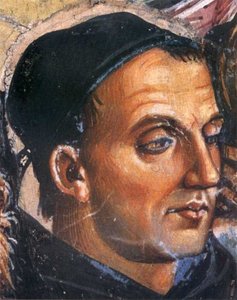
Explore Fra Angelico's (c. 1395-1455) serene Renaissance art: devout frescoes, vibrant colors & spiritual depth. Discover the 'Angelic Painter' & his legacy!

from ·

Chapter 1

How large should it be?

Slide to change the size; the picture on the left shows the frame at its real width. The proportions of the original are kept.

Standard
custom
CM
INCH

Pick from our preset sizes that match the artwork's original proportions.

width
height

Type the width and the height you need, to fit your frame or your wall. This is hand-painted, so for a size with a different shape the artist can paint a bit more around the picture, or cut a bit — you choose. We send you a digital mockup to approve before the painting starts. The picture shown on this page does not show the real result — only the mockup does.

Chapter 2

How should it arrive?

Choose the edges of the stretched canvas

Choose your frame

Corner sample of the WhiteWrap canvas edge finish, stretched on solid wood bars
White $1
Corner sample of the BlurSideWrap canvas edge finish, stretched on solid wood bars
Blurside $1
Corner sample of the ExtendedWrap canvas edge finish, stretched on solid wood bars
Extended $1
Corner sample of the P118B picture frame: moulded polystyrene, 5 cm wide and 3 cm thick
P118B $10
Corner sample of the P118H picture frame: moulded polystyrene, 5 cm wide and 3 cm thick
P118H $10
Corner sample of the P118W picture frame: moulded polystyrene, 5 cm wide and 3 cm thick
P118W $10
Corner sample of the P438Z picture frame: moulded polystyrene, 5.5 cm wide and 3.5 cm thick
P438Z $10
Corner sample of the P508JH picture frame: moulded polystyrene, 7 cm wide and 3.5 cm thick
P508JH $12
Corner sample of the P508YH picture frame: moulded polystyrene, 7 cm wide and 3.5 cm thick
P508YH $12
Corner sample of the P805H picture frame: moulded polystyrene, 5 cm wide and 3.5 cm thick
P805H $10
Corner sample of the P805Z picture frame: moulded polystyrene, 5 cm wide and 3.5 cm thick
P805Z $10
Corner sample of the P919BZ picture frame: moulded polystyrene, 7 cm wide and 3.5 cm thick
P919BZ $10
Corner sample of the P919G picture frame: moulded polystyrene, 7 cm wide and 3.5 cm thick
P919G $10
Corner sample of the P919XJ picture frame: moulded polystyrene, 7 cm wide and 3.5 cm thick
P919XJ $10
Corner sample of the P959ZH picture frame: moulded polystyrene, 5 cm wide and 3 cm thick
P959ZH $10
Corner sample of the P968JZ picture frame: moulded polystyrene, 6 cm wide and 4 cm thick
P968JZ $12
Corner sample of the W106C picture frame: solid wood, 5 cm wide and 3 cm thick
W106C $8
Corner sample of the W218G picture frame: solid wood, 5 cm wide and 3 cm thick
W218G $10
Corner sample of the W218JH picture frame: solid wood, 5 cm wide and 3 cm thick
W218JH $8
Corner sample of the W218Y picture frame: solid wood, 5 cm wide and 3 cm thick
W218Y $10
Corner sample of the W307PJ picture frame: solid wood, 6 cm wide and 3 cm thick
W307PJ $10
Corner sample of the W316G picture frame: solid wood, 6 cm wide and 3 cm thick
W316G $10
Corner sample of the W316PJ picture frame: solid wood, 6 cm wide and 3 cm thick
W316PJ $8
Corner sample of the W316Y picture frame: solid wood, 6 cm wide and 3 cm thick
W316Y $10
Corner sample of the W398PJ picture frame: solid wood, 5 cm wide and 3 cm thick
W398PJ $8
Corner sample of the W4111J picture frame: solid wood, 6.5 cm wide and 3.5 cm thick
W4111J $10
Corner sample of the W500HY picture frame: solid wood, 7 cm wide and 5 cm thick
W500HY $15
Corner sample of the W500JH picture frame: solid wood, 7 cm wide and 5 cm thick
W500JH $15
Corner sample of the W692G picture frame: solid wood, 8 cm wide and 4 cm thick
W692G $12
Corner sample of the W849H picture frame: solid wood, 5 cm wide and 3 cm thick
W849H $8
Corner sample of the W940BG picture frame: solid wood, 7.5 cm wide and 4.5 cm thick
W940BG $15
Corner sample of the W953PJ picture frame: solid wood, 6 cm wide and 3.5 cm thick
W953PJ $8
Corner sample of the H24-GOLD picture frame: carved wood with gesso, 10 cm wide and 6 cm thick
H24-GOLD $30
Corner sample of the H24-SILVER picture frame: carved wood with gesso, 10 cm wide and 6 cm thick
H24-SILVER $30
Corner sample of the H36-GOLD picture frame: carved wood with gesso, 15 cm wide and 6.5 cm thick
H36-GOLD $45
Corner sample of the H36-SILVER picture frame: carved wood with gesso, 15 cm wide and 6.5 cm thick
H36-SILVER $45
Frame preview
Framed

Moulding: . Overall size with the frame: .

Chapter 3

Who paints it, and should anything change?

Examples of what can be changed: Replace face with customer photo; Add pet (e.g., replace cat with dog); Include hidden message in background; Change background landscape or elements.
After order, OriginalUniqueArt.com team will email client for instructions and provide a mockup preview

Worldwide Delivery () in 3/4 weeks instead of standard 5 weeks. (2 November). No compromise on quality.

Chapter 4

The finishing touches

A nameplate, as in a museum?

Engraved Bronze Plaque Details

This elegant plaque features the artist's name and the title of the artwork, finely engraved for a timeless presentation.

It is made from bronze with a refined, elegant finish. The text is precisely laser-engraved for a sharp and permanent result. Measuring 9x2 cm, the plaque is compact yet easy to read. It's built to be durable and scratch-resistant, offering a professional, museum-quality look. Mounting is simple thanks to the included adhesive backing.

Transparent Acrylic Plaque Details

The plaque includes essential engraved details such as the artist's name, the title of the artwork, the date it was created, the type of media used-like oil on canvas or watercolor-a brief description of the piece, and a QR code that links to the complete artwork information.

It is crafted from clear acrylic, offering a sleek, modern appearance. The text is UV-engraved in black to ensure strong visual contrast. With a size of 10x15 cm, it ensures optimal readability. It comes equipped with two metal hooks for secure wall mounting. The plaque is designed to be weather-resistant, making it suitable for various environments, and it includes interactive features that work seamlessly with smartphone scanning.

Black Acrylic Plaque Details

This elegant plaque includes engraved information such as the artist's name, the title of the artwork, the date it was created, the type of media used (like oil on canvas or watercolor), a short description of the artwork, and a QR code for quick access to more information.

The plaque itself is made from refined black acrylic with a premium finish. The text is laser-engraved in white for high contrast and readability. Its size is 10x15 cm, designed to be easy to read. It comes with two metal hooks for professional mounting. The design is sleek and fits any interior style. It is also weather-resistant and durable, with built-in digital integration for mobile compatibility.

A protective varnish?

When do you need it?

Chapter 5

Your painting, as you ordered it

Virgin and Child

Reproduction Medium

Reproduction Size

-

Elite Senior Artist

More detail, finesse, and extra production time

-

Reproduction Frame

-

-

For artworks or reproductions larger than 105 cm (approximately 41 inches) on any side, the frame will be shipped as a kit, disassembled. This method ensures safe delivery and prevents damage during transport.

Professional assembly required - this is not a DIY product.
The kit must be assembled and the canvas stretched by an experienced professional framer, using wood glue (not supplied), a canvas stretching plier and clamps to hold the bars square while the glue dries. Incorrect assembly or uneven canvas tension can permanently damage the artwork and is not covered by our warranty.

  • All solid wood bars are included, precisely cut to size.

  • Assembled with the screws provided, plus wood glue for the corner joints, which is not supplied and must be sourced by your framer.

  • Professional tools are required and not included: a canvas stretching plier (tensioner) and clamps to hold the bars square while the glue dries.

Important:
The corner joints require wood glue, the bars must be held with clamps until the glue is fully dry, and tightening the canvas on the assembled frame requires a canvas stretching plier. None of these are included in the kit. Please arrange an experienced professional framer before ordering this size.

Nameplate

-

-

Protective Varnish

Glossy Varnish (enhances colors, protects against light/moisture)

-

Customize My Artwork

Examples of what can be changed: Replace face with customer photo; Add pet (e.g., replace cat with dog); Include hidden message in background; Change background landscape or elements.

-

Urgent

Worldwide Delivery () in 3/4 weeks instead of standard 5 weeks. (2 November). No compromise on quality.

-

Express Shipping

Worldwide Delivery () in 5 weeks. (9 November).

Included

Total Price

$ 300

Total Price $ 300

Glass option is only available in size under 110 CM

Included with every order

  • Free Worldwide Express Shipping
  • High-Quality Linen Canvas
  • Full Shipping Insurance
  • Customs Tax Refund Guarantee
  • True Color Matching Guarantee
  • 100-Day Return Policy (Defects Only)
  • 100% Money-Back Guarantee
  • Bulk Discount Offer

A Vision of Divine Motherhood: Fra Angelico’s *Virgin and Child* (1435)

This exquisite red chalk drawing on stone presents a deeply moving depiction of the Virgin Mary cradling the Christ Child, created in 1435 by the celebrated Italian Renaissance master, Fra Angelico. The work embodies the spiritual intensity and artistic innovation that define his oeuvre, offering a glimpse into the devotional practices and aesthetic sensibilities of the early 15th century.

Stylistic Roots & Byzantine Echoes

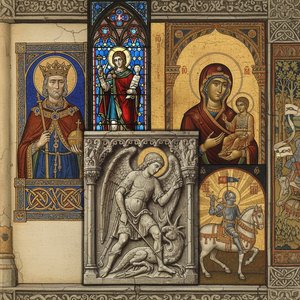
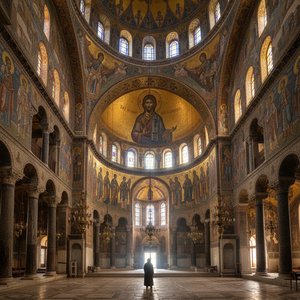
Fra Angelico, born Giovanni da Fiesole, was a Dominican friar whose religious devotion profoundly shaped his artistic output. This *Virgin and Child* showcases his distinctive style – a harmonious blend of emerging Renaissance naturalism with the enduring traditions of Byzantine iconography. Note the elongated proportions of both figures, reminiscent of Byzantine mosaics and panel paintings. The flattened perspective, eschewing strict realism for spiritual emphasis, further reinforces this connection to earlier artistic styles. However, unlike purely iconic representations, Angelico infuses his figures with a nascent sense of volume and tenderness, hinting at the humanist concerns gaining prominence during the Renaissance.

Technique & Materiality

The choice of red chalk on textured stone is particularly significant. This wasn’t a preparatory sketch; it *is* the finished work. The directness of drawing onto the stone lends an immediacy and tactile quality, suggesting a deeply personal connection between artist and subject. Angelico masterfully employs hatching and cross-hatching to build tonal variations within the red chalk, subtly modeling the forms and creating a sense of depth. The rough texture of the stone itself adds another layer of visual interest, evoking a sense of age and reverence. The skillful use of negative space – the untouched areas of the stone – defines shapes and enhances the composition’s clarity.

Symbolism & Religious Context

The *Virgin and Child* is arguably the most iconic subject in Christian art. Here, it represents not merely a maternal bond but also embodies core theological concepts: Mary as the *Theotokos*, “God-bearer,” and Christ as the embodiment of divine grace and salvation. The solemnity of their poses and the quiet intimacy of their interaction convey a sense of profound spiritual contemplation. In 1435, Florence was a hub of religious fervor and artistic patronage; works like this were created for private devotion or to adorn monastic cells – spaces designed to foster prayer and meditation. Fra Angelico himself worked extensively on frescoes in monasteries, imbuing these sacred spaces with his distinctive vision.

Emotional Resonance & Lasting Appeal

This *Virgin and Child* transcends its historical context to offer a timeless message of faith, love, and hope. The work’s quiet beauty and understated elegance invite viewers into a space of peaceful contemplation. The expressive lines and delicate shading create an atmosphere of serene devotion, making it a compelling piece for both art enthusiasts and those seeking to bring a sense of spiritual tranquility into their homes. Beato Angelico, as he was later known, truly captured the divine in his artistry, and this drawing stands as a testament to his enduring legacy. Collectors will appreciate its rarity and historical significance, while interior designers may find its muted palette and devotional subject matter ideal for creating contemplative spaces.

Questions & Answers

What stage of Fra Angelico's development does "Virgin and Child" represent?

"Virgin and Child" belongs to the Mature Period of Fra Angelico's career. This classification relates the work to the artist's development.

What is the luminance of "Virgin and Child" by Fra Angelico?

The colors of "Virgin and Child" show a gentle luminance luminance.

What technique and style characterize "Virgin and Child" by Fra Angelico?

"Virgin and Child" by Fra Angelico combines the acrylic technique with the Byzantine Iconography style. Technique and movement describe the making and the style of the work.

More about this painting

Preview AR preview Switch to Print Switch to Digital Image Send
Details Guide Add to favorites Download Similars X-Ray Diaporama Q&A Stats

In numbers

  • 1435the year it was painted
  • 29frames to choose from
  • standard sizes, in its own proportions
  • 5weeks to paint and deliver it
Fra Angelico

Fra Angelico

1395 - 1455, Italy

Quick facts about Fra Angelico

  • Artistic Movement Or Style: Early Renaissance
  • Artists Or Movements Influenced By This Artist: ['Early Renaissance']
  • Artists Who Influenced This Artist:
    • Lorenzo Monaco
    • Masaccio
  • Full Name: Giovanni da Fiesole
  • Nationality: Italian
  • Notable Artworks:
    • Annunciation
    • Coronation of the Virgin
    • St. Lawrence Giving Alms
    • Deposition of Christ
  • Place Of Birth: Rupesana, Italy
  • Date Of Birth: 1395
  • Date Of Death: 1455

Artist Biography

Early Life and Spiritual Formation

Born Giovanni da Fiesole around 1395 in the Tuscan hills near Florence, Fra Angelico’s early life remains shrouded in a gentle obscurity that seems fitting for an artist whose work would become synonymous with ethereal beauty and devout spirituality. Little is known of his family or childhood, but it's believed he received a solid education, preparing him for a life beyond the humble origins of Rupesana. The pivotal moment arrived when the young Giovanni entered the Dominican Order at Fiesole, embracing a life of religious contemplation and service. It was within the walls of the monastery that he received the name Fra (Brother) Angelico, a moniker that would soon reflect not only his monastic vows but also the angelic quality inherent in his art. Initially tasked with illuminating manuscripts – a meticulous craft demanding precision and vibrant color – he honed skills that would later blossom into breathtaking frescoes and panel paintings. This early training instilled in him a profound respect for detail, a mastery of pigment, and an understanding of how to convey narrative through visual storytelling. The Dominican Order’s emphasis on theological study undoubtedly shaped his artistic vision, imbuing his work with a deep sense of faith and purpose.

The Blossoming of a Unique Style

Fra Angelico's artistic development wasn’t born in isolation; he absorbed the currents of Florentine painting circulating at the time. The elegant linearity and decorative patterns of Lorenzo Monaco, a leading painter of the era, are evident in his early works. However, Fra Angelico didn’t merely imitate his predecessor. He began to synthesize these influences with a burgeoning naturalism, likely sparked by exposure to the groundbreaking frescoes of Masaccio. While Masaccio revolutionized painting with his dramatic use of perspective and realistic depiction of human form, Fra Angelico charted a different course. He embraced perspective not for its own sake, but as a means to create a more immersive spiritual experience. His figures, though graceful and often idealized, possess a quiet dignity and emotional resonance that transcends mere representation. Crucially, his art was inextricably linked to his faith; he viewed painting not as a profession, but as an act of prayer – a way to contemplate the divine and make it visible to others. This deeply held belief infused every brushstroke with reverence and sincerity.

Masterpieces of Faith and Color

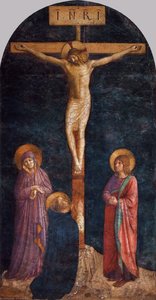
Fra Angelico’s artistic legacy is anchored by several monumental works that continue to inspire awe centuries later. The frescoes within the San Marco monastery in Florence are widely considered his masterpiece. Commissioned for the Dominican convent, these scenes from the life of Christ radiate a serene simplicity and emotional depth rarely encountered in Renaissance art. Each image – from the Annunciation to the Crucifixion – is imbued with a sense of quiet contemplation, inviting viewers into a personal encounter with the sacred narrative. Beyond San Marco, his *Perugia Altarpiece* showcases his evolving style, particularly in its delicate depiction of the Annunciation. The recurring theme of the Annunciation itself appears in numerous versions throughout his oeuvre, each rendered with ethereal beauty and symbolic richness. Works like *St. Lawrence Giving Alms* demonstrate his skill in narrative composition and his ability to portray human emotion with sensitivity and grace. His palette is characterized by bright, clear colors – blues, golds, and reds – that seem to glow from within, creating an atmosphere of otherworldly radiance.

Legacy and Lasting Influence

Fra Angelico stands as a pivotal figure in the Early Renaissance, embodying the era’s fusion of religious devotion and artistic innovation. He wasn't simply a painter; he was a spiritual visionary who translated his faith into visual form. His work reflects the humanist ideals of the period, emphasizing human dignity and the potential for spiritual contemplation. Giorgio Vasari, the celebrated art historian, lauded Fra Angelico in his *Lives of the Artists*, proclaiming that no amount of praise could adequately capture the beauty of his creations. This recognition cemented his place within the canon of Western art. His influence extended far beyond his own time, inspiring generations of artists with his devotional style and masterful use of color. In 1982, Pope John Paul II officially recognized Fra Angelico’s holiness by beatifying him – a testament to the profound spiritual impact of his life and work. Today, his art continues to resonate with viewers around the world, offering a timeless message of faith, hope, and beauty.

Where to Experience His Art

  • Museo di San Marco, Florence: This museum houses the largest and most significant collection of Fra Angelico’s works, including the breathtaking frescoes from the monastery.
  • The Louvre Museum (Paris): Several important paintings by Fra Angelico can be found within the Louvre's extensive collection.
  • The National Gallery (London): The National Gallery boasts a selection of his works, offering visitors a glimpse into his artistic genius.
  • Santa Maria sopra Minerva, Rome: This church contains frescoes by Fra Angelico and is the site where he was officially beatified.
  • Numerous other museums worldwide also display examples of his art, allowing a broader appreciation for his enduring legacy.

Quick Facts

  • title: Virgin and Child
  • style: Byzantine iconography, Early Renaissance
  • medium: Red chalk on stone tablet
  • subject: The Virgin Mary and the infant Jesus

Art Quiz

There is only one correct answer for each question.

Question 1:
What is the primary medium used in Fra Angelico's 'Virgin and Child' (1435) as described?
Question 2:
The artistic style of this 'Virgin and Child' is heavily influenced by which tradition?
Question 3:
What characteristic of the figures in Fra Angelico’s work, as noted in the description, is typical of Byzantine art?
Question 4:
The texture of the stone surface contributes to what overall impression of the artwork?