Menu
Text size

() ·

A painting made for you, by hand

The Birthday Table

Hand Made Oil Reproduction

Hand-painted oil on canvas in your size and frame, made to order by our artists. ( Switch to Print Switch to Digital Image)

Collectible Description

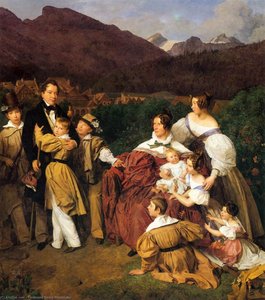
Experience 'The Birthday Table' by Ferdinand Georg Waldmuller (1840). A serene portrait of a woman amidst floral abundance. Hand-painted reproduction, 63x50cm. Elevate your art collection.

Artist Biography

Ferdinand Georg Waldmüller (1793-1865) was a leading Austrian Biedermeier painter renowned for realistic portraits, landscapes & genre scenes. A critic of academic art, he championed natural observation and influenced generations with his detailed depictions.

from ·

Chapter 1

How large should it be?

Slide to change the size; the picture on the left shows the frame at its real width. The proportions of the original are kept.

Standard
custom
CM
INCH

Pick from our preset sizes that match the artwork's original proportions.

width
height

Type the width and the height you need, to fit your frame or your wall. This is hand-painted, so for a size with a different shape the artist can paint a bit more around the picture, or cut a bit — you choose. We send you a digital mockup to approve before the painting starts. The picture shown on this page does not show the real result — only the mockup does.

Chapter 2

How should it arrive?

Choose the edges of the stretched canvas

Choose your frame

Corner sample of the WhiteWrap canvas edge finish, stretched on solid wood bars
White $1
Corner sample of the BlurSideWrap canvas edge finish, stretched on solid wood bars
Blurside $1
Corner sample of the ExtendedWrap canvas edge finish, stretched on solid wood bars
Extended $1
Corner sample of the P118B picture frame: moulded polystyrene, 5 cm wide and 3 cm thick
P118B $10
Corner sample of the P118H picture frame: moulded polystyrene, 5 cm wide and 3 cm thick
P118H $10
Corner sample of the P118W picture frame: moulded polystyrene, 5 cm wide and 3 cm thick
P118W $10
Corner sample of the P438Z picture frame: moulded polystyrene, 5.5 cm wide and 3.5 cm thick
P438Z $10
Corner sample of the P508JH picture frame: moulded polystyrene, 7 cm wide and 3.5 cm thick
P508JH $12
Corner sample of the P508YH picture frame: moulded polystyrene, 7 cm wide and 3.5 cm thick
P508YH $12
Corner sample of the P805H picture frame: moulded polystyrene, 5 cm wide and 3.5 cm thick
P805H $10
Corner sample of the P805Z picture frame: moulded polystyrene, 5 cm wide and 3.5 cm thick
P805Z $10
Corner sample of the P919BZ picture frame: moulded polystyrene, 7 cm wide and 3.5 cm thick
P919BZ $10
Corner sample of the P919G picture frame: moulded polystyrene, 7 cm wide and 3.5 cm thick
P919G $10
Corner sample of the P919XJ picture frame: moulded polystyrene, 7 cm wide and 3.5 cm thick
P919XJ $10
Corner sample of the P959ZH picture frame: moulded polystyrene, 5 cm wide and 3 cm thick
P959ZH $10
Corner sample of the P968JZ picture frame: moulded polystyrene, 6 cm wide and 4 cm thick
P968JZ $12
Corner sample of the W106C picture frame: solid wood, 5 cm wide and 3 cm thick
W106C $8
Corner sample of the W218G picture frame: solid wood, 5 cm wide and 3 cm thick
W218G $10
Corner sample of the W218JH picture frame: solid wood, 5 cm wide and 3 cm thick
W218JH $8
Corner sample of the W218Y picture frame: solid wood, 5 cm wide and 3 cm thick
W218Y $10
Corner sample of the W307PJ picture frame: solid wood, 6 cm wide and 3 cm thick
W307PJ $10
Corner sample of the W316G picture frame: solid wood, 6 cm wide and 3 cm thick
W316G $10
Corner sample of the W316PJ picture frame: solid wood, 6 cm wide and 3 cm thick
W316PJ $8
Corner sample of the W316Y picture frame: solid wood, 6 cm wide and 3 cm thick
W316Y $10
Corner sample of the W398PJ picture frame: solid wood, 5 cm wide and 3 cm thick
W398PJ $8
Corner sample of the W4111J picture frame: solid wood, 6.5 cm wide and 3.5 cm thick
W4111J $10
Corner sample of the W500HY picture frame: solid wood, 7 cm wide and 5 cm thick
W500HY $15
Corner sample of the W500JH picture frame: solid wood, 7 cm wide and 5 cm thick
W500JH $15
Corner sample of the W692G picture frame: solid wood, 8 cm wide and 4 cm thick
W692G $12
Corner sample of the W849H picture frame: solid wood, 5 cm wide and 3 cm thick
W849H $8
Corner sample of the W940BG picture frame: solid wood, 7.5 cm wide and 4.5 cm thick
W940BG $15
Corner sample of the W953PJ picture frame: solid wood, 6 cm wide and 3.5 cm thick
W953PJ $8
Corner sample of the H24-GOLD picture frame: carved wood with gesso, 10 cm wide and 6 cm thick
H24-GOLD $30
Corner sample of the H24-SILVER picture frame: carved wood with gesso, 10 cm wide and 6 cm thick
H24-SILVER $30
Corner sample of the H36-GOLD picture frame: carved wood with gesso, 15 cm wide and 6.5 cm thick
H36-GOLD $45
Corner sample of the H36-SILVER picture frame: carved wood with gesso, 15 cm wide and 6.5 cm thick
H36-SILVER $45
Frame preview
Framed

Moulding: . Overall size with the frame: .

Chapter 3

Who paints it, and should anything change?

Examples of what can be changed: Replace face with customer photo; Add pet (e.g., replace cat with dog); Include hidden message in background; Change background landscape or elements.
After order, OriginalUniqueArt.com team will email client for instructions and provide a mockup preview

Worldwide Delivery () in 3/4 weeks instead of standard 5 weeks. (30 October). No compromise on quality.

Chapter 4

The finishing touches

A nameplate, as in a museum?

Engraved Bronze Plaque Details

This elegant plaque features the artist's name and the title of the artwork, finely engraved for a timeless presentation.

It is made from bronze with a refined, elegant finish. The text is precisely laser-engraved for a sharp and permanent result. Measuring 9x2 cm, the plaque is compact yet easy to read. It's built to be durable and scratch-resistant, offering a professional, museum-quality look. Mounting is simple thanks to the included adhesive backing.

Transparent Acrylic Plaque Details

The plaque includes essential engraved details such as the artist's name, the title of the artwork, the date it was created, the type of media used-like oil on canvas or watercolor-a brief description of the piece, and a QR code that links to the complete artwork information.

It is crafted from clear acrylic, offering a sleek, modern appearance. The text is UV-engraved in black to ensure strong visual contrast. With a size of 10x15 cm, it ensures optimal readability. It comes equipped with two metal hooks for secure wall mounting. The plaque is designed to be weather-resistant, making it suitable for various environments, and it includes interactive features that work seamlessly with smartphone scanning.

Black Acrylic Plaque Details

This elegant plaque includes engraved information such as the artist's name, the title of the artwork, the date it was created, the type of media used (like oil on canvas or watercolor), a short description of the artwork, and a QR code for quick access to more information.

The plaque itself is made from refined black acrylic with a premium finish. The text is laser-engraved in white for high contrast and readability. Its size is 10x15 cm, designed to be easy to read. It comes with two metal hooks for professional mounting. The design is sleek and fits any interior style. It is also weather-resistant and durable, with built-in digital integration for mobile compatibility.

A protective varnish?

When do you need it?

Chapter 5

Your painting, as you ordered it

The Birthday Table

Reproduction Medium

Reproduction Size

-

Elite Senior Artist

More detail, finesse, and extra production time

-

Reproduction Frame

-

-

For artworks or reproductions larger than 105 cm (approximately 41 inches) on any side, the frame will be shipped as a kit, disassembled. This method ensures safe delivery and prevents damage during transport.

Professional assembly required - this is not a DIY product.
The kit must be assembled and the canvas stretched by an experienced professional framer, using wood glue (not supplied), a canvas stretching plier and clamps to hold the bars square while the glue dries. Incorrect assembly or uneven canvas tension can permanently damage the artwork and is not covered by our warranty.

  • All solid wood bars are included, precisely cut to size.

  • Assembled with the screws provided, plus wood glue for the corner joints, which is not supplied and must be sourced by your framer.

  • Professional tools are required and not included: a canvas stretching plier (tensioner) and clamps to hold the bars square while the glue dries.

Important:
The corner joints require wood glue, the bars must be held with clamps until the glue is fully dry, and tightening the canvas on the assembled frame requires a canvas stretching plier. None of these are included in the kit. Please arrange an experienced professional framer before ordering this size.

Nameplate

-

-

Protective Varnish

Glossy Varnish (enhances colors, protects against light/moisture)

-

Customize My Artwork

Examples of what can be changed: Replace face with customer photo; Add pet (e.g., replace cat with dog); Include hidden message in background; Change background landscape or elements.

-

Urgent

Worldwide Delivery () in 3/4 weeks instead of standard 5 weeks. (30 October). No compromise on quality.

-

Express Shipping

Worldwide Delivery () in 5 weeks. (6 November).

Included

Total Price

$ 300

Total Price $ 300

Glass option is only available in size under 110 CM

Included with every order

  • Free Worldwide Express Shipping
  • High-Quality Linen Canvas
  • Full Shipping Insurance
  • Customs Tax Refund Guarantee
  • True Color Matching Guarantee
  • 100-Day Return Policy (Defects Only)
  • 100% Money-Back Guarantee
  • Bulk Discount Offer

The Birthday Table – A Portrait of Quiet Reflection

Ferdinand Georg Waldmüller’s “The Birthday Table” stands as a quintessential example of Biedermeier art, capturing a moment of serene domesticity that speaks volumes about the artistic sensibilities of its era. Painted in 1840, this oil on oak masterpiece transcends mere representation; it delves into the subtle nuances of human emotion and embodies the values championed by Waldmüller’s generation – simplicity, sincerity, and an unwavering devotion to observing the natural world.
  • Subject Matter: The painting depicts a woman seated at a table adorned with vases overflowing with flowers. This deliberate choice of subject matter reflects Biedermeier's fascination with portraying everyday life—a reaction against the grand narratives and theatrical displays favored by earlier Romantic artists.
  • Style: Waldmüller’s style is characterized by meticulous realism combined with an understated elegance. He eschewed flamboyant ornamentation, prioritizing clarity of form and tonal harmony to convey a sense of calm and tranquility. The composition is carefully balanced, guiding the viewer's eye across the canvas in a deliberate manner.
  • Technique: Waldmüller employed a glazing technique—applying thin layers of translucent paint over underlying colors—to achieve remarkable luminosity and depth. This painstaking process allowed him to capture the delicate textures of fabric, flowers, and skin with astonishing accuracy. The artist’s masterful handling of light contributes significantly to the painting's emotional impact.
The historical context surrounding “The Birthday Table” is crucial to understanding its significance. Painted during a period of political upheaval in Austria—the aftermath of Karl Marx’s exile—Waldmüller’s work embodies a spirit of quiet resilience and domestic comfort amidst turbulent times. The flowers themselves symbolize beauty, fertility, and renewal—themes that resonate deeply with the Biedermeier ethos. They serve as a visual counterpoint to the woman's contemplative gaze, inviting viewers to contemplate themes of inner peace and contemplation.
  • Symbolism: Beyond its aesthetic qualities, “The Birthday Table” carries symbolic weight. The woman’s posture conveys composure and grace—a reflection of Biedermeier ideals of feminine virtue. The flowers represent hope and joy amidst adversity, mirroring the broader cultural preoccupation with finding solace in nature and domesticity during a time of social unrest.
  • Emotional Impact: Waldmüller skillfully evokes a feeling of intimacy and tranquility. The muted palette—dominated by earthy tones—creates an atmosphere of understated warmth. The woman’s gaze directs the viewer inward, prompting reflection on themes of solitude, contemplation, and inner harmony.
“The Birthday Table” remains a testament to Waldmüller's artistic vision and his unwavering commitment to capturing the essence of human experience. Its enduring appeal lies in its ability to transport viewers back to a bygone era—a time when beauty was found not in grand spectacle but in the quiet dignity of everyday life, beautifully rendered with meticulous detail and infused with profound emotional resonance. This painting exemplifies the Biedermeier movement's core values: honesty, naturalism, and an appreciation for the simple pleasures of existence. Its legacy continues to inspire artists and collectors alike who seek works that communicate both intellectual depth and heartfelt emotion.

Additional Information

This artwork is housed at Wallraf–Richartz Museum, acquired in 1937 from S. Kende.

Waldmüller’s artistic influence extended beyond portraiture; he was also a prolific landscape painter and genre artist, demonstrating a remarkable versatility that cemented his place as one of Austria's most celebrated painters.

References

Questions & Answers

How do I discover artworks close to "The Birthday Table" by Ferdinand Georg Waldmüller?

Works similar to "The Birthday Table" are listed on the artwork's Similars page.

Who is "The Birthday Table" suggested for as a present, and for what use?

"The Birthday Table" is suggested for birthday as a present, with accent in mind.

Does "The Birthday Table" have an augmented reality preview?

"The Birthday Table" by Ferdinand Georg Waldmüller can be previewed on your own wall with the artwork's AR Preview page, using augmented reality on a compatible device.

More about this painting

Preview AR preview Switch to Print Switch to Digital Image Send
Details Guide Add to favorites Download Similars X-Ray Diaporama Q&A Stats

In numbers

  • 1840the year it was painted
  • 29frames to choose from
  • standard sizes, in its own proportions
  • 5weeks to paint and deliver it
Ferdinand Georg Waldmüller

Ferdinand Georg Waldmüller

1793 - 1865, Austria

Quick facts about Ferdinand Georg Waldmüller

  • Full Name: Ferdinand Georg Waldmüller
  • Nationality: Austrian
  • Date Of Birth: 1793
  • Date Of Death: 1865
  • Place Of Birth: Vienna, Austria
  • Notable Artworks:
    • Venetian Fruit Seller
    • Self-Portrait
    • Louise Mayer
    • View of Ischl
    • On All Souls' Day
    • The Love Letter
    • Bathing Women
  • Artistic Movement Or Style: Biedermeier, Realism
  • Artists Or Movements Influenced By This Artist: Impressionism

Artist Biography

Early Life and Artistic Beginnings

Ferdinand Georg Waldmüller entered the world in Vienna, Austria, on January 15, 1793, a period of significant societal shifts and artistic ferment. His early life was unfortunately marked by hardship; the untimely death of his father cast a shadow over the family’s fortunes, instilling in young Ferdinand an early awareness of life's precariousness—a theme that would later resonate deeply within his art. Despite these challenges, Waldmüller demonstrated a clear aptitude for drawing and painting, leading him to enroll at the Academy of Fine Arts Vienna in 1807. However, his attendance proved somewhat erratic, reflecting perhaps a restless spirit or a dissatisfaction with the rigid academic constraints of the time. Initially, he gravitated towards portraiture, a reliable path for an aspiring artist seeking patronage, but it was the allure of landscapes and genre scenes—depictions of everyday life—that truly captured his imagination and would ultimately define his artistic legacy. These early explorations laid the groundwork for a style characterized by meticulous observation and a profound connection to the natural world.

A Career Forged in Realism and Controversy

Waldmüller’s career unfolded as a dynamic interplay between artistic innovation and institutional resistance. He supplemented his income during his formative years by working as a set designer and continuing to paint portraits, often while touring with his wife, the singer Katharina Weidner. This itinerant lifestyle exposed him to diverse environments and broadened his artistic horizons. By the 1820s, Waldmüller had begun to develop a distinctive style—a commitment to realistic depictions of everyday life, particularly in rural settings. He wasn’t interested in idealizing or romanticizing; instead, he sought to capture the world as it truly was, with all its beauty and imperfections. This dedication to realism brought him both acclaim and criticism. In 1819, he secured a professorship at the Academy of Fine Arts Vienna, but his tenure was fraught with conflict. Waldmüller passionately advocated for direct observation from nature—plein air painting—and openly criticized the academy’s emphasis on formulaic instruction and adherence to established conventions. His outspokenness led to repeated clashes with the artistic establishment and ultimately contributed to his forced retirement in 1857. Frequent journeys to Italy, beginning in 1825, and the idyllic Salzkammergut region profoundly influenced his landscape painting, refining his ability to capture light, texture, and atmosphere with remarkable precision.

Themes of Rural Life and Social Commentary

Waldmüller’s artistic output is remarkably diverse, encompassing portraits, landscapes, and genre scenes, but a common thread unites these varied subjects: a deep engagement with the realities of 19th-century Austrian life. Works like Venetian Fruit Seller (1826), an early example of his genre painting style, demonstrate his skill in capturing fleeting moments of everyday existence. His self-portrait from 1828 reveals a keen understanding of human psychology and the nuances of character. Louise Mayer (1836) stands as a testament to his mastery of portraiture, while View of Ischl (1838) showcases his evolving landscape abilities. However, it was paintings like On All Souls' Day (1839), The Love Letter (1849), and Bathing Women (c. 1848–1849) that truly distinguished him. These works weren’t merely picturesque depictions of rural life; they were imbued with a socially critical perspective, subtly exposing the hardships faced by ordinary people—the impact of poverty, misfortune, and the complexities of family dynamics. He didn't shy away from portraying the less glamorous aspects of existence, offering a more honest and nuanced representation of society than was typically seen in academic art.

Legacy and Historical Significance

Ferdinand Georg Waldmüller is rightfully regarded as one of the most important Austrian painters of the Biedermeier period. His unwavering commitment to natural observation and plein air painting anticipated many of the artistic innovations that would characterize Impressionism decades later. He challenged conventional depictions of rural life, injecting a dose of realism and social commentary into a genre often dominated by idealized imagery. Despite facing criticism and setbacks throughout his career—including forced retirement from the Academy—Waldmüller’s work eventually gained international recognition, culminating in exhibitions at the World Exhibition in Paris (1855) and Buckingham Palace (1856), where he received accolades from Emperor Napoleon III and Queen Victoria respectively. He was knighted shortly before his death on August 23, 1865, in Hinterbrühl, a belated acknowledgment of his artistic contributions. Waldmüller’s legacy extends beyond his individual paintings; he influenced generations of artists with his detailed realism, his focus on everyday subjects, and his courageous willingness to challenge the status quo. He remains a pivotal figure in Austrian art history—a true pioneer who paved the way for new approaches to landscape and genre painting.

Quick Facts

  • Medium: Oil on oak
  • Artist: Ferdinand Georg Waldmüller
  • Artistic style: Romanticism
  • Movement: Biedermeier
  • Subject or theme: Domestic scene
  • Influences: Philipp Ferdinand de Hamilton

Art Quiz

There is only one correct answer for each question.

Question 1:
What is the artist’s name?
Question 2:
In what artistic movement was Ferdinand Georg Waldmüller primarily active?
Question 3:
What medium did Waldmüller predominantly use in his paintings?
Question 4:
The painting depicts a serene scene featuring what prominent element?
Question 5:
What year was 'The Birthday Table' created?