Preview
 Send
Send Share
Share
 Details
 Guide
Guide

 Download
 Similars
 X-Ray
X-Ray Diaporama
 Stats
StatsChildren
 Acrylic On Canvas
- WallArt
- Biedermeier
 1834
1834 25.0 x 31.0 cm
 Hermitage Museum
 Read More
Giclée / Art Print
Museum-quality giclée or canvas print with fast production and flexible finish options. ( Buy Hand Made Painting Switch to Digital Image)




P118B $10

P118H $10

P118W $10

P438Z $10

P508JH $12

P508YH $12

P805H $10

P805Z $10

P919BZ $10

P919G $10

P919XJ $10

P959ZH $10

P968JZ $12

W106C $8

W218G $10

W218JH $8

W218Y $10

W307PJ $10

W316G $10

W316PJ $8

W316Y $10

W398PJ $8

W4111J $10

W500HY $15

W500JH $15

W692G $12

W849H $8

W940BG $15

W953PJ $8




Pick from our preset sizes that match the artwork's original proportions.

Type the width and the height you need, to fit your frame or your wall. A print can only be cut, never made bigger than the picture, so a size with a different shape loses a part of the image. We send you a digital mockup to approve before we print anything. The picture shown on this page does not show the real cut — only the mockup does.
Worldwide Delivery () in 2 weeks instead of standard 4/5 weeks. (26 October)

Free Worldwide Express Shipping

High-Quality Linen Canvas

Full Shipping Insurance

Customs Tax Refund Guarantee

True Color Matching Guarantee

100-Day Return Policy (Defects Only)

100% Money-Back Guarantee

Bulk Discount Offer
 Glass option is only available in size under 110 CM

Children
Giclée / Art Print
Reproduction Size
-


Total Price
$ 81
A Moment of Rural Tranquility: Exploring Waldmüller’s “Children”
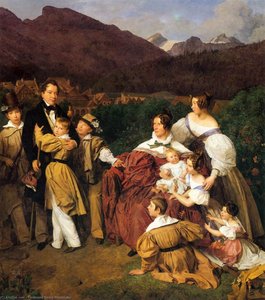
Ferdinand Georg Waldmüller's "Children," painted in 1834, isn’t merely a portrait; it’s a carefully constructed tableau of quiet dignity and poignant observation. The painting captures two young girls returning home from school along a winding path, bathed in the soft, diffused light characteristic of the Biedermeier style – an artistic movement deeply rooted in the appreciation of nature and the celebration of everyday life. Waldmüller, a pivotal figure within this aesthetic, eschewed grand historical or mythological subjects, instead focusing on scenes that offered glimpses into the lives of ordinary people, reflecting a shift away from the formal conventions of earlier art movements.
The scene unfolds with remarkable detail and restraint. The girls, rendered with an almost photographic precision, are dressed in simple, modest attire – a pink dress for one and a white one for the other – their faces conveying a sense of weariness mingled with contentment. Their clasped hands suggest a shared experience, a silent understanding forged through the journey home. The composition is deliberately balanced, drawing the eye along the path towards the distant, hazy mountains—a subtle reminder of the vastness and beauty beyond their immediate world. Waldmüller’s meticulous attention to texture – the rough fabric of their dresses, the worn earth beneath their feet – grounds the scene in a tangible reality.
The Biedermeier Aesthetic: Nature as Inspiration
To understand “Children,” one must appreciate the broader context of the Biedermeier period. Following the tumultuous years of the Napoleonic Wars and the subsequent Restoration, there was a desire for a return to simplicity and sincerity in art. Artists like Waldmüller sought inspiration in the natural world, rejecting the elaborate ornamentation and dramatic narratives favored by earlier styles. The Biedermeier aesthetic valued intimacy, domesticity, and the beauty of the commonplace. Waldmüller’s work embodies this philosophy perfectly; he doesn't attempt to elevate or idealize his subjects but rather presents them with honesty and respect.
The use of *plein air* painting – working directly from nature – was central to the Biedermeier approach, allowing artists to capture the subtle nuances of light and atmosphere. Waldmüller’s ability to render the soft, diffused light filtering through the trees is particularly striking, creating a sense of warmth and tranquility. The muted color palette—dominated by earthy tones and gentle blues—further enhances this effect, contributing to the painting's overall mood of quiet contemplation.
Symbolism and Emotional Resonance
While seemingly straightforward, “Children” is rich in symbolic meaning. The girls’ journey home represents not just a return from school but also a transition into adulthood—a subtle acknowledgement of the challenges and responsibilities that lie ahead. The path itself can be interpreted as a metaphor for life's journey, with its twists and turns, its moments of hardship and joy. The distant mountains symbolize hope and possibility, suggesting that even in the face of adversity, there is always something to strive for.
Beyond its symbolic layers, “Children” evokes a powerful sense of empathy and nostalgia. Waldmüller’s masterful use of light and shadow, combined with his sensitive portrayal of the girls' expressions, creates an emotional connection that transcends time and place. The painting speaks to our shared humanity—to the simple pleasures of childhood, the bonds of family, and the enduring beauty of the natural world.
A Timeless Masterpiece: Reproductions and Legacy
Reproduced on high-quality canvas or paper, “Children” offers a captivating addition to any interior space. The painting’s serene atmosphere and evocative imagery create a sense of calm and tranquility—making it an ideal choice for bedrooms, living rooms, or studies. Consider framing the artwork in a classic wooden frame to complement its Biedermeier aesthetic, or opt for a more contemporary minimalist design to create a striking contrast.
Ferdinand Georg Waldmüller’s “Children” remains a testament to the power of art to capture the essence of human experience. It is a timeless masterpiece that continues to resonate with viewers today, inviting us to pause and reflect on the simple joys of life and the enduring beauty of the natural world.
Questions & Answers
Can "Children" by Ferdinand Georg Waldmüller, held at the Hermitage Museum, be legally reproduced?
The original "Children" is at the Hermitage Museum, and the work is in the public domain - its copyright has expired.
What are the medium and dimensions of "Children" by Ferdinand Georg Waldmüller?
The original "Children" by Ferdinand Georg Waldmüller is an acrylic on canvas work measuring 25 x 31 cm. Technique and size describe the original object.
What is the overall mood of "Children" by Ferdinand Georg Waldmüller?
The overall mood of "Children" by Ferdinand Georg Waldmüller is calm. The mood describes the general atmosphere of the work.
Artist Biography
Early Life and Artistic Beginnings
Ferdinand Georg Waldmüller entered the world in Vienna, Austria, on January 15, 1793, a period of significant societal shifts and artistic ferment. His early life was unfortunately marked by hardship; the untimely death of his father cast a shadow over the family’s fortunes, instilling in young Ferdinand an early awareness of life's precariousness—a theme that would later resonate deeply within his art. Despite these challenges, Waldmüller demonstrated a clear aptitude for drawing and painting, leading him to enroll at the Academy of Fine Arts Vienna in 1807. However, his attendance proved somewhat erratic, reflecting perhaps a restless spirit or a dissatisfaction with the rigid academic constraints of the time. Initially, he gravitated towards portraiture, a reliable path for an aspiring artist seeking patronage, but it was the allure of landscapes and genre scenes—depictions of everyday life—that truly captured his imagination and would ultimately define his artistic legacy. These early explorations laid the groundwork for a style characterized by meticulous observation and a profound connection to the natural world.A Career Forged in Realism and Controversy
Waldmüller’s career unfolded as a dynamic interplay between artistic innovation and institutional resistance. He supplemented his income during his formative years by working as a set designer and continuing to paint portraits, often while touring with his wife, the singer Katharina Weidner. This itinerant lifestyle exposed him to diverse environments and broadened his artistic horizons. By the 1820s, Waldmüller had begun to develop a distinctive style—a commitment to realistic depictions of everyday life, particularly in rural settings. He wasn’t interested in idealizing or romanticizing; instead, he sought to capture the world as it truly was, with all its beauty and imperfections. This dedication to realism brought him both acclaim and criticism. In 1819, he secured a professorship at the Academy of Fine Arts Vienna, but his tenure was fraught with conflict. Waldmüller passionately advocated for direct observation from nature—plein air painting—and openly criticized the academy’s emphasis on formulaic instruction and adherence to established conventions. His outspokenness led to repeated clashes with the artistic establishment and ultimately contributed to his forced retirement in 1857. Frequent journeys to Italy, beginning in 1825, and the idyllic Salzkammergut region profoundly influenced his landscape painting, refining his ability to capture light, texture, and atmosphere with remarkable precision.Themes of Rural Life and Social Commentary
Waldmüller’s artistic output is remarkably diverse, encompassing portraits, landscapes, and genre scenes, but a common thread unites these varied subjects: a deep engagement with the realities of 19th-century Austrian life. Works like Venetian Fruit Seller (1826), an early example of his genre painting style, demonstrate his skill in capturing fleeting moments of everyday existence. His self-portrait from 1828 reveals a keen understanding of human psychology and the nuances of character. Louise Mayer (1836) stands as a testament to his mastery of portraiture, while View of Ischl (1838) showcases his evolving landscape abilities. However, it was paintings like On All Souls' Day (1839), The Love Letter (1849), and Bathing Women (c. 1848–1849) that truly distinguished him. These works weren’t merely picturesque depictions of rural life; they were imbued with a socially critical perspective, subtly exposing the hardships faced by ordinary people—the impact of poverty, misfortune, and the complexities of family dynamics. He didn't shy away from portraying the less glamorous aspects of existence, offering a more honest and nuanced representation of society than was typically seen in academic art.Legacy and Historical Significance
Ferdinand Georg Waldmüller is rightfully regarded as one of the most important Austrian painters of the Biedermeier period. His unwavering commitment to natural observation and plein air painting anticipated many of the artistic innovations that would characterize Impressionism decades later. He challenged conventional depictions of rural life, injecting a dose of realism and social commentary into a genre often dominated by idealized imagery. Despite facing criticism and setbacks throughout his career—including forced retirement from the Academy—Waldmüller’s work eventually gained international recognition, culminating in exhibitions at the World Exhibition in Paris (1855) and Buckingham Palace (1856), where he received accolades from Emperor Napoleon III and Queen Victoria respectively. He was knighted shortly before his death on August 23, 1865, in Hinterbrühl, a belated acknowledgment of his artistic contributions. Waldmüller’s legacy extends beyond his individual paintings; he influenced generations of artists with his detailed realism, his focus on everyday subjects, and his courageous willingness to challenge the status quo. He remains a pivotal figure in Austrian art history—a true pioneer who paved the way for new approaches to landscape and genre painting.
Ferdinand Georg Waldmüller
1793 - 1865 , Austria
Quick Facts
- Full Name: Ferdinand Georg Waldmüller
- Nationality: Austrian
- Date Of Birth: 1793
- Date Of Death: 1865
- Place Of Birth: Vienna, Austria
- Notable Artworks:
- Venetian Fruit Seller
- Self-Portrait
- Louise Mayer
- View of Ischl
- On All Souls' Day
- The Love Letter
- Bathing Women
- Artistic Movement Or Style: Biedermeier, Realism
- Artists Or Movements Influenced By This Artist: Impressionism
Related Articles
Oil on Panel Masters: 10 Paintings That Revolutionized Art |
Journey through 10 legendary 'Oil on Panel' masterpieces by Van Eyck, Bosch & Bruegel. Explore the stories behind these iconic Renaissance & Baroque paintings and find museum-quality art reproductions to elevate your home decor. Discover all masterpieces on !
Oil on Panel: A Historical Survey of Technique, Support, and Aesthetic Impact
Explore the rich history of oil on panel painting! Discover Renaissance techniques, support construction, & the enduring legacy of this masterful art form. Expert insights for collectors and enthusiasts.

Mastering the Surface: The Timeless Elegance and Technical Brilliance of Oil on Panel Painting
Discover the enduring allure of oil on panel painting. Explore the technical mastery, historical significance, and luminous depth that define this prestigious medium, from Renaissance masters to modern fine art reproductions for discerning collectors.
Oil on Panel: A Historical Survey of Technique, Support & Aesthetic Evolution
Explore the rich history of oil on panel painting! Discover Renaissance techniques, support structures & aesthetic evolution. Expert insights for art collectors and enthusiasts.
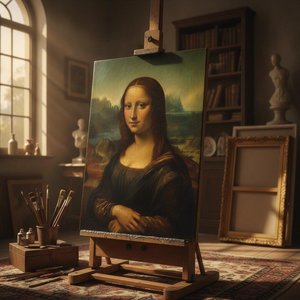
Mastering the Surface: A Historical and Technical Guide to the Art of Oil on Panel Painting
Explore the profound history and technical brilliance of oil on panel painting. From Renaissance masters to modern techniques, discover why this rigid support offers unparalleled precision and permanence for fine art lovers and collectors.