Preview
 Send
Send Share
Share
 Details
 Guide
Guide

 Download
 Similars
 X-Ray
X-Ray Diaporama
 Stats
StatsA Port
 Oil On Panel
- Post-Impressionism
 1901
1901- Modern
 57.0 x 62.0 cm
 Pushkin State Museum
 Read More
Hand Made Oil Reproduction
Hand-painted oil on canvas in your size and frame, made to order by our artists. ( Switch to Print Switch to Digital Image)




































Pick from our preset sizes that match the artwork's original proportions.

You may enter your own dimensions to fit a specific frame or space. If your selected size does not match the original image's proportions, we will either crop the artwork or extend the painting with additional hand-painted elements. A digital mockup will be sent for your approval before production begins.
Please note that the on-screen preview does not reflect the actual cropping or extension. Only the mockup will accurately show the final composition.
While custom sizes are available, we recommend selecting a dimension from the predefined list to preserve the original proportions.
After order, OriginalUniqueArt.com team will email client for instructions and provide a mockup preview
Worldwide Delivery () in 3/4 weeks instead of standard 5 weeks. (13 October). No compromise on quality.

Free Worldwide Express Shipping

High-Quality Linen Canvas

Full Shipping Insurance

Customs Tax Refund Guarantee

True Color Matching Guarantee

100-Day Return Policy (Defects Only)

100% Money-Back Guarantee

Bulk Discount Offer
 Glass option is only available in size under 110 CM

A Port
Reproduction Medium
Reproduction Size
-


Total Price
$ 300
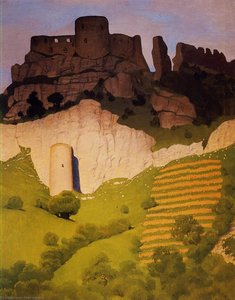
A Port: A Captivating Harbor Scene by Félix Vallotton
The painting "A Port" by Félix Vallotton is a captivating representation of boats on the water at night, showcasing the artist's unique style and technique. Created in 1901, this oil on panel piece measures 57 x 62 cm and is currently housed at the Pushkin State Museum in Moscow, Russia.
Artistic Style and Composition
The scene depicts several sailboats in various positions, with some closer to the shore while others are further out into the water. The boats vary in size, creating an interesting composition that captures the essence of a lively harbor. A person is visible on the right side of the painting, possibly enjoying the view or attending to one of the vessels. The overall atmosphere of the scene is serene and peaceful, with the boats gently floating in the water under the night sky.
- Brushstrokes: Visible brushstrokes give the piece a sense of movement and energy.
- Color Palette: Muted shades of blue and gray dominate the scene, contributing to the peaceful ambiance.
Artist and Museum
Félix Vallotton was a Swiss painter and printmaker associated with the Nabi movement. His work often featured landscapes, portraits, and still lifes, showcasing his unique style and technique.
The Pushkin State Museum is one of the largest and most renowned museums in Russia, housing an impressive collection of Russian and European art.
Historical Context and Symbolism
Created in 1901, "A Port" reflects the artistic trends of the late 19th and early 20th centuries. Vallotton's style, influenced by Japanese woodcuts and Post-Impressionism, moved away from traditional academic painting towards a more simplified and stylized representation of reality.
The painting can be interpreted as a symbol of tranquility and the beauty of everyday life. The harbor scene evokes a sense of peace and solitude, while also hinting at the bustling activity that takes place within it. Vallotton's use of muted colors and subtle details creates an atmosphere of quiet contemplation.
Emotional Impact
"A Port" invites viewers to immerse themselves in a moment of stillness and reflection. The painting’s serene atmosphere and evocative imagery create a sense of calm and nostalgia, transporting the viewer to a peaceful harbor scene at night. It is a work that resonates with those who appreciate the beauty of simplicity and the power of observation.
Questions & Answers
Can the image of "A Port" by Félix Vallotton be freely reproduced?
Regarding copyright, "A Port" is in the public domain - its copyright has expired.
How popular is "A Port" within Post-Impressionism?
Within the Post-Impressionism movement, "A Port" has a recognized popularity level.
Is "A Port" a good gift idea?
As a present, "A Port" by Félix Vallotton is suggested for anniversary. Other occasions can fit as well.
What emotion does the Post-Impressionism work "A Port" convey?
Within the Post-Impressionism movement, "A Port" is recorded with a tranquil tone.
Which reproduction size is suggested for "A Port" by Félix Vallotton?
"A Port" is recommended at a medium print size. Other sizes are available with the same proportions.
Who made "A Port", and when?
"A Port" was created by Félix Vallotton in 1901.
Who is the author of "A Port", and in which movement?
"A Port" was created by Félix Vallotton in the Post-Impressionism style. Artist and movement identify the work's tradition.
Which color stands out most in "A Port"?
espresso (#393141) is the leading color of "A Port" by Félix Vallotton.
Artist Biography
A Life Bridging Worlds: Félix Vallotton and the Fin de Siècle
Félix Édouard Vallotton, born in Lausanne, Switzerland in 1865, was an artist whose work embodies the complex spirit of the *fin de siècle*. He navigated a path between his Swiss roots and the vibrant artistic milieu of Paris, ultimately becoming a pivotal figure in the development of modern art. His early life, steeped in the conservative Protestant values of his family—his father a pharmacist, later a chocolatier—provided a stark contrast to the bohemian world he would embrace as an artist. Though initially steered towards classical studies at the Collège Cantonal, Vallotton’s passion for visual expression led him to Paris in 1882, where he enrolled at the Académie Julian. This marked not merely a geographical relocation but a profound shift in perspective, immersing him in the heart of artistic innovation and intellectual ferment. His academic training provided a solid foundation in technique, yet it was his encounters with emerging avant-garde circles that truly ignited his creative trajectory.The Nabis and the Language of Intimacy
Vallotton’s artistic evolution took a decisive turn when he became associated with *Les Nabis*—a group of young artists including Pierre Bonnard, Édouard Vuillard, and Maurice Denis—in 1892. Though often considered somewhat of an outsider within the group, his affiliation proved crucial in shaping his distinctive style. The Nabis sought to infuse art with a spiritual quality, exploring symbolism and decorative aesthetics. Vallotton absorbed these influences but filtered them through his own unique sensibility, characterized by a cool detachment and unflinching realism. This is perhaps most powerfully expressed in his series of woodcuts, particularly *Intimités* (1898). These ten interior scenes are remarkable for their psychological intensity, depicting charged encounters between men and women with an unsettling frankness. They aren’t narratives of romance or passion but rather explorations of tension, power dynamics, and the hidden complexities within domestic life. The stark contrasts of black and white in his woodcuts—a deliberate nod to Japanese *ukiyo-e* prints—heighten the sense of unease and psychological scrutiny.Master of Woodcut and Painterly Nuance
Vallotton’s mastery extended beyond the realm of painting; he is widely celebrated as a virtuoso of woodcut, revitalizing the medium with his innovative techniques. He embraced the simplicity and directness of the form, employing bold lines and stark contrasts to create images that were both visually striking and emotionally resonant. His prints weren't merely illustrations but independent works of art, often satirical in nature, commenting on social conventions and political issues. Simultaneously, Vallotton continued to develop his painting style, moving away from purely academic approaches towards a more personal expression. He skillfully balanced realism with subtle symbolic undertones, creating portraits, landscapes, and still lifes that possess an enigmatic quality. His later paintings demonstrate a refined technique, characterized by carefully modulated colors and precise rendering of form. He often painted *paysages composés* (“composed landscapes”), constructed from memory and observation, imbued with a sense of stillness and melancholy.Legacy and Enduring Influence
Félix Vallotton’s influence resonated throughout the early 20th century, impacting artists as diverse as Edvard Munch and Ernst Ludwig Kirchner. His unflinching gaze, his exploration of psychological themes, and his innovative use of printmaking techniques paved the way for new artistic expressions. He died in Paris in 1925, leaving behind a body of work that continues to captivate and challenge viewers today. His art serves as a poignant reflection of the anxieties and contradictions of the *fin de siècle*, offering a glimpse into a world on the cusp of profound change. Vallotton’s legacy lies not only in his technical brilliance but also in his ability to capture the complexities of human experience with honesty, intelligence, and an enduring sense of mystery. He remains a compelling figure—a Swiss artist who found his voice in Paris, bridging tradition and modernity, realism and symbolism, leaving an indelible mark on the history of art.
Félix Vallotton
1865 - 1925 , Switzerland
Quick Facts
- Full Name: Félix Vallotton
- Nationality: Swiss/French
- Date Of Birth: 1865
- Date Of Death: 1925
- Place Of Birth: Lannes, Switzerland
- Notable Artworks:
- Intimités
- Bathers on a summer evening
- Moonlight
- Artistic Movement Or Style: Post-Impressionism, Symbolism
- Artists Who Influenced This Artist:
- Holbein
- Ingres
- Japanese woodcut
- Artists Or Movements Influenced By This Artist:
- Edvard Munch
- Aubrey Beardsley
- Ernst Kirchner
Related Articles

Beyond Light & Color: Impressionism vs. Post-Impressionism for the Discerning Collector
Explore the nuances of Impressionism & Post-Impressionism with . Expert insights for collectors on style, investment, and acquiring museum-quality reproductions.

Cézanne's Masterpieces: 25 Iconic Artworks to Transform Your Space
Journey through 25 iconic artworks by Paul Cézanne – a master of Impressionism and Post-Impressionism. Explore his landscapes, still lifes, and the stories behind these timeless masterpieces. Discover museum-quality reproductions & curated decor at OriginalUniqueArt.com.

Impressionism's Masterpieces: 10 Paintings That Defined a Movement | OriginalUniqueArt
Journey through Impressionism's heart with 10 iconic paintings by Monet, Renoir & Degas. Explore light, color & the stories behind these masterpieces. Find museum-quality art reproductions and elevate your home decor on OriginalUniqueArt.com.
Beyond Impressionism: Exploring the Emotional Depth of Post-Impressionist Painting
Explore the profound emotional depth & innovative techniques of Post-Impressionism with OriginalUniqueArt. Discover Cézanne, Van Gogh, Gauguin & more – and their lasting impact on modern art.

Post-Impressionism's 10 Defining Masterpieces: Art for Your Home |
Journey through Post-Impressionism's 10 defining masterpieces – Van Gogh, Monet & more. Explore iconic paintings, art history & find museum-quality reproductions for your home at . Discover all masterpieces online!