Preview
 Send
Send Share
Share
 Details

 Download
 Similars
 X-Ray
X-Ray Diaporama
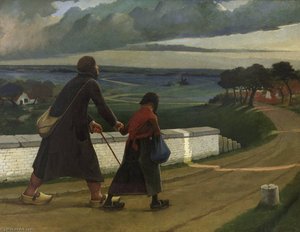
Bathing children
 Oil
Oil- WallArt
- Social Realism
 1908
1908- Modern
 73.0 x 98.0 cm
 Royal Museum of Fine Arts Antwerp
 Read More
Hand Made Oil Reproduction
Hand-painted oil on canvas in your size and frame, made to order by our artists. ( Buy Print Buy Image)




P118B $10

P118H $10

P118W $10

P438Z $10

P508JH $12

P508YH $12

P805H $10

P805Z $10

P919BZ $10

P919G $10

P919XJ $10

P959ZH $10

P968JZ $12

W106C $8

W218G $10

W218JH $8

W218Y $10

W307PJ $10

W316G $10

W316PJ $8

W316Y $10

W398PJ $8

W4111J $10

W500HY $15

W500JH $15

W692G $12

W849H $8

W940BG $15

W953PJ $8




Pick from our preset sizes that match the artwork's original proportions.

You may enter your own dimensions to fit a specific frame or space. If your selected size does not match the original image's proportions, we will either crop the artwork or extend the painting with additional hand-painted elements. A digital mockup will be sent for your approval before production begins.
Please note that the on-screen preview does not reflect the actual cropping or extension. Only the mockup will accurately show the final composition.
While custom sizes are available, we recommend selecting a dimension from the predefined list to preserve the original proportions.
After order, OriginalUniqueArt.com team will email client for instructions and provide a mockup preview
Worldwide Delivery () in 3/4 weeks instead of standard 5 weeks. (3 September). No compromise on quality.

Free Worldwide Express Shipping

High-Quality Linen Canvas

Full Shipping Insurance

Customs Tax Refund Guarantee

True Color Matching Guarantee

60-Day Return Policy (Defects Only)

100% Money-Back Guarantee

Bulk Discount Offer
 Glass option is only available in size under 110 CM

Bathing children
Reproduction Medium
Reproduction Size
-


Total Price
$ 300
A Moment of Pure Innocence: The World of Eugène Laermans
In the quiet, sun-dappled corners of 1908, Eugène Laermans captured a scene that transcends the boundaries of time and social class. Bathing Children is not merely a depiction of leisure; it is a profound window into a world where the simplicity of childhood joy meets the steady, watchful gaze of adulthood. The painting invites the viewer to step onto the shoreline, where the gentle ripples of the water mirror the rhythmic play of youth. As children wade through the shallows and others linger on the grassy banks, there is an undeniable sense of communal harmony. This piece serves as a poignant reminder of those fleeting moments of unburdened existence, making it a captivating centerpiece for any collection that seeks to evoke nostalgia and peace.
The composition is masterfully balanced, utilizing a naturalistic approach that draws the eye through the landscape. Laermans, a master of Belgian social realism, employs a technique that emphasizes texture and light, allowing the viewer to almost feel the coolness of the water and the warmth of the afternoon sun. While his broader body of work often grapples with the heavy, somber realities of the working class and the hardships of peasant life, Bathing Children offers a luminous departure. Here, the artist uses a softer palette and more fluid brushwork to convey movement and vitality. The presence of small boats scattered across the water adds a layer of depth and atmospheric tranquility, suggesting a lifestyle deeply intertwined with the rhythms of nature.
The Silent Observer: Technique and Emotional Resonance
To understand the emotional weight of this work, one must consider the unique perspective of Laermans himself. Having navigated the world through the lens of deafness, his visual sensitivity was unparalleled. In Bathing Children, this heightened sense of sight translates into an extraordinary ability to capture subtle interactions—the way a child leans toward a peer, or the protective stance of the adults watching from the periphery. The figures are not merely subjects; they are characters in a silent, beautiful narrative of care and community. For the interior designer, this painting offers a sophisticated balance of movement and stillness, capable of breathing life into a room while maintaining an air of classical elegance.
For collectors and lovers of fine art, this reproduction represents more than just a decorative element; it is an invitation to contemplate the enduring strength of human connection. The interplay between the shore and the water creates a sense of infinite space, making it an ideal choice for large-scale wall displays in galleries or residential studies. By bringing this piece into a home, one does not just acquire a painting, but rather captures a fragment of a lost era—a time when the simple act of playing by the water was enough to define the beauty of life. It is a soulful addition to any curated space, offering a timeless aesthetic that complements both modern and traditional decor.
Artist Biography
The Silent Visionary: The Life and Legacy of Eugène Laermans
In the quiet, shadowed corners of Belgian art history, few figures command as much profound respect and haunting intrigue as Eugène Jules Joseph Baron Laermans. Born in 1864 in Molenbeek-Saint-Jean, Brussels, his life was defined by a struggle against the encroaching darkness and silence of physical infirmity. At the tender age of eleven, a devastating bout of meningitis robbed him of his hearing and left him nearly mute. Yet, rather than allowing this tragedy to sever his connection to the world, Laermulus transformed his sensory deprivation into an unparalleled visual acuity. Deprived of sound, he turned his entire being toward the power of sight, developing an observational intensity that would eventually allow him to capture the very soul of the marginalized and the downtrodden.
His journey through the artistic landscape was one of remarkable stylistic metamorphosis. Enrolling at the Académie Royale des Beaux-Arts in 1887, he studied under the guidance of Jean-François Portaels, an experience that provided him with a rigorous academic foundation. During his early years, Laermans found himself drawn to the provocative and the decadent. Influenced by the evocative writings of Charles Baudelaire, he actively participated in the Decadent movement of 1890, even lending his brush to illustrate the controversial Les Fleurs du Mal. This period of his life was marked by an exploration of uncomfortable truths and a willingness to confront the darker, more complex facets of human nature, often utilizing an expressive and sometimes unsettling aesthetic.
From Decadence to Social Realism
As his career matured, Laermans underwent a profound shift that would ultimately define his historical significance. By 1893, he began to move away from the stylized decadence of his youth, gravitating instead toward a rugged, earthy realism reminiscent of the great Pieter Bruegel. This transition saw him abandon ornamental flourishes in favor of a more somber, monumental approach to his subjects. He became a chronicler of the human condition, focusing his gaze on the heavy-laden laborers and impoverished peasants of the Belgian countryside. His work during this era was not merely observational; it was an empathetic, often visceral, portrayal of the dignity found within hardship.
His mastery of composition and tone reached new heights in works such as his celebrated triptych, Landverhuisers (Emigrants), inspired by the novel La Nouvelle Carthage by Georges Eekhoud. In these pieces, Laermans utilized a muted palette and atmospheric depth to convey the weight of displacement and the struggle for survival. While some contemporary critics dismissed his depictions as "disturbing caricatures," it is precisely this raw, unvarnished honesty that has secured his place in the canon of social realism. He possessed a unique ability to imbue even the most desolate scenes with a sense of monumental gravity, turning the mundane struggles of the working class into epic narratives of endurance.
The Fading Light and Eternal Impression
The trajectory of Laermans' life took a final, tragic turn in 1924 when his eyesight began to fail. For an artist whose entire identity was forged through the lens of visual perception, this loss was catastrophic. He famously declared, "I am no longer Laermans," as he ceased to paint, retreating into a reclusive existence. Despite being elevated to the rank of Baron in 1927 by King Albert, his later years were marked by the profound isolation of total blindness. He passed away in 1940, leaving behind a body of work that serves as a testament to the resilience of the human spirit.
Today, the legacy of Eugène Laermans endures through paintings that continue to haunt and inspire. His ability to find beauty in the bleak and strength in the silent remains his greatest achievement. To look upon a Laermans canvas is to witness:
- A heightened sensory experience: Where the absence of sound creates a profound visual stillness.
- Social empathy: A deep, respectful connection to the lives of those often ignored by history.
- Technical evolution: A journey from the intricate decadence of the late 19th century to the powerful, stripped-back realism of the early 20th century.
His work remains a vital pillar of Belgian art, reminding us that even when the world grows dark and silent, the eyes of the soul can still perceive the profound truths of existence.

eugène laermans
1864 - 1940
Quick Facts
- Artistic Movement Or Style: Decadent Art; Genre Painting; Bruegel Influence
- Artists Or Movements Influenced By This Artist: ['Bruegel']
- Artists Who Influenced This Artist:
- Jean-François Portaels
- Charles Baudelaire
- Félicien Rops
- Date Of Birth: 1864
- Date Of Death: 1940
- Full Name: Eugène Jules Joseph Baron Laermans
- Nationality: Belgian
- Notable Artworks:
- English The Staircase
- Oasis
- The Drinker
- Landverhuisers
- Place Of Birth: Saint-jans-molenbeek, Belgium
Related Articles
Romantic Realism's Finest: 10 Masterpieces for Your Home | OriginalUniqueArt
Explore 10 defining masterpieces of Romantic Realism! Discover Courbet, Millet & Daumier's powerful paintings—capturing emotion and social realities. Find museum-quality reproductions for your home at OriginalUniqueArt.com.
Scenes of Daily Life: A Comprehensive Exploration of Genre Painting Through History
Explore the rich history of genre painting! Discover Dutch Masters & European artists who captured everyday life with stunning realism. Learn about symbolism, techniques & lasting influence.

Echoes of Society: Exploring Social Realism's Enduring Legacy in Art
Explore the powerful world of Social Realism art! Discover key artists, masterpieces & its profound social commentary. Expert insights into this influential movement's history and enduring legacy.
Realism in Art: A Professional Guide to Authentic Detail and Lifelike Masterpieces for Large-Scale Interior Projects
Master the use of Realism in professional interiors. This expert guide explores 19th-century masterpieces, offering procurement managers and designers technical insights into selecting authentic, hand-painted oil reproductions for high-end hotel and corporate projects.

The Evocative Embrace of Reality: Exploring Romantic Realism in 19th-Century Painting
Explore the captivating world of Romantic Realism! Discover key artists like Courbet & Millet, masterpieces, and the social context behind this influential art movement. Expert insights for collectors at OriginalUniqueArt.