
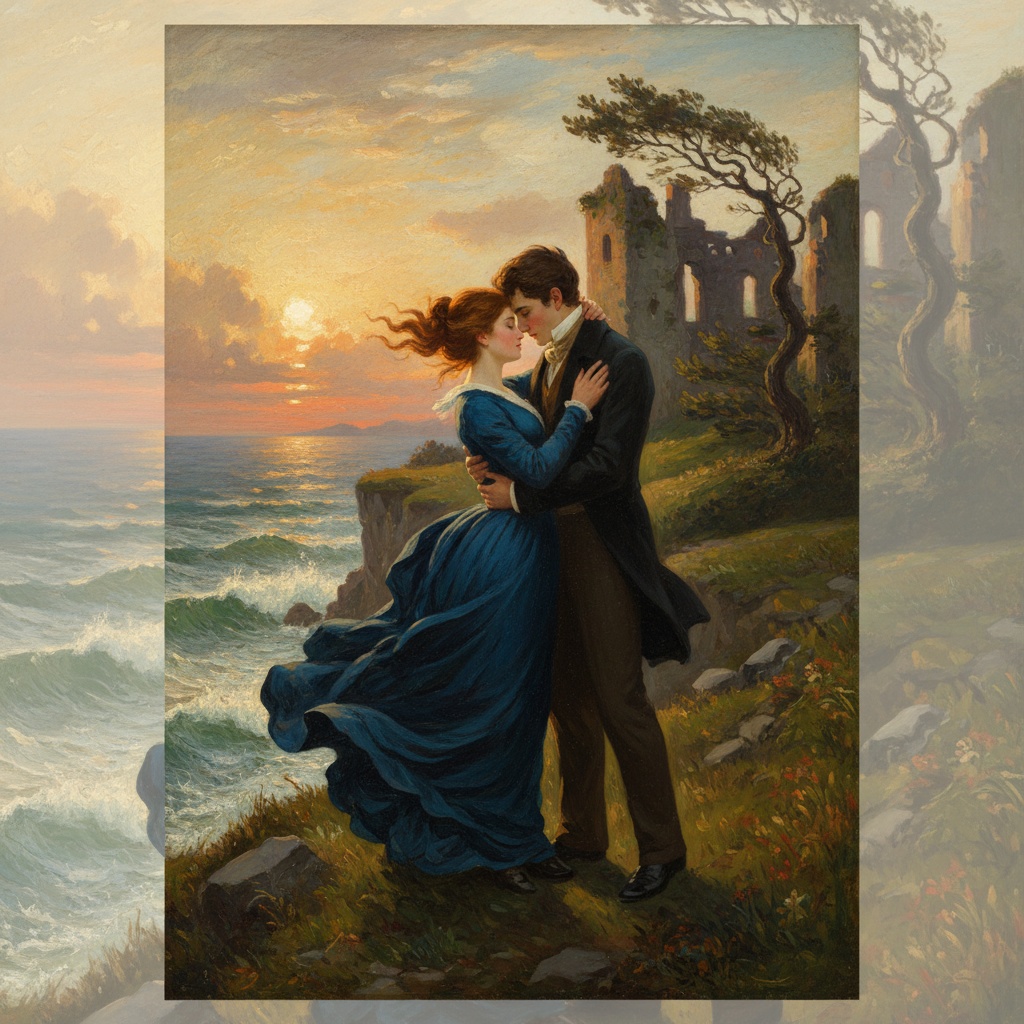
Introduction: Beyond Idealization – The Rise of Romantic Realism
 The Poetic Truth of Observation: Exploring 19th-Century Realism in Painting
Explore the captivating world of 19th-century Realism! Discover key artists like Courbet & Millet, masterpieces, and the powerful social commentary behind this influential art movement. Expert insights at OriginalUniqueArt.
The 19th century was a period of profound upheaval, witnessing revolutions both political and artistic. While the Neoclassical tradition had long championed idealized forms and historical grandeur, a new sensibility began to emerge—one that sought not to depict an imagined past or aspirational future, but the raw, unvarnished truth of the present moment. This wasn’t simply a rejection of beauty; it was a redefinition of it. Romantic Realism, as it came to be known, embraced emotion and subjective experience while simultaneously demanding meticulous observation of the world around us. It represented a shift from “what ought to be” to “what is,” challenging established norms and laying the groundwork for modern art.
The Interplay of Emotion and Observation: Defining Characteristics of Romantic Realism
Romantic realism is art that combines elements of both romanticism and realism. The terms "romanticism" and "realism" have been used in varied ways, and are sometimes seen as opposed to one another. == In literature and art == The term has long sta...
To understand Romantic Realism, it’s crucial to recognize its inherent duality. Unlike earlier forms of realism that focused solely on objective representation, this movement infused observation with a powerful emotional current. Artists weren't merely recording scenes; they were interpreting them through the lens of their own feelings and beliefs. This is where the “Romantic” element comes into play—a sensitivity to atmosphere, mood, and the sublime power of nature. Gustave Courbet, often considered the father of Realism, exemplified this approach in works like *The Stone Breakers* (1849), a deliberately unglamorous depiction of manual labor that sparked controversy for its lack of idealization. The painting’s power lies not just in its accurate portrayal of poverty but also in the dignity it affords its subjects. Similarly, Jean-François Millet's *The Gleaners* (1857) doesn't simply show peasant women collecting wheat; it evokes a sense of hardship and resilience, imbued with a quiet beauty that transcends mere documentation.
Key Figures and Masterpieces: Courbet, Millet, and the Russian School
 Vasily Vereshchagin: Realism, War & Subversion in 19th-Century Russian Painting
Explore the powerful realism of Vasily Vereshchagin's war paintings & Central Asian scenes. Discover how this Russian master challenged artistic conventions and offered a brutal, honest depiction of 19th-century conflict. Learn about his legacy for d...
Courbet’s influence extended beyond his subject matter to his very technique. He rejected the polished finish favored by academic painters, opting instead for a more direct, impasto style—thickly applied paint that emphasized the physicality of the artwork itself. Millet, while sharing Courbet's commitment to depicting rural life, brought a spiritual dimension to his work, often portraying scenes with a sense of timelessness and moral weight. However, Romantic Realism wasn’t confined to France. In Russia, artists like Vasily Vereshchagin took the movement in a strikingly different direction. Vereshchagin's war paintings were brutally honest depictions of conflict—a far cry from the romanticized battle scenes prevalent at the time. His works, such as *The Apotheosis of War* (1871), featuring a pyramid of skulls, served as powerful anti-war statements, challenging viewers to confront the horrors of violence and imperial ambition. These artists, though geographically separated, shared a common desire to depict reality without embellishment.
Nature as a Mirror to the Soul: Landscape Painting within the Movement
 Evoking Nature's Sublime: A Comprehensive Exploration of 19th-Century Landscape Painting
Explore the captivating world of 19th-century landscape painting! Discover renowned artists like Friedrich & Monet, key movements, and find the perfect artwork to bring nature's serenity into your home. Expert insights at OriginalUniqueArt.
The Romantic sensibility found particularly potent expression in landscape painting. Artists like John Constable, while often categorized as a Romantic painter, foreshadowed many of the tenets of Realism through his meticulous observation of the English countryside. His paintings weren’t simply picturesque views; they were studies of light, atmosphere, and the emotional impact of nature. This focus on subjective experience extended to German painters like Caspar David Friedrich, whose landscapes often evoked a sense of melancholy and spiritual longing. While Friedrich's work leans more heavily into Romanticism’s emphasis on the sublime, his detailed rendering of natural forms and his commitment to capturing specific locations align with the Realist desire for authenticity. The landscape became not just a backdrop but an active participant in conveying emotion and meaning.
Social Commentary and Subversion: Challenging Conventions in 19th-Century Art
Perhaps the most significant aspect of Romantic Realism was its willingness to engage with social issues. Artists challenged the established order by depicting the lives of ordinary people—laborers, peasants, soldiers—who had traditionally been marginalized in art. This wasn’t merely a matter of subject matter; it was a deliberate attempt to democratize art and give voice to the voiceless. Courbet's choice to paint large-scale canvases featuring everyday scenes was itself a subversive act, elevating the status of common life to that of historical or mythological subjects. Vereshchagin’s unflinching depictions of war challenged patriotic narratives and exposed the brutal realities of conflict. Louis-Eugène Lambert, through his genre paintings, offered glimpses into the lives of the burgeoning middle class, capturing their aspirations and anxieties with remarkable detail. This commitment to social commentary often led to controversy, as artists faced criticism for challenging conventional notions of beauty and propriety.
Collecting Romantic Realism Today: Finding Your Connection to the Past
Today, Romantic Realist paintings offer a powerful connection to the 19th century—a period of rapid change and profound social upheaval. These works are not simply historical artifacts; they are enduring testaments to the human spirit, capturing emotions and experiences that resonate across generations. When collecting art from this era, consider what aspects of the movement most appeal to you: the raw honesty of Courbet, the spiritual depth of Millet, or the unflinching realism of Vereshchagin? At OriginalUniqueArt, we offer a curated selection of handmade oil paintings and museum-quality prints that allow you to bring these masterpieces into your home. Whether you’re seeking a grand statement piece or a more intimate portrait, our skilled artists can recreate your favorite works with meticulous detail and authenticity. Explore our collection today and discover the evocative embrace of reality that defines Romantic Realism.


