

The Rise of Realism: A Rejection of Idealism
Realism was an artistic movement that emerged in France in the 1840s. Realists rejected Romanticism, which had dominated French literature and art since the early 19th century. The artist Gustave Courbet, the original proponent of Realism, sought to ...
The mid-19th century was a period of seismic shifts – revolutions brewing across Europe, the relentless march of industrialization reshaping society, and a growing awareness of social inequalities. It was against this backdrop that Realism emerged not merely as an artistic style, but as a profound philosophical statement. For centuries, art had largely concerned itself with mythology, religion, or idealized representations of life – visions of grandeur, heroism, and beauty often divorced from the everyday realities experienced by most. The Romantic movement, while valuing emotion, frequently retreated into subjective realms or exotic locales. Realism, however, turned its gaze resolutely towards the present, embracing the mundane, the imperfect, and even the unpleasant as legitimate subjects for artistic exploration. This wasn’t simply a stylistic shift; it was a deliberate rejection of academic conventions and a commitment to portraying life “as it is,” without embellishment or artifice.
Gustave Courbet, often hailed as the father of Realism, famously declared his intention to paint only what he could see. This seemingly simple statement carried revolutionary weight. He eschewed historical allegories and mythological narratives in favor of depicting laborers, peasants, and scenes from contemporary French life. His monumental canvas, A Burial at Ornans (1849-50), scandalized the Salon with its unidealized portrayal of a provincial funeral – a far cry from the heroic compositions typically favored by the establishment. The sheer scale usually reserved for historical paintings, applied to such an ordinary event, was a deliberate provocation, challenging the very definition of what constituted “important” subject matter.
Everyday Life as Subject Matter: Challenging Artistic Conventions
Social realism is work produced by painters, printmakers, photographers, writers, filmmakers and some musicians that aims to draw attention to the real socio-political conditions of the working class as a means to critique the power structures behind...
The embrace of everyday life extended beyond Courbet’s work. Artists began to focus on the lives of working-class individuals, capturing their struggles, dignity, and resilience. Jean-François Millet’s paintings, such as The Gleaners (1857), offered a sympathetic portrayal of rural poverty, depicting peasant women laboriously collecting leftover grains after the harvest. While not overtly political in its message, the painting’s stark realism and focus on the hardships faced by agricultural workers resonated with a growing social consciousness. Similarly, Honoré Daumier's lithographs exposed the injustices and absurdities of Parisian society, often satirizing the bourgeoisie and highlighting the plight of the working class.
This shift in subject matter wasn’t merely about depicting different scenes; it was also about adopting a new aesthetic approach. Realist painters favored earthy palettes, eschewing the bright, idealized colors of Romanticism. They emphasized texture and detail, striving for accuracy and authenticity in their representations. The brushstrokes were often visible, lending a sense of immediacy and rawness to the works. This deliberate rejection of polished surfaces and academic techniques further underscored their commitment to portraying life as it truly was – imperfect, complex, and often unglamorous.
Key Figures of the Movement: Courbet, Millet, and Beyond
 vladimir yegorovich makovsky
Vladimir Makovsky (1846-1920) was a leading Russian realist painter of the Peredvizhniki movement. Known for his insightful depictions of everyday life, social commentary, and ironic scenes of 19th-century Russia. Explore his works & legacy!
While Courbet and Millet stand as central figures in the development of Realism, the movement encompassed a diverse range of artists with distinct approaches. Nikolai Yaroshenko, a leading Russian realist painter, focused on poignant genre scenes depicting social struggles and striking portraits that captured the psychological depth of his subjects. His work often explored themes of poverty, injustice, and the human condition. Vladimir Makovsky, another prominent figure in the Peredvizhniki movement (a group of Russian realist artists), was known for his insightful depictions of everyday life and ironic scenes of 19th-century Russia, offering a critical commentary on social norms and political corruption.
Beyond France and Russia, Realist principles resonated with artists across Europe. Constantin Meunier, a Belgian painter and sculptor, powerfully depicted industrial workers and miners, reflecting the changing landscape of labor and modernity. His sculptures, in particular, captured the physicality and dignity of these often-overlooked individuals. Joaquin Sorolla y Bastida, though later associated with Impressionism, began his career as a Realist painter, tackling difficult social issues such as human trafficking in works like White Slave Trade (Study) (1895), demonstrating the movement’s capacity to address pressing contemporary concerns.
Social Commentary & Political Undercurrents in 19th-Century Painting
 Unexpected Visitors
Witness a poignant family reunion in Ilya Repin's 'Unexpected Visitors.' This 1888 Realist masterpiece captures the surprise and emotion of a revolutionary's return, showcasing intricate detail and masterful use of light.
Realism was rarely apolitical. While not always explicitly advocating for specific reforms, many Realist paintings served as powerful social critiques, exposing the inequalities and injustices of the time. Ilya Repin’s Unexpected Visitors (1888) offers a poignant example, depicting the emotional reunion of a revolutionary returning home to his family – a subtle yet potent commentary on political oppression and exile. The intricate detail and masterful use of light heighten the sense of intimacy and emotion, drawing viewers into the personal lives of those affected by social upheaval.
Artists often used their work to challenge prevailing ideologies and expose the hypocrisy of the ruling classes. Daumier’s lithographs, for instance, frequently satirized politicians and members of the bourgeoisie, exposing their greed and corruption. The very act of depicting ordinary people with dignity and respect was a political statement in itself, challenging the traditional hierarchy that privileged the elite. This commitment to social commentary often led to censorship and controversy, but it also solidified Realism’s reputation as a movement deeply engaged with the realities of its time.
The Enduring Legacy: Realism's Influence on Modern Art
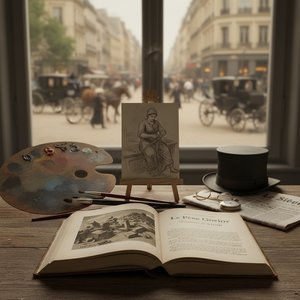 The Enduring Legacy of 19th-Century Realism: A Reflection of Society & Artistic Innovation
Explore the captivating world of 19th-century Realism! Discover key artists, masterpieces & the social commentary behind this influential art movement. Expert insights at .
Realism didn’t simply disappear with the advent of Impressionism or other subsequent movements. Its influence can be traced through much of modern art, particularly in its emphasis on depicting everyday life and challenging artistic conventions. The focus on social issues paved the way for later movements like Social Realism, which explicitly aimed to use art as a tool for political activism. The rejection of academic idealism also laid the groundwork for subsequent explorations of abstraction and subjective expression.
Even today, artists continue to draw inspiration from the principles of Realism – its commitment to authenticity, its focus on social commentary, and its willingness to confront difficult truths. The legacy of Courbet, Millet, and their contemporaries lies not only in the beautiful and thought-provoking works they created but also in their enduring impact on the way we perceive art and its relationship to society. At OriginalUniqueArt, we celebrate this rich artistic heritage by offering high-quality reproductions of these masterpieces, allowing you to bring the poetic truth of observation into your own home. Explore our collection today and discover the power of Realism for yourself.



