Expressionism
Turtle (Emil Nolde)
Emil Nolde (1867–1956) made Turtle. It belongs to the Expressionism movement.

 Preview

 Hand Made Oil Painting
 Send
 Share
 Guide


 Download
 Similars
 X-Ray
 Diaporama
 Q&A

 Stats
Turtle: the essentials
- Title
- Turtle
- Artist
- Emil Nolde (1867–1956)
- Artist born in
- Nolde, Denmark
- Movement
- Expressionism
- Subject
- animals
Turtle in high resolution
Emil Nolde, Turtle. Public domain.
A digital expert checks the colors against the original painting and retouches the file, faithful to the artist's brushwork.
Buy the high-resolution imageQuestions about Turtle
How do I preview a reproduction of "Turtle" by Emil Nolde?
To preview a reproduction of "Turtle" by Emil Nolde, open the artwork's Preview page.
Is there a guide for "Turtle" by Emil Nolde?
A Guide page is available for "Turtle" by Emil Nolde: a printable factsheet about the artwork, designed for students and classroom use.
Is "Turtle" by Emil Nolde a bright or a dark artwork?
In terms of perceived brightness, "Turtle" by Emil Nolde is brilliant.
Is "Turtle" free of copyright?
Regarding copyright, "Turtle" is in the public domain - its copyright has expired.
What does "Turtle" by Emil Nolde depict?
"Turtle" by Emil Nolde depicts: animals.
Can I watch "Turtle" as a full-screen slideshow?
Who created "Turtle" and what style is it in?
"Turtle" was created by Emil Nolde in the Expressionism style. Artist and movement identify the work's tradition.
How many people view "Turtle"?
The Stats page of "Turtle" by Emil Nolde presents public visit statistics: monthly visits of this artwork, a comparison with the artist's most viewed works, and where its visitors come from.
What color palette is used in "Turtle" by Emil Nolde?
The palette of "Turtle" by Emil Nolde is described as neutrals. It is a compact description of the work's colors.
About the artist, Emil Nolde
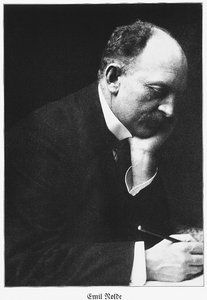
1867–1956, Denmark
Emil Nolde
The Life and Identity of Emile Nolde Born Hans Emil Hansen on 7 August 1867, the man who would become known as Emile Nolde grew up near the village of Nolde in the Duchy of Schleswig. His early years were shaped by the rural, agrarian life of his family. He eventually moved away from this path, choosing instead to work as a wood carver and furniture decorator. This tactile, physical labor preceded his shift toward painting and printmaking.
Also by Emil Nolde
 Sunset
 Sea with Red Sky
 Couple on the beach1903
 Masks1911
Essays around Turtle
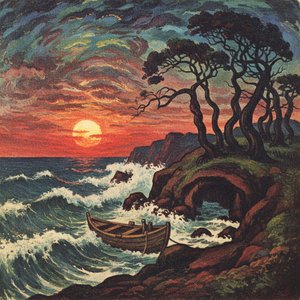 Emile Nolde: A Journey into Expressionist Nature & the Primal SelfExplore the powerful Expressionism of Emile Nolde – a pioneer of emotive landscapes & spiritual themes. Discover his journey, influences, a…
 The Visceral Turn: Exploring Emotional Intensity in ExpressionismExplore the powerful world of Expressionism with OriginalUniqueArt. Discover key artists like Kirchner & Nolde, understand its emotional im…
 The Resonance of Boldness: Exploring Emotional Impact & Artistic ExpressionExplore the powerful world of Expressionism with OriginalUniqueArt. Discover key artists like Kirchner & Rothko, understand its emotional i…