Preview
 Send
Send Share
Share
 Details
 Guide
Guide

 Download
 Similars
 X-Ray
X-Ray Diaporama
 Stats
StatsMemories


 Read More
Giclée / Art Print
Museum-quality giclée or canvas print with fast production and flexible finish options. ( Buy Hand Made Painting Switch to Digital Image)




P118B $10

P118H $10

P118W $10

P438Z $10

P508JH $12

P508YH $12

P805H $10

P805Z $10

P919BZ $10

P919G $10

P919XJ $10

P959ZH $10

P968JZ $12

W106C $8

W218G $10

W218JH $8

W218Y $10

W307PJ $10

W316G $10

W316PJ $8

W316Y $10

W398PJ $8

W4111J $10

W500HY $15

W500JH $15

W692G $12

W849H $8

W940BG $15

W953PJ $8




Pick from our preset sizes that match the artwork's original proportions.

Type the width and the height you need, to fit your frame or your wall. A print can only be cut, never made bigger than the picture, so a size with a different shape loses a part of the image. We send you a digital mockup to approve before we print anything. The picture shown on this page does not show the real cut — only the mockup does.
Worldwide Delivery () in 2 weeks instead of standard 4/5 weeks. (22 October)

Free Worldwide Express Shipping

High-Quality Linen Canvas

Full Shipping Insurance

Customs Tax Refund Guarantee

True Color Matching Guarantee

100-Day Return Policy (Defects Only)

100% Money-Back Guarantee

Bulk Discount Offer
 Glass option is only available in size under 110 CM

Memories
Giclée / Art Print
Reproduction Size
-


Total Price
$ 81
A Moment Frozen in Time: Edward Lamson Henry’s “Memories”
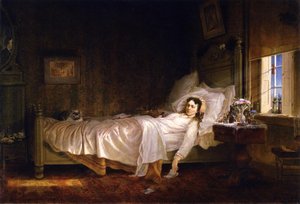
Edward Lamson Henry's "Memories," painted in 1873, isn’t merely a portrait; it’s a carefully constructed evocation of quiet contemplation and the lingering beauty of domestic life. The painting immediately draws the viewer into a warmly lit chamber, dominated by a woman seated near a window, lost in thought as she gazes out at an unseen world. Henry masterfully employs muted colors – soft browns, creams, and subtle greens – to create an atmosphere of serene tranquility, a deliberate choice that invites us to step back from the bustle of Victorian America and into this intimate space.
Henry’s technique is characterized by meticulous detail and a remarkable ability to capture the textures of everyday objects. Notice the worn velvet of her chair, the delicate folds in her dress, and the subtle sheen on the books lining the shelves – each element rendered with painstaking precision. This commitment to realism wasn't simply about accurate representation; it was a way for Henry to imbue his scenes with a sense of authenticity and nostalgia, as if transporting the viewer back to a simpler time. The light streaming through the window is particularly noteworthy, not just for its illumination but also for how it subtly models the forms within the room, adding depth and dimension to the composition.
The Painter’s Narrative: Colonial America and the Romantic Ideal
Understanding “Memories” requires a glimpse into Edward Lamson Henry's artistic context. Born in Charleston, South Carolina, he spent his formative years moving between cities before finding his footing in New York City’s vibrant art scene. His work is deeply rooted in the American Romantic tradition, a movement that emphasized emotion, individualism, and the beauty of nature – often intertwined with a yearning for an idealized past. Henry specifically focused on depicting scenes from colonial and early America, frequently portraying rural life, railroad travel, and domestic interiors.
The painting’s subject matter—a woman lost in thought—resonates strongly with the Romantic sensibility. It speaks to themes of introspection, memory, and the power of the imagination. Henry wasn't simply documenting a scene; he was attempting to capture an *experience*, a feeling – the quiet solitude of a moment spent reflecting on one’s place in the world. The inclusion of the book suggests intellectual curiosity and a connection to knowledge, while the window offers a portal to the outside, hinting at both possibilities and limitations.
Symbolism and Emotional Resonance
Beyond its technical brilliance, “Memories” is rich with subtle symbolism. The cat curled up in the corner represents companionship and comfort, offering a counterpoint to the woman’s solitary contemplation. The books on the shelf symbolize learning, experience, and perhaps even a longing for the past. The window itself is a crucial element – it's not just a source of light but also a symbol of transition, of looking outward while remaining rooted in place.
Perhaps most powerfully, “Memories” evokes a sense of melancholy beauty. There’s an underlying sadness to the scene, a recognition that time moves on and that moments of quiet contemplation are fleeting. Yet, it's not a despairing sadness; rather, it’s a gentle acceptance of life’s complexities, a reminder to cherish the simple pleasures and find solace in introspection. The painting invites us to contemplate our own memories and reflections, prompting a sense of connection to both the artist and the subject.
A Legacy of Nostalgia: Reproductions and Beyond
“Memories” remains a beloved work of American art, celebrated for its evocative atmosphere and masterful technique. Reproductions offer an accessible way to experience Henry’s vision, allowing us to bring this moment of quiet contemplation into our own homes. When selecting a reproduction, consider the quality of the print and the attention to detail – ensuring that it faithfully captures the nuances of Henry's original painting.
For those seeking further insight into Edward Lamson Henry’s life and work, resources like the Yale University Art Gallery website (https://www.yaleartgallery.org/) and Wikipedia offer valuable information. And for a deeper dive into his artistic process, exploring online archives of his paintings and sketches can reveal fascinating details about his techniques and inspirations.
Questions & Answers
Where can I see a preview of "Memories"?
A preview of "Memories" by Edward Lamson Henry is available on the artwork's Preview page.
What palette and what feeling does "Memories" combine?
"Memories" by Edward Lamson Henry combines an earthy palette with a reflective tone.
How do contrast and harmony combine in "Memories"?
The color analysis of "Memories" by Edward Lamson Henry records a bold contrast and a balanced harmony harmony.
Artist Biography
A Nostalgic Vision of America: The Life and Art of Edward Lamson Henry
Edward Lamson Henry, born in Charleston, South Carolina, in 1841, wasn’t merely a painter of scenes; he was a chronicler of a vanishing American identity. His canvases evoke a profound sense of nostalgia, meticulously reconstructing moments from the nation's past—from the bustling energy of early railroad travel to the quiet intimacy of domestic life and the lingering shadows of the Civil War. Though his early life was marked by tragedy – orphaned at the age of seven – this perhaps instilled in him a desire to preserve memories, to capture a world slipping away with each passing year. He moved to New York City to live with cousins, beginning his artistic journey amidst the burgeoning cultural landscape of the metropolis and later formalizing his training at the Pennsylvania Academy of Fine Arts in Philadelphia.Parisian Influences and the Seeds of Realism
The pivotal moment in Henry’s development arrived in 1860 with his relocation to Paris. This was a period of immense artistic ferment, and Henry found himself immersed in a circle of groundbreaking painters including Claude Monet, Pierre-Auguste Renoir, Frédéric Bazille, and Alfred Sisley—artists who would soon redefine the boundaries of art. He studied under Charles Gleyre, absorbing classical techniques, but it was Gustave Courbet’s unflinching realism that truly resonated with him. Courbet's commitment to depicting everyday life without idealization profoundly influenced Henry’s own artistic direction. While he wouldn’t fully embrace Impressionism like his contemporaries, the Parisian experience instilled in him a dedication to capturing authentic moments and a keen observation of light and atmosphere. This period was formative, laying the groundwork for his distinctive style—a blend of meticulous detail and evocative storytelling.Civil War Service and the Rise of Genre Painting
The outbreak of the American Civil War interrupted Henry’s artistic pursuits. He returned to the United States and served as a clerk on a Union transport ship, an experience that would deeply impact his later work. The war's aftermath fueled a series of paintings inspired by his observations—scenes not of grand battles but of everyday life touched by conflict. He settled in New York City, becoming part of the vibrant artistic community centered around the Tenth Street Studio Building, where he shared space with luminaries like Winslow Homer. It was during this time that Henry fully embraced genre painting – depicting scenes of ordinary people and their daily lives. He quickly gained recognition for his ability to recreate historical moments with remarkable accuracy and a touch of quaint humor. In 1869, his election to the National Academy of Design solidified his position within the American art world.A Master of Detail: Historical Fiction on Canvas
Henry’s paintings are characterized by an extraordinary attention to detail—a meticulous reconstruction of period costumes, architecture, and everyday objects. He wasn't simply painting scenes; he was building worlds. His subjects often revolved around colonial and early American themes, railroad travel, stagecoach journeys, and canal boat life. He became renowned for rendering these scenes on a minute scale, inviting viewers to immerse themselves in the intricacies of the past. However, it’s important to note that Henry's work wasn’t purely documentary. He freely admitted to artistic license, prioritizing atmosphere and narrative over strict historical accuracy—creating what contemporaries termed “historical fictions.” This willingness to embellish for emotional effect is a key element of his appeal; he wasn’t interested in simply recording history but in evoking a particular mood and sense of nostalgia. His wife, Frances Livingston Wells, played a crucial role in this process, ensuring the authenticity of details through extensive research using antiques, old photographs, and assorted Americana.Legacy and Historical Significance
Edward Lamson Henry’s work offers a unique window into 19th-century American culture—a romanticized vision of a simpler past. His paintings resonated with a public eager to embrace a sense of national identity and nostalgia for a bygone era. He was a member of the New-York Historical Society, further cementing his role as a visual historian. His dedication to detail led contemporaries to view his work as authentic reconstructions, even though he often prioritized artistic effect over strict accuracy. Later in life, Henry co-founded an artists’ colony in Cragsmoor, New York, fostering a community dedicated to preserving and celebrating American heritage. While perhaps not as widely recognized today as some of his Impressionist contemporaries, Edward Lamson Henry remains a significant figure in American art history—a master of genre painting whose evocative canvases continue to captivate viewers with their charm, detail, and enduring sense of nostalgia.
Edward Lamson Henry
1841 - 1919 , United States of America
Quick Facts
- Full Name: Edward Lamson Henry
- Nationality: American
- Date Of Birth: 1841
- Date Of Death: 1919
- Place Of Birth: Charleston, United States of America
- Notable Artworks:
- Memories
- East Hampton Beach
- Parlor on Brooklyn Heights
- Artistic Movement Or Style: Genre painting
- Artists Who Influenced This Artist:
- Charles Gleyre
- Gustave Courbet
Related Articles
Henri Matisse's Masterpieces: Explore 25 Iconic Paintings & Art Decor Ideas
Journey through Henri Matisse's 25 most iconic paintings! Explore Fauvism, vibrant colors & the stories behind masterpieces like 'The Dance'. Find museum-quality art reproductions and curated decor ideas to elevate your space. Discover all masterpieces on OriginalUniqueArt.com.

American Realism's Defining Works: 10 Masterpieces for Your Home
Explore 10 defining American Realism masterpieces – Hopper, Homer & more. Discover the stories behind these iconic paintings and bring timeless art to your home with OriginalUniqueArt's museum-quality reproductions. Explore the full collection online.

Grant Wood & American Regionalism: Identity, Myth & the Rural Landscape
Explore the world of Grant Wood & American Regionalism with OriginalUniqueArt. Discover the symbolism behind 'American Gothic', recurring themes, and the movement's lasting impact on art history. High-quality reproductions available.
Robert Henri & the Spirit of American Realism: A Legacy of Urban Life and Artistic Independence
Explore the life & legacy of Robert Henri, a pivotal figure in American Realism. Discover his captivating portraits, influence on the Ashcan School, and enduring impact on art history. Learn more at OriginalUniqueArt.
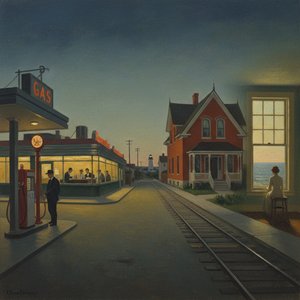
Edward Hopper's Masterpieces: 25 Iconic Paintings & Their Enduring Legacy | OriginalUniqueArt
Explore 25 iconic Edward Hopper paintings & their stories. Discover American realism, urban loneliness, and timeless beauty through his masterpieces. Find museum-quality art reproductions & curated decor ideas at OriginalUniqueArt.com.