Preview
 Send
Send Share
Share
 Details
 Guide
Guide

 Download
 Similars
 X-Ray
X-Ray Diaporama
 Stats
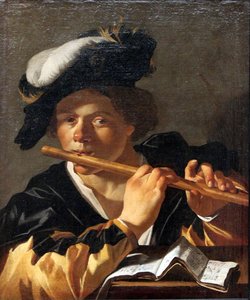
StatsYoung Man Singing
 Acrylic
- WallArt
- Dutch Baroque
 1622
1622 58.0 x 71.0 cm
 Städel Museum
 Read More
Giclée / Art Print
Museum-quality giclée or canvas print with fast production and flexible finish options. ( Buy Hand Made Painting Switch to Digital Image)




P118B $10

P118H $10

P118W $10

P438Z $10

P508JH $12

P508YH $12

P805H $10

P805Z $10

P919BZ $10

P919G $10

P919XJ $10

P959ZH $10

P968JZ $12

W106C $8

W218G $10

W218JH $8

W218Y $10

W307PJ $10

W316G $10

W316PJ $8

W316Y $10

W398PJ $8

W4111J $10

W500HY $15

W500JH $15

W692G $12

W849H $8

W940BG $15

W953PJ $8




Pick from our preset sizes that match the artwork's original proportions.

You may enter your own dimensions to fit a specific frame or space. If your selected size does not match the original image's proportions, we will either crop the artwork or extend the image with a mirrored or solid-fill edge. A digital mockup will be sent for your approval before production begins.
Please note that the on-screen preview does not reflect the actual cropping or extension. Only the mockup will accurately show the final composition.
While custom sizes are available, we recommend selecting a dimension from the predefined list to preserve the original proportions.
Worldwide Delivery () in 2 weeks instead of standard 4/5 weeks. (26 September)

Free Worldwide Express Shipping

High-Quality Linen Canvas

Full Shipping Insurance

Customs Tax Refund Guarantee

True Color Matching Guarantee

100-Day Return Policy (Defects Only)

100% Money-Back Guarantee

Bulk Discount Offer
 Glass option is only available in size under 110 CM

Young Man Singing
Giclée / Art Print
Reproduction Size
-


Total Price
$ 81
A Portrait Steeped in Emotion: Exploring Dirck van Baburen’s ‘Young Man Singing’
The painting “Young Man Singing,” executed by Dirck van Baburen in 1622, stands as a testament to the Utrecht School's embrace of Caravaggio’s revolutionary approach to Baroque art. More than just a depiction of an individual, it’s a carefully constructed tableau brimming with symbolic resonance and masterful execution—a piece that continues to captivate viewers centuries later.Subject Matter and Composition
At its core lies a portrait of a young man dressed in attire typical for the period – a hat adorned with feathers, indicative of social status and artistic aspiration – engaged in an activity that transcends mere observation: he sings or speaks intently into a book held firmly in his hand. This posture isn’t simply one of reading; it conveys a palpable sense of passion and vulnerability. The artist skillfully utilizes chiaroscuro—the dramatic interplay between light and shadow—to sculpt the man's form, emphasizing musculature and conveying an emotional depth rarely seen in portraits of this era. Two birds are subtly integrated into the composition – one perched near the upper left corner and another positioned at the lower right – adding visual interest and potentially symbolizing themes of freedom or contemplation.Style and Technique: Caravaggisti Influence
Van Baburen’s style is undeniably indebted to Caravaggio, whose dramatic use of tenebrismo—extreme contrasts between light and dark—created an illusionistic effect that heightened emotional impact. Like Caravaggio, van baburen employed a direct approach to painting, eschewing idealized beauty for realism infused with psychological insight. The artist meticulously rendered textures – the feathers on the hat, the folds of the man’s clothing – demonstrating considerable technical skill. Furthermore, he achieved remarkable depth and luminosity through careful layering of glazes, capturing the subtle nuances of skin tone and fabric texture.Historical Context: Utrecht's Artistic Renaissance
The painting emerged during a period of significant artistic flourishing in Utrecht—a city that had become a magnet for Caravaggisti artists seeking inspiration beyond Florence and Rome. This movement represented a decisive break from Mannerism, prioritizing naturalistic representation and conveying intense emotion. Van Baburen’s work reflects the broader cultural currents of the time, signaling an interest in humanist ideals and exploring the complexities of human experience. The Utrecht School championed a style characterized by dynamism and expressive intensity—a stylistic hallmark that distinguishes it from its predecessors.Symbolism and Emotional Impact
Beyond its technical brilliance, “Young Man Singing” resonates with profound symbolic significance. The book symbolizes knowledge and contemplation, while the singing gesture embodies passion and vulnerability – emotions central to Baroque art’s preoccupation with human psychology. The birds could represent aspiration or spiritual freedom, subtly enriching the narrative conveyed by the image. Ultimately, the painting evokes a feeling of intimacy and introspection, inviting viewers to contemplate the inner life of its subject and reflecting the broader artistic ethos of Utrecht during its golden age.Artist Biography
The Shadow and the Light: The Life of Dirck van Baburen
In the annals of the Dutch Golden Age, few names evoke the visceral drama of shadow and sudden illumination quite like Dirck van Baburen. Born around 1595 in Wijk bij Duurstede, his life was a brief but brilliant meteor strike across the canvas of art history. Though his years were tragically short, ending in 1624, he managed to ignite a stylistic revolution that would redefine the northern European aesthetic. As a central pillar of the Utrecht School of Caravaggisti, van Baburen did not merely paint scenes; he orchestrated moments of profound tension, using the stark language of tenebrism to pull viewers into the intimate, often gritty reality of his subjects.
The foundation of his mastery was laid in the studios of Utrecht, under the tutelage of the respected Paulus Moreelse. However, the true metamorphosis of his soul and brush occurred during his transformative pilgrimage to Rome between 1612 and 1615. It was in the sun-drenched yet shadow-strewn streets of the Eternal City that van Baburen encountered the revolutionary spirit of Caravaggio. Through his close association with Bartolomeo Manfredi, a devoted follower of Caravaggio’s methods, the young Dutchman absorbed the secrets of chiaroscuro—the art of using extreme contrasts between light and dark to create volume and psychological depth. This Roman immersion was not merely academic; it was a social and professional ascent, as he secured commissions from prestigious patrons such as Cardinal Scipione Borghese, placing him at the very heart of the Baroque movement.
The Genesis of the Utrecht Caravaggisti
Upon his return to the Netherlands, van Baburen did not arrive as a mere student, but as a vanguard. Alongside contemporaries like Hendrick ter Brugghen and Gerard van Honthorst, he spearheaded a movement that would forever alter the trajectory of Dutch painting. This collective, known as the Utrecht Caravaggisti, sought to transplant the dramatic intensity of Italian Baroque into the local vernacular. Their work was characterized by a departure from the polished, serene landscapes of their predecessors, favoring instead:
- Genre Scenes: Vivid, often boisterous depictions of everyday life, including musicians, drinkers, and peasants, rendered with a startling sense of presence.
- Tenebrism: The use of deep, impenetrable shadows that swallow the background, forcing the viewer’s eye to focus solely on the illuminated figures.
- Emotional Immediacy: A focus on the human condition, capturing fleeting expressions of joy, sorrow, or contemplative stillness.
His technical prowess allowed him to manipulate light as if it were a physical substance, carving figures out of the darkness with a precision that felt almost tactile. Whether depicting religious fervor or the humble activities of a tavern, his brushwork possessed an energy that bridged the gap between the monumental scale of Italian art and the intimate, domestic focus of the Dutch tradition.
Legacy and Historical Significance
The impact of Dirck van Baburen extends far beyond the borders of Utrecht. While his career was cut short in his early thirties, the ripples of his innovation traveled through the decades, influencing the development of the Dutch Baroque and even providing a stylistic precursor to the works of Rembrandt van Rijn. The way Rembrandt would later manipulate light to evoke profound psychological truths owes a significant debt to the groundwork laid by the Utrecht masters.
Today, van Baburen is remembered not just as a follower of an Italian master, but as an architect of a new visual language. He transformed the canvas into a stage where light and shadow perform a perpetual drama, ensuring that his name remains etched in the history of art as a master of the profound, the dramatic, and the deeply human. His ability to find the extraordinary within the ordinary continues to captivate scholars and art lovers alike, serving as a testament to the enduring power of the Caravaggesque spirit.

Dirck van Baburen
1595 - 1624 , Netherlands
Quick Facts
- Artistic Movement Or Style: Caravaggisti; Utrecht School
- Artists Or Movements Influenced By This Artist: ['Rembrandt van Riijn']
- Artists Who Influenced This Artist:
- Paulus Moreelse
- Bartolomeo Manfredi
- Date Of Birth: Utrecht, Netherlands (1595)
- Date Of Death: 1624
- Full Name: Dirck Jaspersz. van Baburen
- Nationality: Dutch
- Notable Artworks:
- The Procuress
- A philosopher
- St. Francis in Meditation
- Place Of Birth: Wijk bij Duurstede
Related Articles

Golden Age Reflections: Dutch Baroque Painting & Cultural Innovation
Explore the Dutch Golden Age of painting! Discover key artists like Vermeer & ter Borch, their innovative techniques, and the rich cultural context behind these Baroque masterpieces. Learn about collecting & appreciating this iconic art period.

Baroque Masterpieces: 10 Paintings That Defined an Era |
Journey through the drama & grandeur of Baroque art! Explore 10 masterpieces by Caravaggio, Rembrandt, Rubens & more. Discover stunning oil paintings, rich colors & timeless stories. Find museum-quality reproductions at .

Golden Light & Dutch Skies: The Timeless Magic of Dutch Golden Age Landscapes
Discover the breathtaking beauty of Dutch Golden Age landscapes. Explore the mastery of light, chiaroscuro, and 17th-century realism through an expert art history lens, celebrating the enduring legacy of the Dutch Masters for discerning collectors and art lovers.
Dutch Baroque Unlocked: Mastering Chiaroscuro, Epic Drama, and the High-Impact Legacy of Rembrandt
Explore the dramatic power of Dutch Baroque art. Master the secrets of Rembrandt’s chiaroscuro, discover the epic scale of the Golden Age, and learn how to bring high-impact, hand-painted historical masterpieces into your modern collection with expert precision.

Dutch Baroque Masters: 10 Paintings That Shaped an Era | OriginalUniqueArt
Journey through the Golden Age with our guide to the Top 10 Dutch Baroque masterpieces! Explore iconic paintings by Rembrandt, Vermeer & Frans Hals. Find museum-quality art reproductions and elevate your home decor at OriginalUniqueArt.com.