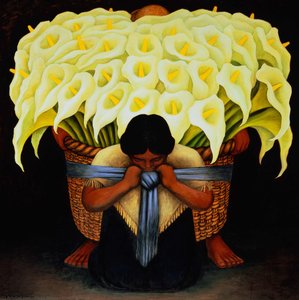
Preview
 Send
Send Share
Share
 Details

 Download
 Similars
 X-Ray
X-Ray Diaporama
Ofrenda II
 Acrylic On Canvas
- WallArt
- Mexican Mural Movement
 1954
1954 37.0 x 26.0 cm
 Museo Dolores Olmedo
 Read More
Giclée / Art Print
Museum-quality giclée or canvas print with fast production and flexible finish options. ( Buy Hand Made Painting Buy Image)




P118B $10

P118H $10

P118W $10

P438Z $10

P508JH $12

P508YH $12

P805H $10

P805Z $10

P919BZ $10

P919G $10

P919XJ $10

P959ZH $10

P968JZ $12

W106C $8

W218G $10

W218JH $8

W218Y $10

W307PJ $10

W316G $10

W316PJ $8

W316Y $10

W398PJ $8

W4111J $10

W500HY $15

W500JH $15

W692G $12

W849H $8

W940BG $15

W953PJ $8




Pick from our preset sizes that match the artwork's original proportions.

You may enter your own dimensions to fit a specific frame or space. If your selected size does not match the original image's proportions, we will either crop the artwork or extend the image with a mirrored or solid-fill edge. A digital mockup will be sent for your approval before production begins.
Please note that the on-screen preview does not reflect the actual cropping or extension. Only the mockup will accurately show the final composition.
While custom sizes are available, we recommend selecting a dimension from the predefined list to preserve the original proportions.
Worldwide Delivery () in 2 weeks instead of standard 4/5 weeks. (4 September)

Free Worldwide Express Shipping

High-Quality Linen Canvas

Full Shipping Insurance

Customs Tax Refund Guarantee

True Color Matching Guarantee

60-Day Return Policy (Defects Only)

100% Money-Back Guarantee

Bulk Discount Offer
 Glass option is only available in size under 110 CM

Ofrenda II
Giclée / Art Print
Reproduction Size
-


Total Price
$ 81
Ofrenda II: A Tapestry of Remembrance – Diego Rivera’s Echoes of Tradition
Diego Rivera's “Ofrenda II,” painted in 1954, is more than just a depiction of the Day of the Dead; it’s a vibrant portal into the heart of Mexican cultural heritage. This striking black and white drawing captures a pivotal ritual – the elaborate preparations for honoring deceased loved ones on November 1st and 2nd – revealing a complex interplay of symbolism, artistic technique, and deeply rooted traditions. The scene unfolds within a modestly furnished room, dominated by a table laden with offerings, meticulously arranged upon a bed of crimson sawdust. This foundational element immediately establishes the artwork’s connection to ancient indigenous practices, where sawdust served as a sacred ground for honoring ancestors. The composition is anchored by two women engaged in a quiet, intimate exchange. Their postures and expressions suggest a shared reverence and perhaps even a moment of solace. While their identities remain ambiguous, they embody the spirit of community and familial bonds central to the Day of the Dead celebrations. Notice how Rivera masterfully uses light and shadow to draw attention to specific elements – the vibrant colors of the sugar skulls, the glistening fruits, and the carefully positioned candles. These aren’t merely decorative; they represent sustenance for the souls returning from the afterlife, a tangible expression of love and remembrance. The inclusion of a book and a vase adds a layer of domesticity, grounding the scene in everyday life while simultaneously elevating it to a sacred ritual.The Roots of Ritual: Pre-Hispanic Influences and Colonial Synthesis
“Ofrenda II” is deeply rooted in Mexico’s pre-Columbian past. The tradition of honoring the dead predates European colonization, with indigenous cultures constructing elaborate offerings to appease and nourish departed spirits. Rivera, keenly aware of this heritage, deliberately incorporated these ancient practices into his work. However, the painting isn't simply a nostalgic reproduction; it reflects a synthesis of traditions – a blending of pre-Hispanic symbolism with elements introduced during the colonial period. The use of purple, pink, or orange sawdust, for instance, is a direct continuation of indigenous customs, while the inclusion of items like sugar skulls and elaborate floral arrangements speaks to the influence of Catholic iconography prevalent in post-colonial Mexico. This careful juxtaposition highlights the dynamic evolution of Mexican identity – a testament to resilience and cultural adaptation.Rivera’s Technique: A Masterclass in Composition and Detail
Rivera's distinctive style is immediately recognizable in “Ofrenda II.” He employs a meticulous, almost photographic realism, capturing every detail with remarkable precision. The textures of the fruits, the folds of the fabric, and the intricate patterns on the sugar skulls are rendered with astonishing clarity. This attention to detail isn’t merely aesthetic; it serves to emphasize the sacredness of the ritual. Rivera's use of black and white further enhances this effect, creating a stark contrast that draws the viewer's eye to the central elements of the composition. The careful arrangement of objects – each chosen for its symbolic significance – demonstrates Rivera’s deep understanding of Mexican culture and his ability to translate complex traditions into a visually compelling narrative.Symbolism and Emotional Resonance: A Celebration of Life and Remembrance
Beyond its technical brilliance, “Ofrenda II” resonates with profound emotional depth. The painting is not simply about death; it’s about life – the enduring bonds between generations, the importance of memory, and the celebration of those who have passed on. The act of creating an offering is a powerful affirmation of love and connection, a way to keep the spirits of ancestors alive in the hearts and minds of the living. The quiet intimacy between the two women suggests a shared grief tempered by acceptance and gratitude. “Ofrenda II” invites us to contemplate our own relationships with those who have shaped our lives and to honor their memory through acts of remembrance and celebration. It’s a poignant reminder that death is not an ending, but rather a transition – a continuation of the cycle of life and love.This artwork is available as a high-quality reproduction by OriginalUniqueArt.
Artist Biography
Early Life and Artistic Awakening
Diego Rivera, born Diego María de la Concepción Juan Nepomuceno Estanislao de la Rivera y Barrientos Acosta y Rodríguez in Guanajuato, Mexico, on December 8, 1886, entered a world already imbued with artistic sensibility. From the tender age of three, an undeniable fascination with art blossomed within him, nurtured by parents who recognized and encouraged his burgeoning talent. His early years were marked by a formal education at the Academy of San Carlos in Mexico City, where he diligently honed his skills in traditional painting and sculpture. A pivotal moment arrived in 1907 when Teodoro A. dehesa Méndez generously sponsored Rivera’s studies abroad, launching him into the heart of Europe's artistic ferment.
His initial sojourn took him to Madrid, Spain, where he studied under Eduardo Chicharro, absorbing the tenets of Realism. However, it was Paris that truly ignited his creative evolution. Immersed in the vibrant Montparnasse community, Rivera encountered a kaleidoscope of artistic perspectives, most notably the revolutionary principles of Cubism after 1912. The influence of Pablo Picasso and Georges Seurat became palpable in his work, as he began to deconstruct forms and explore intersecting planes—a departure from traditional representation that would define a significant phase of his artistic journey.
The Return to Mexico and the Mural Renaissance
A profound shift occurred in 1921 when Rivera returned to his homeland, a nation grappling with the aftermath of revolution. This homecoming wasn’t merely a geographical relocation; it was an ideological awakening. He became a central figure in the burgeoning Mexican Mural Movement, a powerful artistic response to the social and political upheaval of the time. The movement aimed to democratize art, bringing it out of elite circles and into public spaces accessible to all citizens.
Rivera’s murals weren't simply decorative; they were potent narratives of Mexican history, culture, and societal struggles. His early masterpieces, such as “Creation” (1922), showcased his innovative use of encaustic technique, while the monumental works at the Secretaría de Educación Pública in Mexico City revealed a distinctive style characterized by large, simplified figures and bold colors—a deliberate homage to Aztec art and pre-Columbian aesthetics. These murals weren’t just paintings; they were visual manifestos, proclaiming a new national identity forged from its indigenous roots and revolutionary spirit.
A Style Forged in Social Consciousness
Diego Rivera's artistic style is instantly recognizable—a monumental scale that commands attention, simplified forms that convey powerful messages, vibrant colors that evoke the richness of Mexican culture, and an unwavering focus on social and historical narratives. His work wasn’t confined to aesthetic concerns; it was deeply intertwined with his political beliefs, particularly his Marxist convictions.
The “Dreams of a Sunday in the Alameda” is perhaps one of his most iconic works, though also controversial for its depiction of atheism. The Detroit Industry Murals (1933), commissioned for the Detroit Institute of Arts, stand as a testament to his ability to capture the dynamism and complexity of industrial life, portraying both the power of machinery and the dignity of the workers who operated it. He seamlessly blended elements of Mexican folk art with pre-Columbian imagery, creating a visual language that was uniquely his own—a powerful synthesis of tradition and modernity.
Legacy and Enduring Influence
Diego Rivera’s impact on 20th-century art is immeasurable. He isn't merely remembered as one of Mexico’s most important artists, but as a global icon whose work continues to resonate with audiences today. His murals are not just artistic achievements; they are significant examples of social realism and public art—powerful statements about the human condition and the struggle for social justice.
He played a pivotal role in establishing Mexican Muralism as an influential artistic movement, inspiring generations of artists to use their work as a vehicle for social commentary. His personal life, particularly his passionate and often tumultuous relationship with Frida Kahlo, has further cemented his place in popular culture, adding another layer of intrigue to his already captivating legacy.
Rivera’s commitment to portraying the lives and struggles of ordinary people, combined with his innovative artistic techniques, ensures that his work will continue to inspire and provoke thought for generations to come. He left behind a body of work that is not only visually stunning but also deeply meaningful—a testament to the power of art to shape our understanding of history, culture, and ourselves.
Notable Works
- Creation (1922): His first significant mural, utilizing the encaustic technique.
- Dreams of a Sunday in the Alameda: A controversial piece known for its depiction of atheism and historical figures.
- Secretaría de Educación Pública Murals: Showcasing his unique style with large, simplified forms and vibrant colors influenced by Aztec art.
- Detroit Industry Murals (1933): Commissioned for the Detroit Institute of Arts, depicting industrial processes and workers.

Diego Rivera
1886 - 1957 , Mexico
Quick Facts
- Artistic Movement Or Style: Mexican Muralism, Cubism
- Artists Or Movements Influenced By This Artist: ['Mexican Muralism']
- Artists Who Influenced This Artist:
- Pablo Picasso
- Georges Seurat
- Date Of Birth: December 8, 1886
- Date Of Death: November 24, 1957
- Full Name: Diego Rivera
- Nationality: Mexican
- Notable Artworks:
- Creation
- Detroit Industry Murals
- Dreams of a Sunday in Alameda
- Place Of Birth: Guanajuato, Mexico
Related Articles
Diego Rivera: A Revolutionary Vision of Mexican Identity Through Muralism
Explore the revolutionary murals of Diego Rivera and his profound impact on Mexican art & identity. Discover his techniques, iconic works like 'Man at the Crossroads,' and lasting legacy with OriginalUniqueArt.
Revolution on Canvas: Exploring the Socio-Political Power & Artistic Legacy of Mexican Muralism
Explore the powerful world of Mexican muralism! Discover Diego Rivera, Frida Kahlo & Orozco's revolutionary art, social impact & lasting legacy. Expert insights & high-quality reproductions at OriginalUniqueArt.

John Francis Sartorius II: Equestrian Elegance & the Rise of British Portraiture
Explore the captivating world of Francis Sartorius II (1734-1804), a leading British painter renowned for his exquisite equestrian portraits and hunting scenes. Discover his life, techniques & enduring legacy.
Timeless Valentine's Day Gifts: A Procurement Guide to Premium Hand-Painted Art Reproductions
Discover premium hand-painted art reproductions for unforgettable Valentine's Day gifts. From custom oil portraits to museum-quality classics, we provide professional procurement solutions with global shipping, bulk ordering, and guaranteed excellence for collectors and professionals.

Roy Lichtenstein's Masterpieces: 25 Iconic Pop Artworks for Your Home | OriginalUniqueArt
Explore Roy Lichtenstein's 25 most iconic Pop Art masterpieces! Discover the stories behind 'Drowning Girl', 'Look Mickey' & more. Find museum-quality reproductions and elevate your home decor with OriginalUniqueArt. Explore the full collection online.