

The Genesis of a Movement: Post-Revolutionary Mexico & the Call for New Art
 Museo Nacional de Arte
Explore Mexico's art history at MUNAL! Discover 3,000+ works from the 16th-20th centuries in a stunning palace. See iconic sculptures & colonial to modern masterpieces.
The dust had barely settled from the Mexican Revolution when a new kind of battle began – a battle waged not with bullets, but with brushes and paint. The decades following 1920 witnessed an unprecedented artistic flourishing, born from a fervent desire to redefine national identity and communicate directly with a largely illiterate populace. For centuries, Mexican art had been dominated by European styles and aristocratic patronage. The revolution shattered those conventions, creating a vacuum ripe for innovation and a powerful need to depict the struggles, triumphs, and aspirations of the common people. This wasn’t merely about aesthetic change; it was a deliberate act of cultural reconstruction. Intellectuals like José Vasconcelos envisioned art as a tool for education and social transformation, believing that monumental public works could foster unity and instill pride in a nation fractured by years of conflict. The walls of government buildings, schools, and even private residences became canvases for this ambitious project, ushering in the era of Mexican muralism.
Diego Rivera: Champion of Mexican Identity Through Monumental Frescoes
 untitled (2301)
Experience Diego Rivera’s "untitled (2301)", a vibrant Mexican mural depicting collaborative harvest. Explore this iconic work & discover Rivera's powerful social art.
At the heart of this movement stood Diego Rivera, arguably its most iconic figure. Rivera didn’t simply paint *about* Mexico; he painted *Mexico itself*. His murals weren't confined to idealized landscapes or romanticized portraits of heroes. Instead, they were sprawling narratives teeming with life – indigenous farmers alongside industrial workers, pre-Columbian deities interwoven with modern struggles, and stark depictions of social inequalities. Consider his “Dream of a Sunday Afternoon in Alameda Central,” housed within the Museo Mural Diego Rivera. This masterpiece isn’t just a visual feast; it's a carefully constructed genealogy of Mexican history, featuring figures from various eras interacting in a single space. His technique – fresco painting – was crucial to this vision. Applying pigment directly to wet plaster demanded speed and precision, imbuing the works with an immediacy and permanence that resonated deeply with the public. Rivera’s commitment extended beyond aesthetics; he actively sought to portray Mexico's complex past, acknowledging both its glories and its injustices. A work like “Untitled (2301)” exemplifies this – a vibrant depiction of collaborative harvest, celebrating collective labor and the dignity of rural life. Rivera wasn't just an artist; he was a storyteller, a historian, and a passionate advocate for his people.
Beyond Rivera: Orozco, Siqueiros, and the Diverse Voices of Muralism
 David Alfaro Siqueiros
Explore the revolutionary art of David Alfaro Siqueiros (1896-1974), a Mexican muralist whose powerful frescoes ignited social change & challenged conventions alongside Rivera & Orozco.
While Rivera often takes center stage, it’s crucial to recognize the contributions of other pivotal figures. José Clemente Orozco possessed a distinctly darker, more emotionally charged style. Where Rivera offered a panoramic view of Mexican society, Orozco delved into the psychological and existential consequences of conflict. His murals are filled with haunting imagery – skeletal figures, anguished faces, and scenes of brutal violence – reflecting his profound skepticism about human nature and the cyclical patterns of history. David Alfaro Siqueiros, the most politically radical of the three, embraced a dynamic, almost Cubist aesthetic. His works often depicted revolutionary battles and industrial landscapes with a raw energy that mirrored his own activism. Unlike Rivera’s more narrative approach, Siqueiros focused on capturing movement and tension, experimenting with new techniques like spray guns and industrial paints to achieve a heightened sense of realism. The diversity within the muralist movement is striking; each artist brought their unique perspective and artistic vocabulary to bear on the central themes of national identity and social justice.
Frida Kahlo’s Intimate Murals: Surrealism as Social Commentary
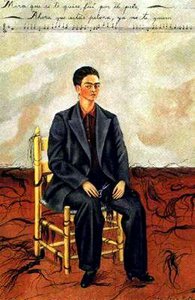 untitled (5405)
Explore Frida Kahlo’s "Untitled (5405)", a surreal Mexican muralist portrait of Diego Rivera. Intense emotion & symbolism in oil on canvas – a unique piece.
Though often categorized solely as a surrealist painter, Frida Kahlo's murals offer a powerful, albeit deeply personal, dimension to the broader movement. Her self-portraits, frequently imbued with symbolic imagery and autobiographical details, weren’t simply explorations of individual pain and identity; they were also potent statements about Mexican culture, gender roles, and political realities. “Untitled (5405),” a striking portrait of Diego Rivera himself, reveals her complex relationship with the muralist giant – a blend of adoration, frustration, and defiance. Kahlo's use of indigenous motifs and traditional Mexican dress challenged European aesthetic norms and celebrated her heritage. Her unflinching honesty about her physical suffering and emotional turmoil resonated deeply with audiences, particularly women, who found solace and empowerment in her work. While she didn’t create large-scale public murals like Rivera or Orozco, Kahlo's intimate paintings contributed significantly to the movement’s broader exploration of Mexican identity and social consciousness.
The Enduring Legacy: Influence on Contemporary Art & Public Spaces
The impact of Mexican muralism extends far beyond the 20th century. The movement profoundly influenced subsequent generations of artists, inspiring public art projects around the globe. From the Chicano mural movement in the United States to contemporary street art initiatives, the spirit of social realism and community engagement continues to thrive. Artists today draw inspiration from the techniques, themes, and political fervor of Rivera, Orozco, and Siqueiros, adapting their approaches to address contemporary issues. The very concept of using public spaces as canvases for artistic expression – a cornerstone of Mexican muralism – remains remarkably relevant in an era where art is increasingly accessible and democratized. The murals themselves continue to serve as powerful reminders of Mexico’s rich history and ongoing struggles.
Experiencing Mexican Muralism Today: Museums & Preserving a Cultural Treasure
Fortunately, experiencing the grandeur of Mexican muralism firsthand is readily achievable. The Museo Mural Diego Rivera in Mexico City offers an unparalleled opportunity to immerse oneself in his iconic work, including the rescued masterpiece “Dream of a Sunday Afternoon.” The Museo Nacional de Arte (MUNAL) houses an extensive collection of works from the 16th to 20th centuries, providing valuable context for understanding the movement’s evolution. The Museo de Arte Popular showcases the vibrant folk art traditions that influenced many muralists. However, murals aren't confined to museums; they adorn buildings throughout Mexico City and beyond. Exploring these public works allows visitors to connect with the art on a visceral level, experiencing it in the context for which it was originally intended. Preserving this cultural treasure requires ongoing effort – restoration projects, educational initiatives, and continued support for artists who carry forward the legacy of Mexican muralism. At OriginalUniqueArt, we are committed to making these masterpieces accessible to all through high-quality reproductions that capture the spirit and power of this revolutionary art form. Explore our collection today and bring a piece of Mexico’s soul into your home.



