Preview
 Send
Send Share
Share
 Details
 Guide
Guide

 Download
 Similars
 X-Ray
X-Ray Diaporama
 Q&A
Q&A Stats
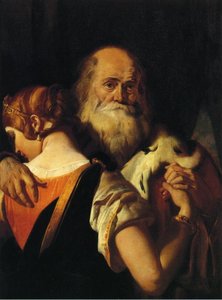
StatsKing Lear and Cordelia

 Read More
Giclée / Art Print
Museum-quality giclée or canvas print with fast production and flexible finish options. ( Buy Hand Made Painting Switch to Digital Image)




































Pick from our preset sizes that match the artwork's original proportions.

Type the width and the height you need, to fit your frame or your wall. A print can only be cut, never made bigger than the picture, so a size with a different shape loses a part of the image. We send you a digital mockup to approve before we print anything. The picture shown on this page does not show the real cut — only the mockup does.
Worldwide Delivery () in 2 weeks instead of standard 4/5 weeks. (10 November)

Free Worldwide Express Shipping

High-Quality Linen Canvas

Full Shipping Insurance

Customs Tax Refund Guarantee

True Color Matching Guarantee

100-Day Return Policy (Defects Only)

100% Money-Back Guarantee

Bulk Discount Offer
 Glass option is only available in size under 110 CM

King Lear and Cordelia
Giclée / Art Print
Reproduction Size
-


Total Price
$ 81
A Moment of Reconciliation: Daniel Maclise's "King Lear and Cordelia"
Daniel Maclise’s “King Lear and Cordelia” is a powerful depiction of a pivotal moment from Shakespeare’s tragic play, capturing the raw emotion and poignant reconciliation between a broken king and his devoted daughter. This artwork transcends mere illustration; it's a deeply moving exploration of family, regret, forgiveness, and mortality rendered with Romantic drama and meticulous detail.
Composition & Style: A Study in Chiaroscuro
The composition is strikingly intimate, focusing solely on Lear and Cordelia against a dark, undefined background. This deliberate isolation intensifies the emotional weight of their interaction. Maclise masterfully employs chiaroscuro – the dramatic contrast between light and shadow – to highlight Lear’s aged face and upper body, drawing the viewer's eye immediately to his sorrowful expression. Cordelia’s figure is partially visible, her arm embracing him in a gesture that suggests both tenderness and resignation. The style aligns with Romanticism, characterized by its emphasis on emotion, historical or literary subjects, and dramatic presentation. Notice how Maclise uses circular shapes – particularly in Lear's face and beard – to convey wisdom and age, contrasting them with the more fluid, organic form of Cordelia.
Color Palette & Technique: Earthly Tones and Regal Accents
The color palette is deliberately restrained, dominated by earthy browns and creams that evoke a sense of somberness. However, strategic highlights of red and gold inject regal dignity into the scene. Cordelia’s vibrant red dress provides a striking contrast to Lear's white shirt with golden accents, symbolizing her unwavering loyalty and perhaps hinting at a fleeting moment of hope amidst despair. Maclise’s technique is rooted in traditional oil painting, demonstrating careful attention to detail and realistic representation. Visible brushstrokes add texture without detracting from the overall realism, suggesting the rough texture of Lear's beard, the smooth fabric of Cordelia’s dress, and the wrinkled skin of the king.
Symbolism & Emotional Impact: A Universal Theme
Beyond its narrative context, "King Lear and Cordelia" resonates with universal themes. The embrace itself is laden with symbolism – a belated understanding between father and daughter, a desperate plea for forgiveness, or perhaps simply a moment of shared grief. Lear’s aged appearance and sorrowful expression evoke feelings of pity and empathy, while Cordelia's posture suggests both tenderness and the acceptance of an inevitable fate. This artwork isn't just about Shakespearean tragedy; it's about the complexities of human relationships, the weight of regret, and the enduring power of familial love—making it a compelling piece for any art collection or interior space seeking to evoke profound emotion.
Historical Context & Materials
Created during the Victorian era, Maclise’s work reflects the period's fascination with literature and history. He was a celebrated artist known for his murals at Westminster Palace and literary illustrations. The artwork is likely executed using oil paints on canvas, materials commonly employed by artists of this time to achieve rich colors and detailed textures.
Questions & Answers
Can I use augmented reality to see "King Lear and Cordelia" by Daniel Maclise in my room?
The AR Preview page of "King Lear and Cordelia" by Daniel Maclise uses augmented reality to show the artwork in your own space, on a compatible device.
How does "King Lear and Cordelia" fit into Daniel Maclise's themes and style?
Within Daniel Maclise's output, "King Lear and Cordelia" sits in the Romanticism style, alongside the themes of romanticism’s emotional intensity, classical portraiture traditions, literary illustration focus, representative of maclise’s literary focus, demonstrates skill in historical narrative, part of his series on shakespearean works, shakespearean tragedy & drama, family dynamics and forgiveness.
What art movement does "King Lear and Cordelia" by Daniel Maclise belong to?
"King Lear and Cordelia" by Daniel Maclise belongs to the Romanticism movement. This movement provides the stylistic context of the work.
Artist Biography
Early Life and Education
- Born: January 25, 1806, Cork, Ireland
- Died: April 25, 1870, London, England
- Parents: Alexander McLish (tanner/shoemaker) and Rebecca McLeish
- Early education in Cork; showed artistic talent from a young age.
- Studied at the Cork School of Art, focusing on drawing and anatomy.
- Self-funded move to London in 1827 to pursue art studies.
- Entered the Royal Academy Schools in 1828, excelling in life drawing and history painting.
Career and Major Works
- Rapidly gained recognition for his portrait skills, notably depicting Charles Kean and Niccolò Paganini.
- Contributed significantly to *Fraser's Magazine* under the pseudonym "Alfred Croquis," creating a series of character portraits that enhanced his reputation.
- Became an Associate of the Royal Academy in 1835 and a full member in 1840.
- Notable Works:
- The Meeting of Wellington and Blücher after the Battle of Waterloo (located at Westminster Palace)
- The Death of Nelson (located at Westminster Palace) – A monumental fresco considered one of his masterpieces.
- The Chivalric Vow of the Ladies and the Peacock
- Illustrations for Charles Dickens' Christmas books and other works.
Artistic Style and Influences
- Maclise’s style blended historical narrative with elements of realism and portraiture.
- Influenced by French and classical art, particularly after his visit to Paris in 1830.
- His work often depicted scenes from history, literature (Shakespeare), and mythology.
- Demonstrated a keen eye for detail and characterization in both portraits and historical compositions.
Later Life and Legacy
- Intense dedication to his art took a toll on his health.
- Declined the presidency of the Royal Academy in 1865 due to declining health.
- Died in Chelsea, London, in 1870.
- A memoir was published by William Justin O'Driscoll in 1871.
- Maclise’s murals at Westminster Palace remain significant contributions to British art and architecture.
- His illustrations for Dickens helped popularize the author's works.
- Considered a key figure in Victorian-era history painting, bridging the gap between Neoclassicism and Realism.
Historical Significance
- Maclise played a crucial role in documenting significant historical events and figures for a wider audience.
- His work reflects the cultural and artistic trends of the 19th century, particularly the Victorian era's fascination with history and literature.
- He helped establish the tradition of large-scale narrative painting within British art.
- His contributions to Westminster Palace’s decoration are integral to the building's aesthetic and symbolic importance.

Daniel Maclise
1806 - 1870 , Ireland
Quick Facts
- Artistic Movement Or Style: Historical narrative, realism and portraiture
- Artists Who Influenced This Artist:
- French art
- Classical art
- Full Name: Daniel Maclise
- Nationality: Irish
- Notable Artworks:
- The Death of Nelson
- The Meeting of Wellington and Blücher
- The Chivalric Vow of the Ladies and the Peacock
- King Cophetua and the Beggar Maid
- The Sleeping Beauty
- Place Of Birth: Cork, Ireland
- Date Of Birth: 1806
- Date Of Death: 1870
Related Articles

Daniel Maclise: Historical Narratives & Romantic Ideals in 19th-Century British Art
Explore the life & works of Daniel Maclise, a leading Victorian historical painter. Discover his captivating murals, Shakespearean scenes, and portraits at OriginalUniqueArt.com – handmade oil paintings & museum-quality prints.

Charles Bird King: Capturing Native American Dignity Through Portraiture & Cultural Exchange
Explore the captivating portraits of Charles Bird King, renowned for his depictions of Native American leaders. Discover the historical context, artistic techniques, and collecting value of these significant 19th-century artworks.
Edward Lear: A Life Beyond Nonsense – Landscape, Illustration & the Poetics of Isolation
Explore the life of Edward Lear beyond his nonsense poems. Discover his stunning landscape paintings, travel illustrations & the poignant themes of isolation in this expert art history analysis.

Thomas Daniell: Navigating Light, Landscape & Cultural Exchange in Early 19th-Century India
Explore the captivating landscapes of Thomas Daniell, a pioneering artist who documented India's beauty in the 19th century. Discover his 'Oriental Scenery,' aquatint technique & lasting legacy. Hand-painted reproductions available at OriginalUniqueArt.

The Evocative Brushstroke: Exploring Emotion, Individuality & the Sublime in Romanticism's Artistic Landscape
Explore the passionate world of Romanticism! Discover masterpieces by Friedrich & Goya, delve into the sublime, and understand the movement's lasting impact on art history. Expert analysis & insights at OriginalUniqueArt.