Switch to Print
 Read More







































 For artworks or reproductions larger than 105 cm (approximately 41 inches) on any side, the frame will be shipped as a kit, disassembled. This method ensures safe delivery and prevents damage during transport.


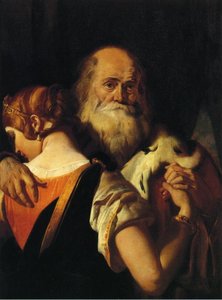
A Moment of Reconciliation: Daniel Maclise's "King Lear and Cordelia"
Daniel Maclise’s “King Lear and Cordelia” is a powerful depiction of a pivotal moment from Shakespeare’s tragic play, capturing the raw emotion and poignant reconciliation between a broken king and his devoted daughter. This artwork transcends mere illustration; it's a deeply moving exploration of family, regret, forgiveness, and mortality rendered with Romantic drama and meticulous detail.
Composition & Style: A Study in Chiaroscuro
The composition is strikingly intimate, focusing solely on Lear and Cordelia against a dark, undefined background. This deliberate isolation intensifies the emotional weight of their interaction. Maclise masterfully employs chiaroscuro – the dramatic contrast between light and shadow – to highlight Lear’s aged face and upper body, drawing the viewer's eye immediately to his sorrowful expression. Cordelia’s figure is partially visible, her arm embracing him in a gesture that suggests both tenderness and resignation. The style aligns with Romanticism, characterized by its emphasis on emotion, historical or literary subjects, and dramatic presentation. Notice how Maclise uses circular shapes – particularly in Lear's face and beard – to convey wisdom and age, contrasting them with the more fluid, organic form of Cordelia.
Color Palette & Technique: Earthly Tones and Regal Accents
The color palette is deliberately restrained, dominated by earthy browns and creams that evoke a sense of somberness. However, strategic highlights of red and gold inject regal dignity into the scene. Cordelia’s vibrant red dress provides a striking contrast to Lear's white shirt with golden accents, symbolizing her unwavering loyalty and perhaps hinting at a fleeting moment of hope amidst despair. Maclise’s technique is rooted in traditional oil painting, demonstrating careful attention to detail and realistic representation. Visible brushstrokes add texture without detracting from the overall realism, suggesting the rough texture of Lear's beard, the smooth fabric of Cordelia’s dress, and the wrinkled skin of the king.
Symbolism & Emotional Impact: A Universal Theme
Beyond its narrative context, "King Lear and Cordelia" resonates with universal themes. The embrace itself is laden with symbolism – a belated understanding between father and daughter, a desperate plea for forgiveness, or perhaps simply a moment of shared grief. Lear’s aged appearance and sorrowful expression evoke feelings of pity and empathy, while Cordelia's posture suggests both tenderness and the acceptance of an inevitable fate. This artwork isn't just about Shakespearean tragedy; it's about the complexities of human relationships, the weight of regret, and the enduring power of familial love—making it a compelling piece for any art collection or interior space seeking to evoke profound emotion.
Historical Context & Materials
Created during the Victorian era, Maclise’s work reflects the period's fascination with literature and history. He was a celebrated artist known for his murals at Westminster Palace and literary illustrations. The artwork is likely executed using oil paints on canvas, materials commonly employed by artists of this time to achieve rich colors and detailed textures.
Questions & Answers
Can I use augmented reality to see "King Lear and Cordelia" by Daniel Maclise in my room?
The AR Preview page of "King Lear and Cordelia" by Daniel Maclise uses augmented reality to show the artwork in your own space, on a compatible device.
How does "King Lear and Cordelia" fit into Daniel Maclise's themes and style?
Within Daniel Maclise's output, "King Lear and Cordelia" sits in the Romanticism style, alongside the themes of romanticism’s emotional intensity, classical portraiture traditions, literary illustration focus, representative of maclise’s literary focus, demonstrates skill in historical narrative, part of his series on shakespearean works, shakespearean tragedy & drama, family dynamics and forgiveness.
What art movement does "King Lear and Cordelia" by Daniel Maclise belong to?
"King Lear and Cordelia" by Daniel Maclise belongs to the Romanticism movement. This movement provides the stylistic context of the work.
More about this painting
 Preview
 Send
Send Share
Share
 Details
 Guide
Guide

 Download
 Similars
 X-Ray
X-Ray Diaporama
 Q&A
Q&A Stats
Stats