Early Life & Artistic Beginnings: From Ornithological Illustration to Landscape
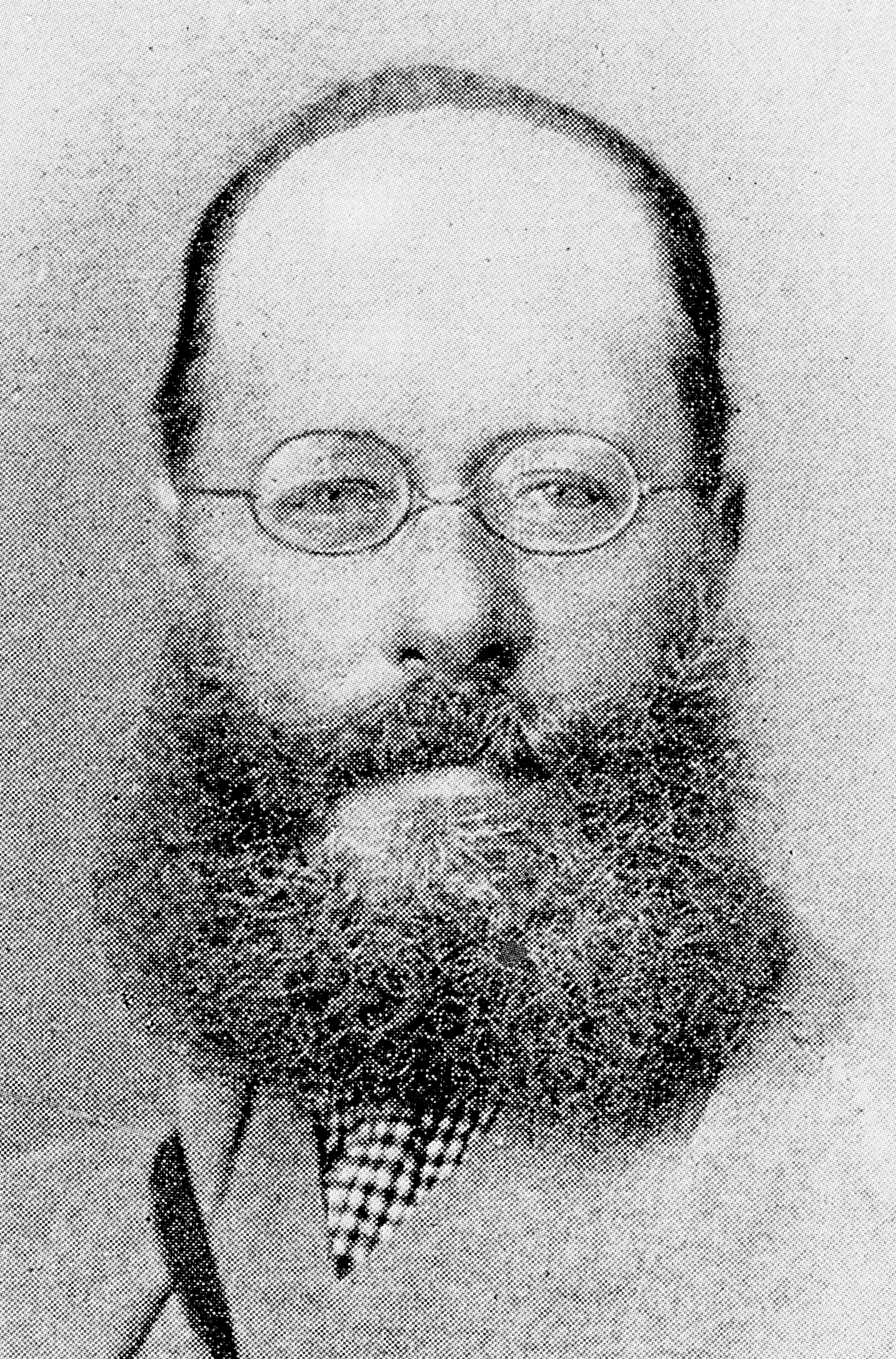 Wikipedia: Edward Lear
Edward Lear (12 May 1812 – 29 January 1888) was an English artist, illustrator, musician, author and poet, who is known mostly for his literary nonsense in poetry and prose and especially his limericks, a form he popularised. His principal areas of w...
Edward Lear, a name synonymous with whimsical limericks and delightfully peculiar creatures, often obscures the depth and sensitivity of his artistic journey. Born in 1812 into a family grappling with financial instability and personal sorrow, Lear’s early life was marked by a fragility that would profoundly shape his creative output. While destined for a conventional career path, a talent for drawing emerged early, initially focused on meticulous depictions of birds. This wasn't merely youthful pastime; it was a means of survival, providing income as he sketched and painted to support his family. His skill quickly garnered attention, leading to commissions in the burgeoning field of ornithological illustration – a pursuit demanding precision and observation. However, even within these scientific renderings, a nascent artistic sensibility began to bloom, hinting at a deeper desire for expressive form beyond strict accuracy. The detailed studies of parrots, published as Illustrations of the Family Psittacidae in 1832, were not simply taxonomic exercises; they revealed an appreciation for vibrant color and dynamic composition that foreshadowed his later landscapes.
The Knowsley Hall Years: Patronage, Friendship, and the Genesis of 'Nonsense'
A pivotal moment arrived with Lear’s appointment at Knowsley Hall, the estate of Edward Stanley, the 13th Earl of Derby. This wasn’t merely a job; it was an immersion into aristocratic society and a period of profound artistic development. The Earl’s extensive menagerie provided endless subjects for Lear's skilled hand, but more importantly, Knowsley offered a nurturing environment where his talents were celebrated. It was here that the seeds of “nonsense” were sown. Entertaining the children with playful drawings and accompanying verses, Lear discovered a unique voice – one characterized by absurd scenarios, illogical rhymes, and delightfully strange characters. These early creations weren’t intended for public consumption; they were intimate amusements born from genuine connection. Yet, they laid the foundation for his future fame. The patronage of Lord Derby was crucial, not only financially but also socially, opening doors to a world that would otherwise have remained inaccessible. This period fostered a confidence in Lear's artistic vision and allowed him to experiment with form and content, ultimately leading to the publication of A Book of Nonsense under the pseudonym “Derry down Derry” in 1846.
Travels in Italy & Greece: Capturing Light, Form, and a Sense of Place
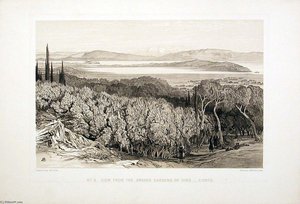 View From The Orange Gardens Of Viro-Corfu
This artwork is inspired by Edward Lear’s travels to Corfu in the mid-19th century, reflecting his keen eye for detail and love of capturing natural beauty. The scene depicts a tranquil view from within an orange grove, showcasing the characteristic
As his eyesight deteriorated, forcing him to abandon the exacting detail required for ornithological work, Lear embarked on a lifelong journey through the Mediterranean. Italy became his initial sanctuary, offering not only respite from the English climate but also an unparalleled source of artistic inspiration. He settled in Rome in 1837 and dedicated himself to landscape painting, meticulously documenting the sun-drenched vistas of the Roman Campagna. His technique evolved, embracing a watercolor style that captured the luminosity of the Italian light and the rugged beauty of the countryside. He wasn’t merely replicating scenes; he was interpreting them through his own unique lens – one imbued with sensitivity and emotional depth. Later travels to Greece further refined his artistic vision. The dramatic landscapes of Corfu, Albania, and the Greek islands provided new challenges and opportunities. Works like “View From The Orange Gardens Of Viro-Corfu” exemplify his ability to convey a sense of tranquility and atmosphere, showcasing his keen eye for detail and love of capturing natural beauty. These weren’t grand historical paintings; they were intimate observations of place, imbued with a personal resonance.
Beyond Limericks: Lear’s Serious Landscapes and the Victorian Aesthetic
 St Erenzo And Lerici From Palmaria, Gulf Of Spezia
Admire 'St Erenzo & Lerici' by Edward Lear – a captivating Gulf of Spezia landscape painting. Explore Victorian art & Lear’s whimsical style. A unique piece for collectors.
While celebrated for his lighthearted verse, it's crucial to recognize Lear as a serious landscape painter operating within the context of the Victorian aesthetic. The mid-19th century witnessed a growing appreciation for natural beauty and a desire to capture the essence of specific locales. Artists like J.M.W. Turner were pushing the boundaries of landscape painting, exploring atmospheric effects and emotional expression. Lear’s work, though distinct in style, shared this commitment to capturing the subjective experience of nature. Paintings such as “St Erenzo And Lerici From Palmaria, Gulf Of Spezia” demonstrate his mastery of composition, color, and light. He wasn't simply documenting topography; he was creating evocative scenes that resonated with a Victorian sensibility – one characterized by romanticism, sentimentality, and a growing awareness of the sublime. His landscapes often feature a sense of stillness and solitude, reflecting a deeper emotional undercurrent beneath the surface.
Isolation and Melancholy: The Poetic Undercurrents in Lear's Art and Verse
Beneath the playful facade of his nonsense poems lay a profound sense of isolation and melancholy. Lear’s lifelong struggle with epilepsy, coupled with early childhood trauma – the perceived abandonment by his mother and the family’s financial hardships – contributed to a deep-seated insecurity and a fear of intimacy. This emotional vulnerability permeates both his art and verse. The characters in his limericks are often eccentric outsiders, grappling with absurd situations that mirror his own feelings of alienation. His landscapes, while beautiful, frequently evoke a sense of loneliness and longing. He sought companionship throughout his life, forming deep friendships with artists like Alfred Tennyson and Robert Browning, yet he remained emotionally distant, fearing rejection and exposure. The recurring themes of travel and exile in his work suggest a restless spirit searching for belonging but ultimately finding solace only in the act of creation itself. His journals reveal a man deeply sensitive to beauty, acutely aware of his own flaws, and haunted by a sense of unfulfilled desire.
Legacy and Rediscovery: Edward Lear as Precursor to Modern Comic Art
Edward Lear’s influence extends far beyond the realm of Victorian poetry and landscape painting. He is now recognized as a precursor to modern comic art, his limericks paving the way for the development of visual storytelling and caricature. His innovative integration of text and illustration – often with absurdly detailed drawings accompanying nonsensical verses – challenged conventional artistic norms. The simplification of form and the emphasis on parody in his work foreshadowed the techniques employed by later cartoonists and graphic novelists. Furthermore, his autobiographical elements—the subtle anxieties and emotional vulnerabilities embedded within his creations—anticipated the confessional style that would become prominent in 20th-century art. While initially dismissed as a mere purveyor of light entertainment, Lear is now celebrated for his unique artistic vision, his profound sensitivity, and his enduring legacy as a master of both words and images. At OriginalUniqueArt.com, we offer high-quality reproductions of Lear’s stunning landscapes and illustrations, allowing you to experience the beauty and depth of his work firsthand. Explore our collection today and discover the hidden layers within this remarkable artist's oeuvre.