Preview
 Send
Send Share
Share
 Details
 Guide
Guide

 Download
 Similars
 X-Ray
X-Ray Diaporama
 Q&A
Q&A Stats
StatsTwo Home Homes

- 27.0 x 35.0 cm


 Read More
The artwork displayed on this page is protected by copyright law, which means we cannot legally create or sell an identical reproduction. This protection is enforced under international agreements such as the Berne Convention and by national laws, including those outlined by the U.S. Copyright Law - Title 17.
This method fully complies with copyright regulations because it does not involve copying or duplicating the protected artwork. Instead, it is a creative reinterpretation - a new painting that is influenced by the original but not identical to it.
Giclée / Art Print
Museum-quality giclée or canvas print with fast production and flexible finish options. ( Buy Hand Made Painting Switch to Digital Image)




P118B $10

P118H $10

P118W $10

P438Z $10

P508JH $12

P508YH $12

P805H $10

P805Z $10

P919BZ $10

P919G $10

P919XJ $10

P959ZH $10

P968JZ $12

W106C $8

W218G $10

W218JH $8

W218Y $10

W307PJ $10

W316G $10

W316PJ $8

W316Y $10

W398PJ $8

W4111J $10

W500HY $15

W500JH $15

W692G $12

W849H $8

W940BG $15

W953PJ $8




Pick from our preset sizes that match the artwork's original proportions.

Type the width and the height you need, to fit your frame or your wall. A print can only be cut, never made bigger than the picture, so a size with a different shape loses a part of the image. We send you a digital mockup to approve before we print anything. The picture shown on this page does not show the real cut — only the mockup does.
Worldwide Delivery () in 2 weeks instead of standard 4/5 weeks. (1 November)

Free Worldwide Express Shipping

High-Quality Linen Canvas

Full Shipping Insurance

Customs Tax Refund Guarantee

True Color Matching Guarantee

100-Day Return Policy (Defects Only)

100% Money-Back Guarantee

Bulk Discount Offer
 Glass option is only available in size under 110 CM

Two Home Homes
Giclée / Art Print
Reproduction Size
-


Total Price
$ 81
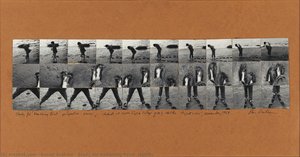
A Fragmented Reality: Dan Graham’s “Two Home Homes”
Dan Graham's "Two Home Homes," created in 1966, isn’t merely a photograph; it’s an invitation to reconsider the very nature of perception and space. This seemingly simple image – two modest brick houses with their front doors open – immediately destabilizes our expectations, hinting at a deeper conceptual engagement. Graham, a pivotal figure in the development of Conceptual Art, wasn't interested in replicating reality but rather in exposing its constructedness, challenging the viewer to actively participate in the process of seeing. The photograph’s stark black and white palette amplifies this effect, stripping away any superficial distractions and forcing us to confront the inherent artificiality of the scene.
The context surrounding “Two Home Homes” is crucial to understanding its significance. Graham was operating within a vibrant artistic milieu in New York during the 1960s – a period marked by experimentation with new media, performance art, and a growing skepticism towards traditional notions of representation. He drew heavily from Minimalism and Structuralism, employing techniques like mirrored pavilions and site-specific installations to explore how our experience of space is shaped by its physical boundaries and our own cognitive processes. “Two Home Homes” embodies this approach perfectly; it’s not about depicting two houses, but about creating a visual puzzle that prompts us to question the relationship between the image and reality.
Mirroring and Distortion: The Technique
The photograph itself is deceptively straightforward, yet reveals layers of complexity upon closer inspection. Graham utilized gelatin silver prints on paper, a technique known for its fine grain and tonal range. Crucially, he employed a process of double printing – essentially creating two identical images that were then combined. This layering introduces subtle distortions and shifts in perspective, subtly altering the spatial relationships within the scene. The slight blurring around the edges suggests an awareness of the photograph’s own materiality, reminding us that it's a representation, not a direct transcription of what was observed.
Furthermore, Graham incorporated graphite markings onto the prints – a deliberate act of intervention that further disrupts any sense of objective observation. These lines aren’t intended to add detail or enhance clarity; instead, they subtly alter the tonal values and create an unsettling feeling of unease. They serve as a visual reminder of the artist's hand in shaping the image, highlighting the inherent subjectivity involved in artistic creation.
Symbolism of Domesticity and Isolation
The two houses themselves are imbued with potent symbolism. The unassuming brick construction speaks to the commonplace, the everyday – yet this familiarity is immediately undermined by the photograph’s unsettling atmosphere. The open doors invite us into these spaces, suggesting a potential for connection or intimacy, but the stark lighting and the lack of any human presence create a sense of isolation and detachment. It's a scene frozen in time, devoid of narrative, prompting us to project our own interpretations onto the image.
The repetition of the architectural elements – the identical houses, the symmetrical arrangement – further reinforces this feeling of artificiality. Graham is deliberately stripping away any sense of individual character or personality, presenting a generalized representation of domestic space. This can be interpreted as a commentary on the alienation and anonymity of modern urban life, where individuals are often lost within the vastness of their surroundings.
A Legacy of Conceptual Inquiry
“Two Home Homes” remains a remarkably prescient work, anticipating many of the concerns that would dominate contemporary art in the decades following its creation. It’s a testament to Graham's ability to use seemingly simple visual elements – a photograph of two houses – to explore profound philosophical questions about perception, space, and the nature of reality. Reproductions of this piece offer more than just an image; they provide a portal into the mind of one of art history’s most innovative thinkers, inviting us to engage in a continuous dialogue with its enduring mysteries.
Questions & Answers
What does "Two Home Homes" by Daniel Graham depict, and in what mood?
"Two Home Homes" by Daniel Graham depicts brick houses, white doors, staircase, windows, urban landscape, 1966, americana, in a calm mood. Subject and atmosphere together describe the work.
How do the colors of "Two Home Homes" by Daniel Graham relate to its emotion?
In "Two Home Homes", earthy colors accompany a reflective feeling.
What atmosphere does "Two Home Homes" have?
The overall mood of "Two Home Homes" by Daniel Graham is calm. The mood describes the general atmosphere of the work.
Artist Biography
A Life Interwoven with Perception: The World of Dan Graham
Dan Graham, born Daniel Harry Ginsberg in Urbana, Illinois, in 1942, was an artist who defied easy categorization. His passing in New York City in February 2022 marked the loss of a truly pivotal figure in conceptual art, one whose work consistently challenged our understanding of space, perception, and the very act of looking. Graham’s journey wasn't rooted in formal artistic training; instead, it blossomed from an inquisitive mind and a willingness to engage with the world around him—a world he then meticulously deconstructed and re-presented through diverse mediums. His early life was marked by a rejection of conventional paths, dropping out of high school and finding his initial footing not as an artist, but as a gallery director. This experience, running the John Daniels Gallery in New York during the 1960s, proved formative. Surrounded by emerging talents like Sol LeWitt, Robert Smithson, and Donald Judd, Graham absorbed the burgeoning currents of Minimalism and Conceptual art, shaping his own artistic trajectory. It was within this vibrant scene that he began to formulate a practice that would consistently blur the boundaries between disciplines.From Text to Transparency: The Evolution of an Artistic Vision
Graham’s early work demonstrated a fascination with systems and structures—both visual and textual. He moved fluidly between writing, photography, and performance, often combining these elements in innovative ways. His photographic series *Homes for America* (1966-67) stands as an iconic example of this period. These seemingly objective photographs of suburban houses, accompanied by Graham’s analytical text, weren't merely documenting architectural forms; they were dissecting the social and psychological implications of postwar American suburbia—the uniformity, the isolation, the underlying anxieties. This exploration of societal norms through a cool, detached lens became a hallmark of his practice. As he moved into the 1970s, Graham began to experiment with video and performance art, further blurring the lines between artist, viewer, and subject. *Performer/Audience/Mirror* (1975) exemplifies this shift—a work where Graham positioned himself between an audience and a mirror, creating a dynamic interplay of observation, reflection, and self-awareness. This exploration of perception would ultimately lead to his most recognizable creations: the pavilions. These structures, typically constructed from steel and glass, weren't simply sculptures; they were architectural interventions designed to disrupt our spatial awareness. The use of two-way mirrors created an unsettling sense of transparency and surveillance, forcing viewers to confront their own image and question their relationship to the surrounding environment.The Pavilion as a Stage for Interaction
Graham’s pavilions are arguably his most enduring legacy. Beginning in the late 1970s, these structures evolved from smaller-scale experiments into increasingly ambitious architectural projects. They weren't intended as enclosed spaces but rather as open platforms—stages for interaction and observation. The mirrored surfaces created a disorienting effect, reflecting the surrounding landscape and the viewers themselves, effectively dissolving the boundaries between inside and outside. This deliberate manipulation of space wasn’t merely aesthetic; it was deeply conceptual. Graham sought to challenge our preconceived notions about architecture, sculpture, and the very nature of perception. He drew inspiration from diverse sources—from the functionalism of modernist architecture to the psychological theories of surveillance and control. His pavilions weren't simply objects to be admired; they were environments designed to provoke thought and encourage self-reflection. They became sites where viewers were forced to acknowledge their own presence, their own vulnerability, and their own role in constructing meaning.Beyond the Visual: A Polymathic Approach
To understand Dan Graham fully, one must recognize his remarkable breadth of intellectual curiosity. He wasn’t solely a visual artist; he was also a prolific writer, critic, and commentator on culture. His essays ranged from in-depth analyses of art theory to insightful reviews of rock music—a passion that informed much of his work. He even delved into the unlikely subject of Dwight D. Eisenhower's paintings and the television show starring Dean Martin, demonstrating a willingness to explore unconventional subjects and find connections between seemingly disparate fields. This polymathic approach enriched his artistic practice, providing him with a unique perspective on the world and allowing him to engage with a wide range of ideas. He saw art not as an isolated discipline but as part of a larger cultural conversation—a conversation he actively sought to shape through his work and writing. The Present, a collection of his essays, offers a compelling glimpse into his critical thinking and his unwavering commitment to challenging conventional wisdom.A Lasting Influence: Graham’s Legacy in Contemporary Art
Dan Graham's influence on contemporary art is profound and far-reaching. His work paved the way for generations of artists who explore themes of perception, space, and social interaction. He challenged the traditional boundaries between disciplines, demonstrating the power of combining visual art with writing, performance, and architecture. His pavilions continue to inspire architects and designers, while his conceptual approach has influenced countless artists working in a variety of mediums. Graham’s legacy isn't simply about the objects he created; it’s about the questions he raised—questions that remain relevant today. He forced us to confront our own assumptions about art, architecture, and the world around us. His work reminds us that perception is subjective, that space is fluid, and that the act of looking is never neutral. Museums like The Museum of Modern Art in New York and The Phillips Collection in Washington D.C. preserve his contributions for future generations to study and appreciate. He leaves behind a body of work that continues to resonate with its intellectual rigor, its aesthetic innovation, and its unwavering commitment to challenging the status quo—a testament to the enduring power of an artist who dared to see the world differently.
Daniel Graham
1942 - 2022 , United States of America
Quick Facts
- Full Name: Daniel Graham
- Nationality: American
- Date Of Birth: 1942
- Date Of Death: 2022
- Place Of Birth: Urbana, United States of America
- Notable Artworks:
- Detumescence
- Two Home Homes
- The Present
- Artistic Movement Or Style: Conceptual art
- Artists Who Influenced This Artist:
- Sol LeWitt
- Robert Smithson
- Artists Or Movements Influenced By This Artist:
- Minimalism
- Relational Aesthetics
Related Articles
Documentary Photography's Defining Moments: 10 Masterpieces for Your Home |
Explore 10 defining documentary photography masterpieces – from Dorothea Lange to Robert Capa. Discover powerful stories, iconic images & timeless art for your home. Museum-quality prints at .

Pictorialism: A Search for Artistic Photography's Soul – Aesthetics, Techniques & Legacy
Explore the captivating world of Pictorialism – a pivotal movement that transformed photography into fine art. Discover key artists like Stieglitz & Käsebier, techniques, and collecting tips from experts.

Monochrome Visions: Exploring the Aesthetic & Historical Significance of Black & White Photography
Explore the rich history & artistic power of black and white photography. From early techniques to iconic masters like Ansel Adams, discover why monochrome continues to captivate art lovers today. Expert insights for collectors.

Beyond the Lens: Photography's Enduring Influence on Modern & Contemporary Art
Explore photography's pivotal role in shaping modern & contemporary art. Discover key movements, influential artists like Stieglitz, and expert collecting advice from OriginalUniqueArt.

Witnessing History Through Lens & Light: Documentary Photography's Enduring Legacy
Explore the powerful history of documentary photography – from its origins to contemporary masters like Gordon Parks & W. Eugene Smith. Discover how this art form shapes our understanding of society and witness pivotal moments in time.