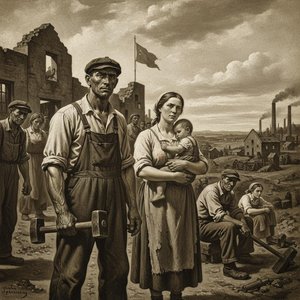
The Birth of Witness: Early Documentary Photography & Social Reform
Documentary photography usually refers to a popular form of photography used to chronicle events or environments both significant and relevant to history and historical events as well as everyday life. It is typically undertaken as professional photo...
Before the term “documentary photography” solidified, the impulse to capture reality existed as a nascent force within the earliest days of photographic technology. The daguerreotype and calotype weren’t merely tools for portraiture or landscape; they were windows into worlds previously unseen, offering glimpses of ruins in Egypt, the American wilderness, and, crucially, the lives of those often excluded from traditional artistic representation. John Beasly Greene's surveys of Nubian ruins in the 1850s represent an early form of visual archiving, but it was the French Missions Heliographiques’ dedication to preserving France’s architectural heritage that truly signaled photography’s potential as a historical record. However, the true seeds of documentary’s social conscience were sown during the American Civil War. Mathew Brady and Alexander Gardner didn't simply document battlefields; they presented the brutal cost of conflict – images of fallen soldiers, desolate landscapes, and the sheer scale of human suffering. These weren’t detached observations but attempts to convey the war’s gravity to a public largely removed from its immediate horrors. The work of photographers like Timothy O’Sullivan and George N. Barnard further expanded this scope, laying the groundwork for photography's role in bearing witness.
As printing technologies advanced in the late 19th century, so too did the potential for wider dissemination of these images. The Illustrated London News pioneered weekly illustrated reporting, but it was John Thomson’s “Street Life in London” (1876-1877) that truly revolutionized the field. Collaborating with journalist Adolphe Smith, Thomson didn't just supplement text with photographs; he *made* the photographs the primary means of conveying information about the lives of London’s marginalized communities. This marked a pivotal shift – from illustration to direct visual testimony. The first halftone reproductions in 1880 further democratized access, and Jacob Riis’s groundbreaking work exposing the squalid conditions of New York City tenements in the late 1880s cemented documentary photography as a powerful tool for social reform.
Gordon Parks and the Power of Narrative: Capturing Everyday Life
 Untitled, Harlem, New York
Gordon Parks' poignant black & white photo captures a quiet Harlem moment – two men in a kitchen, hinting at unspoken stories and the realities of everyday life. A powerful documentary image from 1948.
While early documentary often focused on grand events or systemic issues, Gordon Parks brought an intimate humanity to the genre. Parks’s poignant black-and-white photographs, particularly those taken in Harlem during the 1940s and 50s, weren't about sensationalism; they were about dignity, resilience, and the quiet realities of everyday life. His iconic image “Untitled, Harlem, New York” (1948) – two men sharing a moment in a kitchen – speaks volumes without explicit explanation. It’s a study in unspoken stories, hinting at the complexities of family, community, and the enduring spirit of a people facing adversity. Parks wasn't simply *recording* life; he was actively engaging with it, building relationships with his subjects and allowing their humanity to shine through.
Parks masterfully employed composition and light to convey emotion and narrative depth. His work transcended mere documentation, becoming a powerful form of social commentary. He understood that the most impactful photographs weren’t necessarily those depicting dramatic events but those capturing subtle gestures, shared glances, and the quiet moments that define human experience. His ability to connect with his subjects on a personal level allowed him to capture an authenticity rarely seen in earlier documentary work.
W. Eugene Smith's Photo Essays: Humanism, Depth, and Impactful Storytelling
 Nurse Midwife (new dresses)
Explore William Eugene Smith's iconic "Nurse Midwife" photo essay documenting Maude Callen’s compassionate care for underserved women in rural South Carolina—a landmark achievement in documentary photography.
If Parks focused on the everyday, W. Eugene Smith delved into the profound depths of human struggle and compassion. Smith wasn’t interested in fleeting moments; he immersed himself in his subjects’ lives, producing deeply humanistic photo essays that often took years to complete. His iconic “Nurse Midwife” series documenting Maude Callen’s tireless work providing healthcare to underserved women in rural South Carolina is a testament to this dedication. Smith didn't just photograph Callen; he lived with her and her patients, capturing the raw emotion, hardship, and unwavering hope that defined their lives.
Smith’s approach was meticulous and demanding – both of himself and his subjects. He believed in the power of visual storytelling to effect social change, and his essays were often characterized by a relentless pursuit of truth and authenticity. His work on WWII, country life, and environmental issues like Minamata disease further demonstrated his commitment to exposing injustice and giving voice to the voiceless. Smith’s legacy lies not only in the beauty and power of his images but also in his unwavering ethical standards and dedication to impactful journalism.
The FSA Photographers: Documenting America’s Great Depression
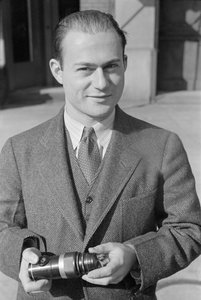 arthur rothstein
Arthur Rothstein (1915-1985): American photojournalist of the FSA & OWI, documenting the Great Depression, Dust Bowl, and rural life. Powerful social realism.
The Farm Security Administration (FSA) project, initiated during the Great Depression, represents a watershed moment in documentary photography. Arthur Rothstein, John Vachon, and others were tasked with documenting the plight of rural Americans – the Dust Bowl farmers, migrant workers, and those struggling to survive amidst economic devastation. This wasn’t simply about creating a historical record; it was about raising awareness and garnering support for New Deal programs.
Photographers like Rothstein embraced social realism, portraying the harsh realities of poverty and displacement with unflinching honesty. Vachon's candid style captured the quiet dignity of everyday people, while others focused on the systemic issues that contributed to their suffering. The FSA photographs weren’t just images; they were powerful tools for advocacy, shaping public perception and influencing policy decisions. The project also highlighted the importance of photography as a form of social commentary, demonstrating its ability to mobilize empathy and inspire action.
Ethical Considerations & The Evolving Role of Documentary Photography
As documentary photography gained prominence, so too did questions about ethical responsibility. How much intervention is acceptable? How do you represent vulnerable subjects with dignity and respect? These are questions that have plagued the field since its inception. While early photographers often operated under different standards – sometimes staging scenes or manipulating narratives – later generations increasingly emphasized objectivity and transparency.
The rigid ethical framework of photojournalism demands an honest and impartial approach, telling a story in strictly journalistic terms. However, even with the best intentions, it’s impossible to be entirely neutral. The photographer's own biases and perspectives inevitably shape the final image. Today, documentary photographers are increasingly aware of these complexities, striving for collaborative approaches that empower their subjects and prioritize ethical representation.
Documentary Photography Today: Continuing the Legacy in a Digital Age
In the digital age, documentary photography continues to evolve. The proliferation of cameras and social media has democratized access to image-making, but it’s also created new challenges – concerns about authenticity, misinformation, and the saturation of visual content. Despite these challenges, the core principles of documentary photography remain relevant: bearing witness, raising awareness, and inspiring social change.
Contemporary photographers are exploring new forms of storytelling, utilizing multimedia platforms and engaging with communities in innovative ways. The legacy of pioneers like Parks and Smith continues to inspire a new generation of visual storytellers dedicated to documenting the complexities of our world. At OriginalUniqueArt.com, we celebrate this enduring tradition by offering high-quality reproductions of iconic documentary photographs, allowing you to bring these powerful images into your home and reflect on their profound message. Explore our collection today and discover the transformative power of visual storytelling.