Text size

() ·

A painting made for you, by hand

Two Home Homes

Hand Made Oil Reproduction

Hand-painted oil on canvas in your size and frame, made to order by our artists. ( Switch to Print Switch to Digital Image)

Collectible Description

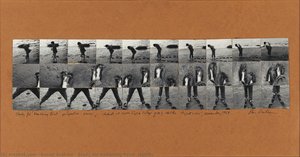
Dan Graham's "Two Home Homes" (1966) is a captivating photographic exploration of space and perception, challenging our understanding of domesticity and urban environments. A seminal work of conceptual art.

Artist Biography

Discover Dan Graham (1942-2022), a conceptual artist renowned for mirrored pavilions, photography, video art & insightful writing. He challenged perceptions of space and society with minimalist structures.

from ·

Chapter 1

How large should it be?

Slide to change the size; the picture on the left shows the frame at its real width. The proportions of the original are kept.

Standard
custom
CM
INCH

Pick from our preset sizes that match the artwork's original proportions.

width
height

Type the width and the height you need, to fit your frame or your wall. This is hand-painted, so for a size with a different shape the artist can paint a bit more around the picture, or cut a bit — you choose. We send you a digital mockup to approve before the painting starts. The picture shown on this page does not show the real result — only the mockup does.

Chapter 2

How should it arrive?

Choose the edges of the stretched canvas

Choose your frame

Corner sample of the WhiteWrap canvas edge finish, stretched on solid wood bars
White $1
Corner sample of the BlurSideWrap canvas edge finish, stretched on solid wood bars
Blurside $1
Corner sample of the ExtendedWrap canvas edge finish, stretched on solid wood bars
Extended $1
Corner sample of the P118B picture frame: moulded polystyrene, 5 cm wide and 3 cm thick
P118B $10
Corner sample of the P118H picture frame: moulded polystyrene, 5 cm wide and 3 cm thick
P118H $10
Corner sample of the P118W picture frame: moulded polystyrene, 5 cm wide and 3 cm thick
P118W $10
Corner sample of the P438Z picture frame: moulded polystyrene, 5.5 cm wide and 3.5 cm thick
P438Z $10
Corner sample of the P508JH picture frame: moulded polystyrene, 7 cm wide and 3.5 cm thick
P508JH $12
Corner sample of the P508YH picture frame: moulded polystyrene, 7 cm wide and 3.5 cm thick
P508YH $12
Corner sample of the P805H picture frame: moulded polystyrene, 5 cm wide and 3.5 cm thick
P805H $10
Corner sample of the P805Z picture frame: moulded polystyrene, 5 cm wide and 3.5 cm thick
P805Z $10
Corner sample of the P919BZ picture frame: moulded polystyrene, 7 cm wide and 3.5 cm thick
P919BZ $10
Corner sample of the P919G picture frame: moulded polystyrene, 7 cm wide and 3.5 cm thick
P919G $10
Corner sample of the P919XJ picture frame: moulded polystyrene, 7 cm wide and 3.5 cm thick
P919XJ $10
Corner sample of the P959ZH picture frame: moulded polystyrene, 5 cm wide and 3 cm thick
P959ZH $10
Corner sample of the P968JZ picture frame: moulded polystyrene, 6 cm wide and 4 cm thick
P968JZ $12
Corner sample of the W106C picture frame: solid wood, 5 cm wide and 3 cm thick
W106C $8
Corner sample of the W218G picture frame: solid wood, 5 cm wide and 3 cm thick
W218G $10
Corner sample of the W218JH picture frame: solid wood, 5 cm wide and 3 cm thick
W218JH $8
Corner sample of the W218Y picture frame: solid wood, 5 cm wide and 3 cm thick
W218Y $10
Corner sample of the W307PJ picture frame: solid wood, 6 cm wide and 3 cm thick
W307PJ $10
Corner sample of the W316G picture frame: solid wood, 6 cm wide and 3 cm thick
W316G $10
Corner sample of the W316PJ picture frame: solid wood, 6 cm wide and 3 cm thick
W316PJ $8
Corner sample of the W316Y picture frame: solid wood, 6 cm wide and 3 cm thick
W316Y $10
Corner sample of the W398PJ picture frame: solid wood, 5 cm wide and 3 cm thick
W398PJ $8
Corner sample of the W4111J picture frame: solid wood, 6.5 cm wide and 3.5 cm thick
W4111J $10
Corner sample of the W500HY picture frame: solid wood, 7 cm wide and 5 cm thick
W500HY $15
Corner sample of the W500JH picture frame: solid wood, 7 cm wide and 5 cm thick
W500JH $15
Corner sample of the W692G picture frame: solid wood, 8 cm wide and 4 cm thick
W692G $12
Corner sample of the W849H picture frame: solid wood, 5 cm wide and 3 cm thick
W849H $8
Corner sample of the W940BG picture frame: solid wood, 7.5 cm wide and 4.5 cm thick
W940BG $15
Corner sample of the W953PJ picture frame: solid wood, 6 cm wide and 3.5 cm thick
W953PJ $8
Corner sample of the H24-GOLD picture frame: carved wood with gesso, 10 cm wide and 6 cm thick
H24-GOLD $30
Corner sample of the H24-SILVER picture frame: carved wood with gesso, 10 cm wide and 6 cm thick
H24-SILVER $30
Corner sample of the H36-GOLD picture frame: carved wood with gesso, 15 cm wide and 6.5 cm thick
H36-GOLD $45
Corner sample of the H36-SILVER picture frame: carved wood with gesso, 15 cm wide and 6.5 cm thick
H36-SILVER $45
Frame preview
Framed

Moulding: . Overall size with the frame: .

Chapter 3

Who paints it, and should anything change?

Examples of what can be changed: Replace face with customer photo; Add pet (e.g., replace cat with dog); Include hidden message in background; Change background landscape or elements.
After order, OriginalUniqueArt.com team will email client for instructions and provide a mockup preview

Worldwide Delivery () in 3/4 weeks instead of standard 5 weeks. (1 November). No compromise on quality.

Chapter 4

The finishing touches

A nameplate, as in a museum?

Engraved Bronze Plaque Details

This elegant plaque features the artist's name and the title of the artwork, finely engraved for a timeless presentation.

It is made from bronze with a refined, elegant finish. The text is precisely laser-engraved for a sharp and permanent result. Measuring 9x2 cm, the plaque is compact yet easy to read. It's built to be durable and scratch-resistant, offering a professional, museum-quality look. Mounting is simple thanks to the included adhesive backing.

Transparent Acrylic Plaque Details

The plaque includes essential engraved details such as the artist's name, the title of the artwork, the date it was created, the type of media used-like oil on canvas or watercolor-a brief description of the piece, and a QR code that links to the complete artwork information.

It is crafted from clear acrylic, offering a sleek, modern appearance. The text is UV-engraved in black to ensure strong visual contrast. With a size of 10x15 cm, it ensures optimal readability. It comes equipped with two metal hooks for secure wall mounting. The plaque is designed to be weather-resistant, making it suitable for various environments, and it includes interactive features that work seamlessly with smartphone scanning.

Black Acrylic Plaque Details

This elegant plaque includes engraved information such as the artist's name, the title of the artwork, the date it was created, the type of media used (like oil on canvas or watercolor), a short description of the artwork, and a QR code for quick access to more information.

The plaque itself is made from refined black acrylic with a premium finish. The text is laser-engraved in white for high contrast and readability. Its size is 10x15 cm, designed to be easy to read. It comes with two metal hooks for professional mounting. The design is sleek and fits any interior style. It is also weather-resistant and durable, with built-in digital integration for mobile compatibility.

A protective varnish?

When do you need it?

Chapter 5

Your painting, as you ordered it

Two Home Homes

Reproduction Medium

Reproduction Size

-

Elite Senior Artist

More detail, finesse, and extra production time

-

Reproduction Frame

-

-

For artworks or reproductions larger than 105 cm (approximately 41 inches) on any side, the frame will be shipped as a kit, disassembled. This method ensures safe delivery and prevents damage during transport.

Professional assembly required - this is not a DIY product.
The kit must be assembled and the canvas stretched by an experienced professional framer, using wood glue (not supplied), a canvas stretching plier and clamps to hold the bars square while the glue dries. Incorrect assembly or uneven canvas tension can permanently damage the artwork and is not covered by our warranty.

  • All solid wood bars are included, precisely cut to size.

  • Assembled with the screws provided, plus wood glue for the corner joints, which is not supplied and must be sourced by your framer.

  • Professional tools are required and not included: a canvas stretching plier (tensioner) and clamps to hold the bars square while the glue dries.

Important:
The corner joints require wood glue, the bars must be held with clamps until the glue is fully dry, and tightening the canvas on the assembled frame requires a canvas stretching plier. None of these are included in the kit. Please arrange an experienced professional framer before ordering this size.

Nameplate

-

-

Protective Varnish

Glossy Varnish (enhances colors, protects against light/moisture)

-

Customize My Artwork

Examples of what can be changed: Replace face with customer photo; Add pet (e.g., replace cat with dog); Include hidden message in background; Change background landscape or elements.

-

Urgent

Worldwide Delivery () in 3/4 weeks instead of standard 5 weeks. (1 November). No compromise on quality.

-

Express Shipping

Worldwide Delivery () in 5 weeks. (8 November).

Included

Total Price

$ 300

Total Price $ 300

Glass option is only available in size under 110 CM

Included with every order

  • Free Worldwide Express Shipping
  • High-Quality Linen Canvas
  • Full Shipping Insurance
  • Customs Tax Refund Guarantee
  • True Color Matching Guarantee
  • 100-Day Return Policy (Defects Only)
  • 100% Money-Back Guarantee
  • Bulk Discount Offer

A Fragmented Reality: Dan Graham’s “Two Home Homes”

Dan Graham's "Two Home Homes," created in 1966, isn’t merely a photograph; it’s an invitation to reconsider the very nature of perception and space. This seemingly simple image – two modest brick houses with their front doors open – immediately destabilizes our expectations, hinting at a deeper conceptual engagement. Graham, a pivotal figure in the development of Conceptual Art, wasn't interested in replicating reality but rather in exposing its constructedness, challenging the viewer to actively participate in the process of seeing. The photograph’s stark black and white palette amplifies this effect, stripping away any superficial distractions and forcing us to confront the inherent artificiality of the scene.

The context surrounding “Two Home Homes” is crucial to understanding its significance. Graham was operating within a vibrant artistic milieu in New York during the 1960s – a period marked by experimentation with new media, performance art, and a growing skepticism towards traditional notions of representation. He drew heavily from Minimalism and Structuralism, employing techniques like mirrored pavilions and site-specific installations to explore how our experience of space is shaped by its physical boundaries and our own cognitive processes. “Two Home Homes” embodies this approach perfectly; it’s not about depicting two houses, but about creating a visual puzzle that prompts us to question the relationship between the image and reality.

Mirroring and Distortion: The Technique

The photograph itself is deceptively straightforward, yet reveals layers of complexity upon closer inspection. Graham utilized gelatin silver prints on paper, a technique known for its fine grain and tonal range. Crucially, he employed a process of double printing – essentially creating two identical images that were then combined. This layering introduces subtle distortions and shifts in perspective, subtly altering the spatial relationships within the scene. The slight blurring around the edges suggests an awareness of the photograph’s own materiality, reminding us that it's a representation, not a direct transcription of what was observed.

Furthermore, Graham incorporated graphite markings onto the prints – a deliberate act of intervention that further disrupts any sense of objective observation. These lines aren’t intended to add detail or enhance clarity; instead, they subtly alter the tonal values and create an unsettling feeling of unease. They serve as a visual reminder of the artist's hand in shaping the image, highlighting the inherent subjectivity involved in artistic creation.

Symbolism of Domesticity and Isolation

The two houses themselves are imbued with potent symbolism. The unassuming brick construction speaks to the commonplace, the everyday – yet this familiarity is immediately undermined by the photograph’s unsettling atmosphere. The open doors invite us into these spaces, suggesting a potential for connection or intimacy, but the stark lighting and the lack of any human presence create a sense of isolation and detachment. It's a scene frozen in time, devoid of narrative, prompting us to project our own interpretations onto the image.

The repetition of the architectural elements – the identical houses, the symmetrical arrangement – further reinforces this feeling of artificiality. Graham is deliberately stripping away any sense of individual character or personality, presenting a generalized representation of domestic space. This can be interpreted as a commentary on the alienation and anonymity of modern urban life, where individuals are often lost within the vastness of their surroundings.

A Legacy of Conceptual Inquiry

“Two Home Homes” remains a remarkably prescient work, anticipating many of the concerns that would dominate contemporary art in the decades following its creation. It’s a testament to Graham's ability to use seemingly simple visual elements – a photograph of two houses – to explore profound philosophical questions about perception, space, and the nature of reality. Reproductions of this piece offer more than just an image; they provide a portal into the mind of one of art history’s most innovative thinkers, inviting us to engage in a continuous dialogue with its enduring mysteries.

Questions & Answers

What does "Two Home Homes" by Daniel Graham depict, and in what mood?

"Two Home Homes" by Daniel Graham depicts brick houses, white doors, staircase, windows, urban landscape, 1966, americana, in a calm mood. Subject and atmosphere together describe the work.

How do the colors of "Two Home Homes" by Daniel Graham relate to its emotion?

In "Two Home Homes", earthy colors accompany a reflective feeling.

What atmosphere does "Two Home Homes" have?

The overall mood of "Two Home Homes" by Daniel Graham is calm. The mood describes the general atmosphere of the work.

More about this painting

Preview AR preview Switch to Print Switch to Digital Image Send
Details Guide Add to favorites Download Similars X-Ray Diaporama Q&A Stats

In numbers

  • 1966the year it was painted
  • 29frames to choose from
  • standard sizes, in its own proportions
  • 5weeks to paint and deliver it

About the original

Dimensions
27.0 x 35.0 cm
Daniel Graham

Daniel Graham

1942 - 2022, United States of America

Quick facts about Daniel Graham

  • Full Name: Daniel Graham
  • Nationality: American
  • Date Of Birth: 1942
  • Date Of Death: 2022
  • Place Of Birth: Urbana, United States of America
  • Notable Artworks:
    • Detumescence
    • Two Home Homes
    • The Present
  • Artistic Movement Or Style: Conceptual art
  • Artists Who Influenced This Artist:
    • Sol LeWitt
    • Robert Smithson
  • Artists Or Movements Influenced By This Artist:
    • Minimalism
    • Relational Aesthetics

Artist Biography

A Life Interwoven with Perception: The World of Dan Graham

Dan Graham, born Daniel Harry Ginsberg in Urbana, Illinois, in 1942, was an artist who defied easy categorization. His passing in New York City in February 2022 marked the loss of a truly pivotal figure in conceptual art, one whose work consistently challenged our understanding of space, perception, and the very act of looking. Graham’s journey wasn't rooted in formal artistic training; instead, it blossomed from an inquisitive mind and a willingness to engage with the world around him—a world he then meticulously deconstructed and re-presented through diverse mediums. His early life was marked by a rejection of conventional paths, dropping out of high school and finding his initial footing not as an artist, but as a gallery director. This experience, running the John Daniels Gallery in New York during the 1960s, proved formative. Surrounded by emerging talents like Sol LeWitt, Robert Smithson, and Donald Judd, Graham absorbed the burgeoning currents of Minimalism and Conceptual art, shaping his own artistic trajectory. It was within this vibrant scene that he began to formulate a practice that would consistently blur the boundaries between disciplines.

From Text to Transparency: The Evolution of an Artistic Vision

Graham’s early work demonstrated a fascination with systems and structures—both visual and textual. He moved fluidly between writing, photography, and performance, often combining these elements in innovative ways. His photographic series *Homes for America* (1966-67) stands as an iconic example of this period. These seemingly objective photographs of suburban houses, accompanied by Graham’s analytical text, weren't merely documenting architectural forms; they were dissecting the social and psychological implications of postwar American suburbia—the uniformity, the isolation, the underlying anxieties. This exploration of societal norms through a cool, detached lens became a hallmark of his practice. As he moved into the 1970s, Graham began to experiment with video and performance art, further blurring the lines between artist, viewer, and subject. *Performer/Audience/Mirror* (1975) exemplifies this shift—a work where Graham positioned himself between an audience and a mirror, creating a dynamic interplay of observation, reflection, and self-awareness. This exploration of perception would ultimately lead to his most recognizable creations: the pavilions. These structures, typically constructed from steel and glass, weren't simply sculptures; they were architectural interventions designed to disrupt our spatial awareness. The use of two-way mirrors created an unsettling sense of transparency and surveillance, forcing viewers to confront their own image and question their relationship to the surrounding environment.

The Pavilion as a Stage for Interaction

Graham’s pavilions are arguably his most enduring legacy. Beginning in the late 1970s, these structures evolved from smaller-scale experiments into increasingly ambitious architectural projects. They weren't intended as enclosed spaces but rather as open platforms—stages for interaction and observation. The mirrored surfaces created a disorienting effect, reflecting the surrounding landscape and the viewers themselves, effectively dissolving the boundaries between inside and outside. This deliberate manipulation of space wasn’t merely aesthetic; it was deeply conceptual. Graham sought to challenge our preconceived notions about architecture, sculpture, and the very nature of perception. He drew inspiration from diverse sources—from the functionalism of modernist architecture to the psychological theories of surveillance and control. His pavilions weren't simply objects to be admired; they were environments designed to provoke thought and encourage self-reflection. They became sites where viewers were forced to acknowledge their own presence, their own vulnerability, and their own role in constructing meaning.

Beyond the Visual: A Polymathic Approach

To understand Dan Graham fully, one must recognize his remarkable breadth of intellectual curiosity. He wasn’t solely a visual artist; he was also a prolific writer, critic, and commentator on culture. His essays ranged from in-depth analyses of art theory to insightful reviews of rock music—a passion that informed much of his work. He even delved into the unlikely subject of Dwight D. Eisenhower's paintings and the television show starring Dean Martin, demonstrating a willingness to explore unconventional subjects and find connections between seemingly disparate fields. This polymathic approach enriched his artistic practice, providing him with a unique perspective on the world and allowing him to engage with a wide range of ideas. He saw art not as an isolated discipline but as part of a larger cultural conversation—a conversation he actively sought to shape through his work and writing. The Present, a collection of his essays, offers a compelling glimpse into his critical thinking and his unwavering commitment to challenging conventional wisdom.

A Lasting Influence: Graham’s Legacy in Contemporary Art

Dan Graham's influence on contemporary art is profound and far-reaching. His work paved the way for generations of artists who explore themes of perception, space, and social interaction. He challenged the traditional boundaries between disciplines, demonstrating the power of combining visual art with writing, performance, and architecture. His pavilions continue to inspire architects and designers, while his conceptual approach has influenced countless artists working in a variety of mediums. Graham’s legacy isn't simply about the objects he created; it’s about the questions he raised—questions that remain relevant today. He forced us to confront our own assumptions about art, architecture, and the world around us. His work reminds us that perception is subjective, that space is fluid, and that the act of looking is never neutral. Museums like The Museum of Modern Art in New York and The Phillips Collection in Washington D.C. preserve his contributions for future generations to study and appreciate. He leaves behind a body of work that continues to resonate with its intellectual rigor, its aesthetic innovation, and its unwavering commitment to challenging the status quo—a testament to the enduring power of an artist who dared to see the world differently.

Quick Facts

  • Movement: Conceptual art
  • Influences: Space exploration
  • Notable elements: Mirrored pavilions
  • Artistic style: Minimalist
  • Year: 1966
  • Subject or theme: Spatial perception

Art Quiz

There is only one correct answer for each question.

Question 1:
What is the primary subject matter depicted in ‘Two Home Homes’?
Question 2:
In what year was ‘Two Home Homes’ created?
Question 3:
The artist, Dan Graham, is known for his work exploring which of the following concepts?
Question 4:
What type of photographic process was used to create ‘Two Home Homes’?
Question 5:
According to the provided information, what is Dan Graham’s birthplace?