Text size

() ·

A print made for you, with care

untitled (8000)

Giclée / Art Print

Museum-quality giclée or canvas print with fast production and flexible finish options. ( Buy Hand Made Painting Switch to Digital Image)

Collectible Description

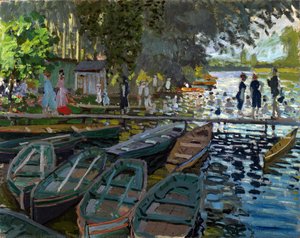
Experience Claude Monet's 'Untitled (8000)' – a vibrant city street scene brimming with life and light! This hand-painted reproduction captures the essence of Impressionism, showcasing bustling urban energy & fleeting moments.

Artist Biography

A founder of Impressionism, Monet is famed for his Water Lilies series. Discover his breathtaking landscapes and vibrant colors today.

from ·

Chapter 1

On which medium should it be printed?

Canvas is printed with giclée inks and can be stretched or framed like a painting; paper comes flat, or framed behind glass.

Chapter 2

How large should it be?

Slide to change the size; the picture on the left shows the frame at its real width. The proportions of the original are kept.

Standard
custom
CM
INCH

Pick from our preset sizes that match the artwork's original proportions.

width
height

Type the width and the height you need, to fit your frame or your wall. A print can only be cut, never made bigger than the picture, so a size with a different shape loses a part of the image. We send you a digital mockup to approve before we print anything. The picture shown on this page does not show the real cut — only the mockup does.

Chapter 3

How should it arrive?

Choose the edges of the stretched canvas

Choose your frame

Corner sample of the WhiteWrap canvas edge finish, stretched on solid wood bars
White $1
Corner sample of the BlurSideWrap canvas edge finish, stretched on solid wood bars
Blurside $1
Corner sample of the ExtendedWrap canvas edge finish, stretched on solid wood bars
Extended $1
Corner sample of the P118B picture frame: moulded polystyrene, 5 cm wide and 3 cm thick
P118B $10
Corner sample of the P118H picture frame: moulded polystyrene, 5 cm wide and 3 cm thick
P118H $10
Corner sample of the P118W picture frame: moulded polystyrene, 5 cm wide and 3 cm thick
P118W $10
Corner sample of the P438Z picture frame: moulded polystyrene, 5.5 cm wide and 3.5 cm thick
P438Z $10
Corner sample of the P508JH picture frame: moulded polystyrene, 7 cm wide and 3.5 cm thick
P508JH $12
Corner sample of the P508YH picture frame: moulded polystyrene, 7 cm wide and 3.5 cm thick
P508YH $12
Corner sample of the P805H picture frame: moulded polystyrene, 5 cm wide and 3.5 cm thick
P805H $10
Corner sample of the P805Z picture frame: moulded polystyrene, 5 cm wide and 3.5 cm thick
P805Z $10
Corner sample of the P919BZ picture frame: moulded polystyrene, 7 cm wide and 3.5 cm thick
P919BZ $10
Corner sample of the P919G picture frame: moulded polystyrene, 7 cm wide and 3.5 cm thick
P919G $10
Corner sample of the P919XJ picture frame: moulded polystyrene, 7 cm wide and 3.5 cm thick
P919XJ $10
Corner sample of the P959ZH picture frame: moulded polystyrene, 5 cm wide and 3 cm thick
P959ZH $10
Corner sample of the P968JZ picture frame: moulded polystyrene, 6 cm wide and 4 cm thick
P968JZ $12
Corner sample of the W106C picture frame: solid wood, 5 cm wide and 3 cm thick
W106C $8
Corner sample of the W218G picture frame: solid wood, 5 cm wide and 3 cm thick
W218G $10
Corner sample of the W218JH picture frame: solid wood, 5 cm wide and 3 cm thick
W218JH $8
Corner sample of the W218Y picture frame: solid wood, 5 cm wide and 3 cm thick
W218Y $10
Corner sample of the W307PJ picture frame: solid wood, 6 cm wide and 3 cm thick
W307PJ $10
Corner sample of the W316G picture frame: solid wood, 6 cm wide and 3 cm thick
W316G $10
Corner sample of the W316PJ picture frame: solid wood, 6 cm wide and 3 cm thick
W316PJ $8
Corner sample of the W316Y picture frame: solid wood, 6 cm wide and 3 cm thick
W316Y $10
Corner sample of the W398PJ picture frame: solid wood, 5 cm wide and 3 cm thick
W398PJ $8
Corner sample of the W4111J picture frame: solid wood, 6.5 cm wide and 3.5 cm thick
W4111J $10
Corner sample of the W500HY picture frame: solid wood, 7 cm wide and 5 cm thick
W500HY $15
Corner sample of the W500JH picture frame: solid wood, 7 cm wide and 5 cm thick
W500JH $15
Corner sample of the W692G picture frame: solid wood, 8 cm wide and 4 cm thick
W692G $12
Corner sample of the W849H picture frame: solid wood, 5 cm wide and 3 cm thick
W849H $8
Corner sample of the W940BG picture frame: solid wood, 7.5 cm wide and 4.5 cm thick
W940BG $15
Corner sample of the W953PJ picture frame: solid wood, 6 cm wide and 3.5 cm thick
W953PJ $8
Corner sample of the H24-GOLD picture frame: carved wood with gesso, 10 cm wide and 6 cm thick
H24-GOLD $30
Corner sample of the H24-SILVER picture frame: carved wood with gesso, 10 cm wide and 6 cm thick
H24-SILVER $30
Corner sample of the H36-GOLD picture frame: carved wood with gesso, 15 cm wide and 6.5 cm thick
H36-GOLD $45
Corner sample of the H36-SILVER picture frame: carved wood with gesso, 15 cm wide and 6.5 cm thick
H36-SILVER $45
Frame preview
Framed

Moulding: . Overall size with the frame: .

Chapter 4

Worldwide Delivery () in 2 weeks instead of standard 4/5 weeks. (22 November)

The finishing touches

A nameplate, as in a museum?

Engraved Bronze Plaque Details

This elegant plaque features the artist's name and the title of the artwork, finely engraved for a timeless presentation.

It is made from bronze with a refined, elegant finish. The text is precisely laser-engraved for a sharp and permanent result. Measuring 9x2 cm, the plaque is compact yet easy to read. It's built to be durable and scratch-resistant, offering a professional, museum-quality look. Mounting is simple thanks to the included adhesive backing.

Transparent Acrylic Plaque Details

The plaque includes essential engraved details such as the artist's name, the title of the artwork, the date it was created, the type of media used-like oil on canvas or watercolor-a brief description of the piece, and a QR code that links to the complete artwork information.

It is crafted from clear acrylic, offering a sleek, modern appearance. The text is UV-engraved in black to ensure strong visual contrast. With a size of 10x15 cm, it ensures optimal readability. It comes equipped with two metal hooks for secure wall mounting. The plaque is designed to be weather-resistant, making it suitable for various environments, and it includes interactive features that work seamlessly with smartphone scanning.

Black Acrylic Plaque Details

This elegant plaque includes engraved information such as the artist's name, the title of the artwork, the date it was created, the type of media used (like oil on canvas or watercolor), a short description of the artwork, and a QR code for quick access to more information.

The plaque itself is made from refined black acrylic with a premium finish. The text is laser-engraved in white for high contrast and readability. Its size is 10x15 cm, designed to be easy to read. It comes with two metal hooks for professional mounting. The design is sleek and fits any interior style. It is also weather-resistant and durable, with built-in digital integration for mobile compatibility.

A protective varnish?

When do you need it?

Chapter 5

Your print, as you ordered it

untitled (8000)

Reproduction Medium

Reproduction Size

-

Reproduction Frame

-

-

For artworks or reproductions larger than 105 cm (approximately 41 inches) on any side, the frame will be shipped as a kit, disassembled. This method ensures safe delivery and prevents damage during transport.

Professional assembly required - this is not a DIY product.
The kit must be assembled and the canvas stretched by an experienced professional framer, using wood glue (not supplied), a canvas stretching plier and clamps to hold the bars square while the glue dries. Incorrect assembly or uneven canvas tension can permanently damage the artwork and is not covered by our warranty.

  • All solid wood bars are included, precisely cut to size.

  • Assembled with the screws provided, plus wood glue for the corner joints, which is not supplied and must be sourced by your framer.

  • Professional tools are required and not included: a canvas stretching plier (tensioner) and clamps to hold the bars square while the glue dries.

Important:
The corner joints require wood glue, the bars must be held with clamps until the glue is fully dry, and tightening the canvas on the assembled frame requires a canvas stretching plier. None of these are included in the kit. Please arrange an experienced professional framer before ordering this size.

Nameplate

-

-

Protective Varnish

Glossy Varnish (enhances colors, protects against light/moisture)

-

Urgent

Worldwide Delivery () in 2 weeks instead of standard 4/5 weeks. (22 November)

-

Express Shipping

Worldwide Delivery () in 4/5 weeks. (29 November).

Included

Total Price

$ 81

Total Price $ 81

Glass option is only available in size under 110 CM

Included with every order

  • Free Worldwide Express Shipping
  • High-Quality Linen Canvas
  • Full Shipping Insurance
  • Customs Tax Refund Guarantee
  • True Color Matching Guarantee
  • 100-Day Return Policy (Defects Only)
  • 100% Money-Back Guarantee
  • Bulk Discount Offer

The Urban Pulse: Monet’s “Untitled (8000)” – A Chronicle of Parisian Life

Claude Monet's "Untitled (8000)," a monumental depiction of a bustling city street, isn’t merely a snapshot of a Parisian scene; it’s a vibrant embodiment of the Impressionist philosophy. Painted around 1897-1898, during a period when Monet was deeply invested in capturing fleeting moments and the effects of light on urban landscapes, this work offers a profound glimpse into the heart of late 19th-century Parisian life. The painting’s scale—likely intended for a grand salon or public space—immediately commands attention, drawing the viewer into a dynamic tableau teeming with activity and human interaction.

Monet's technique here is characteristic of his mature Impressionist style. He eschews sharp lines and meticulous detail in favor of loose brushstrokes and a focus on capturing the *impression* of light and atmosphere. Notice how he uses broken color—small, distinct strokes of paint layered upon each other—to create an overall sense of luminosity and movement. The buildings recede into a hazy distance, rendered with soft, diffused tones, while the foreground figures are depicted with greater clarity, their forms partially obscured by the atmospheric haze. This deliberate blurring emphasizes the ephemeral nature of the scene – a transient moment frozen in time.

A Symphony of Light and Color

The color palette is remarkably rich and varied, reflecting Monet’s meticulous observation of light throughout the day. He masterfully employs complementary colors—such as blues and oranges, greens and reds—to create visual excitement and depth. The dappled sunlight filtering through the trees casts shifting patterns of light and shadow across the street, animating the scene with a palpable energy. The artist's use of color isn’t about realistic representation; it’s about conveying the *feeling* of being immersed in that particular moment – the warmth of the sun, the coolness of the shade, the vibrancy of the human presence.

Interestingly, this painting aligns with Monet’s broader project of documenting the changing seasons and atmospheric conditions at his beloved Giverny garden. While not a direct representation of Giverny, it shares a similar sensibility – an appreciation for the interplay of light, color, and nature within the urban environment. The inclusion of trees, though somewhat abstracted, provides a vital connection to the natural world, grounding the scene amidst the frenetic energy of the city.

Symbolism and Social Commentary

Beyond its purely aesthetic qualities, “Untitled (8000)” offers subtle insights into Parisian society at the turn of the century. The painting captures a diverse crowd – men in hats, women carrying baskets, children playing—reflecting the cosmopolitan nature of the city. The sheer number of people suggests a thriving metropolis, a hub of commerce and culture. While Monet doesn’t offer explicit social commentary, the scene implicitly speaks to the dynamism and vitality of urban life during this period of rapid industrialization and modernization.

Furthermore, the painting can be interpreted as an exploration of the relationship between humanity and nature within the confines of the city. The trees, though small in scale, provide a visual counterpoint to the towering buildings, reminding us of the enduring presence of the natural world even amidst the concrete jungle. It’s a poignant reminder that even in the midst of urban chaos, beauty and tranquility can still be found.

Bringing Monet's Vision Home

OriginalUniqueArt offers meticulously crafted hand-painted reproductions of “Untitled (8000),” allowing you to experience the magic of Monet’s brushstrokes firsthand. Our artists replicate his distinctive technique with exceptional skill, ensuring that every detail—from the subtle shifts in color to the delicate texture of the paint—is faithfully reproduced. Whether displayed in a grand salon or a cozy corner, this reproduction will bring a touch of Impressionist brilliance into your home and serve as a timeless testament to Monet’s artistic genius.

Explore our collection of Claude Monet reproductions today and discover the perfect piece to elevate your space with the enduring beauty of Parisian light and life. View this artwork.

Questions & Answers

Is "untitled (8000)" by Claude Monet a well-known artwork?

"untitled (8000)" by Claude Monet has a legendary popularity level. This classification reflects how widely the work is recognized.

What kind of piece is "untitled (8000)"?

In the catalog, "untitled (8000)" by Claude Monet is filed as wall art. The category helps find similar works.

At what size is "untitled (8000)" suggested for a living room?

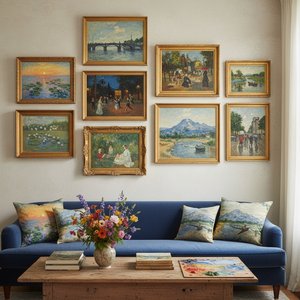
The recommended pairing for "untitled (8000)" by Claude Monet: a large print in a living room.

More about this painting

Preview AR preview Buy Hand Made Painting Switch to Digital Image Send
Details Guide Add to favorites Download Similars X-Ray Diaporama Q&A Stats

In numbers

  • 29frames to choose from
  • standard sizes, in its own proportions
  • 5weeks to paint and deliver it
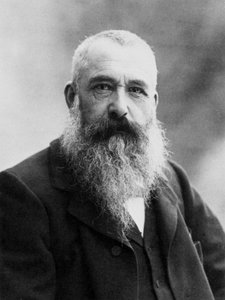
Claude Monet

Claude Monet

1840 - 1926, France

Quick facts about Claude Monet

  • Artistic Movement Or Style: Impressionism
  • Artists Or Movements Influenced By This Artist: ['Modernism']
  • Artists Who Influenced This Artist:
    • Eugène Boudin
    • Johan Jongkind
  • Full Name: Oscar-Claude Monet
  • Nationality: French
  • Notable Artworks:
    • Impression, Sunrise
    • Water Lilies
    • Haystacks
    • Rouen Cathedral
  • Place Of Birth: Paris, France
  • Date Of Birth: 1840
  • Date Of Death: 1926

Artist Biography

Early Life, Family and Training

Born in Paris, France, on 14 November 1840, Claude Monet entered a world of diverging expectations. While his father, Claude-Adolphe Monet, envisioned a more stable professional path for his son, his mother, Louise-Justine Aubrée Monet, offered a quiet support for his burgeoning creative inclinations. The family eventually settled in Le Havre, Normandy, where the coastal atmosphere would leave a lasting impression on the young boy. This period of childhood was marked by an early talent for drawing, a skill that would eventually lead him away from the commercial interests his father preferred.

Tragedy arrived in January 1857, when Monet was sixteen years old. The death of his mother, Louise-Justine, forced a sudden shift in his domestic life. He was sent to live with his aunt, Marie-Jeanne Lecadre, a widow who possessed significant wealth and no children of her own. This transition provided the stability necessary for his formal development. It was during these formative years that he encountered Eugène Boudin, a man who would fundamentally alter his perspective on the purpose of painting. Boudin introduced him to the practice of plein air painting, encouraging him to take his materials outdoors to capture the immediate reality of the natural world.

His training continued in the structured environments of Paris. He sought instruction at the Académie Suisse, studying under the academic history painter Charles Gleyre. This period of study allowed him to refine his technical abilities while navigating the tension between traditional academic methods and the more spontaneous, observational approach he had begun to favor. These early years of instruction and loss shaped the foundation of a career defined by the pursuit of light and atmosphere.

The Impressionist Movement and Style

As a founder of French Impressionism, Claude Monet acted as a key precursor to modernism. He was the most consistent and prolific practitioner of the movement's core philosophy, which sought to express a person's perceptions of nature. This pursuit was defined by plein air landscape painting, a method that required him to work directly on large-scale canvases out of doors. He would often return to his studio to rework and complete these pieces, bridging the gap between the immediate observation of the outdoors and the controlled environment of the studio.

His technical approach relied on unmediated colors and asymmetrical arrangements of forms. Rather than seeking a static representation, he developed a method of painting the same scene many times to capture the shifting effects of light and the passing of the seasons. This repetitive study allowed him to document how atmosphere and weather transformed a single subject. His work moved away from academic precision, focusing instead on the ephemeral qualities of the environment.

Life and Works in Argenteuil

In 1871, Monet moved to Argenteuil, a village situated northwest of Paris. This period marked a significant shift in his social and creative landscape. As his colleagues frequently joined him in the village, the area became closely associated with the burgeoning Impressionist movement. The setting provided a steady rhythm of life and light that would define much of his output during these years.

His domestic life was deeply intertwined with his artistic practice. His first wife, Camille Doncieux, became a frequent presence in his compositions, serving as a model for his figurative paintings throughout the 1860s and 1870s. In the spring of 1872, he turned his attention to the immediate surroundings of his home, producing several canvases within his own garden. These works captured the seasonal shifts of the local landscape through a lens of direct observation.

The Years in Giverny

In 1883, Monet moved to a house and property in Giverny, a village northwest of Paris. This relocation marked the beginning of a forty-three-year residency that would define his later existence. He did not merely inhabit the space; he actively shaped it, embarking on a vast landscaping project that transformed the grounds into a living subject. His hands were as much involved in the cultivation of the earth as they were in the application of pigment, as he planted thousands of flowers and engineered a water-lily pond to serve as a focal point for his observations.

The garden became a sanctuary of light and seasonal change. For the final thirty-one years of his life, his artistic focus narrowed toward the specificities of this environment. He sought to document the way light interacted with the water and the flora, often working directly from the garden to capture the immediate sensations of the landscape. This period was characterized by a devotion to the shifting atmosphere of his private estate, where the boundaries between the cultivated garden and the canvas began to blur.

Key Works and Series Paintings

Monet’s contribution to the evolution of modern art was cemented by a single work that inadvertently defined an entire movement. His 1873 painting, Impression, Sunrise, provided the name for the Impressionist movement, even as its loose handling and indistinct forms initially drew scorn from the establishment. This work signaled a departure from the rigid expectations of the Salon, favoring the immediate perception of light over the polished finish of academic tradition.

As his career progressed, his focus shifted toward the repetitive study of a single subject to capture the shifting nuances of light, weather, and time. This method of creating series paintings allowed him to document how a single scene transformed under different atmospheric conditions. He applied this rigorous observation to various subjects, including Haystacks, Rouen Cathedrals, and Poplars. Through these studies, he sought to render not just the object itself, but the very air and light that surrounded it.

The most extensive manifestation of this obsession occurred in his later years at Giverny. There, he produced a vast series of approximately 250 oil paintings titled Water Lilies (Nymphéas). These works focused on his flower garden and the water-lily pond, often painted while he contended with failing eyesight. The series represents a profound commitment to the ephemeral, attempting to fix the movement of water and the reflection of clouds upon its surface.

Circle of Artists and Influences

Monet’s artistic path was shaped by a series of vital encounters and mentorships that moved him away from the rigid constraints of academic tradition. His early training was significantly influenced by Eugène Boudin, who introduced him to the practice of plein air painting. This emphasis on working outdoors allowed him to observe the immediate effects of light on the landscape, a method that would define his entire career. He also drew inspiration from the Dutch landscapist Johan Jongkind, whose approach to nature helped refine his vision of the natural world.

In the studios of Paris, his development was furthered by the company of peers who would become central to the evolution of modern painting. While studying under Charles Gleyre at the Académie Suisse, he was a classmate of Auguste Renoir, alongside Frédéric Bazille and Camille Pissarro. These friendships were more than mere social connections; they were the foundations of a shared rebellion against the established Salon. Throughout his career, he worked and exhibited alongside figures such as Edgar Degas and Édouard Manet, contributing to a collective shift in how light and atmosphere were perceived on canvas.

Later Years and Death

The final decades of Monet's life were deeply intertwined with the landscape he had so meticulously cultivated. In 1892, he married Alice Hoschedé, a union that provided a sense of stability as he continued his obsessive study of light and atmosphere. His focus narrowed toward the water garden at Giverny, where the interplay of reflections and flora became his primary preoccupation. This period was marked by a relentless pursuit of the ephemeral, often working through the physical challenges of failing vision to capture the shifting nuances of his surroundings.

As his life drew to a close, the scale of his vision expanded. He moved toward large-scale works that sought to envelop the viewer, particularly through his series of water lily paintings. These works were not merely depictions of a pond but were attempts to record the very act of perception. His death occurred on 5 December 1926, leaving behind a body of work that had fundamentally altered the way nature was observed on canvas.

The transition from his personal life to his public presence was completed shortly after his passing. In May 1927, the Musée de l'Orangerie opened its doors to the public, providing a permanent home for his large-scale murals. This space was designed to honor the specific atmosphere he had spent his final years attempting to translate into paint.

Legacy and Global Influence

The influence of Claude Monet expanded significantly during the second half of the 20th century, as his presence in the global consciousness grew. He remains an undisputed titan of Impressionism, having been a key figure in the movement that transformed French painting during the latter half of the nineteenth century. His approach to light and atmosphere fundamentally altered how painters perceived the natural world, moving away from academic rigidity toward a more immediate, sensory experience of the landscape.

His late-career focus on the water-lily paintings produced a body of work that is among the most recognised and celebrated of the 20th century. These works, often characterized by their scale and focus on the reflections within his Giverny garden, moved beyond mere landscape to explore the very essence of perception. By documenting the shifting qualities of light through repetitive study, he provided a blueprint for modernism, influencing generations of artists who sought to capture the ephemeral nature of sight and color.

Quick Facts

  • Movement: Impressionism
  • Artist: Claude Monet
  • Location: Musée Marmottan
  • Notable elements: Urban scene, people

Art Quiz

There is only one correct answer for each question.

Question 1:
Based on the description, what is the primary focus of the painting ‘untitled (8000)’?
Question 2:
Which artistic movement is most closely associated with Claude Monet’s work, as evidenced by this painting?
Question 3:
The description mentions ‘plein air’ painting. What does this term refer to?
Question 4:
Considering Monet’s biography, what was a key element of his artistic development that involved painting outdoors?
Question 5:
The painting captures a sense of ‘movement and activity.’ What artistic technique might Monet have employed to convey this feeling?