Preview
 Send
Send Share
Share
 Details
 Guide
Guide

 Download
 Similars
 X-Ray
X-Ray Diaporama
 Q&A
Q&A Stats
StatsMontesquieu


 Read More
Giclée / Art Print
Museum-quality giclée or canvas print with fast production and flexible finish options. ( Buy Hand Made Painting Switch to Digital Image)




P118B $10

P118H $10

P118W $10

P438Z $10

P508JH $12

P508YH $12

P805H $10

P805Z $10

P919BZ $10

P919G $10

P919XJ $10

P959ZH $10

P968JZ $12

W106C $8

W218G $10

W218JH $8

W218Y $10

W307PJ $10

W316G $10

W316PJ $8

W316Y $10

W398PJ $8

W4111J $10

W500HY $15

W500JH $15

W692G $12

W849H $8

W940BG $15

W953PJ $8




Pick from our preset sizes that match the artwork's original proportions.

Type the width and the height you need, to fit your frame or your wall. A print can only be cut, never made bigger than the picture, so a size with a different shape loses a part of the image. We send you a digital mockup to approve before we print anything. The picture shown on this page does not show the real cut — only the mockup does.
Worldwide Delivery () in 2 weeks instead of standard 4/5 weeks. (7 November)

Free Worldwide Express Shipping

High-Quality Linen Canvas

Full Shipping Insurance

Customs Tax Refund Guarantee

True Color Matching Guarantee

100-Day Return Policy (Defects Only)

100% Money-Back Guarantee

Bulk Discount Offer
 Glass option is only available in size under 110 CM

Montesquieu
Giclée / Art Print
Reproduction Size
-


Total Price
$ 81
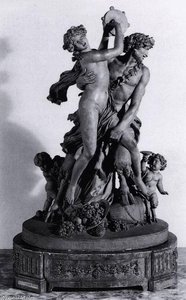
A Stoic Vision: Claude Michel (Clodion)’s Bust of Montesquieu
The stark elegance of Claude Michel’s (Clodion) marble bust of Montesquieu, created in 1783, is more than a mere portrait; it's a distilled essence of Enlightenment thought captured in stone. This remarkable sculpture, now meticulously reproduced, offers a profound glimpse into the mind of the influential French philosopher and his era – an age defined by reason, reform, and the burgeoning spirit of intellectual liberty. The piece immediately commands attention with its dramatic simplicity: a seated figure, rendered in the cool, contemplative tones of classical Neoclassicism, presented against a backdrop that emphasizes both the subject’s gravitas and the sculpture's inherent power.
Clodion, born Benjamin West in 1738, was a pivotal figure bridging the worlds of American and European art. Initially trained by his father, a tavern keeper, he eschewed formal artistic education, instead developing an extraordinary talent through observation and tireless practice. This unconventional path shaped his unique style – characterized by a remarkable realism combined with a subtle theatricality. His early years in Pennsylvania instilled a deep appreciation for the natural world, which is subtly reflected in the meticulous detail of Montesquieu’s features, particularly the thoughtful furrow of his brow and the carefully rendered texture of his hair. The sculpture's creation coincided with West’s move to Paris, where he quickly gained recognition for his portraiture skills, often commissioned by European nobility.
The Language of Stone: Technique and Form
Clodion’s mastery lies in his ability to coax a remarkable sense of life from cold marble. The bust is executed with painstaking precision, utilizing the subtractive method – carefully chipping away at the stone to reveal the form beneath. This technique, perfected over decades, allows for an incredible level of detail, particularly evident in the subtle modeling of Montesquieu’s face and the folds of his drapery. Note the way light plays across the surface, creating a dynamic interplay of highlights and shadows that imbue the sculpture with a palpable sense of volume and depth. The smooth, polished finish speaks to Clodion's dedication to achieving an almost photographic realism – a testament to his keen eye for detail and his understanding of how light interacts with different materials.
The composition itself is carefully considered. Montesquieu’s seated posture conveys a sense of intellectual authority and quiet contemplation, while the elevated pedestal subtly reinforces his importance. The three-quarter view allows us to fully appreciate the nuances of his expression – a mixture of seriousness, wisdom, and perhaps even a hint of melancholy. The restrained use of drapery adds to the sculpture’s elegance without distracting from the central figure.
Symbolism and the Enlightenment
More than just a likeness, Clodion's bust is laden with symbolic meaning. Montesquieu, renowned for his theories on separation of powers and the importance of individual liberty, embodies the core tenets of the Enlightenment. His thoughtful gaze invites us to contemplate the complexities of governance and the pursuit of knowledge. The classical style itself – characterized by its emphasis on reason, order, and harmony – reflects the philosophical ideals that shaped the era. The choice of marble, a material associated with permanence and intellectual pursuits, further underscores the sculpture’s significance as a celebration of Enlightenment thought.
Furthermore, the bust's creation in 1783, just before the French Revolution, adds another layer of historical context. It represents a moment of intense intellectual ferment – a time when traditional hierarchies were being challenged and new ideas were rapidly spreading across Europe. The sculpture serves as a poignant reminder of the philosophical currents that ultimately led to profound social and political upheaval.
A Timeless Reflection: Emotional Impact and Reproduction
Clodion’s bust of Montesquieu is not merely an artistic achievement; it's a powerful emotional experience. The sculpture’s quiet dignity and intellectual intensity evoke a sense of reverence for the philosopher’s legacy and a reflection on our own pursuit of knowledge and understanding. The reproduction, meticulously crafted to capture every nuance of the original, offers a remarkable opportunity to bring this timeless work of art into your home or office.
Whether displayed as a statement piece in a study or a subtle accent in a salon, Clodion’s bust is sure to spark conversation and inspire contemplation. It's a testament to the enduring power of art to capture not only likeness but also the spirit of an age – a reminder that even across centuries, the pursuit of wisdom remains a fundamental human endeavor.
Questions & Answers
Where do the visitors of "Montesquieu" by Claude Michel (Clodion) come from?
A Stats page exists for "Montesquieu". It charts the monthly visits of the artwork and of the artist's other works, with country and language breakdowns.
How do medium and movement combine in "Montesquieu"?
"Montesquieu" is made in acrylic on canvas, in the Neoclassical Style style.
How light is "Montesquieu" overall?
Overall, "Montesquieu" is recorded as deep_shadow. Perceived brightness describes how light or dark the work appears.
Artist Biography
The Master of Clay: The Life and Art of Clodion
Born in Nancy, France, the sculptor known to history as Clodion—or Claude Michel—emerged as one of the most captivating figures of the late eighteenth century. His journey into the heart of the French art world began in 1755 when he arrived in Paris, entering the prestigious workshop of his maternal uncle, Lambert-Sigisbert Adam. This early immersion in a lineage of skilled sculptors provided him with a foundation of technical excellence that would later allow him to transcend the boundaries of traditional medium. While many of his contemporaries sought permanence in marble or bronze, Clodion found his true voice in the tactile, intimate world of terracotta.
His development was profoundly shaped by his travels and his encounters with the classical past. After winning the prestigious Prix de Rome, he moved to Italy, where he shared a studio with the renowned Jean-Antoine Houdon. It was during this period that Clodion deeply studied the nuances of antique, Renaissance, and Baroque sculpture. This exposure to the grace of antiquity infused his work with a sense of timelessness, even as he remained firmly rooted in the playful, light-hearted spirit of the Rococo style. He possessed an extraordinary gift for capturing fleeting emotions and dynamic movement within the soft, malleable confines of clay, creating works that felt alive even before they were fully realized.
A Legacy of Elegance and Emotion
Clodion’s oeuvre is a testament to his ability to blend classical mythology with a palpable sense of human vitality. His sculptures often feature mythological figures—satyrs, nymphs, and bacchantes—engaged in scenes of Dionysian ecstasy or tender interaction. In works such as Satyr and Bacchante, one can observe the masterful interplay between earthly passion and idealized beauty. He had a unique talent for modeling musculature with anatomical precision while maintaining an ethereal grace that prevented his figures from feeling heavy or static. This mastery made his terracotta pieces highly sought after; indeed, it is noted that his works were often purchased by admirers even before they were completed.
As the artistic landscape shifted from the Rococo toward the more restrained Neoclassical movement, Clodion’s work evolved to reflect these changing sensibilities. His later pieces, such as the marble statue of Montesquieu, demonstrate a profound stillness and a capacity for intellectual gravity, capturing the contemplative power of Enlightenment thought. Yet, even amidst the rise of Neoclassicism, he never lost his ability to evoke the whimsical and the romantic. Whether decorating functional objects like clocks and vases or creating independent sculptural masterpieces, Clodion’s touch remained unmistakable—a delicate balance of technical rigor and poetic inspiration that continues to enchant viewers in collections around the world.

Claude Michel (Clodion)
1738 - 1814 , France
Quick Facts
- Artistic Movement Or Style: Rococo and Neoclassical
- Artists Who Influenced This Artist:
- Lambert-Sigisbert Adam
- Jean-Baptiste Pigalle
- Full Name: Claude Michel
- Nationality: French
- Notable Artworks:
- Satyr and Bacchante
- Nymph and Faun
- Dance of Time
- Montesquieu
- Amor and Psyche
- The Intoxication of Wine
- Place Of Birth: Nancy, France
- Date Of Birth: 1738
- Date Of Death: 1814
Related Articles

The Enduring Form: Exploring Themes & Techniques in Sculpture Across Historical Periods
Explore the rich history of sculpture from ancient masterpieces to contemporary innovations. Discover key techniques, influential artists & investment potential for discerning art collectors.
Timeless Grandeur: Exploring the Eternal Beauty and Art-Historical Legacy of Marble Sculpture
Explore the profound legacy of marble sculpture, from Classical antiquity to Neoclassical mastery. A definitive guide for elite collectors and designers seeking to integrate the luminous, eternal beauty of stone into sophisticated, high-end architectural spaces.

Bronze Sculptures That Defined Art History | OriginalUniqueArt
Journey through art history with our Top 10 bronze sculptures! Explore masterpieces by Rodin, Michelangelo & more. Discover stories behind iconic statues and find museum-quality reproductions for your home decor at OriginalUniqueArt.com.

The Enduring Allure of Marble in Art History: From Classical Sculpture to Modern Abstraction
Explore the captivating history of marble sculpture from ancient Greece to modern art. Discover renowned artists like Canova & Michelangelo, carving techniques, and investment insights at OriginalUniqueArt.

Timeless Elegance: A Complete Guide to the Sublime Beauty and Artistry of Marble Sculpture
Discover the sublime beauty of marble art through an expert exploration of Renaissance and Neoclassical masterpieces. From the delicate textures of Carpeaux to the grandeur of Sansovino, immerse yourself in a guide to timeless elegance and sculptural perfection.