

 Preview
 Send
Send Share
Share
 Details
 Guide
Guide

 Download
 Similars
 X-Ray
X-Ray Diaporama
 Stats
StatsUSA. Hampton, Virginia. 1962.


 Read More
The artwork displayed on this page is protected by copyright law, which means we cannot legally create or sell an identical reproduction. This protection is enforced under international agreements such as the Berne Convention and by national laws, including those outlined by the U.S. Copyright Law - Title 17.
This method fully complies with copyright regulations because it does not involve copying or duplicating the protected artwork. Instead, it is a creative reinterpretation - a new painting that is influenced by the original but not identical to it.
Giclée / Art Print
Museum-quality giclée or canvas print with fast production and flexible finish options. ( Buy Hand Made Painting Switch to Digital Image)




P118B $10

P118H $10

P118W $10

P438Z $10

P508JH $12

P508YH $12

P805H $10

P805Z $10

P919BZ $10

P919G $10

P919XJ $10

P959ZH $10

P968JZ $12

W106C $8

W218G $10

W218JH $8

W218Y $10

W307PJ $10

W316G $10

W316PJ $8

W316Y $10

W398PJ $8

W4111J $10

W500HY $15

W500JH $15

W692G $12

W849H $8

W940BG $15

W953PJ $8




Pick from our preset sizes that match the artwork's original proportions.

Type the width and the height you need, to fit your frame or your wall. A print can only be cut, never made bigger than the picture, so a size with a different shape loses a part of the image. We send you a digital mockup to approve before we print anything. The picture shown on this page does not show the real cut — only the mockup does.
Worldwide Delivery () in 2 weeks instead of standard 4/5 weeks. (22 October)

Free Worldwide Express Shipping

High-Quality Linen Canvas

Full Shipping Insurance

Customs Tax Refund Guarantee

True Color Matching Guarantee

100-Day Return Policy (Defects Only)

100% Money-Back Guarantee

Bulk Discount Offer
 Glass option is only available in size under 110 CM

USA. Hampton, Virginia. 1962.
Giclée / Art Print
Reproduction Size
-


Total Price
$ 81
Bruce Davidson’s “USA. Hampton, Virginia. 1962.” – A Moment Frozen in Time
The photograph by Bruce Davidson, titled "USA. Hampton, Virginia. 1962.," isn't merely a depiction of an event; it’s a distillation of an era—a searing indictment of racial prejudice simmering beneath the veneer of American civility during the Cold War years. Captured on Kodak film in 1962, this image transcends its documentary origins to become a timeless emblem of injustice and quiet dignity. Davidson's masterful composition centers around a young Black man standing before a window emblazoned with “White Only,” instantly establishing a palpable tension that radiates from the frame.- Composition & Technique: Davidson’s eye for detail is evident in his deliberate framing, prioritizing symmetry and utilizing strong diagonal lines to guide the viewer's gaze. The photograph leverages dramatic chiaroscuro—the interplay of light and shadow—to sculpt the man’s face and emphasize the stark contrast between flesh tones and the oppressive signage. Lines are primarily defined by architectural elements – the window frame and building façade – creating a sense of confinement and reinforcing the symbolic weight of the scene.
- Historical Context: The photograph was taken during the height of the Civil Rights Movement, specifically in Hampton Roads, Virginia, where segregation laws persisted despite growing calls for equality. Davidson’s decision to document this confrontation speaks volumes about his commitment to confronting uncomfortable truths and amplifying marginalized voices.
- Symbolism & Emotion: Beyond its visual elements, “USA. Hampton, Virginia. 1962.” carries profound symbolic resonance. The "White Only" sign represents the dehumanizing logic of segregation—a deliberate attempt to deny basic human rights based solely on race. Simultaneously, the man’s posture conveys a contemplative gaze, suggesting both defiance and sorrow; he observes the injustice unfolding before him with unwavering resolve yet burdened by its inescapable reality.
- Material & Medium: Shot on 35mm film, Davidson's technique contributes to the photograph's immediacy and authenticity. The grainy texture of the film lends a palpable sense of presence, transporting viewers back to the moment captured—a testament to his dedication to preserving the raw essence of experience.
Davidson’s Approach: Beyond Observation – A Pursuit of Truth
Davidson's methodology extended far beyond simple observation; he actively sought to immerse himself in the environment and gain access to the subjects he wished to portray. As recounted by Emily Haas, his wife, Davidson approached the young Black man with whom he photographed—the leader of a group known as “The Jokers”—with humility and patience. He spent considerable time documenting their daily lives, capturing candid moments that revealed their resilience and humanity amidst adversity. This painstaking process underscores Davidson’s belief that true understanding requires prolonged engagement and an unwavering commitment to portraying subjects in their natural context.Legacy & Influence: Shaping the Landscape of Documentary Photography
Bruce Davidson's work has profoundly impacted the trajectory of documentary photography, establishing him as a pioneer in color portraiture and championing empathetic storytelling. His unflinching gaze—characterized by sensitivity and intellectual rigor—inspired generations of photographers to confront social injustices and explore the complexities of human experience. “USA. Hampton, Virginia. 1962.” stands as an enduring reminder that art can serve as a catalyst for change—a powerful tool for illuminating uncomfortable realities and fostering compassion for those whose voices are often silenced. Its impact continues to resonate today, prompting viewers to contemplate the enduring legacy of discrimination and the imperative to strive for a more equitable world.Questions & Answers
What placement suits the format of "USA. Hampton, Virginia. 1962." by Bruce Davidson?
Format (landscape) and recommended space (living room) are the two placement facts recorded for "USA. Hampton, Virginia. 1962." by Bruce Davidson.
What medium is "USA. Hampton, Virginia. 1962." by Bruce Davidson executed in?
"USA. Hampton, Virginia. 1962." is executed in acrylic on canvas.
What use is suggested for "USA. Hampton, Virginia. 1962." by Bruce Davidson?
A reproduction of "USA. Hampton, Virginia. 1962." by Bruce Davidson is recommended for accent. This suggestion follows from the work's subject, mood and colors.
Artist Biography
Early Life and Artistic Awakening
Bruce Landon Davidson, born in Oak Park, Illinois, in 1933, embarked on a photographic journey that would indelibly mark the landscape of American documentary photography. His story isn’t one of immediate artistic calling, but rather a gradual unfolding nurtured by familial support and early exploration. At the tender age of ten, his mother thoughtfully constructed a darkroom within their basement—a pivotal act that ignited a lifelong passion. This wasn't merely access to equipment; it was an invitation into a world of light, shadow, and creative control. He quickly sought guidance from Al Cox, a local news photographer, who imparted not only the technical intricacies of the craft but also the subtle art of lighting and printing—skills that would become foundational to his distinctive style. The influence of masters like Robert Frank, Eugene Smith, and Henri Cartier-Bresson began to subtly shape his vision, instilling in him a desire to capture raw emotion and social realities with unflinching honesty. Even as a teenager, Davidson demonstrated exceptional talent, earning the 1952 Kodak National High School Photographic Award for an evocative image of an owl—a testament to his burgeoning eye for composition and mood.Formative Years and Magnum’s Embrace
Davidson's academic pursuits at the Rochester Institute of Technology and Yale University further honed his artistic sensibilities. At Yale, under the tutelage of Josef Albers, a renowned color theorist, he experienced a critical turning point. Initially presenting a series of photographs depicting alcoholics on Skid Row, Davidson received challenging feedback from Albers, who urged him to discard what he deemed “sentimental” work and embrace the discipline of drawing and color study. This rigorous training proved invaluable, shaping his understanding of visual form and composition. His college thesis, a photo-essay titled "Tension in the Dressing Room," offered an intimate glimpse behind the scenes of Yale’s football team, capturing the emotional intensity of athletes preparing for competition—a project that garnered publication in Life magazine in 1955. Following graduation, Davidson served in the US Army Signal Corps at Fort Huachuca, Arizona, where he leveraged his photographic skills to document military life. A fortuitous assignment to Supreme Headquarters Allied Powers Europe near Paris brought him into contact with Henri Cartier-Bresson, a pivotal encounter that led to mentorship and ultimately, membership in the prestigious Magnum Photos agency in 1958.Documenting Marginalized Communities
Davidson’s work is characterized by an unwavering commitment to documenting communities often overlooked or misunderstood by mainstream society. His early projects, such as “Brooklyn Gang” (1959), offered a poignant portrayal of troubled teenagers navigating the complexities of urban life. This wasn't simply observation; it was immersion—a willingness to spend months gaining the trust of his subjects and capturing their world with empathy and respect. He continued this exploration with assignments from The New York Times covering the Freedom Riders in the South, which evolved into a broader documentation of the Civil Rights Movement between 1961 and 1965. Supported by a Guggenheim Fellowship, Davidson fearlessly captured the struggles and triumphs of those fighting for equality, producing images that resonated deeply with audiences and contributed to a growing national awareness of racial injustice. His commitment to social commentary reached its zenith with “East 100th Street” (1970), a two-year immersive study of a poverty-stricken block in East Harlem—a project that earned widespread acclaim and solidified his reputation as a master of documentary photography.Expanding Horizons: Subway, Central Park, and Beyond
Throughout the 1970s and beyond, Davidson continued to push creative boundaries, exploring new subjects and techniques. “Subway” (late 1970s) marked a significant shift towards color photography, capturing the gritty energy and diverse characters of New York City’s underground transit system. He didn't shy away from the darkness or the chaos; instead, he embraced it, creating images that were both visually arresting and emotionally resonant. In the early 1990s, Davidson turned his lens towards Central Park, transforming this iconic urban oasis into a canvas for exploring themes of beauty, solitude, and human connection. He revisited East 100th Street in 1998, documenting the changes that had occurred over three decades—a poignant reflection on gentrification, resilience, and the enduring spirit of community. Beyond still photography, Davidson also ventured into filmmaking, directing award-winning short films that further showcased his storytelling abilities. His work has been recognized with numerous accolades, including the Outstanding Contribution to Photography Award at the 2011 Sony World Photography Awards and the Infinity Award for Lifetime Achievement from the International Center of Photography in 2018—testaments to a career dedicated to capturing the human experience with compassion, integrity, and artistic vision. His images continue to provoke thought, inspire dialogue, and remind us of our shared humanity.
Bruce Davidson
1933 - , United States of America
Quick Facts
- Full Name: Bruce Landon Davidson
- Nationality: American
- Date Of Birth: 1933
- Place Of Birth: Oak Park, United States of America
- Notable Artworks:
- Brooklyn Gang
- East 100th Street
- Subway
- Untitled
- Artistic Movement Or Style: Social documentary photography
- Artists Who Influenced This Artist:
- Robert Frank
- Eugene Smith
- Henri Cartier-Bresson
Related Articles
Witnessing History: Documentary Photography as an Art Movement
Explore the powerful history of documentary photography – from its origins to contemporary masters like Gordon Parks. Discover how this art form shapes our understanding of society and witness pivotal moments in time.
The Unfiltered Lens: Curating the Profound Emotional Depth of Documentary Photography Artworks
Explore the profound emotional depth of documentary photography art. Discover how collectors curate powerful historical narratives through museum-quality black and white prints and fine art reproductions that preserve humanity's most resilient moments.
Witnessing History Through Lens & Light: Documentary Photography's Enduring Legacy
Explore the powerful history of documentary photography – from its origins to contemporary masters like Gordon Parks & W. Eugene Smith. Discover how this art form shapes our understanding of society and witness pivotal moments in time.
Documentary Photography's Defining Moments: 10 Masterpieces for Your Home |
Explore 10 defining documentary photography masterpieces – from Dorothea Lange to Robert Capa. Discover powerful stories, iconic images & timeless art for your home. Museum-quality prints at .
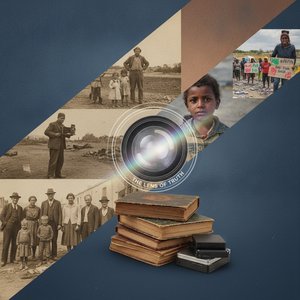
The Lens of Truth: A Comprehensive History and Legacy of Documentary Photography
Explore the profound history of documentary photography. From early daguerreotypes to social reform movements, discover how the lens captures truth, preserves vanishing cultures, and shapes our global visual narrative through an expert art-historical lens.


